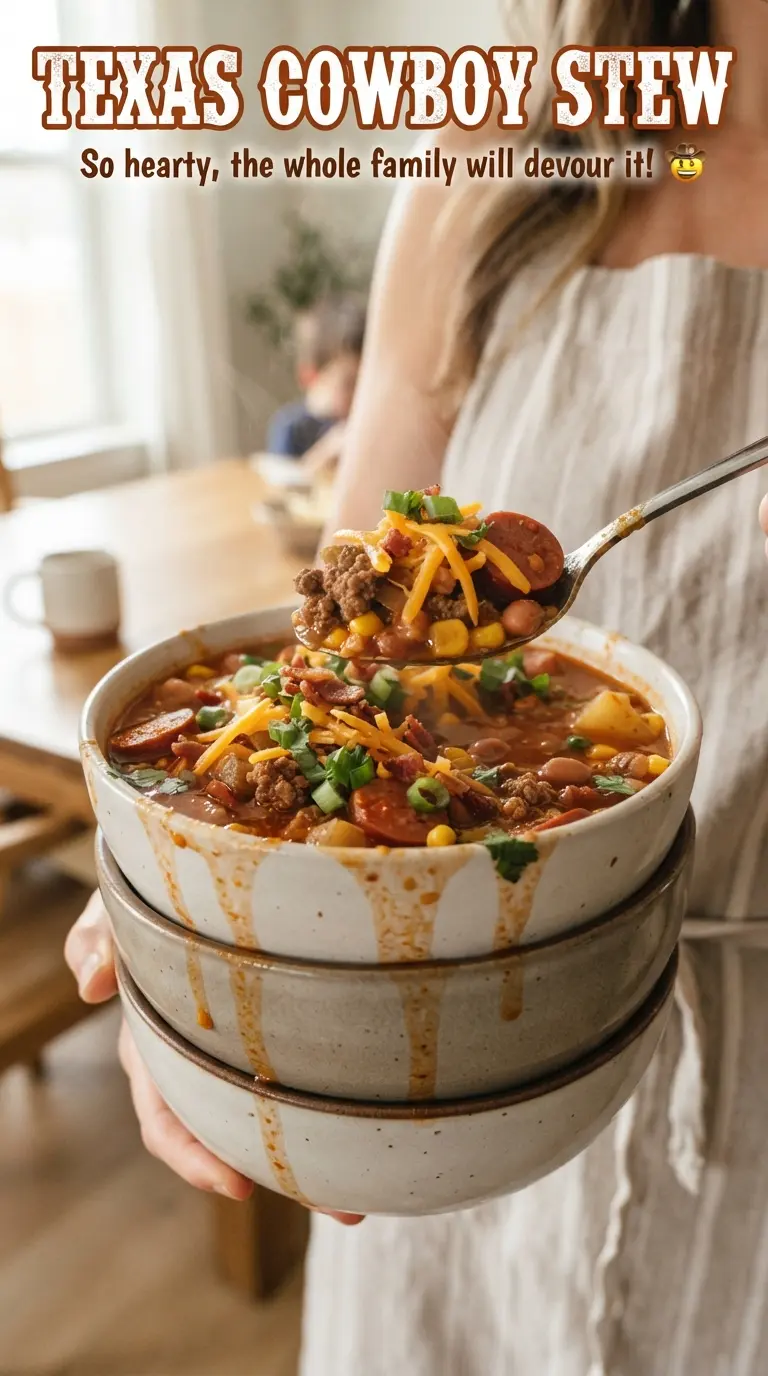
Texas Cowboy Stew brings the kind of one-pot comfort that settles into a pot with purpose: smoky, beefy, a little spicy, and loaded with enough potatoes, beans, and corn to make it eat like a full meal. The broth turns rich and savory as it simmers, and the bacon stirred in at the end gives every bowl a salty, crisp-edged finish that keeps it from tasting flat.
What makes this version work is the layering. Bacon goes in first to build the base, then the beef and sausage brown in those drippings, which gives the stew depth before a single tomato hits the pot. The potatoes simmer in the broth until tender without falling apart, and the Rotel adds both heat and acidity so the stew tastes lively instead of heavy.
Below, you’ll find the little details that matter most: how to keep the stew from turning greasy, what to do if you want it thicker, and a few smart swaps if you need to work with what’s already in the pantry.
The broth had the perfect smoky kick, and the potatoes stayed tender without turning mushy. I served it with cornbread and my husband went back for a second bowl before I sat down.
Save this Texas Cowboy Stew for the nights when you want a smoky, filling one-pot dinner with cornbread on the side.
The Step Most Stews Skip: Building Flavor Before the Broth
Texas Cowboy Stew can taste thin if everything goes in at once and waits around for the simmer to do all the work. The deeper flavor comes from browning the meat with the bacon drippings first. That’s where the stew gets its backbone: the beef develops a savory crust, the sausage picks up color, and the onion and bell pepper soften into the fat instead of boiling in liquid.
The other thing that matters here is the potatoes. Add them after the meat has browned and the garlic has just taken the edge off, not before. If they go in too early, they start breaking down before the broth has any real flavor, and you end up with a cloudy pot instead of a stew with defined pieces of potato that hold their shape.
- Bacon — This isn’t just garnish. It seasons the whole pot through the drippings, and stirring it back in at the end gives you little smoky bites instead of bacon that disappears into the broth.
- Smoked sausage — This is where the Tex-Mex depth comes from. A good smoked sausage brings seasoning and fat that plain ground meat can’t match. Hot links will make the stew spicier; kielbasa is milder.
- Rotel — The diced tomatoes and green chiles add heat and brightness in one can. Regular diced tomatoes work in a pinch, but the stew loses that sharp, peppery edge unless you add extra chiles or a pinch of cayenne.
- Potatoes — Use a waxier potato if you want the cubes to stay neat. Russets will work, but they soften faster and make the broth thicker and a little starchier.
What Each Ingredient Is Actually Doing in This Recipe
- Primary ingredient (the star) — Quality matters most. Choose the best you can find.
- Cooking medium (oil, butter, or broth) — This carries flavors and prevents dryness.
- Seasonings (salt, pepper, spices, herbs) — Layer flavors so nothing overpowers. Build depth gradually.
- Aromatics (garlic, onion, herbs) — Cook with fat to bloom flavors. Become the foundation.
- Supporting ingredients — Complement the main ingredient without overpowering it.
- Sauce or liquid (if applicable) — Brings flavors together. Balance richness with acid.
- Acid (lemon, vinegar, wine, or other) — Brightens and prevents flat-tasting results.
- Final finish (garnish, glaze, or sauce) — Prevents one-dimensional taste and adds visual appeal.
How to Keep the Potatoes Tender and the Broth Rich
Crisping the Bacon First
Cook the bacon until it’s crisp and the fat has rendered out before anything else goes into the pot. That fat becomes the cooking medium for the meat and vegetables, so don’t pour it off unless you’ve got a truly excessive amount. If the bacon stays pale, the drippings won’t have enough flavor to carry the stew.
Brown the Meat, Don’t Steam It
Add the ground beef, sausage, onion, and bell pepper to the hot drippings and leave them alone long enough to brown. If you stir constantly, the meat releases liquid and steams, which leaves the base flat and gray. Once the beef loses its raw color and you’ve got browned bits on the bottom, add the garlic and cook just until fragrant so it doesn’t turn bitter.
Let the Simmer Do the Work
After the broth and vegetables go in, bring the pot up to a boil, then drop it to a steady simmer. A hard boil can break the potatoes and make the beans split open, which clouds the broth and makes the texture muddy. Thirty minutes is usually enough for fork-tender potatoes; if your cubes are on the larger side, give them a few extra minutes before you stir the bacon back in.
How to Adapt It When the Pantry Looks Different
Make It Spicier Without Changing the Texture
Use hot smoked sausage, swap in hot Rotel, or add a pinch of cayenne with the chili powder. That gives the stew more heat without thinning the broth or changing the potato-to-bean balance. If you want the burn to build slowly, stir in a chopped jalapeño with the onion and bell pepper.
Dairy-Free and Naturally Thick Enough
This stew is already dairy-free as written, and the starch from the potatoes plus the beans gives it body without any cream. If you want it thicker, mash a few potato cubes against the side of the pot near the end of cooking. That works better than adding flour because it keeps the stew glossy instead of pasty.
Swap the Beans or Corn to Use What You Have
Pinto beans give this its classic cowboy feel, but kidney beans or black beans will work if that’s what’s in the pantry. Frozen corn can replace canned corn without any real change in method, and it keeps a little more bite. Just drain canned vegetables well so the broth doesn’t turn watered down.
Storage and Reheating
- Refrigerator: Store in an airtight container for up to 4 days. The stew thickens as it sits, so expect the broth to look richer the next day.
- Freezer: It freezes well for up to 3 months. Cool it completely first, then freeze in portions; the potatoes soften a bit after thawing, but the flavor holds up.
- Reheating: Warm it gently on the stovetop over medium-low heat with a splash of broth or water if needed. A hard boil can turn the potatoes grainy and split the sausage casing, so keep the heat low and stir often.
Questions I Get Asked About This Recipe

Texas Cowboy Stew
Ingredients
Equipment
Method
- In a Dutch oven, cook the chopped bacon over medium heat until crisp, then remove the bacon and leave the drippings in the pot.
- Add the ground beef, sliced smoked sausage, diced onion, and diced green bell pepper to the drippings and cook until browned, about 8 minutes; drain excess fat, then stir in the minced garlic.
- Add the cubed potatoes, diced tomatoes, Rotel, pinto beans, corn, beef broth, chili powder, ground cumin, salt, and black pepper to the pot.
- Bring the mixture to a boil, then reduce heat to a simmer and cook for 30 minutes, stirring once, until the potatoes are tender.
- Stir the crisp bacon back into the stew and heat through for 2 minutes.
- Serve hot with cornbread.