Beef bourguignon earns its place at the table by turning a tough cut into something spoon-tender, with a wine sauce that tastes deep, glossy, and layered instead of heavy. The beef doesn’t just soften in the oven; it takes on the flavor of the bacon, the browned vegetables, and the wine until the whole pot tastes like it has been simmering for far longer than it actually has.
What makes this version work is the sequence. The bacon is blanched first, which keeps the final sauce from tasting smoky or greasy. The beef gets seared in batches so it browns instead of steaming, and the flour goes in before the wine so the sauce thickens naturally as it braises. By the time the mushrooms and pearl onions go back in, they’re not fillers — they’re part of the finished dish, each with its own texture.
Below, I’ll show you the small details that keep the sauce smooth and the meat tender, plus the easiest way to handle the braised onions and mushrooms so they stay distinct instead of collapsing into the stew.
The sauce turned silky after straining, and the mushrooms stayed meaty instead of soggy. I made it on a Sunday and the leftovers tasted even deeper the next day.
Save Julia Child Beef Bourguignon for the night you want tender beef, a deep wine sauce, and that classic mushroom-and-pearl-onion finish.
The Step That Keeps the Sauce Deep Instead of Muddy
The biggest mistake in beef bourguignon is crowding the pan. If the beef goes in all at once, the surface cools and the meat releases moisture faster than it can brown, which leaves you with gray cubes and a flat-tasting sauce. Browning in small batches takes longer, but it’s the difference between a stew that tastes built from the bottom up and one that tastes boiled.
The flour goes in after the meat and vegetables are browned, before the liquid. That timing matters because the fat in the pan coats the flour and keeps it from tasting raw. Then the wine and stock loosen everything on the bottom and turn those stuck-on bits into the base of the sauce. If you rush straight to the liquid, you miss that layer of flavor entirely.
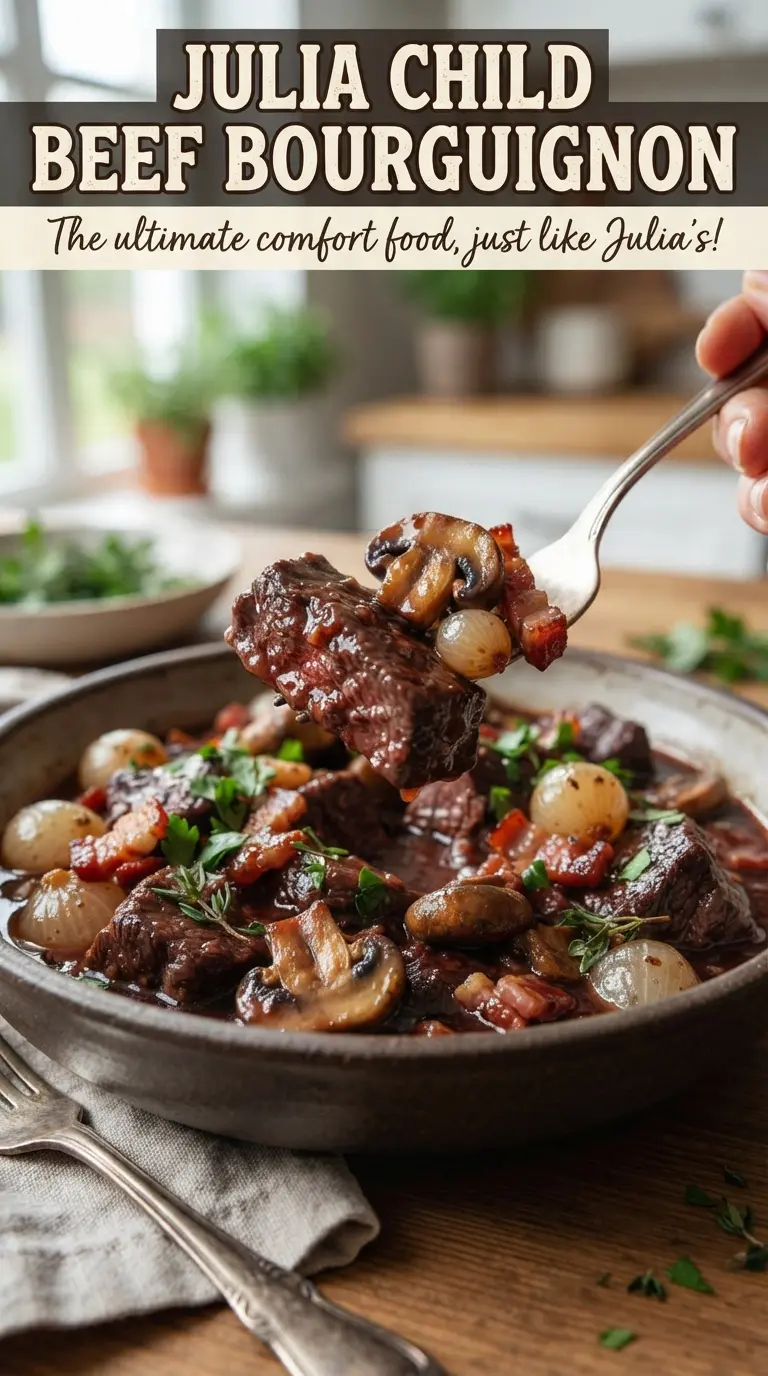
- Beef chuck or lean stewing beef — You need a cut with enough connective tissue to turn silky after a long braise. Precut stew meat works if it’s actually from chuck; if it looks too neat and uniform, it usually means less marbling and a drier result.
- Full-bodied red wine — This is where the sauce gets its depth, so use a wine you’d be happy to taste on its own. A dry Burgundy-style red is classic, but any sturdy pinot noir, merlot, or cabernet blend works as long as it isn’t sweet.
- Bacon lardons — Blanching them first pulls off some of the salt and harshness, which keeps the finished sauce cleaner. Thick-cut bacon can work; just cut it small so it renders before the beef goes in.
- Pearl onions and mushrooms — These are worth the extra pan time because they add contrast. Brown them separately so the onions stay sweet and the mushrooms stay browned instead of leaking into the stew.
- Tomato paste — It doesn’t make the dish taste tomatoey. It rounds out the wine and gives the sauce a little more body and color, especially after the long braise.
Building the Pot So the Beef Turns Fork-Tender
Rendering the Bacon and Searing the Beef
Start by browning the bacon in the oil, then lift it out before it overcooks. You want enough fat left in the pot to help the beef brown, but not so much that the meat fries. Sear the beef a few pieces at a time, leaving space around each cube until you get a dark crust; if the pieces stick at first, let them sit another minute instead of forcing them loose.
Coating with Flour and Toasting the Base
Once the carrot and onion have picked up color, return the beef and bacon, season them, and toss with flour. That short blast in the hot oven cooks off the raw flour taste and helps form the body of the sauce. If the flour looks dusty or clumped, keep tossing until every surface has a thin coating before the liquid goes in.
Braising Low and Slow
When the wine, stock, tomato paste, garlic, thyme, and bay leaf go in, the liquid should barely cover the meat. Too much stock waters down the sauce and makes it take longer to reduce later. Cover the pot and braise until the beef gives easily when pressed with a fork; if it still feels tight, it needs time, not more heat.
Finishing the Sauce with the Mushrooms and Onions
Strain the sauce and skim the fat before reducing it. That step gives you the glossy finish Julia Child was known for, and it keeps the sauce from tasting greasy. Add the braised onions and sautéed mushrooms at the end so they hold their shape; if they simmer too long in the finished sauce, the onions break and the mushrooms lose their browned edges.
How to Adjust This When You Need a Different Pot, Wine, or Dietary Path
Gluten-Free Version
Use a gluten-free flour blend in place of the all-purpose flour, but coat the beef lightly so the sauce doesn’t turn pasty. The texture stays rich and steady, though the sauce may need a few extra minutes of simmering after straining to reach the same gloss.
No Burgundy, No Problem
Any dry, medium- to full-bodied red will work if it has enough structure to stand up to the braise. Avoid anything sweet or heavily oaked, since those notes get louder as the sauce reduces and can make the finished dish taste jammy or bitter.
Make-Ahead for Better Flavor
This stew tastes even deeper the next day because the sauce has time to settle and the seasoning spreads through the meat. Cook it completely, chill it, and reheat gently with a splash of stock if needed; don’t boil it hard or the beef can tighten up.
Lighter Bacon Presence
If you want less smokiness, use the smaller end of the bacon amount and blanch it well before browning. You’ll still get the savory backbone it contributes, but the finished sauce will lean more toward wine and beef than cured pork.
Storage and Reheating
- Refrigerator: Store covered for up to 4 days. The sauce thickens and the flavor deepens as it rests.
- Freezer: It freezes well for up to 3 months. Cool it completely first, then freeze in portions so the beef reheats evenly.
- Reheating: Rewarm gently on the stove over low heat, covered, with a splash of stock if the sauce has tightened. Don’t boil it hard or the beef can dry out before the sauce loosens.
Questions I Get Asked About This Recipe
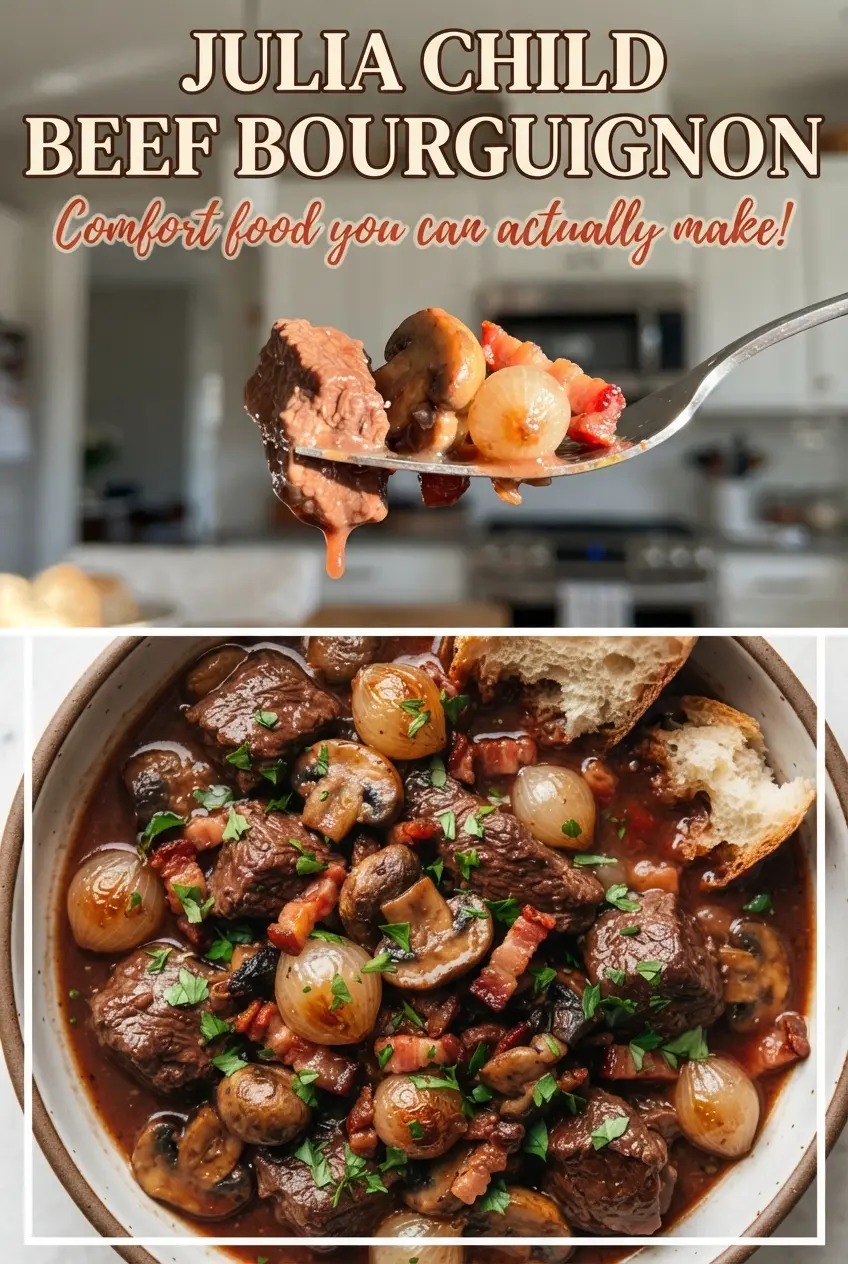
Julia Child Beef Bourguignon
Ingredients
Equipment
Method
- Preheat the oven to 450F and blanch the bacon lardons for 10 minutes before using. Brown the blanched bacon in olive oil in a casserole or Dutch oven until it has color, then remove.
- Sear the lean stewing beef in the hot fat a few pieces at a time until browned all over. Add the sliced carrot and sliced onion and brown them as well.
- Return the beef and bacon to the pot, then season with salt and black pepper. Sprinkle all-purpose flour over the mixture and toss until the meat looks lightly coated.
- Bake uncovered at 450F for 4 minutes, then toss and spread the pieces back out. Bake uncovered at 450F for another 4 minutes, until the coating looks dry and lightly thickened.
- Reduce the oven temperature to 325F, then stir in the full-bodied red wine and enough beef stock to barely cover the meat. Mix in tomato paste, mashed garlic, dried thyme, and the bay leaf.
- Cover the pot and braise at 325F for 2 1/2-3 hours, until the beef is fork-tender. Check toward the end so the liquid stays at a gentle simmer.
- Strain the sauce, skim the fat, and simmer the strained sauce to thicken. When it coats the back of a spoon, pour it back over the beef.
- Add the brown-braised pearl onions and the sautéed mushrooms, then warm until heated through. Garnish with fresh parsley just before serving.