Golden cheese on top, fluffy eggs underneath, and a hash brown base that picks up the sausage drippings all the way through — this is the kind of breakfast casserole people remember long after the campfire dies down. The best part is the contrast: crisp edges where the Dutch oven holds heat, tender eggs in the center, and just enough cheddar to pull everything together without turning greasy or heavy.
The trick is keeping the layers simple and the heat controlled. Frozen hash browns go in straight from the bag, which saves time and keeps the bottom from turning gummy. Pre-cooked sausage matters here because the casserole doesn’t have time to spend cooking raw meat through before the eggs set. And because this cooks under coals, not in a steady oven, a tight lid and a short rest at the end make the difference between a clean slice and a runny center.
Below you’ll find the small details that help this work over a campfire, including how to avoid a soggy bottom and what to do if your coals run hotter than expected. Once you’ve made it this way, it’s hard to go back to a plain skillet breakfast.
The eggs set up perfectly in my Dutch oven and the hash browns at the bottom stayed tender, not soggy. I used the full 35 minutes with coals on the lid, and the top came out nicely browned with the cheese melted all the way through.
Love a cheesy Dutch oven breakfast? Save this grilled breakfast casserole for your next campfire morning.
The Coals Matter More Than the Clock
With a Dutch oven breakfast like this, the biggest mistake is treating the cook time like it’s fixed. Coals run hotter or cooler depending on wind, humidity, and how long they’ve been burning, so the casserole is done when the eggs are set in the center and the top has a deep golden color, not just when the timer says 35 minutes. If the lid is too hot and the top is browning too fast, pull a few coals off the lid and let the residual heat finish the middle.
- Hash browns — Frozen hash browns work best because they’re already cut small and cook evenly under the eggs. Thawed potatoes can get watery and make the bottom soft.
- Breakfast sausage — Cook it first and crumble it fine so every bite gets a little savory richness without big greasy pockets. Drain it well after browning.
- Eggs and milk — The milk keeps the eggs from setting up too tightly, which gives the casserole a softer, more sliceable texture. Whole milk is ideal, but 2% works fine.
- Cheddar and green onions — Sharp cheddar gives you the most flavor for the amount used, and the onions cut through the richness. Pre-shredded cheese melts fine here, though freshly shredded cheese browns a little better.
How to Layer It So the Bottom Stays Tender
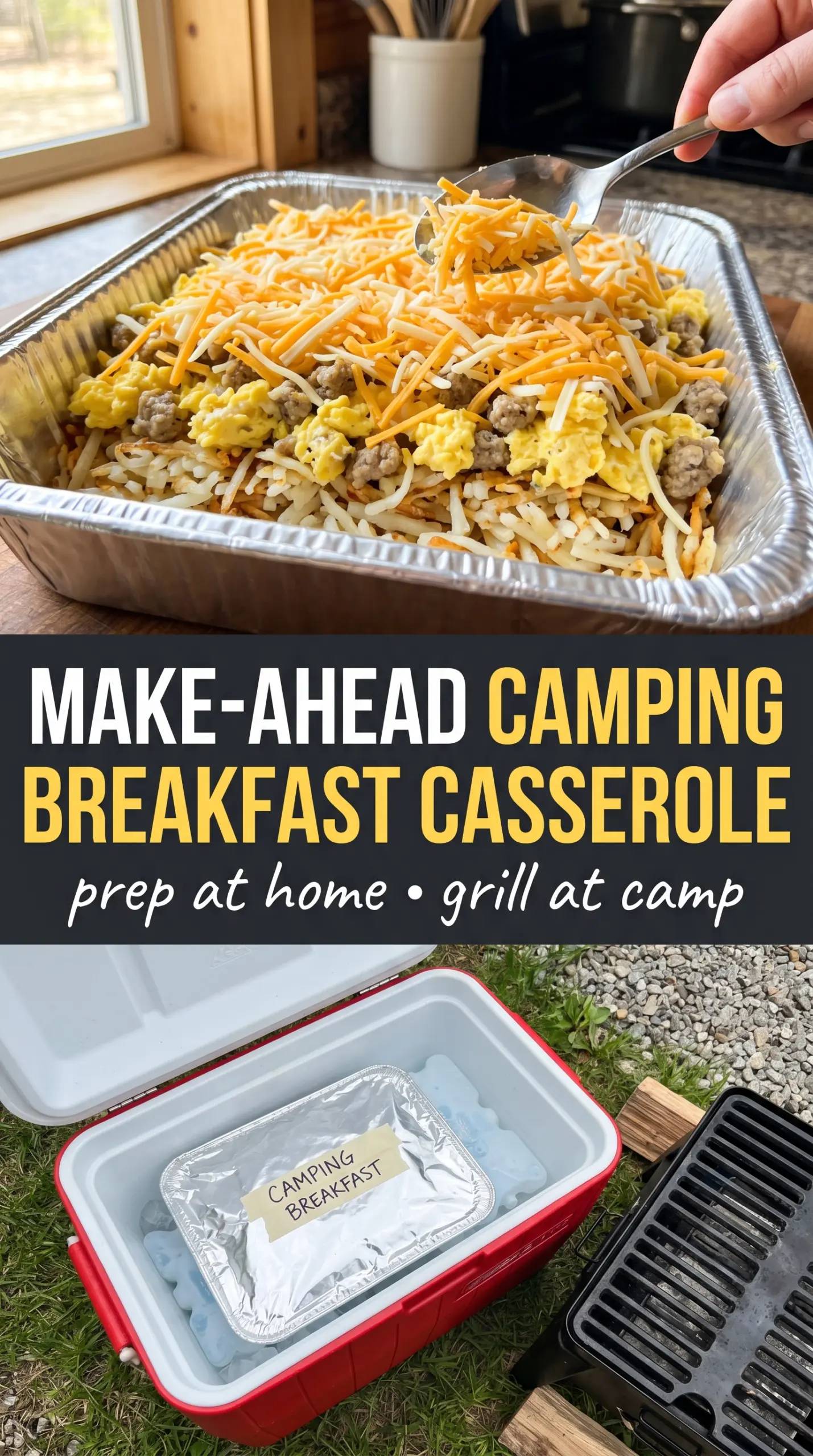
- Frozen hash browns — Use them straight from frozen. They act like a sponge for the sausage flavor while holding enough structure to keep the base from collapsing.
- Cooked sausage — This is the layer that seasons the whole casserole, so don’t leave it in large clumps. Small crumbles distribute better and make slicing easier.
- Egg mixture — Whisk until the milk is fully blended and the eggs look uniform. Uneven whisking can leave streaks of set white in the finished casserole.
- Cheese — Put it on top instead of folding it through. That gives you a browned, melted cap instead of cheese disappearing into the eggs.
Building the Dutch Oven Breakfast Without Breaking the Center
Greasing and Layering the Base
Coat the Dutch oven well with cooking spray, then spread the hash browns into an even layer across the bottom. Add the cooked sausage in an even scatter so the casserole heats uniformly and every serving gets meat. If the sausage sits in one thick pile, the eggs around it will overcook before the middle sets.
Whisking the Custard
Whisk the eggs, milk, salt, and pepper until the mixture looks smooth and pale yellow. This isn’t just for mixing; it helps the eggs bake into a soft, cohesive layer instead of a dense slab. Pour it slowly over the potatoes and sausage so it settles into the gaps instead of sitting on top.
Finishing Under the Lid
Top with cheddar and green onions, cover the pot, and set it on campfire coals with coals on the lid too. That top heat is what melts the cheese and browns the surface while the bottom cooks from below. If the top looks done before the middle is set, shift the pot to gentler coals and give it a few more minutes rather than blasting it with more heat.
Bacon Instead of Sausage
Cook and crumble the bacon first, then drain it well before layering it in. Bacon gives a smokier, saltier finish than sausage, but the casserole will taste a little less hearty, so a sharper cheese helps carry the flavor.
Make It Vegetarian
Skip the sausage and add sautéed mushrooms, bell peppers, or onions that have already been cooked down. Vegetables release moisture, so pre-cooking them keeps the casserole from turning watery in the center.
Dairy-Free Version
Use an unsweetened plant milk and a good melting dairy-free cheese. The texture will still set, but it won’t brown quite the same way, so watch for firmness in the center instead of relying only on color.
Storage and Reheating
- Refrigerator: Store leftovers covered for up to 4 days. The hash browns soften a little, but the flavor holds up well.
- Freezer: Freeze cooled slices wrapped tightly and tucked into a freezer bag for up to 2 months. Thaw overnight in the fridge before reheating.
- Reheating: Warm in a 325°F oven until heated through, or reheat single portions in a skillet covered over low heat. The common mistake is using high heat, which tightens the eggs and dries out the sausage.
Questions I Get Asked About This Recipe

Grilled Breakfast Casserole
Ingredients
Equipment
Method
- Spray a Dutch oven with cooking spray to coat the surface. This helps prevent sticking when the casserole is unmolded and served.
- Layer hash browns and cooked sausage in the bottom of the Dutch oven. Spread them evenly so the egg mixture bakes through the center.
- Whisk together eggs, milk, salt, and pepper until smooth, then pour over hash browns and sausage. Aim for even coverage so the casserole sets uniformly.
- Top with cheese and green onions. The cheese should sit on top so it melts and forms a golden layer.
- Cover the Dutch oven and place it on campfire coals with coals on top of the lid. The top heat mimics an oven, creating even browning.
- Cook for 30-35 minutes until eggs are set and the top is golden. Look for a firm center and bubbling/melted cheese on top as the visual cue.
- Let the casserole cool for 5 minutes before serving. This short rest helps the slices hold together for serving.