Golden hash browns, smoky ham, sweet peppers, and melted cheddar all in one skillet make this the kind of breakfast that disappears fast. The potatoes turn crisp at the edges, the eggs set right into the filling, and every scoop gets a little bit of everything. It’s hearty without feeling heavy, and it lands on the table looking like you worked a lot harder than you did.
The trick is giving the frozen hash browns enough time in the skillet to dry out and brown before anything else goes in. If you rush that part, you end up steaming the potatoes instead of building the crust that makes this dish worth making. The ham and vegetables go in after the potatoes are already taking on color, so they can warm through without watering the whole pan down.
Below, I’ve included the one detail that keeps the eggs tender instead of rubbery, plus a few smart swaps for making this over a campfire, on the stovetop, or with whatever you already have in the fridge.
The hash browns got crisp underneath before I added the ham and peppers, and the eggs cooked up with set whites and soft yolks. My husband went back for seconds and asked if I could make it again the next morning.
Pin this cheesy western skillet for a campfire breakfast with crisp hash browns, smoky ham, and melty cheddar.
The Part That Keeps the Hash Browns Crisp Instead of Soggy
Frozen hash browns need space and time before they turn into a good base for this skillet. The first 10 minutes are about driving off moisture and building a browned layer on the bottom of the pan. If you keep stirring too often, they never get the chance to form that crust, and the whole dish turns soft instead of hearty.
Cast iron helps here because it holds steady heat, which is exactly what the potatoes need. Once the ham, peppers, and onions go in, the pan picks up a little moisture again, so the timing matters. The vegetables should soften and the ham should warm through, but the potatoes need to already be cooked enough to stand up to that extra moisture.
What Each Ingredient Is Actually Doing in This Skillet
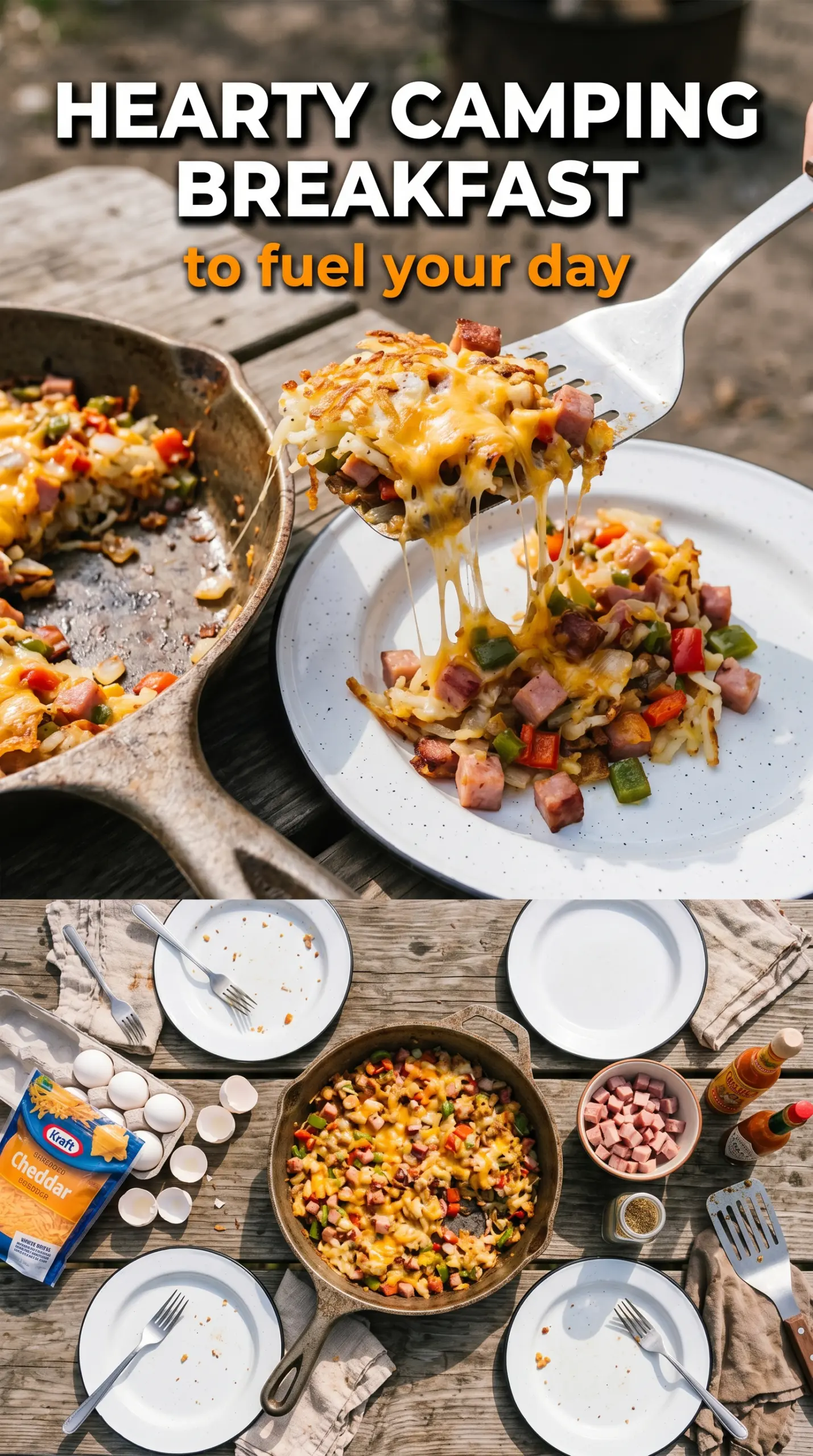
- Frozen hash browns — These give you the crisp, starchy base. Shredded potatoes cook more evenly here than cubed ones, and frozen hash browns are already peeled and grated, which keeps this breakfast fast. Thaw them only if they’re clumped hard; otherwise, go straight into the hot pan.
- Ham — The diced ham adds salt, smoke, and enough heft to make this feel like a full meal. Use a good deli ham or leftover baked ham if you have it. Pre-cooked ham is the right choice; raw ham would need a completely different cooking plan.
- Bell pepper and onion — These bring sweetness and a little bite that keeps the skillet from tasting flat. Dice them small so they soften in the same window as the ham heats through. If your onion pieces are too large, they’ll still taste sharp when the eggs are ready.
- Cheddar cheese — Sharp cheddar is best because it stands up to the potatoes and ham without disappearing. Pre-shredded cheese works fine, though freshly shredded melts a little smoother. If you swap in a milder cheese, the dish loses some of its backbone.
- Butter or oil — This is what gets the potatoes moving before they stick. Butter adds flavor, but oil handles higher heat a little better, especially over campfire heat that changes fast. If you’re cooking over uneven flames, oil gives you a bit more protection.
- Eggs — The wells keep the eggs in place so they cook right on top of the hash browns instead of running into the pan. Crack them one at a time into a small bowl first if you want neater yolks. That extra step helps a lot when you’re working in a crowded skillet.
Building the Skillet in the Right Order
Getting the Potatoes Browned First
Start with hot butter or oil in a large cast iron skillet, then add the frozen hash browns in an even layer. Let them sit long enough to take on color before you stir, because the first contact with the hot pan is what starts the crust. If the potatoes are still pale and wet when you move on, the finished dish will taste more steamed than crisp.
Warming the Ham and Vegetables Without Flooding the Pan
Once the potatoes have started browning, add the ham, bell pepper, and onion. Stir just enough to mix everything through and keep the vegetables from scorching, then let the pan settle again. The onions should soften and lose their raw edge, and the ham should get hot all the way through without releasing enough liquid to loosen the potatoes.
Setting the Eggs Under the Cheese
Make six wells in the hash brown mixture and crack an egg into each one. Sprinkle the cheese over the top, then cover the skillet with a lid or foil so the tops trap enough steam to set the eggs. Pull the skillet when the whites are just set and the yolks still look soft if that’s how you like them; if you wait until the yolks look fully opaque, they’ll go chalky fast.
Finishing at the Table
Season with salt and pepper at the very end. The ham and cheese already bring salt, so tasting first keeps the skillet from getting too heavy. Serve it straight from the pan while the cheese is still stretchy and the bottom edge of the potatoes is crisp.
How to Adjust This Skillet for What You Have on Hand
Make It Without Ham
Use cooked breakfast sausage, crumbled bacon, or leave the meat out entirely and add an extra handful of cheese. The dish still works because the hash browns and eggs carry the structure, but you’ll lose some of the salty, smoky backbone that ham brings.
Dairy-Free Version
Swap the butter for oil and skip the cheese, or use a dairy-free melting cheese that you know works well. The skillet will still be hearty and satisfying, but the top won’t have quite the same creamy finish, so let the eggs carry more of the richness.
Make It Spicier
Add diced jalapeño with the onion and bell pepper, or finish with a pinch of smoked paprika and hot sauce at the table. That gives the skillet a little more edge without changing the basic cooking method.
Storage and Reheating
- Refrigerator: Store leftovers for up to 3 days. The hash browns soften a bit, but the flavor stays good.
- Freezer: It freezes, but the eggs and potatoes change texture after thawing, so I don’t recommend freezing the finished skillet.
- Reheating: Reheat portions in a skillet over medium-low heat or in the oven until warmed through. The mistake to avoid is blasting it in the microwave, which makes the eggs rubbery and the potatoes limp.
Answers to the Questions Worth Asking

Cheesy Western Skillet with Hash Browns and Ham
Ingredients
Equipment
Method
- Heat the butter or oil in a large cast iron skillet over campfire.
- Add the frozen hash browns and cook for 10 minutes, stirring occasionally, until golden.
- Add the diced ham, bell pepper, and onion, and cook for 5 minutes more.
- Create 6 wells in the hash brown mixture and crack an egg into each well.
- Sprinkle the shredded cheddar cheese over everything and cover with a lid or foil.
- Cook for 8-10 minutes until the eggs are set to desired doneness, with cheese melted and bubbling at edges.
- Season with salt and pepper and serve directly from the skillet while steaming.