Foil packet fish comes off the fire tender and lightly seasoned, with the lemon steaming into the fish and the vegetables turning just-soft enough to eat with a fork. The best part is that the whole dinner cooks in its own little sealed pocket, which keeps the fish moist even if your campfire heat isn’t perfectly steady. When it works, you open the packet and get flaky fish, buttery juice, and bright slices of lemon all in one place.
The trick is in the layering. The vegetables go under and around the fish so they catch the heat and release a little moisture, while the butter and lemon help season everything without drowning it. Heavy-duty foil matters here because thin foil tears when you’re flipping packets or opening them over hot coals, and that’s how you lose both the steam and the dinner. I like dill with fish for its clean, grassy edge, but parsley keeps it simple and fresh if that’s what you’ve got.
Below, I’ve included the part that matters most for campfire cooking: how to keep the packets sealed, how to tell when the fish is done, and a few swaps that make this work with whatever fish and vegetables you have on hand.
The fish stayed flaky and the zucchini picked up all that lemon-butter juice without getting mushy. I was shocked how well the packets held in the campfire heat.
Save this foil packet fish for a campfire dinner with flaky fish, lemon, and vegetables cooked in one tidy packet.
The Reason Foil Packets Stay Juicy Instead of Drying Out
Fish dries out fast over open heat, especially when the fire is hotter on one side than the other. A sealed foil packet changes that. It traps steam from the lemon, butter, and vegetables, so the fish cooks in a gentler little pocket instead of getting blasted directly by the grate.
The other thing working in your favor is the way the vegetables are arranged. Zucchini and bell pepper release enough moisture to help the packet stay steamy, but they still hold their shape if you slice them evenly. The most common mistake is opening the packet too soon to peek; that dumps the steam and can leave the fish a little underdone in the center. Wait until it flakes easily with a fork and looks opaque all the way through.
What the Lemon, Butter, and Vegetables Are Each Doing Here
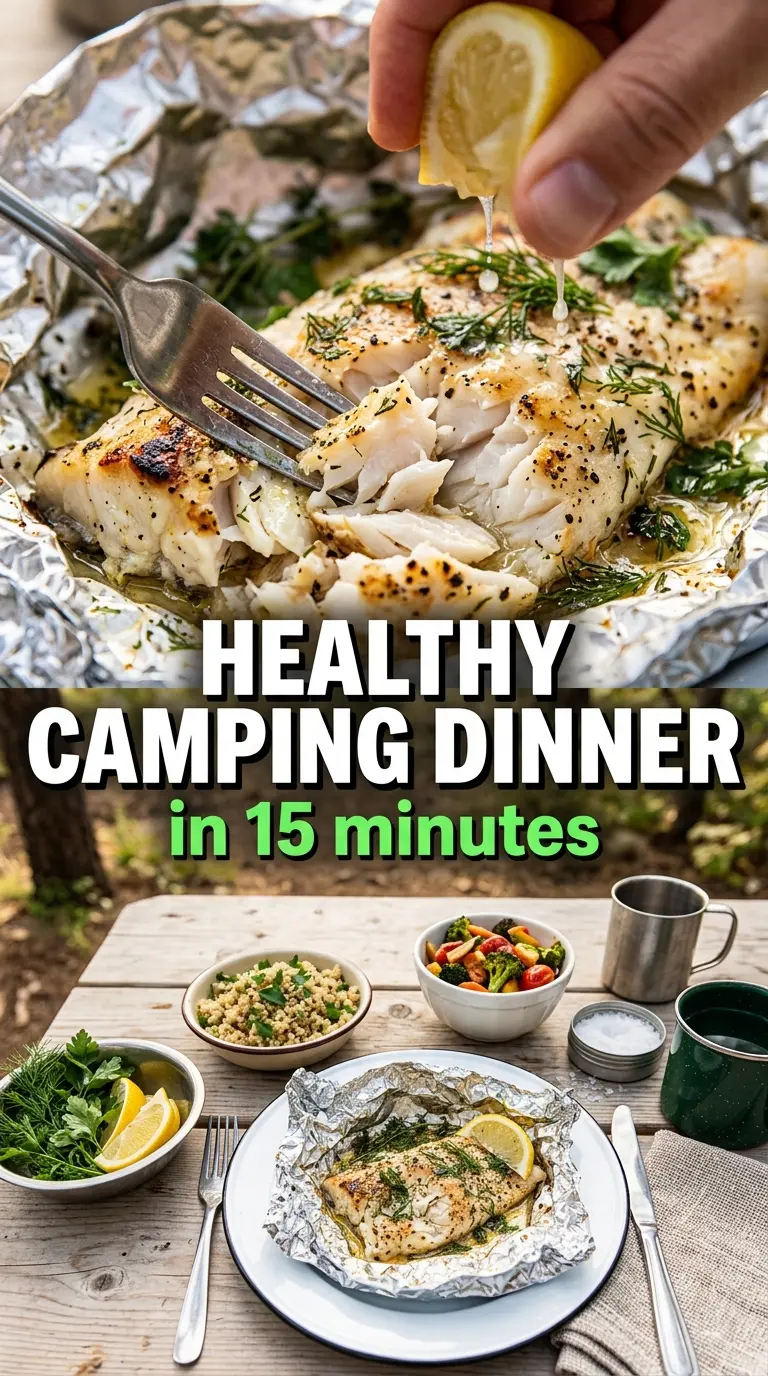
- Fish fillets — Salmon gives you the richest result, trout stays delicate, and tilapia cooks quickly and stays mild. Any of the three works, but thicker fillets are easier to cook evenly over campfire heat because they’re less likely to dry out before the vegetables are ready.
- Heavy-duty aluminum foil — This is not the place to use thin foil. Heavy-duty sheets hold their seal better, especially if you’re moving packets around on a grate or opening them with tongs at the table.
- Butter — The butter melts into the fish and vegetables and carries the garlic and herbs through the packet. If you need a dairy-free version, use olive oil, but know that you’ll lose a little of that rich finish.
- Lemon slices — Fresh lemon does the acid work that bottled juice can’t quite match here. The slices soften as they cook and perfume the fish without making it sour.
- Zucchini and bell pepper — These vegetables are there for texture and moisture. Slice them evenly so they soften at the same pace; thick chunks stay too firm while paper-thin slices turn mushy.
- Dill or parsley — Dill gives the strongest, most classic match for fish, while parsley stays cleaner and milder. Use fresh if you have it, but dried will still work in a pinch as long as you keep the amount light.
How to Seal the Packet So Nothing Leaks Into the Fire
Building the Base
Lay each fish fillet in the center of its own foil sheet, then season it before the vegetables go on. That keeps the seasoning right on the fish instead of getting lost in the juices below. Add the garlic, herbs, salt, pepper, and butter first, then arrange the lemon slices and vegetables around the fish so everything cooks together without burying the fillet.
Folding for Steam, Not Steam Escape
Bring the long sides of the foil together and fold them down in tight, repeated folds, then crimp the short ends to seal the packet. Leave a little air space inside so steam can circulate. If the foil is packed too tightly against the fish, the vegetables trap the liquid and you end up with a soggy bottom instead of a steamy, evenly cooked packet.
Cooking Over the Fire
Set the packets on a campfire grate over medium heat and let them cook for 15 to 20 minutes. The exact time depends on the thickness of the fish and how hot your fire runs, so check the thickest part of one packet at the 15-minute mark. The fish is done when it flakes with gentle pressure and looks opaque; if it still looks translucent in the center, give it a few more minutes before opening the rest.
Opening Without Losing the Best Part
Open the packets carefully because the steam inside is hot enough to burn you. I like to pull back the top foil slowly with a fork or tongs and let a little steam escape before opening all the way. Serve the fish straight from the packet or slide it onto plates with the vegetables and spoon the buttery lemon juices over the top.
How to Adapt This for Different Fish, Diets, and Campfire Setups
Use salmon for a richer campfire dinner
Salmon holds up best if your fire runs hot because it has more fat and stays moist. The result is deeper, richer, and a little more forgiving than lean white fish, though it will cook a bit more slowly if the fillets are thick.
Make it dairy-free with olive oil
Swap the butter for olive oil and the packets will still steam beautifully, but the finish will be lighter and less silky. Add a little extra salt or an extra squeeze of lemon at the end to bring the flavor back up.
Change the vegetables based on what cooks at the same speed
Green beans, asparagus, and thinly sliced potatoes all work if you match the cut to the cook time. Harder vegetables need to be sliced much thinner than zucchini, or they’ll still be firm when the fish is done.
Set up the packets at home, then cook them at camp
You can assemble the packets a few hours ahead and keep them chilled until it’s time to cook. That makes campfire dinner easier, but don’t leave lemon slices sitting directly on delicate fish for too long or the surface can start to turn soft before it ever hits the heat.
Storage and Reheating
- Refrigerator: Store leftovers in a sealed container for up to 2 days. The fish will be a little less flaky after chilling, but it still makes a good next-day lunch.
- Freezer: I don’t recommend freezing cooked foil packet fish. The vegetables turn watery and the fish loses its tender texture when thawed.
- Reheating: Warm it gently in a covered skillet over low heat or in a low oven just until heated through. High heat will dry out the fish fast, which is the main reason leftovers turn rubbery.
Answers to the Questions Worth Asking
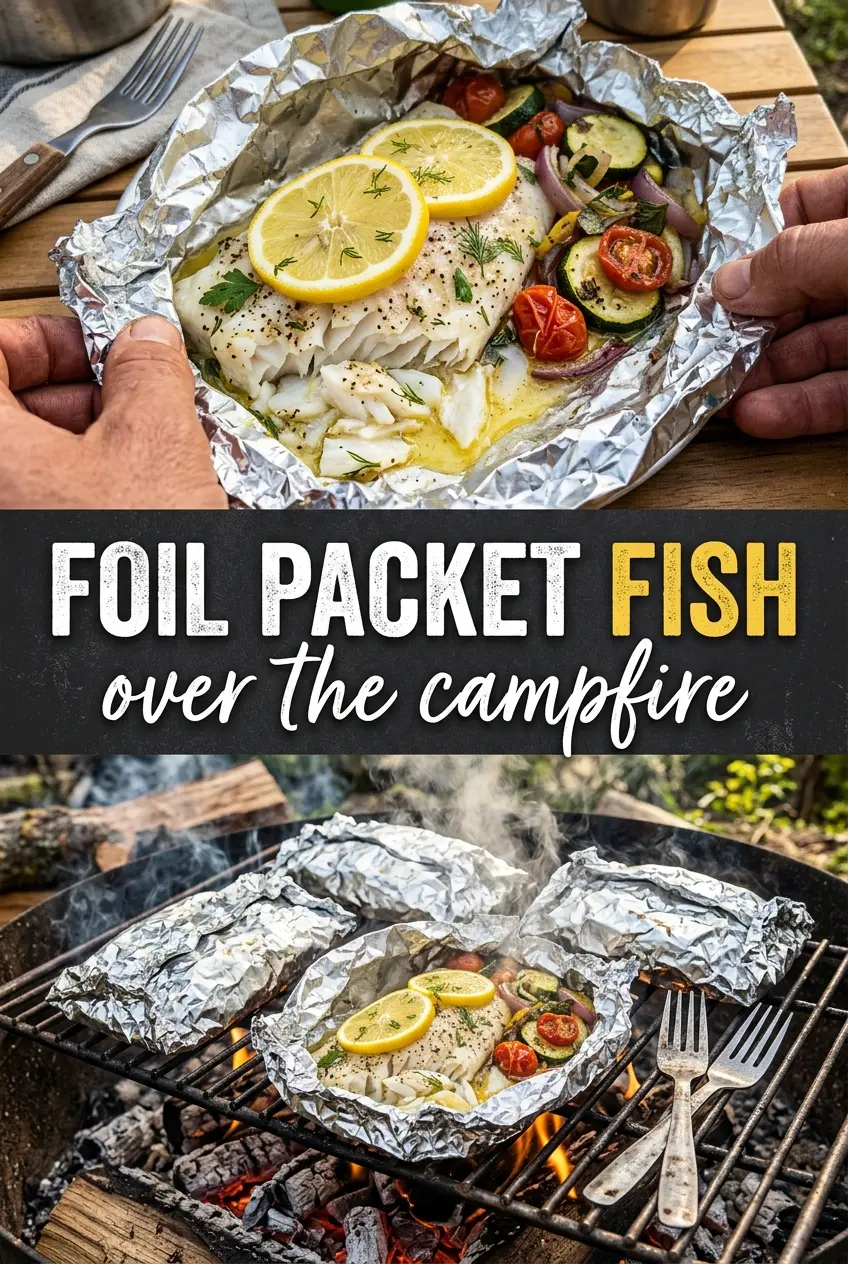
Foil Packet Fish
Ingredients
Equipment
Method
- Place 1 fish fillet on a sheet of heavy-duty aluminum foil. Keep the foil flat and large enough to fold over the fish fully.
- Top the fish with minced garlic, chopped dill or parsley, salt, and pepper, then add a pat of butter. Aim for even coverage so every bite has seasoning.
- Arrange lemon slices over the fish and surround it with sliced zucchini and bell pepper. Tuck the vegetables close to the fish for faster, more even steaming.
- Fold the foil into a sealed packet, crimping the edges tightly to prevent steam from escaping. Press along the seams so the packet stays closed.
- Place the foil packet on a campfire grate over medium heat for 15-20 minutes. Cook until the fish flakes easily with a fork.
- Carefully open the packets and serve. Let steam escape away from your face before peeling back the foil.