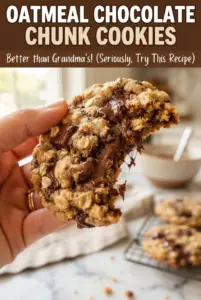
These gluten free oatmeal chocolate chip cookies bake up thick in the center, chewy around the edges, and loaded with chocolate in every bite. The oats give them that hearty, bakery-style texture, while the brown sugar keeps the crumb moist instead of dry or sandy. If you’ve had gluten free cookies turn out crumbly or gritty before, this batch fixes both problems without making the dough fussy.
The key is using a good gluten free 1-to-1 flour blend and certified gluten free oats. The flour blend handles structure, but the oats are what give these cookies their chew and that classic oatmeal cookie bite. Chilling the dough for 30 minutes matters here too, because it keeps the cookies from spreading too fast and helps the flavors settle into something deeper and more balanced.
Below, I’ll walk through the small details that keep these cookies soft for days, plus a few smart swaps if you need to work around what’s already in your pantry.
These chilled perfectly and baked up chewy instead of cakey. The oats stayed hearty, the edges browned up just enough, and the chocolate stayed melty for days.
Like these chewy gluten free oatmeal chocolate chip cookies? Save them to Pinterest for the days when you want a soft-centered cookie with crisp edges and plenty of chocolate.
The Reason These Cookies Stay Chewy Instead of Dry and Crumbly
Gluten free cookies can go wrong in two directions: too soft and fragile, or dry and chalky. The difference here comes down to balance. The oats bring body and chew, but the flour blend has to be the kind formulated to replace wheat flour at a one-to-one ratio. A random single-starch substitute won’t behave the same way, and the dough will either spread too much or fall apart after baking.
Brown sugar does a lot of work here too. It holds moisture better than white sugar, which is what keeps the centers tender after the cookies cool. The chill time matters because gluten free dough often starts a little looser than wheat dough; cold dough bakes thicker, with edges that set before the middle overflows across the pan.
- Certified gluten free oats — These give the cookies their signature chew. Regular oats can carry cross-contact, so certified gluten free oats matter if you’re baking for someone who needs them.
- Gluten free 1-to-1 flour blend — This handles structure. Look for a blend that already includes xanthan gum unless the package says it isn’t needed.
- Brown sugar — Packed brown sugar keeps the crumb moist and gives the cookies a deeper, almost caramel note.
- Butter — Softened butter creams with the sugar and traps air, which helps the cookies bake up with a little lift instead of turning dense.
What Each Ingredient Is Actually Doing in the Dough
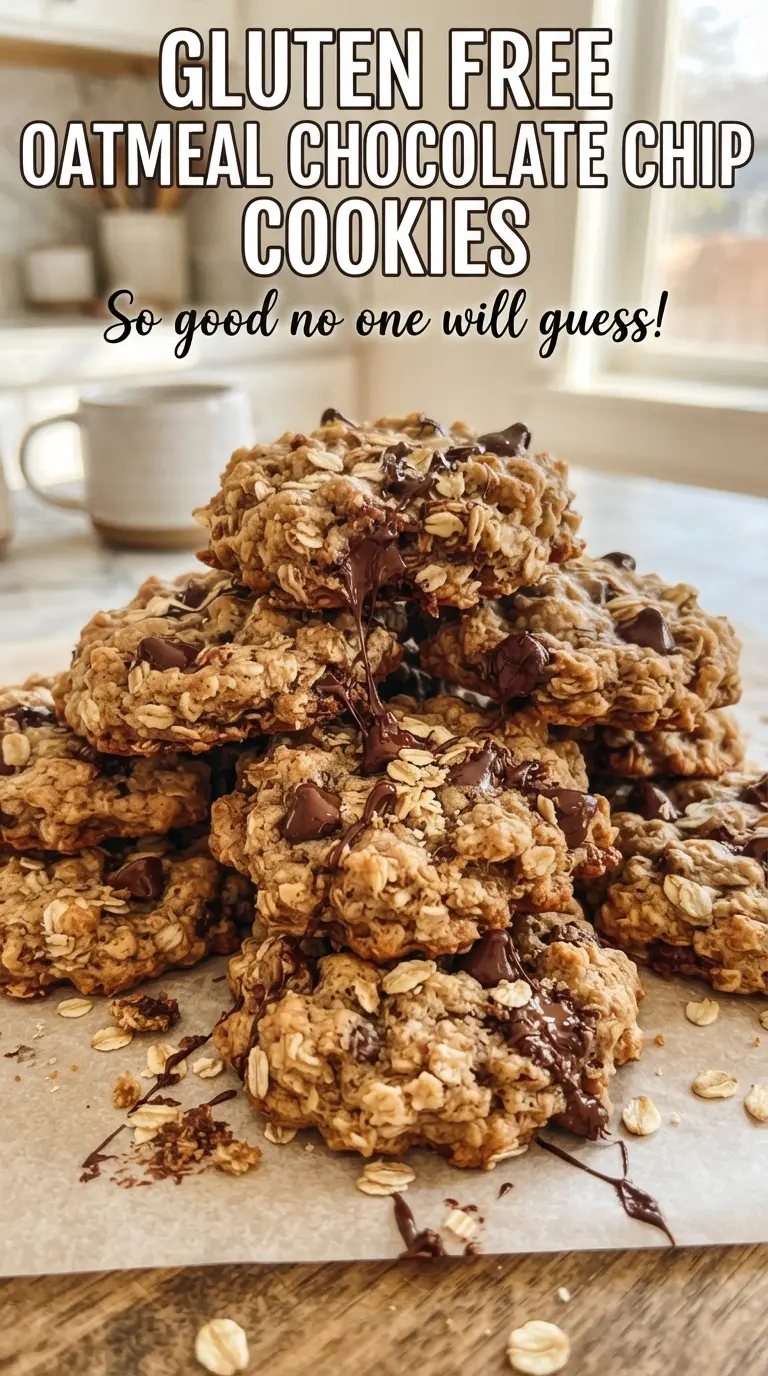
- Butter — Use softened, not melted. Softened butter creams properly with the sugars and gives the cookies a tender center. Melted butter makes them spread faster and bake thinner.
- Brown sugar and granulated sugar — Brown sugar drives chew and moisture, while white sugar helps the edges crisp. If you cut the white sugar too much, the cookies can turn a little soft and heavy.
- Egg — The egg binds the dough and gives it enough lift to hold together around the oats. A flax egg won’t give the same structure here; it will make the cookies denser and a little more fragile.
- Cinnamon — It doesn’t make the cookies taste like spice cookies. It rounds out the oats and chocolate so the flavor tastes warmer and more complete.
- Chocolate chips — Semi-sweet chips keep the sweetness in check. If you use darker chocolate, the cookies taste more grown-up and a little less candy-like.
Building the Dough So the Cookies Bake Thick and Even
Creaming the Butter and Sugars
Beat the butter with both sugars until the mixture looks lighter in color and fluffy around the edges of the bowl. That step isn’t just about mixing; it traps air that helps the cookies rise a little instead of baking up heavy. Stop once the mixture looks smooth and cohesive. If the butter is too soft or greasy, the dough can spread more than you want.
Bringing the Dry Ingredients In
Mix in the gluten free flour, baking soda, cinnamon, and salt until the dough just comes together. Overmixing at this point can make the dough thick and pasty, and there’s no gluten here that needs extra work anyway. The dough should look a little rough before the oats go in. That’s fine.
Adding the Oats and Chocolate
Stir in the oats and chocolate chips by hand so they stay intact and distribute evenly. The dough will feel sturdy and a little sticky, which is exactly what you want. If it feels loose, the oats probably need a minute to hydrate before baking, so don’t rush that chill time. A 30-minute rest firms everything up and helps the cookies hold their shape on the pan.
Baking Until the Edges Set
Scoop 2-tablespoon portions onto parchment-lined baking sheets and bake at 350F until the edges are golden and the centers still look slightly soft. Pull them before the tops look fully dry; they finish setting on the hot pan. If you wait until the middle looks completely done in the oven, the cookies will cool dry instead of chewy.
Swap the Chocolate Chips for Chopped Bars
Chopped chocolate melts into bigger puddles and gives the cookies a more bakery-style look. Use the same amount by weight or volume, but expect more pockets of melted chocolate and less even distribution than with chips.
Make Them Dairy-Free
Swap the butter for a good plant-based baking stick, not tub margarine. You’ll keep the same texture and spread, while coconut oil tends to make the cookies feel a little more greasy and brittle once cooled.
Use Raisins Instead of Chocolate
Replace the chocolate chips with the same amount of raisins for a classic oatmeal cookie. The cookies will be less rich and a little sweeter in a different way, with a softer, chewier bite.
Add Pecans for More Crunch
Fold in up to 3/4 cup chopped pecans along with the chocolate chips. They add a toasty crunch that plays well with the oats, but they also make the cookies a little more substantial, so keep the pieces small and evenly chopped.
Storage and Reheating
- Refrigerator: Store in an airtight container for up to 5 days. The oats will keep the cookies soft, though the edges lose a little of their fresh-baked crispness.
- Freezer: These freeze well both as baked cookies and as scooped dough balls. Freeze the dough on a tray first, then transfer to a bag and bake from frozen, adding 1-2 minutes.
- Reheating: Warm baked cookies in a 300F oven for 3-4 minutes or give them 8-10 seconds in the microwave. Don’t overheat them or the chocolate will turn oily and the cookies will dry out fast.
Answers to the Questions Worth Asking
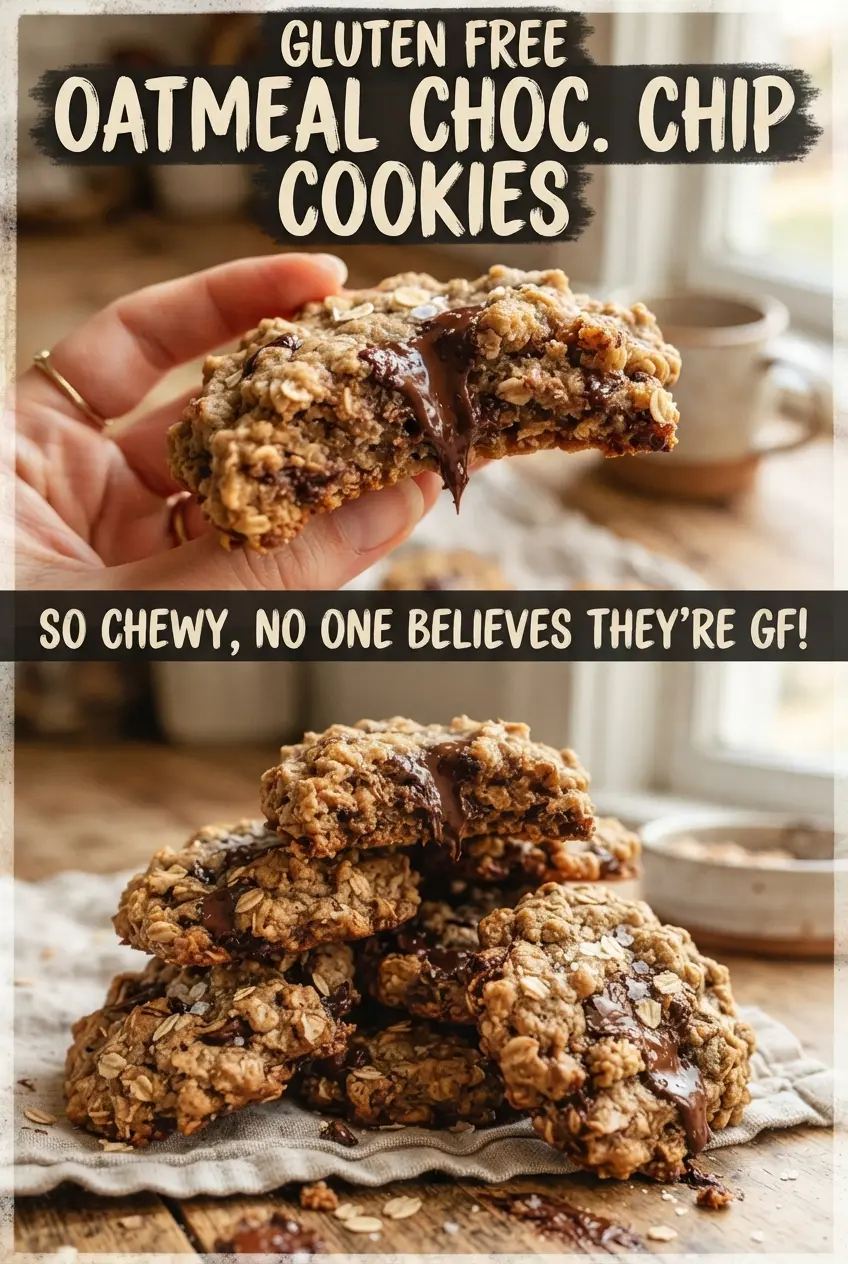
Gluten Free Oatmeal Chocolate Chip Cookies
Ingredients
Equipment
Method
- Beat the softened unsalted butter, brown sugar, and granulated sugar until fluffy, then beat in the egg and vanilla extract.
- Mix in the gluten free 1-to-1 flour blend, baking soda, ground cinnamon, and salt until no dry streaks remain.
- Stir in the certified gluten free old-fashioned oats and semi-sweet chocolate chips until evenly distributed.
- Chill the cookie dough for 30 minutes so it thickens before baking.
- Preheat the oven to 350F and scoop 2-tablespoon balls onto parchment-lined sheet pans, leaving space between cookies.
- Bake for 10-12 minutes, until the cookies are golden at the edges and set in the centers.
- Cool the cookies for 10 minutes on the sheet pan before moving or serving.