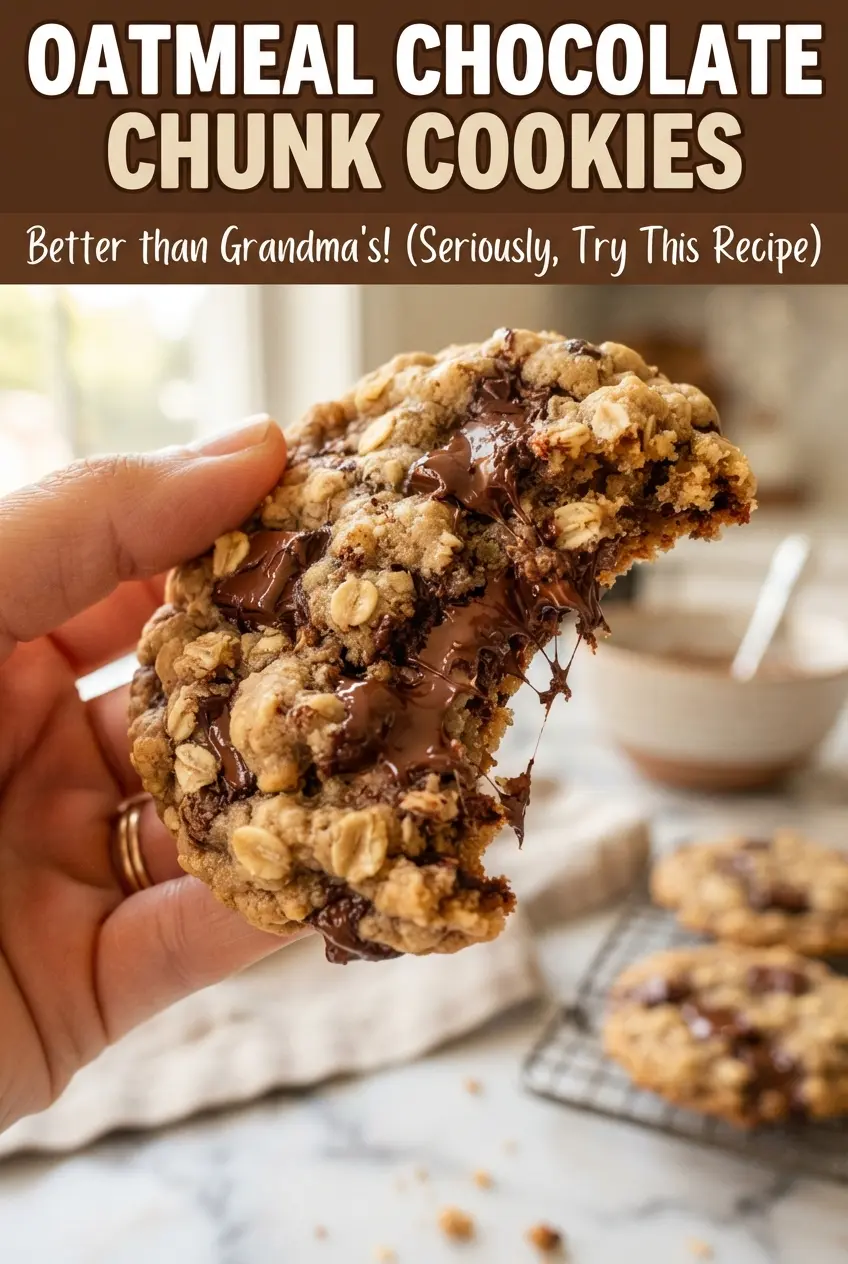
Oatmeal chocolate chunk cookies earn their place fast when the edges bake up golden and the centers stay chewy with just enough structure to hold big pockets of melted chocolate. The oats give these cookies a hearty bite, but the real payoff is the contrast: crisp rims, soft middles, and salty dark chocolate in every other mouthful. They disappear in a way plain oatmeal cookies never do.
This version leans on old-fashioned oats for texture and uses brown sugar to keep the crumb moist and caramel-like. Chilling the dough matters here because it gives the oats time to hydrate and helps the cookies bake thicker instead of spreading into flat puddles. I also chop the chocolate instead of using chips; the uneven pieces melt into glossy streaks and little pools that make the cookies feel bakery-made.
Below, you’ll find the small details that keep these cookies from turning dry or cakey, plus a few swaps that work when you need to adjust for what’s in the pantry.
The cookies stayed thick after chilling, and the chopped chocolate melted into those little pockets instead of disappearing into the dough. I sprinkled the flaky salt on top and my husband said they tasted like something from a bakery.
Save these oatmeal chocolate chunk cookies for the nights when you want chewy oats, melted dark chocolate, and a flaky salt finish.
The Reason These Cookies Stay Chewy Instead of Dry and Cakey
The biggest mistake with oatmeal cookies is treating oats like they’re just another dry mix-in. They keep absorbing moisture after the dough comes together, which is why this dough needs a short chill before baking. That resting time gives the oats a head start so the cookies set with a chewy middle instead of a crumbly, dusty texture.
Brown sugar does the heavy lifting for tenderness here. It brings moisture and a deeper flavor than white sugar alone, while the smaller amount of granulated sugar helps the edges crisp. If your cookies ever come out puffy and bread-like, it’s usually from overmixing after the flour goes in or baking them too long. Pull them when the edges are set and the centers still look a little soft.
What Each Ingredient Is Actually Doing in These Cookies

- Old-fashioned oats — These give the cookies their chew and body. Quick oats turn the texture softer and more uniform, but you lose that hearty bite. If you only have quick oats, use them, but expect a slightly less rustic cookie.
- Brown sugar — This is what keeps the centers moist and adds that warm caramel note. Light or dark brown sugar both work; dark brown sugar will push the cookies a little deeper and richer.
- Chopped dark chocolate — Chunks melt into glossy pockets instead of staying in neat little chips. That uneven melt is what makes these taste like bakery cookies. If you swap in chocolate chips, use a good-quality brand with a higher cocoa butter content so they still soften well.
- Butter, softened — Softened butter creams properly with the sugar and traps air for a light, tender crumb. If the butter is too cold, the dough stays dense; if it’s melted, the cookies spread too much.
- Cinnamon — It doesn’t make these taste spiced in an obvious way. It just nudges the oats and chocolate into a warmer, more rounded flavor.
How to Build the Dough So the Cookies Bake Thick
Creaming the Butter and Sugars
Beat the butter, brown sugar, and granulated sugar until the mixture looks fluffy and a little paler in color. That step adds air, which helps the cookies lift instead of baking into dense disks. Stop once the texture looks creamy; if you keep beating forever, the dough can become greasy and the cookies may spread unevenly.
Adding the Dry Ingredients Without Toughening the Dough
Mix in the flour, baking soda, cinnamon, and salt just until the flour disappears. The dough should look thick and a little rough before the oats go in. Overmixing at this point develops too much structure and turns the cookies firm instead of tender.
Stirring in the Oats and Chocolate
Fold in the oats and chocolate chunks until everything is evenly distributed. The dough will be heavy, and that’s what you want. If the chocolate seems to sink, the dough is probably too warm; chilling it will fix that and help the chunks stay suspended instead of puddling at the bottom of the bowl.
Chilling, Scooping, and Baking
Chill the dough for 30 minutes, then scoop generous 3-tablespoon portions onto parchment-lined baking sheets. Bake until the edges are golden and the centers still look slightly underdone; they’ll finish setting on the pan. If you wait until the tops look completely dry in the oven, the cookies will bake past chewy and head straight for crisp.
How to Adapt These Cookies Without Losing the Chewy Center
Make them dairy-free
Use a good vegan butter stick instead of regular butter. Choose one that’s meant for baking, not a soft tub spread, or the cookies can spread too much. The texture will stay chewy, though the flavor will be a little less rich.
Use quick oats in a pinch
Quick oats work if that’s what you have, but the cookies will bake up softer and less textured. They also hydrate faster, so keep the 30-minute chill; skipping it makes the dough slack and the cookies thinner.
Swap the dark chocolate
Milk chocolate makes a sweeter cookie and softens the bitter edge from the oats and cinnamon. White chocolate works too, but it won’t give you the same deep contrast. If you use chocolate chips, choose chunks or oversized chips so the cookies still have those big molten pockets.
Storage and Reheating
- Refrigerator: Store baked cookies in an airtight container for up to 5 days. They’ll firm up a little in the fridge, which actually helps the centers stay chewy.
- Freezer: Freeze baked cookies for up to 2 months, or freeze scooped dough balls and bake from frozen with 1 to 2 extra minutes.
- Reheating: Warm a baked cookie in the microwave for 8 to 10 seconds to soften the chocolate. Don’t overheat them or the oats will dry out fast.
Answers to the Questions Worth Asking
Oatmeal Chocolate Chunk Cookies
Ingredients
Equipment
Method
- Beat the softened unsalted butter with the brown sugar and granulated sugar until fluffy, then beat in the eggs and vanilla extract until smooth and combined.
- Mix in the all-purpose flour, baking soda, ground cinnamon, and salt until a thick dough forms with no dry flour pockets.
- Stir in the old-fashioned oats and the dark chocolate chunks until evenly distributed.
- Chill the dough for 30 minutes to help prevent spreading and to thicken the texture; cover the bowl so the surface doesn’t dry out (no oven yet).
- Preheat the oven to 350F and line sheet pan(s) with parchment.
- Scoop 3-tablespoon dough balls onto the parchment-lined sheets, spacing them apart so they have room to spread.
- Bake for 11-13 minutes until the edges turn golden while the centers still look slightly soft.
- Sprinkle with flaky sea salt while warm, then cool for 5 minutes on the sheet pan before moving cookies to a rack or serving plate.