Deep, dark beef stew gets a little theatrical here, but the real reason it earns a place in the rotation is the way the broth turns rich and glossy while the beef softens into spoon-tender chunks. The stout brings depth without making the stew taste like beer, and the balsamic keeps the whole pot from feeling heavy. Purple potatoes give it an almost eerie look, but they also hold their shape better than you’d expect after a long simmer.
The key is building the base in layers. Browning the beef in batches gives you those browned bits at the bottom, and the stout loosens every bit of that flavor before the broth goes in. A little flour on the beef helps the stew thicken naturally as it cooks, so the broth ends up with body instead of turning thin and brothy. The black beans go in near the end so they stay intact, and the puff pastry bats stay crisp if you bake them separately and add them at the last minute.
Below you’ll find the exact timing that keeps the potatoes from collapsing, plus a few swaps that still preserve the dark, savory character of the stew. If you’ve ever had beef stew that tasted flat or watery, this version fixes both problems.
The stew thickened up beautifully and the stout gave it this deep, savory gravy flavor. I loved that the purple potatoes stayed intact, and the puff pastry bats were the first thing gone.
Like this Witch’s Cauldron Beef Stew? Save it for the nights when you want a dark, hearty stew with stout, purple potatoes, and crisp puff pastry bats.
The Trick to Keeping the Stew Rich Instead of Watery
The biggest mistake with beef stew is crowding the pan and rushing the browning. If the beef goes in all at once, it steams, the flour turns pasty, and you lose the deep flavor that should be clinging to the bottom of the pot. Browning in batches takes a little longer, but it’s the difference between a stew that tastes built and one that tastes boiled.
The stout also needs a minute on the heat before the broth goes in. Once it hits the hot pan, scrape hard and let it pull up the browned bits. That’s where the dark, almost smoky backbone comes from. The flour on the beef and the tomato paste in the onion base work together here, giving the broth body without making it gluey.
- Browned beef bits — These are the flavor base, so don’t wipe the pot clean after searing. Those stuck-on bits dissolve into the liquid and give the stew its depth.
- Stout — Use a beer you’d actually drink. It adds bitterness and maltiness, but it cooks down into something savory rather than boozy.
- Purple potatoes — They hold their shape better than regular russets. If you swap them, use waxy potatoes so the stew doesn’t turn mushy.
- Black beans — They go in at the end for body and color contrast. Add them too early and they’ll break down into the broth.
What Each Ingredient Is Doing in the Cauldron
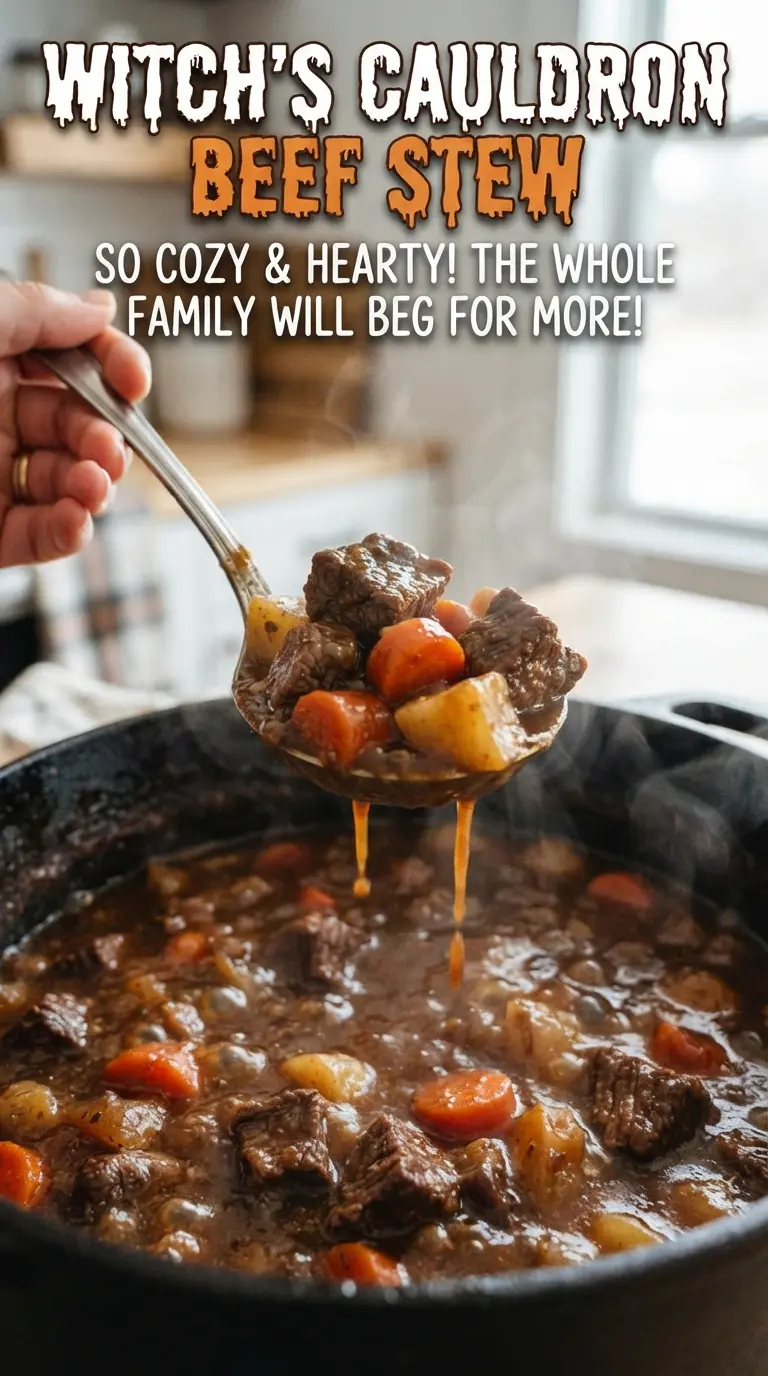
- Beef chuck — This cut has enough connective tissue to turn tender after a long simmer. Leaner beef cooks up dry and stringy here.
- Flour — It lightly coats the beef and helps the stew thicken as it simmers. A gluten-free flour blend can work, but the texture will be a touch less silky.
- Tomato paste — It deepens the color and adds concentrated savoriness. Let it cook for a full minute so it loses that raw tomato edge.
- Stout — This is the ingredient that gives the stew its dark, almost molasses-like depth. If you don’t want alcohol, use more beef broth with a teaspoon of Worcestershire-style seasoning, though the flavor won’t be quite as rounded.
- Purple potatoes — They make the stew look dramatic and stay pleasantly firm. If you can’t find them, Yukon Golds are the best substitute.
- Black beans — They echo the dark color and add a creamy bite. Cannellini beans will work, but they won’t give the same visual punch.
- Puff pastry bats — Bake them separately so they stay crisp and flaky. If they sit in the stew too long, they soften fast.
Building the Pot in the Right Order
Searing the Beef in Batches
Season the beef, toss it with the flour, then brown it in hot oil without crowding the pan. You want a deep crust on the outside and space around each piece so the meat sears instead of steaming. If the pan looks wet or pale, it’s too crowded. Pull a few pieces out and keep going until the beef has a dark, savory edge all over.
Cooking the Onion Base
Once the beef is out, add the onion and let it soften until it turns glossy and sweet at the edges. The garlic and tomato paste go in after that, and they only need about a minute before they start smelling rich and concentrated. If the garlic starts browning hard, the heat is too high and it will turn bitter in the finished stew.
Deglazing with Stout
Pour in the stout and scrape the bottom of the pan until the browned bits lift cleanly. That’s not optional flavor; that’s the backbone of the stew. Let the beer bubble for a minute so the harsh edge cooks off before you add the broth. The liquid should look dark and already a little glossy before the simmer starts.
The Long Simmer and Final Add-Ins
Cover the pot and let it cook low and slow until the beef is fork-tender. When the potatoes and carrots go in, the stew should still be gently bubbling, not raging. Add the beans near the end so they warm through without falling apart. If the stew is too thin at the end, simmer uncovered for a few extra minutes; if it’s too thick, loosen it with a splash of broth.
How to Adapt the Stew Without Losing Its Dark, Hearty Character
Gluten-Free Version
Use a 1:1 gluten-free flour blend to coat the beef, or skip the flour and finish the stew with a slurry of cornstarch and cold water near the end. The stew will still be rich, but the texture will be a little less velvety than the original.
Beer-Free Substitution
Replace the stout with extra beef broth plus a teaspoon of soy sauce or Worcestershire sauce for depth. You’ll lose the malty bitterness, but the stew will still taste dark and savory.
Making It Vegetarian
Swap the beef for mushrooms and extra black beans, and use vegetable broth instead of beef broth. You won’t get the same meaty texture, but you will get a stew with deep color and a smoky, earthy finish.
Storage and Reheating
- Refrigerator: Store in an airtight container for up to 4 days. The broth thickens as it chills, which is exactly what you want.
- Freezer: It freezes well for up to 3 months. Cool it completely first, and leave a little headspace so the liquid can expand.
- Reheating: Warm it gently on the stove over low heat with a splash of broth if needed. Don’t boil it hard or the beef can tighten up and the potatoes can break apart.
Answers to the Questions Worth Asking
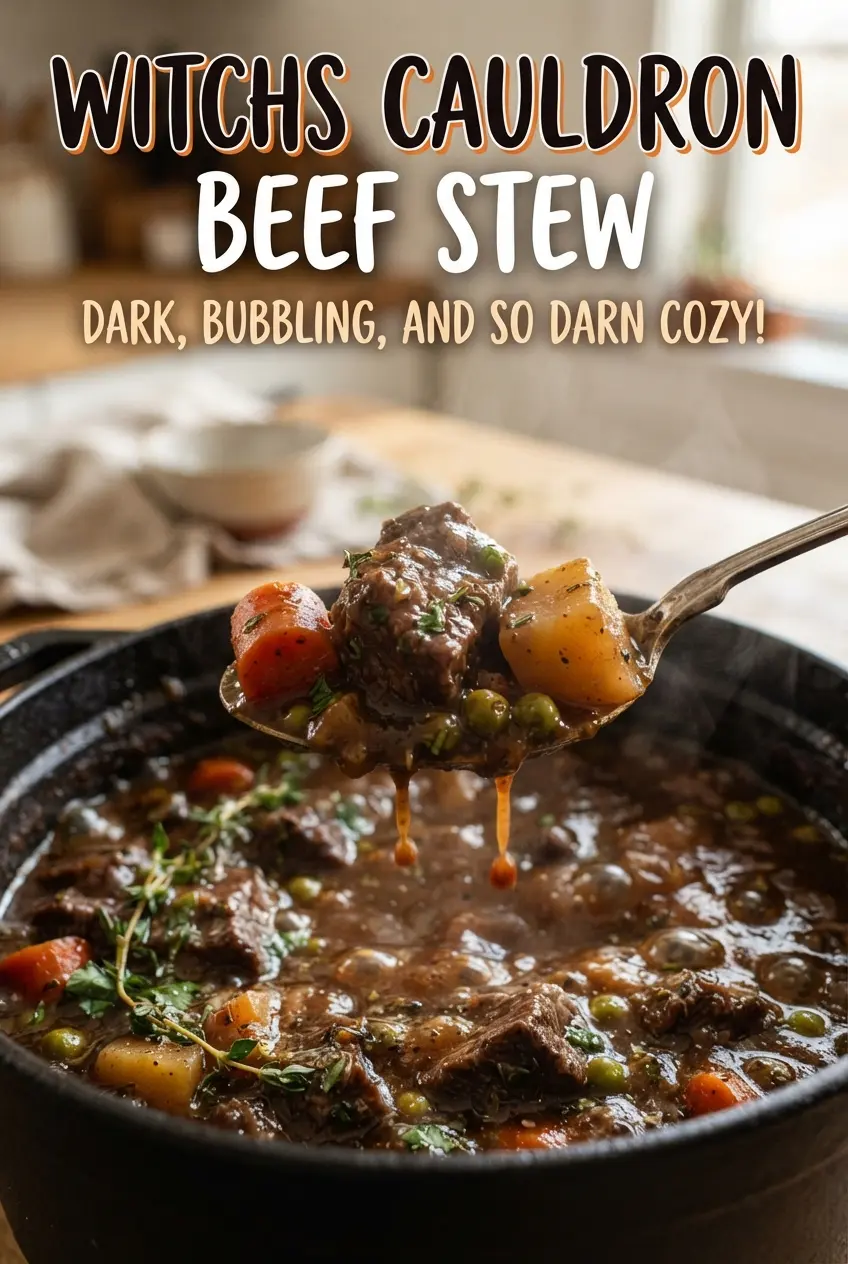
Witchs Cauldron Beef Stew
Ingredients
Equipment
Method
- Season the beef with salt and black pepper, then toss it with the all-purpose flour until lightly coated. Set aside while you heat the oil so the meat browns instead of steaming.
- Heat the vegetable oil in a Dutch oven over medium-high heat, then brown the beef in batches, turning occasionally, until deeply browned on the outside. Keep batches from crowding for proper caramelization; look for a dark crust.
- Add the chopped red onion and cook for 5 minutes, stirring, until softened. Leave the fond in the pot for flavor.
- Add the minced garlic and tomato paste, cooking for 1 minute while stirring. The mixture should look darker and fragrant.
- Pour in the stout and scrape the bottom of the pot to release browned bits, then cook briefly until bubbling. Scrape thoroughly so the stew turns dark and flavorful.
- Add the beef broth, balsamic vinegar, smoked paprika, dried thyme, and the browned beef, stirring to combine. Make sure the beef is mostly submerged.
- Cover and simmer for 2 hours, keeping a steady gentle bubble. Stir once or twice if needed so nothing sticks to the bottom.
- Add the cubed purple potatoes and sliced carrots, then simmer for 45 minutes until the vegetables are tender. Look for potatoes that break with light pressure.
- Stir in the drained black beans and simmer for 10 minutes. The stew should thicken slightly and the beans should be heated through.
- Bake the puff pastry bat shapes on a sheet pan at 400F until golden, then let them set briefly so they stay crisp. Look for deep golden edges and puffed centers.
- Ladle the stew into bowls and float a puff pastry bat on each serving. Add right before eating so the pastry stays crisp.