Gyoza soup lands in that sweet spot between light and satisfying: tender dumplings, a fragrant broth, and just enough vegetables to make the bowl feel complete. The dumplings stay the star, but the broth gives them somewhere worth floating. When it’s done right, you get a clear, savory soup with little bursts of ginger, garlic, and sesame in every spoonful.
This version works because the broth gets seasoned before the dumplings go in, so the flavor has time to settle instead of tasting flat at the end. The mushrooms simmer first and give the broth a deeper, woodsy note, while the bok choy goes in at the very end so it stays bright and crisp-tender. Frozen gyoza work fine here, which makes this the kind of dinner you can pull together without a lot of planning.
Below, I’ve included the little timing details that keep the dumplings intact, plus a few swaps if you want to make the bowl lighter, heartier, or pantry-friendly. The difference between a thin soup and a bowl you want to make again usually comes down to a few small choices, and this recipe gives you those levers.
The broth had that deep ginger-garlic flavor and the gyoza held together perfectly. I usually worry about dumplings falling apart, but these stayed plump and the bok choy was still crisp at the end.
Pin this gyoza soup for a quick bowl with ginger broth, tender dumplings, and crisp bok choy.
The Trick to Keeping Gyoza Tender Instead of Torn
The biggest mistake with dumpling soup is boiling the gyoza hard after they go in. That rough movement can split wrappers and leak filling into the broth, which turns a clean soup into cloudy dumpling debris. Keep the broth at a steady simmer, not a rolling boil, and let the dumplings move gently as they cook.
Frozen gyoza can go straight into the pot, but don’t thaw them first unless the package tells you to. Thawed dumplings soften too quickly and are more likely to fall apart before the filling is cooked through. If you’re using fresh gyoza, the same rule still applies: gentle heat is your friend.
What Each Ingredient Is Actually Doing in the Bowl
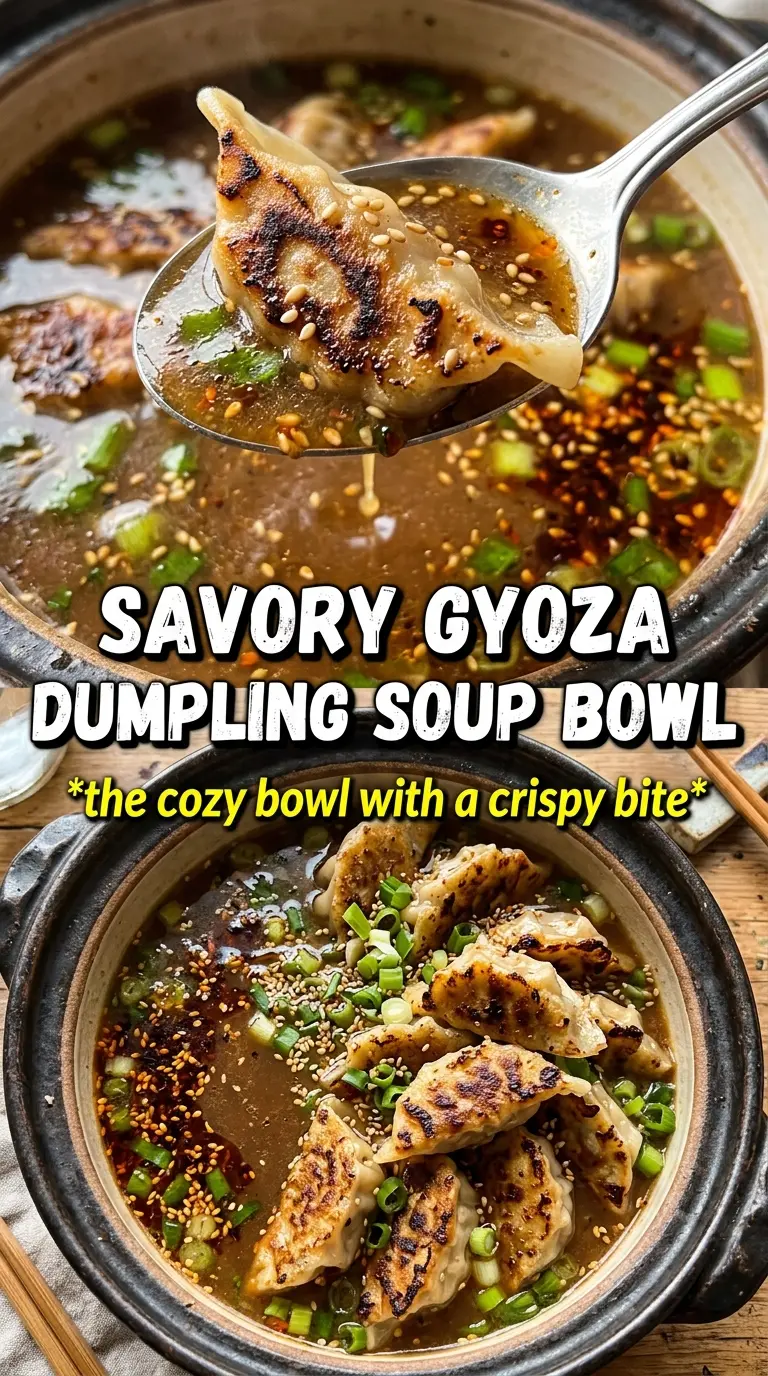
- Gyoza or potstickers — These are the heart of the soup, so choose dumplings with a filling you’d actually want to eat on its own. Pork, chicken, shrimp, or vegetable all work. Frozen dumplings are completely fine; just add them straight from the freezer so they hold their shape.
- Chicken broth — This is the base, and its quality matters more than anything else in the pot. A broth you like to sip on its own will make the soup taste fuller. If yours is very salty, hold back on the soy sauce until the end.
- Soy sauce, mirin, rice vinegar — This trio gives the broth balance. Soy sauce brings depth, mirin softens the edges with a little sweetness, and rice vinegar keeps the soup from tasting heavy. If you don’t have mirin, use a tiny pinch of sugar, but the broth will lose some of that rounded finish.
- Ginger and garlic — Fresh is worth it here. Powdered versions don’t give the same bright top note, and that first hit of ginger is part of what makes the bowl taste fresh instead of flat.
- Bok choy and shiitake mushrooms — The mushrooms build a deeper savory note, while the bok choy gives the soup contrast and freshness. Baby bok choy is especially good because it cooks fast and stays tender without turning limp.
- Sesame oil, chili oil, and sesame seeds — Sesame oil goes in at the end so its aroma stays intact. Chili oil is a finish, not a base, and sesame seeds add a little nutty crunch right before serving.
Building the Broth Before the Dumplings Go In
Starting the Flavor Base
Bring the broth up to a simmer with the garlic, ginger, soy sauce, mirin, and rice vinegar. You want steam rising and tiny bubbles around the edge of the pot, not a hard boil. That gives the aromatics time to infuse without scattering the flavor or reducing the liquid too quickly. If the broth tastes thin at this stage, it usually needs another minute or two with the ginger and garlic before anything else goes in.
Cooking the Mushrooms First
Add the shiitakes and let them cook until they soften and the broth picks up a little deeper color. This short simmer pulls out their savory flavor and keeps them from tasting raw or rubbery. Sliced mushrooms cook fast, so don’t walk away and let the pot keep boiling down. You’re looking for tender slices, not shriveled edges.
Poaching the Gyoza Gently
Slide the dumplings into the simmering broth one by one so they don’t stick together. Cook them according to the package, usually 5 to 7 minutes, until they float and the wrappers look slightly translucent. If the broth is boiling hard, the wrappers can burst before the centers are hot, so keep the heat low and steady. Stir once or twice with a spoon, not a whisk, just enough to keep them moving.
Finishing With the Greens
Add the bok choy near the end and cook just until the leaves wilt and the stems lose their raw crunch. That usually takes 2 to 3 minutes, depending on how thick the stems are. Stir in the sesame oil after the heat is off so the aroma stays bright. Taste the broth, then add salt only if it still needs it after the soy sauce and dumplings have done their work.
Three Practical Ways to Change the Bowl Without Ruining It
Make it vegetarian
Use vegetable broth and vegetable gyoza, then add a splash of tamari if the broth needs more depth. You’ll lose some of the roundness chicken broth brings, so taste carefully at the end and lean a little harder on mushrooms and sesame oil for savoriness.
Turn up the heat
Add extra chili oil at the table or stir in a pinch of red pepper flakes with the broth. If you put too much heat into the pot too early, it can drown out the ginger and make the soup taste one-note, so it’s better to finish each bowl individually.
Make it gluten-free
Use gluten-free dumplings and swap in tamari or a certified gluten-free soy sauce. The broth itself adapts easily, but the dumplings are the part that usually hide gluten, so check that package carefully before you start.
Add more substance
A handful of baby spinach or a few thin noodles can turn this into a fuller meal. If you add noodles, cook them separately or add them only at the very end so they don’t steal broth or go mushy while the dumplings finish.
Storage and Reheating
- Refrigerator: Store for up to 3 days. The dumplings will soften a little in the broth, but the soup still reheats well.
- Freezer: I don’t recommend freezing the finished soup. The gyoza wrappers turn soggy and can split after thawing, though you can freeze the broth separately.
- Reheating: Warm it slowly over medium-low heat until the broth is steaming and the dumplings are hot through. Don’t boil it hard again or the wrappers can tear and the bok choy will collapse.
Answers to the Questions Worth Asking
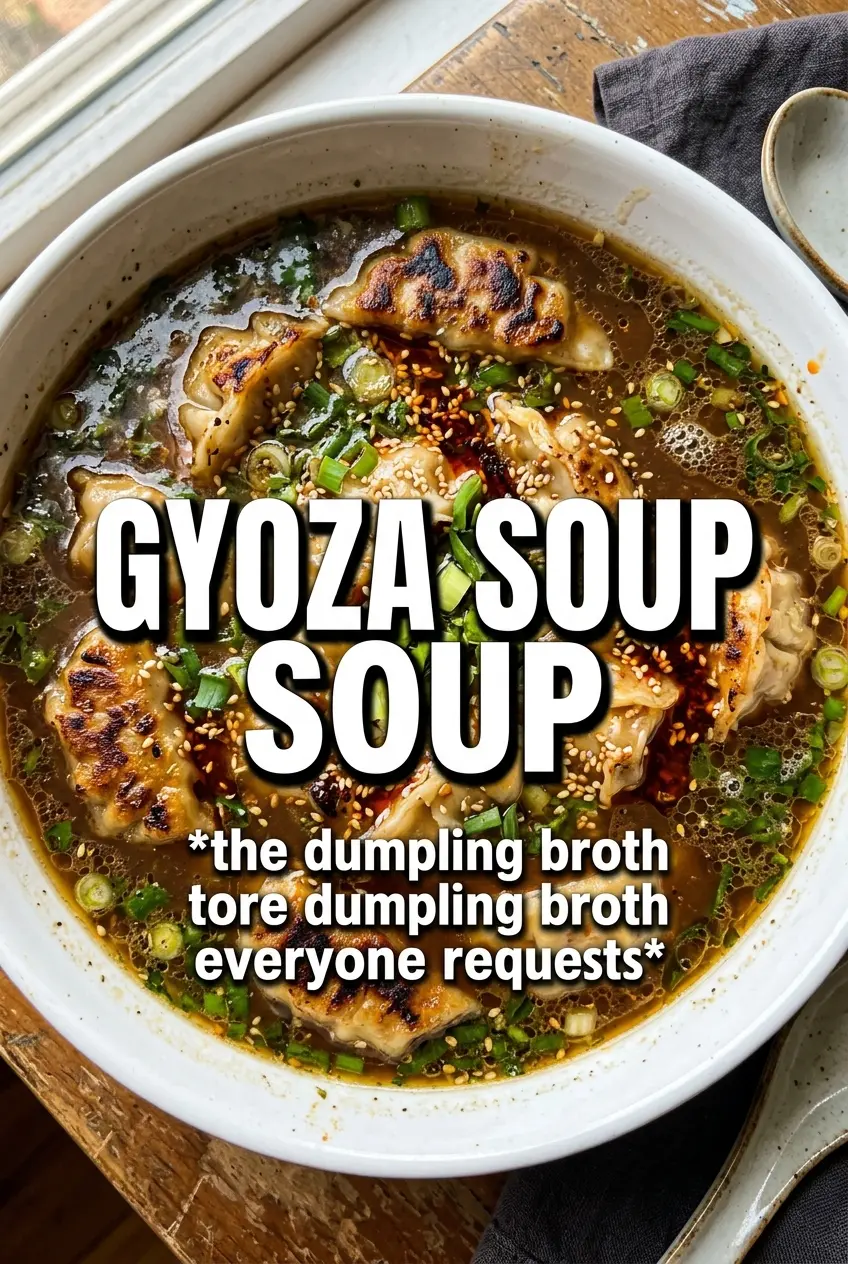
Gyoza Soup
Ingredients
Equipment
Method
- Bring the chicken broth to a simmer in a large pot, about 5 minutes, then add the garlic, grated ginger, soy sauce, mirin, and rice vinegar. Keep the surface at a steady gentle simmer and look for small bubbles around the edges.
- Simmer for 5 minutes total with aromatics, then add the shiitake mushrooms. Cook for 3-4 minutes until they look slightly softened and glossy.
- Add gyoza dumplings directly to the simmering broth and cook according to package directions, usually 5-7 minutes. Watch for the dumplings to float and look fully cooked through with no raw center.
- Add bok choy and cook 2-3 minutes until wilted, keeping the broth at a gentle simmer. The bok choy should turn bright green and tender.
- Stir in the sesame oil, then taste and season with salt to taste. The soup should smell nutty and look lightly golden, with the broth surface shimmering.
- Serve hot, topped with green onions, sesame seeds, and chili oil. The green onions should stay vivid and the toppings should sit on top for contrast.