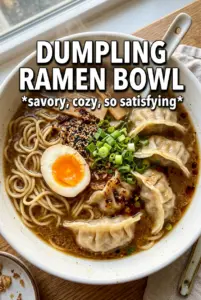
Dumpling ramen bowl hits the table with the kind of payoff that makes it worth keeping frozen dumplings in the freezer at all times. The broth tastes deep and savory, the noodles stay springy, and every bowl gets those little moments that matter: a yolky egg, sweet corn, tender bok choy, and dumplings that turn a plain noodle soup into a full dinner.
What makes this version work is restraint. White miso gets whisked into the broth after it comes up to a simmer, not boiled hard, so it stays smooth and gives the soup body without turning grainy. Cooking the ramen noodles separately keeps the broth clean and prevents that starchy, cloudy finish that happens when everything sits together too long.
Below, I’ve included the timing that keeps the dumplings tender, the noodles bouncy, and the toppings in balance. If you’ve ever wanted a ramen bowl that feels fast but still tastes layered and intentional, this is the one to keep close.
The broth stayed clear, the dumplings held together, and the miso-sesame base tasted like something from a good noodle shop. I loved that the noodles were cooked separately because they didn’t soak up all the broth before dinner.
Save this dumpling ramen bowl for the nights when you want a fast miso broth, tender dumplings, and a full topping spread without extra fuss.
The Trick to Keeping the Miso Broth Smooth and Clean
The biggest mistake with a bowl like this is treating the broth like soup from a can and letting it boil hard after the miso goes in. That drives off the gentle savoriness you want and can make the broth taste dull. A low simmer is enough to cook the dumplings and wilt the bok choy while keeping the broth balanced and clear.
Cooking the dumplings directly in the broth works here because they add body and flavor as they heat, but they need enough space to move around. If your pot is crowded, the wrapper edges can stick together and split before the centers are hot. Use a wide saucepan or a medium Dutch oven so the dumplings have room to circulate.
- White miso paste — This is the backbone of the broth. White miso is milder and sweeter than darker miso, which keeps the bowl from tasting too salty or heavy.
- Frozen dumplings — Frozen is exactly right here. They hold their shape better than thawed dumplings and go straight into the simmering broth.
- Fresh ramen noodles — Fresh noodles cook fast and stay springy. If you use dried ramen, shorten the cook time a little and watch closely so they don’t go mushy.
- Sesame oil and mirin — Sesame oil adds a toasty finish, and mirin softens the saltiness of the soy sauce. Don’t skip the mirin unless you replace it with a tiny pinch of sugar and a splash of water.
- Bok choy and corn — Bok choy brings a clean, green bite, while corn adds sweetness that plays well against the miso. Baby bok choy or chopped full-size bok choy both work; just cut the stems thin so they cook at the same pace as the leaves.
What Each Ingredient Is Actually Doing in This Recipe
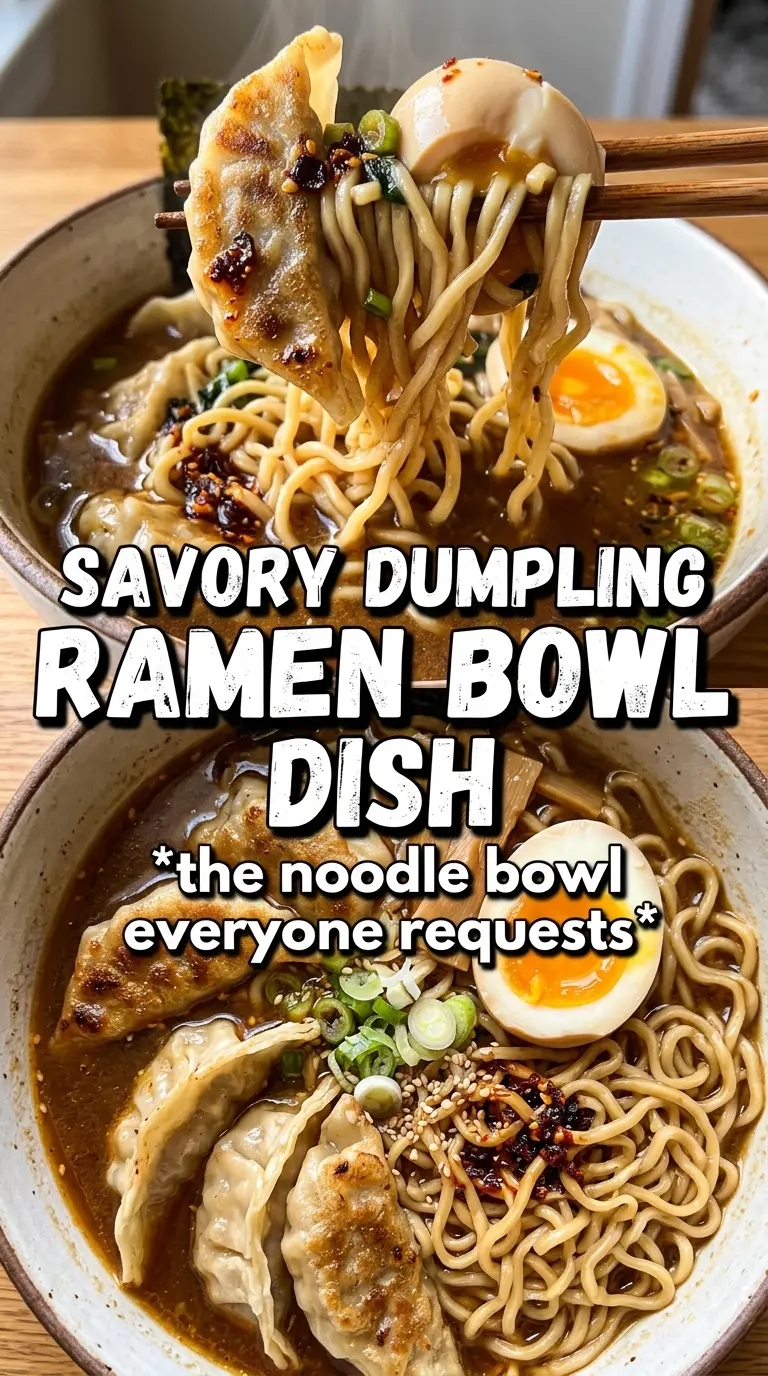
- Primary ingredient (the star) — Quality matters most. Choose the best you can find.
- Cooking medium (oil, butter, or broth) — This carries flavors and prevents dryness.
- Seasonings (salt, pepper, spices, herbs) — Layer flavors so nothing overpowers. Build depth gradually.
- Aromatics (garlic, onion, herbs) — Cook with fat to bloom flavors. Become the foundation.
- Supporting ingredients — Complement the main ingredient without overpowering it.
- Sauce or liquid (if applicable) — Brings flavors together. Balance richness with acid.
- Acid (lemon, vinegar, wine, or other) — Brightens and prevents flat-tasting results.
- Final finish (garnish, glaze, or sauce) — Prevents one-dimensional taste and adds visual appeal.
Building the Bowl So Every Topping Keeps Its Texture
Warming the Broth Base
Bring the broth to a steady simmer before you whisk in the miso, soy sauce, mirin, and sesame oil. If the liquid is boiling hard, the miso can clump and the broth loses that smooth, rounded finish. Whisk until the paste disappears completely and the broth looks unified, not streaky.
Cooking the Dumplings Through
Add the frozen dumplings straight to the simmering broth and cook until they’re heated through and the wrappers look slightly translucent at the edges. Five to seven minutes is usually right, but go by texture: the dumplings should float freely and feel plump, not stiff in the center. If they start tearing, the heat is too high or the pot is too crowded.
Blanching the Bok Choy and Noodles Separately
Stir in the bok choy for just a couple of minutes, until the stems turn bright and the leaves wilt. Cook the ramen noodles in a separate pot and drain them right away so they don’t steal broth or turn gummy. This is the move that keeps the finished bowl tasting like a real ramen bowl instead of overworked soup.
Finishing in the Bowl
Divide the noodles into bowls first, then ladle the hot broth and dumplings over the top so everything lands hot and fresh. Add the halved eggs, corn, green onions, nori, sesame seeds, and chili oil at the very end. That keeps the nori crisp enough to tear with a bite and lets the chili oil stay bright on the surface instead of disappearing into the broth.
How to Tweak This Bowl Without Losing What Makes It Good
Make It Vegetarian
Use vegetable broth and swap in vegetable dumplings. You’ll still get a savory, satisfying bowl, but the broth will taste a little lighter, so a touch more soy sauce or a few drops of toasted sesame oil may help bring it back into balance.
Use Gluten-Free Noodles
Choose rice noodles or gluten-free ramen noodles and replace the soy sauce with tamari. The bowl still eats like a noodle soup, though the texture will be softer than wheat ramen, so keep a close eye on the noodle timing.
Make It Richer and Spicier
Add a spoonful of chili crisp or a little extra sesame oil at the end. That gives the broth more heat and a deeper toasted note, but add it after the bowls are assembled so the spice stays sharp and doesn’t muddy the miso.
Storage and Reheating
- Refrigerator: Store the broth, dumplings, noodles, and toppings separately for up to 3 days. The noodles soften quickly once they sit in broth.
- Freezer: Freeze the broth and dumplings together if needed, but don’t freeze the noodles or egg. Reheat gently from thawed for the best texture.
- Reheating: Warm the broth and dumplings over low heat until just steaming, then add fresh or separately stored noodles. The common mistake is boiling everything together again, which turns the dumplings tough and the noodles bloated.
Questions I Get Asked About This Recipe
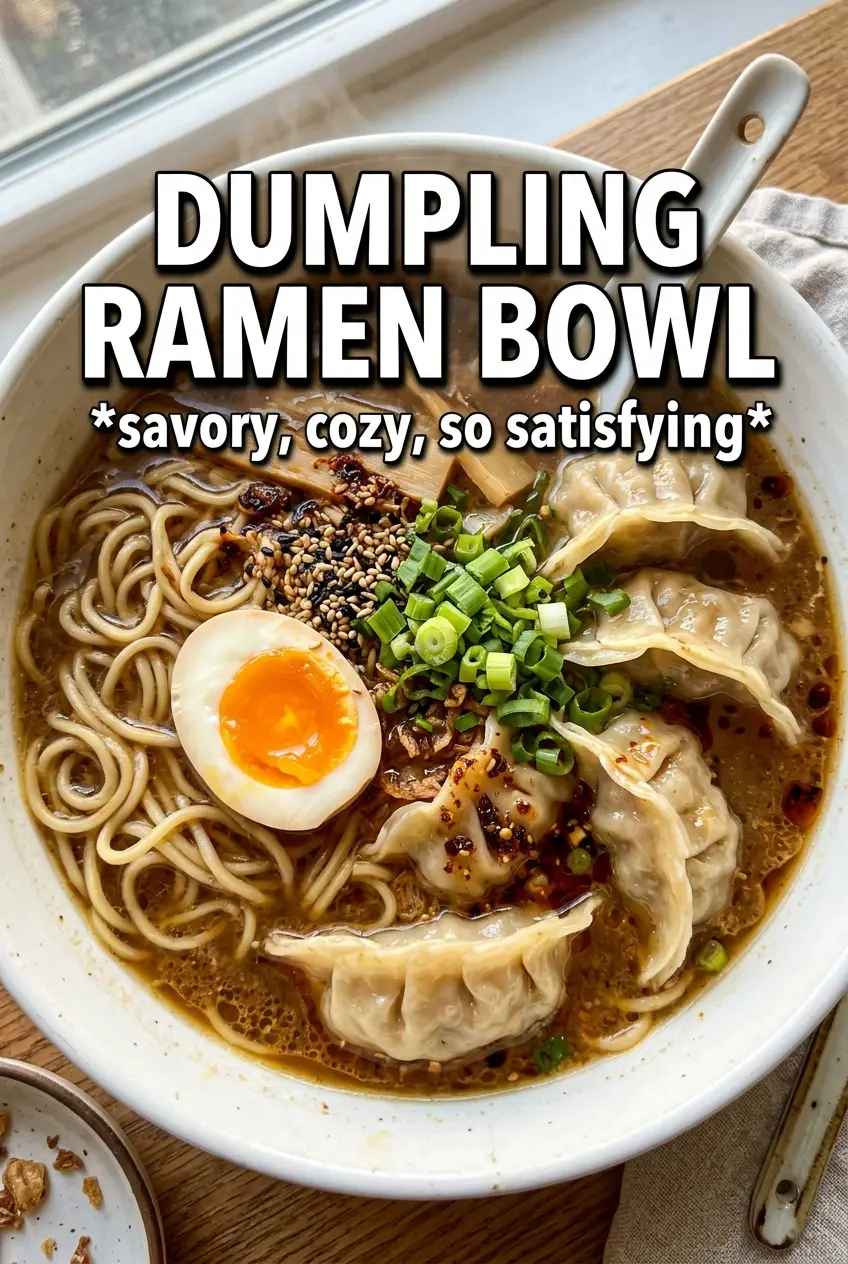
Dumpling Ramen Bowl
Ingredients
Equipment
Method
- Bring the chicken broth to a simmer in a Dutch oven, then whisk in the white miso paste, soy sauce, mirin, and sesame oil until smooth.
- Keep the broth at a gentle simmer as you prep the remaining components so it stays hot but does not boil hard.
- Add the frozen pork or chicken dumplings to the simmering broth and cook for 5–7 minutes, until cooked through.
- Add the halved bok choy and cook for 2–3 minutes, until wilted and bright green.
- Cook the fresh ramen noodles separately according to package instructions, then drain.
- Divide the drained ramen noodles between 4 bowls, then ladle the dumplings and soy-miso broth over the noodles.
- Top each bowl with halved soft-boiled eggs, corn, sliced green onions, nori, sesame seeds, and chili oil.