Pillowy Japanese cheesecake and cold strawberry or mango ice cream make a dessert sandwich that lands somewhere between nostalgic and wildly new. The cheesecake bakes up softly set, with that signature jiggly crumb, then firms just enough in the freezer to hold a scoop of ice cream without turning dense or bready. The contrast is the whole point: cloud-soft cake on the outside, creamy frozen center, clean edges, and a bite that melts almost immediately on the tongue.
This version works because the cheesecake is built for flexibility. A water bath keeps the batter tender, while whipped egg whites give the cake its lift and delicate structure. Cake flour keeps the crumb light instead of spongy, and cooling it completely before cutting prevents ragged edges that make assembling the sandwiches messy. I tested these with both strawberry and mango ice cream, and both work beautifully as long as the ice cream is softened just enough to scoop cleanly, not melted into soup.
Below, I’ll walk through the one part that matters most for the texture, the ingredient choices that give you that cottony crumb, and a few ways to change the filling without losing the magic.
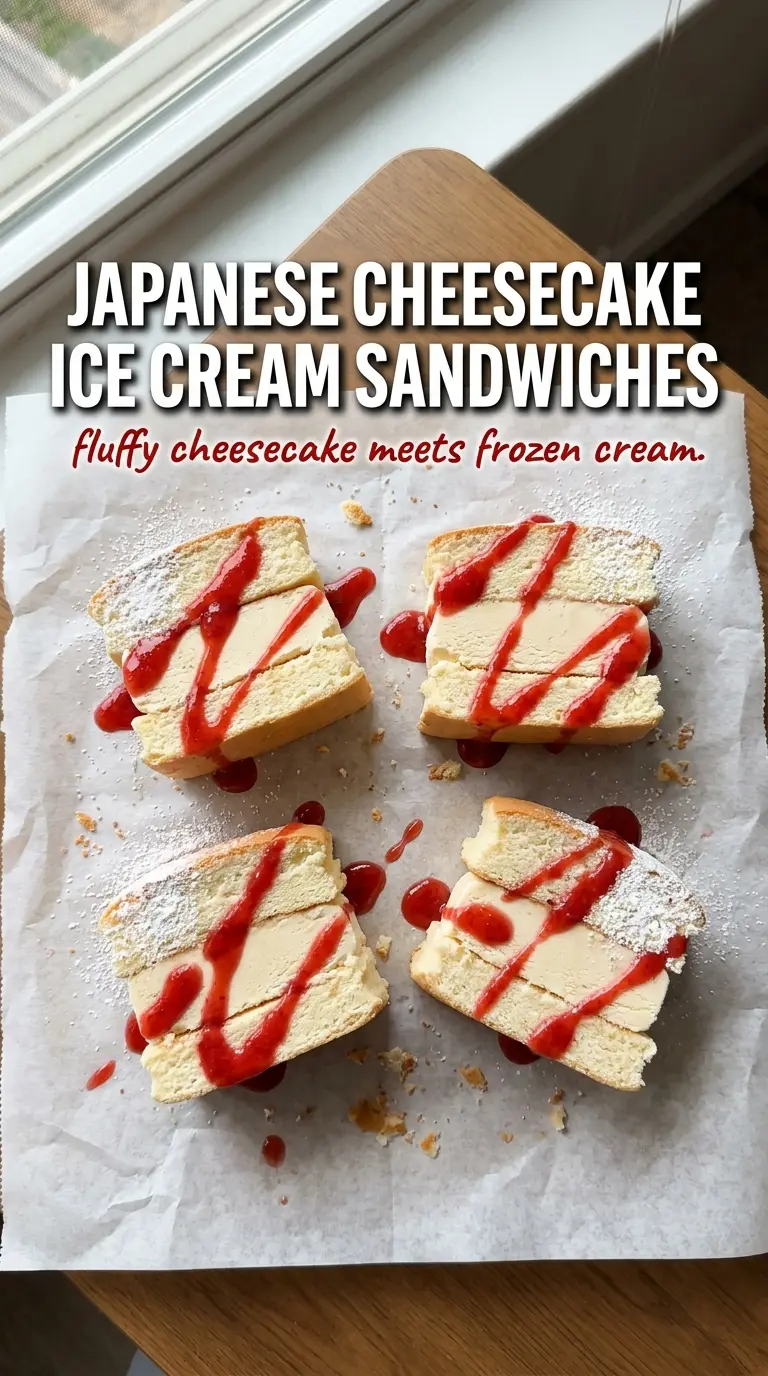
The cheesecake stayed unbelievably soft even after freezing, and the strawberry ice cream tucked in cleanly without squishing the squares. Mine looked just like the photo and held together better than I expected.
Save these jiggly Japanese cheesecake ice cream sandwiches for the kind of dessert that looks fancy but eats like a cold, creamy cloud.
The Trick Behind a Cheesecake That Freezes Soft Instead of Hard
Japanese cheesecake can go wrong here if it bakes up too firm. A dense cake turns chalky once frozen, and then the sandwich feels more like a brick with ice cream in the middle. The goal is a tender, airy cake that still has enough structure to be sliced cleanly and pressed gently around the filling.
The water bath is doing real work. It buffers the oven heat, so the edges don’t overbake before the center sets, and that matters because overbaked cheesecake loses the soft bounce that makes these sandwiches special. Folding the whites in three additions matters for the same reason: you want to keep as much air in the batter as possible without leaving streaks or large pockets.
If your cheesecake usually cracks, domes too much, or bakes up dry around the edges, the problem is almost always heat. This version stays flatter and more even, which makes neat squares and clean layers much easier later on.
What Each Ingredient Is Doing in These Japanese Cheesecake Sandwiches
- Cream cheese — This gives the cheesecake its tang and body. Full-fat cream cheese matters here; reduced-fat versions can turn loose and watery once baked and frozen.
- Cake flour — The lower protein keeps the crumb soft instead of bouncy or chewy. If you only have all-purpose flour, replace 1 cup cake flour with 3/4 cup all-purpose flour plus 2 tablespoons cornstarch, then sift well.
- Egg whites — These are what give the cheesecake its lift and that cloudlike texture. Beat them to stiff glossy peaks, but stop before they look dry, or they’ll fold in unevenly and the cake will lose volume.
- Strawberry or mango ice cream — Pick a flavor that tastes bright even when frozen hard. A fruit-forward ice cream gives the best contrast against the mellow cheesecake, and it softens into a smoother bite than heavy, dense mix-ins.
- Lemon juice and vanilla — These keep the cheesecake from tasting flat. The lemon doesn’t make it taste lemony; it just sharpens the dairy flavor and makes the filling taste lighter.
How to Bake, Cut, and Assemble Without Squashing the Filling
Building the Base Batter
Melt the cream cheese, butter, and milk together until the mixture is smooth and glossy, then let it cool slightly before adding the yolks. If it’s too hot, the yolks can cook on contact and leave tiny bits in the batter. Whisk in the flour until the mixture looks silky and thick but still loose enough to pour. At this stage, lumps are the enemy, so sift the flour first and whisk with purpose.
Whipping in the Air
Beat the egg whites until foamy, then add the sugar gradually and keep going until you get stiff glossy peaks. The meringue should hold its shape when you lift the whisk, but the tips should still look smooth, not dry and crumbly. Fold it into the base in three additions, and stop as soon as the batter looks uniform. If you overmix, you knock out the air that gives the cheesecake its signature spring.
Water Bath Baking
Pour the batter into a parchment-lined 9×13 pan set inside a water bath and bake until the top is pale golden and the center still has a gentle wobble. The cake should look set at the edges before the middle is fully firm. Pull it from the oven before it starts to darken; this cheesecake is better soft and light than browned and sturdy. Cool it completely before cutting, or the squares will smear instead of slicing cleanly.
Freezing and Filling
Cut the cheesecake into even squares, then soften the ice cream just enough that it scoops or spreads without melting. If it’s too soft, it will squeeze out the sides; if it’s too firm, it will tear the cheesecake. Sandwich a scoop between two squares, wrap them tightly, and freeze for about an hour so the layers settle together. Serve while the cheesecake is still slightly jiggly at the edges for the best texture.
How to Change the Filling Without Losing the Texture
Mango for a Softer, Tropical Finish
Mango ice cream gives the cleanest fruit flavor here because it stays bright against the mild cheesecake. It also tends to soften smoothly after freezing, which makes the sandwich easier to bite through without the filling cracking.
Dairy-Free Version
Use a dairy-free cream cheese, plant-based butter, and coconut or oat milk, then choose a dairy-free ice cream that freezes creamy rather than icy. The cake will be a little less rich and slightly less delicate, but the structure still works if you keep the batter light and don’t overbake it.
Gluten-Free Swap
A good 1:1 gluten-free baking flour blend can work, but the crumb won’t be quite as silky as the cake-flour version. Sift it well and fold gently so the batter stays airy, since gluten-free blends can thicken faster and make the cake feel heavier if you overwork it.
Make-ahead Assembly for a Crowd
Bake and cut the cheesecake squares a day ahead, then keep them chilled and wrapped until you’re ready to assemble. The sandwiches freeze best after assembly, but pre-cut squares save a lot of time when you’re making a tray for guests.
Storage and Reheating
- Refrigerator: Store the assembled sandwiches up to 2 days, but expect the cheesecake to soften quickly and lose some of its jiggly edge.
- Freezer: Freeze wrapped sandwiches up to 2 weeks. Wrap each one tightly in parchment and then plastic so the cheesecake doesn’t pick up freezer odor.
- Reheating: No reheating needed. Let them sit at room temperature for 5 to 8 minutes before serving so the filling becomes creamy again; if you leave them out too long, the ice cream melts and the layers slip.
Answers to the Questions Worth Asking
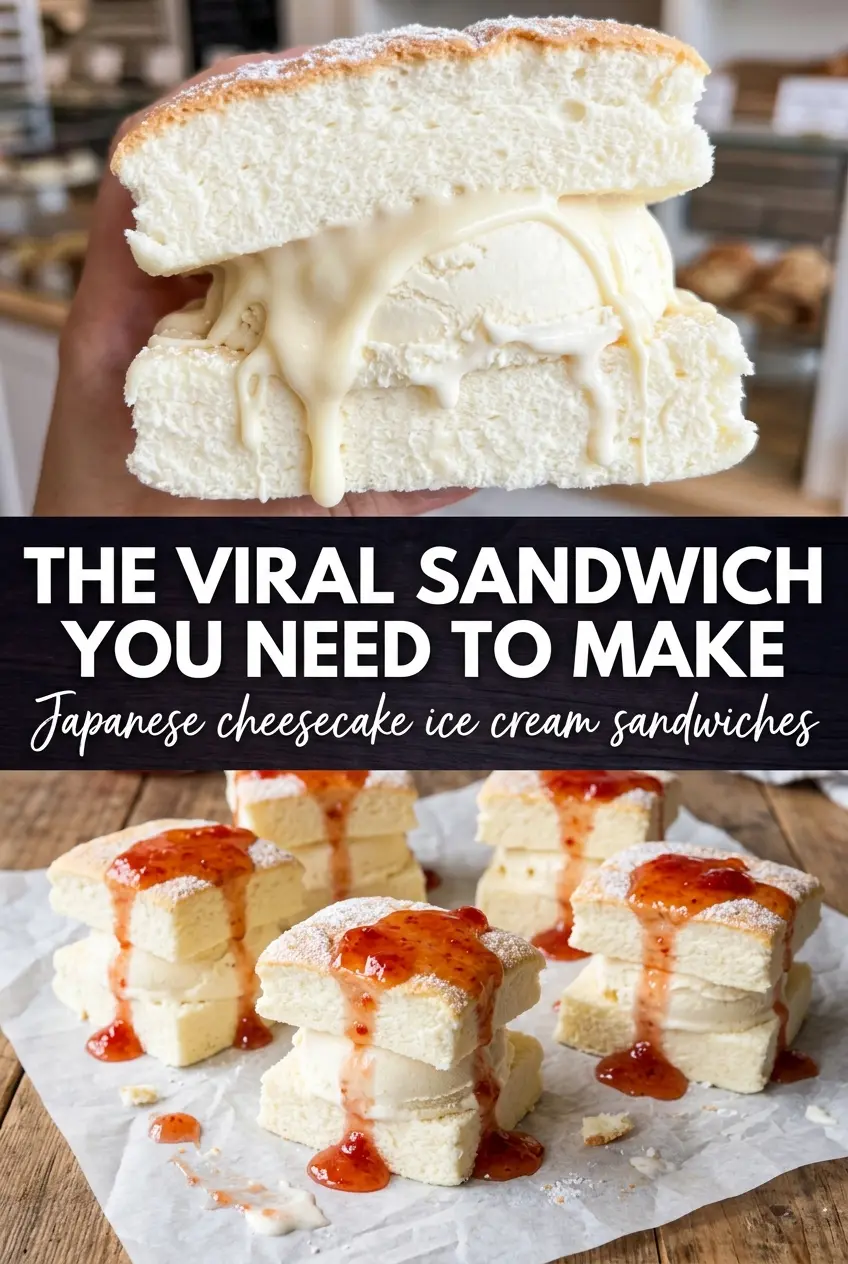
Viral Japanese Cheesecake Ice Cream Sandwiches
Ingredients
Equipment
Method
- Preheat the oven to 325°F. In a heatproof bowl, melt the cream cheese, butter, and whole milk together until smooth, then cool slightly (you should be able to touch the bowl without discomfort).
- Whisk in the egg yolks, cake flour, vanilla extract, and fresh lemon juice until the batter is smooth and thick, with no visible flour streaks.
- Beat the egg whites to soft peaks, then gradually add granulated sugar while beating to stiff glossy peaks. Stop when the peaks stand tall and look shiny.
- Fold the egg whites into the cream cheese mixture in three additions, keeping the batter airy after each fold.
- Bake in a parchment-lined 9x13 pan set in a water bath at 325°F for 25-30 minutes, until the top looks set and the center has a gentle wobble. Place the pan on a rack and cool completely.
- Cut the cheesecake into squares. For each sandwich, place a scoop of softened strawberry or mango ice cream between two squares so the cheesecake edges wrap around the ice cream.
- Wrap the sandwiches and freeze for 1 hour. Serve once the cheesecake is still slightly jiggly, with the ice cream firm at the center.