Three crusts turn this peach cobbler into something halfway between a pie and a classic cobbler, with a top that crackles under your spoon and a syrupy peach center that settles into every layer. The bottom crust bakes first, so it stays sturdy instead of turning soggy, and the middle crust gives each slice that dramatic stack you can actually see when you lift it from the pan.
The trick is in the order. A quick pre-bake on the first crust gives the filling a base to rest on, while cornstarch keeps the peach juices from running everywhere once the fruit starts to bubble. I use enough sugar to draw out a glossy syrup, but the lemon juice keeps the filling from tasting flat. The coarse sugar on top adds a little crunch that plays nicely against the soft fruit underneath.
Below, you’ll find the cue that tells you the filling has thickened properly, plus a few smart swaps if your peaches are a little tart or you need to use frozen fruit instead.
The crust stayed flaky all the way through and the peach filling set up beautifully after the rest time. My slices held together instead of sliding apart, and the syrup around the edges was perfect with vanilla ice cream.
Save this triple crust peach cobbler for the days when you want stacked flaky layers, bubbling peach syrup, and a dessert that slices cleanly.
The Part That Keeps the Bottom Crust from Going Limp
Most peach cobblers with multiple crusts fail in the same place: the bottom layer never gets a chance to set before the fruit starts leaking juice. That’s why the first crust gets a short bake on its own. It firms up just enough to stand up to the filling, and it gives you that pie-like base instead of a soft, steamed layer.
Let the peaches sit with the sugar and cornstarch until they look glossy and pooled around the edges. That juice is what becomes the syrup in the pan, and the cornstarch needs a little time with the liquid before it hits the oven. If you rush that part, the filling can turn soupy instead of spoonable.
What Each Ingredient Is Actually Doing in This Peach Cobbler
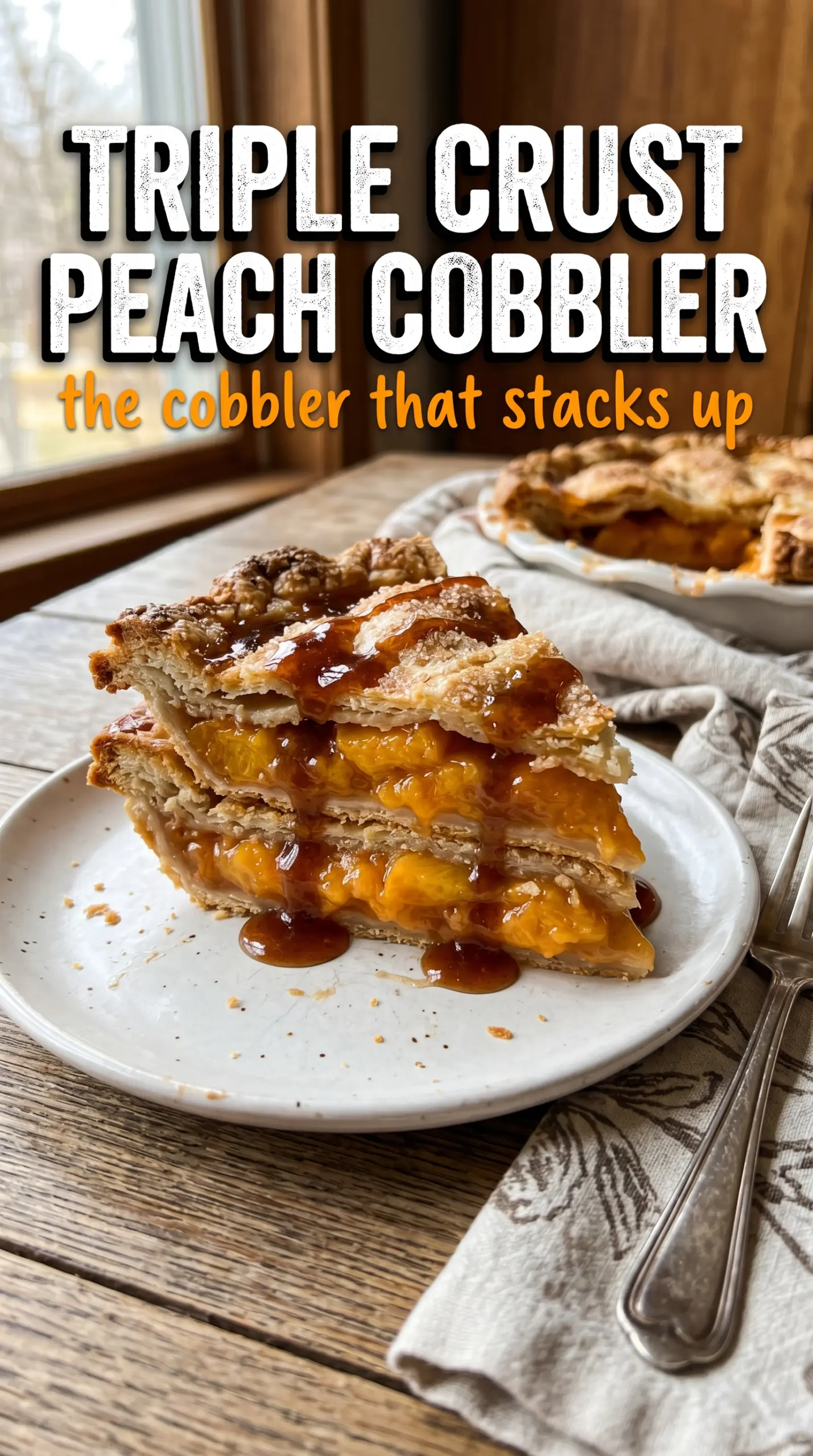
- Fresh peaches (the star fruit) — Use ripe but firm peaches so they hold their shape. Overripe peaches turn to mush; underripe ones taste mealy.
- Sugar (the sweetness and sauce base) — This draws juices from the peaches and creates the syrupy base. Adjust sugar based on peach ripeness.
- Lemon juice (the brightness and acid) — This prevents the filling from tasting one-dimensional or cloying. It also keeps the peaches from browning.
- Thickener (flour, cornstarch, or tapioca) — This keeps the filling from being too runny while the cobbler bakes. Don’t skip this or filling runs everywhere.
- Biscuit or crumble topping (the texture element) — This creates contrast with the soft fruit. Biscuits are cake-like; crumbles are crispy and buttery.
- Butter in the topping (the richness) — This creates a golden brown finish and adds flavor. Cold butter creates flakier biscuits.
- Spices (cinnamon, nutmeg, or ginger) — These warm up the peach flavor without overwhelming it. Use sparingly so peach stays the star.
- Baking temperature and time (375-400°F, 40-50 minutes) — Hot enough to cook the filling through and brown the topping. Not so hot it burns before peaches soften.
What the Three Crusts Are Doing Separately
- Pie crusts — Store-bought crust works fine here if it rolls out cleanly and doesn’t crack badly. Homemade gives you a little more flavor and a flakier bite, but the real win is keeping each layer cold until it goes into the oven.
- Peaches — Fresh peaches give the cleanest texture and the brightest flavor. If yours are very ripe, cut the sugar back slightly; if they’re firm or a little bland, let the full amount do its job so the syrup tastes complete.
- Cornstarch — This is what keeps the peach juices from running all over the pan. Flour won’t thicken the same way in this filling, and you’d need more of it to get the same set, which dulls the fruit.
- Egg wash and coarse sugar — The egg wash gives the top crust that deep burnished finish, and the coarse sugar adds crunch. Skip both and you’ll still have a good cobbler, but you’ll lose the crackly top that makes the first bite special.
Building the Stack Without Trapping Raw Dough Inside
Setting the Bottom Layer
Press the first crust into the pan and bake it until it just loses its raw look. You’re not trying to brown it deeply here, only to give it enough structure to hold the fruit. If it puffs a little, that’s fine; just dock it lightly before baking so it doesn’t balloon into uneven pockets.
Layering in the Peach Filling
Spoon in half the peach mixture and dot it with butter cubes so the melt distributes richness through the syrup. The peaches should look wet and coated, not dry and sandy. If there’s a thick mound of sugar sitting at the bottom of the bowl, stir longer before adding it to the pan, because that sugar needs to dissolve into the fruit juices, not bake in patches.
Closing the Middle and Top Crusts
Lay the second crust over the peaches, then repeat with the remaining filling and butter before capping it with the third crust. Work gently so the lower layers stay intact. The top crust should sit flat enough to seal the filling but not be stretched tight; a tight crust tears when the steam starts building underneath.
Knowing When It’s Done
Bake until the top is deeply golden and the filling is bubbling through the vents, especially around the edges and in the center openings. That bubbling matters more than color alone, because it tells you the cornstarch has activated and the juices have thickened. Let it rest before slicing or the layers will slide apart and the syrup will run too fast.
How to Change This Cobbler When the Peaches Don’t Cooperate
Use frozen peaches without turning the filling watery
Frozen peaches work well, but don’t thaw them first or they’ll dump too much liquid into the pan. Toss them straight from frozen with the sugar and cornstarch, then add 5 to 10 extra minutes to the bake if needed. The filling may look looser at the start, but it thickens as it bubbles.
Make it dairy-free without losing richness
Swap the butter for a good plant-based baking stick with a similar fat content. You’ll lose a little of the classic butter flavor, but the texture still comes out flaky and the filling will stay glossy.
Dial back the sweetness for very ripe fruit
If your peaches taste intensely sweet on their own, reduce the sugar by 1/4 cup. That keeps the filling balanced and stops the syrup from tasting flat. The cobbler will still bake up thick and spoonable because the cornstarch is doing the real set work.
Storage and Reheating
- Refrigerator: Store covered for up to 4 days. The crust softens a bit after day one, but the filling stays flavorful.
- Freezer: It freezes well after baking. Cool completely, wrap tightly, and freeze for up to 2 months. Thaw overnight in the fridge before reheating.
- Reheating: Warm slices in a 325F oven until the filling is hot and the top crust crisp again. The microwave will soften the layers fast, so use it only if you don’t mind losing that flaky finish.
Answers to the Questions Worth Asking
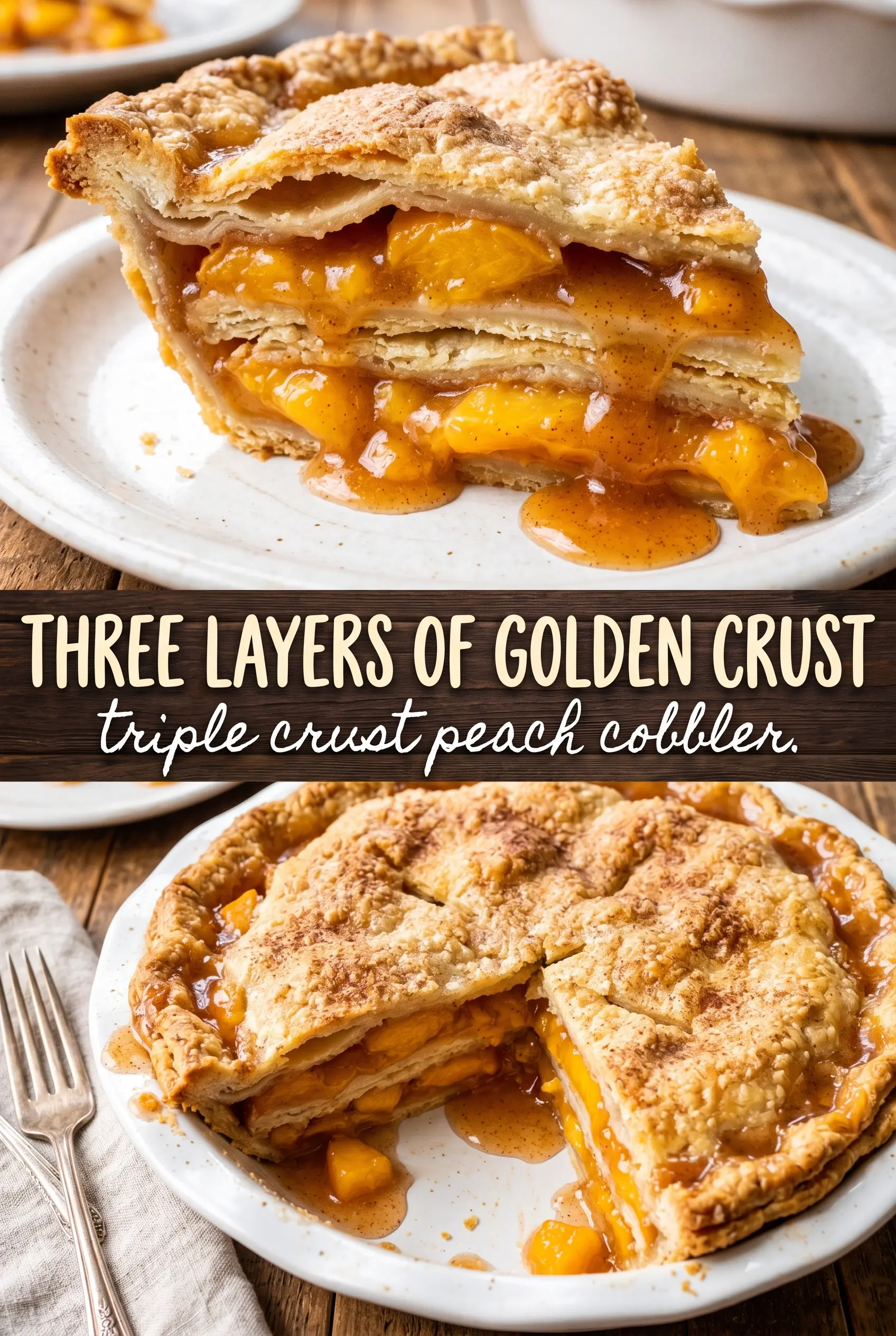
Triple Crust Peach Cobbler
Ingredients
Equipment
Method
- Preheat the oven to 375F and grease a 9x13 baking dish, so the crust can start setting immediately. Keep the dish ready for layering.
- Toss sliced peaches with granulated sugar, cinnamon, nutmeg, lemon juice, and cornstarch until combined, forming a thick, coated peach mixture. Make sure cornstarch is evenly distributed.
- Press the first pie crust into the bottom of the dish and bake for 10 minutes until just set, preventing sogginess. The crust should look set but not deeply browned.
- Spoon half the peach filling over the first crust and dot with half the butter for rich, syrupy pockets. Spread gently so the layer is even.
- Press the second crust over the peaches, sealing in the filling as much as possible. Tuck edges as needed to help the structure hold.
- Top the second crust with the remaining peach filling and dot with the remaining butter for the second syrup layer. Level the peaches so they bake uniformly.
- Lay the third crust on top, then brush with the beaten egg and sprinkle with coarse sugar for a golden, crackly finish. Use an even coat so it caramelizes throughout.
- Cut several vents in the top crust to let steam escape and keep filling from overflowing the dish. Aim for small slits distributed across the surface.
- Bake for 45-55 minutes at 375F until deeply golden and bubbling, with caramelized peach syrup pooling at the cracks. Look for vigorous bubbling around the vents.
- Let the cobbler rest 15 minutes before serving so the syrup thickens and slices lift cleanly. Serve warm for the most tender layers.