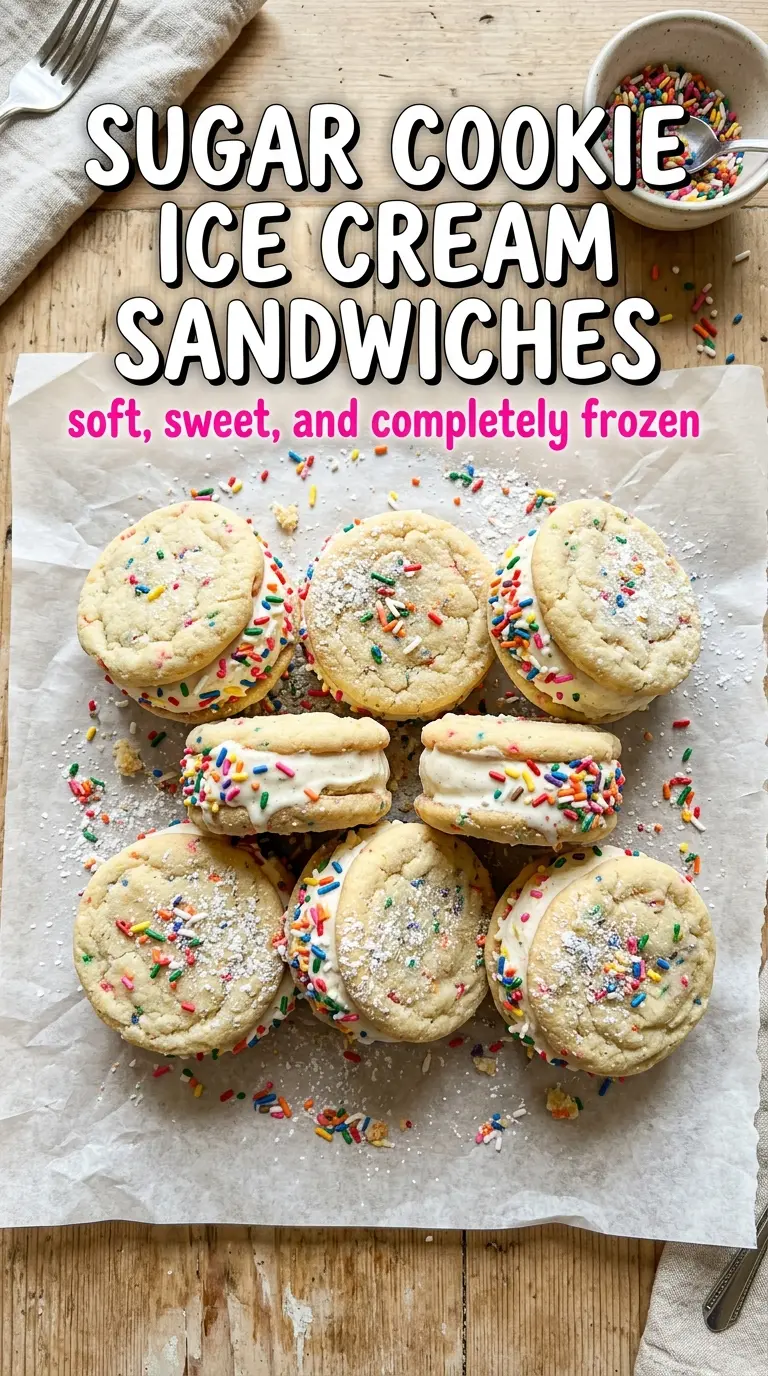
Soft sugar cookies and cold ice cream make a sandwich that eats like a bakery treat and a nostalgic freezer dessert at the same time. The cookies stay tender instead of turning crisp and brittle, which matters because a frozen sandwich only works when the cookie gives a little bite instead of shattering the second you take one. Rainbow sprinkles on the edges add that classic party look and a little crunch without fighting the ice cream.
The key here is baking the cookies until the edges are just set and the centers still look pale. That slight underbake keeps them pillow-thick after cooling, and it keeps them from turning dry once they’ve been frozen. I also use both vanilla and almond extract, which gives the dough that unmistakable sugar-cookie bakery flavor that plain vanilla alone doesn’t quite reach.
Below, I’ll walk you through the small details that matter most: how thick to shape the cookies, when to sandwich them so the ice cream doesn’t ooze everywhere, and how to freeze them so they slice and serve cleanly. There’s also a couple of smart swaps if you want to change up the flavor or make them ahead for a crowd.
The cookies stayed soft even after freezing, and the ice cream edges rolled in sprinkles without melting into a mess. I made them the night before our barbecue and they held together perfectly.
Save these sugar cookie ice cream sandwiches for the kind of dessert that looks bakery-made but comes together with simple ingredients and a little freezer time.
The Bake Time That Keeps These Sandwich Cookies Soft in the Freezer
Most ice cream sandwiches fail because the cookie is baked like a regular cookie: too long, too dry, too crisp. That works for dunking in milk, not for freezing around ice cream. Here you want the cookies to finish with set edges and pale, tender centers so they stay pliable after the freeze. The goal is a cookie that bends when you bite it instead of snapping apart and squeezing ice cream out the sides.
The other mistake is making the rounds too thin. These need to be scooped in generous tablespoons and pressed flat just enough to bake evenly. Thicker cookies give you a soft perimeter and enough structure to hold the sandwich together, which matters once the ice cream starts warming on the counter.
- Soft centers matter most — Pull the cookies when the edges are just turning golden. The centers should still look a touch underdone; they finish setting as they cool.
- Size affects the sandwich — Keep the cookies evenly sized so every sandwich closes neatly. Big size gaps lead to tilting, uneven freezing, and messy edges.
- Cooling is not optional — Warm cookies melt the ice cream too fast. Let them cool all the way before assembling or the sandwich layer will slide.
Why the Cookie Dough Ingredients Matter Here
- Unsalted butter — Softened butter creams with the sugar to trap air, which gives the cookies that thick, tender texture. Salted butter works in a pinch, but the flavor is harder to control.
- Granulated sugar — This gives the cookies their classic sugar-cookie bite and helps the edges turn lightly crisp. Brown sugar changes the texture and makes the cookie more cake-like.
- Eggs — They bind the dough and add structure so the cookies can be frozen without crumbling. Room-temperature eggs mix in more evenly and help the dough stay smooth.
- Vanilla and almond extract — Vanilla brings the familiar sugar-cookie base, and almond extract adds that bakery-style note people notice even if they can’t name it. Don’t skip the almond unless you need to; it’s a small amount, but it makes the cookie taste finished.
- Rainbow sprinkles — These are purely for the edge roll, and they need to go on right after the ice cream is sandwiched so they stick. Jimmies work best because they keep their color and shape better than delicate nonpareils.
- Ice cream — Let it soften just enough to scoop and spread, not melt. If it gets soupy, the sandwich will freeze with ice crystals and the cookies can slide around.
How to Build the Sandwiches Without a Melted Mess
Mixing the Dough to the Right Texture
Beat the butter and sugar until the mixture looks pale and fluffy, not greasy or dense. That stage builds the air you need for a soft cookie, and it also helps the sugar dissolve a little so the finished cookie doesn’t feel gritty. Once the eggs and extracts go in, stir only until combined. Overmixing after the flour goes in makes the cookies tougher, which is the last thing you want in a frozen sandwich.
Shaping Thick, Even Rounds
Scoop the dough into large rounds and press them flat on the baking sheet so they bake into matching disks. If one cookie is much thicker than the other, the sandwich tips and the ice cream squeezes out the lean side. Line the pans well and leave space between the cookies; these spread enough to need room, but not so much that they lose their soft center.
Cooling Before the Fill
Let the cookies cool completely on a rack before you even think about adding ice cream. If the cookies are warm, the ice cream melts into the crumb and turns the whole thing sloppy. Work with softened ice cream that still holds shape when scooped, then press the cookies together firmly enough to seal without cracking them. Roll the exposed edges in sprinkles immediately, then freeze the sandwiches until they’re firm all the way through.
How to Change These for Different Freezers, Parties, and Diets
Gluten-Free Version
Use a good 1:1 gluten-free baking blend in place of the all-purpose flour. The cookies will still work, but they may be a little more delicate, so cool them completely before handling and expect a slightly softer bite once frozen.
Dairy-Free Sandwiches
Swap in plant-based butter for the cookies and use a dairy-free ice cream that freezes firm. Coconut-based ice cream gives the richest texture, while lighter almond-based versions can freeze a little icier and soften faster at room temperature.
Make-Ahead Party Batch
Bake the cookies a day ahead, then assemble and freeze the sandwiches on a sheet pan until solid before wrapping them individually. That extra freeze time keeps the ice cream centered and makes it easy to serve them one at a time without softening the whole batch.
Change the Ice Cream Flavor
Strawberry, mint chip, cookies and cream, and chocolate all work well here. Choose a flavor that freezes firmly; mix-ins with large chunks can make the sandwich harder to bite cleanly, so the smoothest scoops give the neatest result.
Storage and Reheating
- Refrigerator: Not ideal. These soften fast in the fridge, so keep them frozen until serving.
- Freezer: Wrap individually and store for up to 2 weeks for the best texture. After that, the cookies can start to dry out and the ice cream may pick up freezer flavor.
- Reheating: Don’t reheat these. Let them sit at room temperature for 3 to 5 minutes before serving so the cookies soften just enough to bite cleanly.
Questions I Get Asked About This Recipe

Sugar Cookie Ice Cream Sandwiches
Ingredients
Equipment
Method
- Preheat the oven to 350°F. Whisk all-purpose flour, baking powder, baking soda, and salt in a bowl until evenly combined.
- Beat softened unsalted butter and granulated sugar until fluffy, about 2-3 minutes. Add eggs, vanilla extract, and almond extract and beat again until smooth.
- Stir the flour mixture into the butter mixture to form a soft dough. Stop mixing as soon as no dry streaks remain.
- Scoop the dough into large rounds (about 3 tablespoons each) and press flat on a lined sheet pan. Leave a little space between cookies for spreading.
- Bake at 350°F for 10-12 minutes, until edges are just golden but centers are still soft. Let cookies cool completely on the pan.
- Scoop the softened ice cream and sandwich it between two cooled cookies. Press gently so the filling reaches the edges without squeezing out.
- Roll the exposed ice cream edges in rainbow sprinkles so the outside looks like a bakery-style frozen sandwich. Place sandwiches back on the sheet pan.
- Freeze for at least 1 hour before serving. Keep frozen until ready to enjoy for clean slices and sturdy bites.