Dense strawberry gelato has a way of tasting more like fruit than dessert, and that’s exactly why it earns a permanent place in the freezer. The best batches don’t just taste sweet and creamy; they land with a bright, concentrated strawberry punch and that silky, slightly elastic texture that sets gelato apart from American ice cream.
The difference here comes from building the base the right way. A small amount of cornstarch helps the custard thicken without turning heavy, while egg yolks add body and keep the finish smooth. The strawberry puree goes in after the custard comes off the heat, which keeps the fruit flavor vivid instead of cooked down and dull. Straining the berries is worth the extra minute, too. It gives you that clean, dense texture you want in a proper gelato.
Below, you’ll find the one step that matters most for texture, the ingredient choices that make this gelato taste like strawberries instead of cream, and a few practical ways to adapt it without losing that tight, scoopable finish.
The custard thickened up in about five minutes and the strawberry flavor stayed bright instead of getting lost in the cream. I strained the puree like you suggested and the texture came out unbelievably smooth.
Save this strawberry gelato for the days when you want a vivid, scoopable dessert with clean strawberry flavor and a silky gelato finish.
The Custard Has to Cook Long Enough to Coats the Spoon, Not Boil
Gelato fails when the base is pulled too early. If the custard stays thin, it freezes icy instead of dense, and the strawberry flavor gets diluted by all that extra water. The target is a pudding-like thickness that lightly coats the back of a spoon and leaves a clean line when you drag your finger through it.
The cornstarch helps protect the eggs, which means you can cook the base to the right point without turning it grainy. Keep the heat at medium and stir constantly, especially around the edges of the pan where the thickening happens first. If the mixture starts to bubble hard before it thickens, the heat is too high and the yolks can scramble.
- Egg yolks — They give the gelato its creamy body and keep the texture from freezing hard. Whole eggs won’t give the same richness.
- Cornstarch — This is what gives the base that gelato-style density. It’s not there to make the custard taste starchy; it keeps the texture smooth after freezing.
- Lemon juice — A small amount sharpens the berries and keeps the flavor bright. Without it, the strawberries taste flatter and sweeter, not fresher.
- Strawberries — Fresh berries matter most here. Frozen strawberries work in a pinch, but the puree can taste a little softer and less vivid after churning.
What the Strawberries, Yolks, and Milk Each Bring to the Bowl
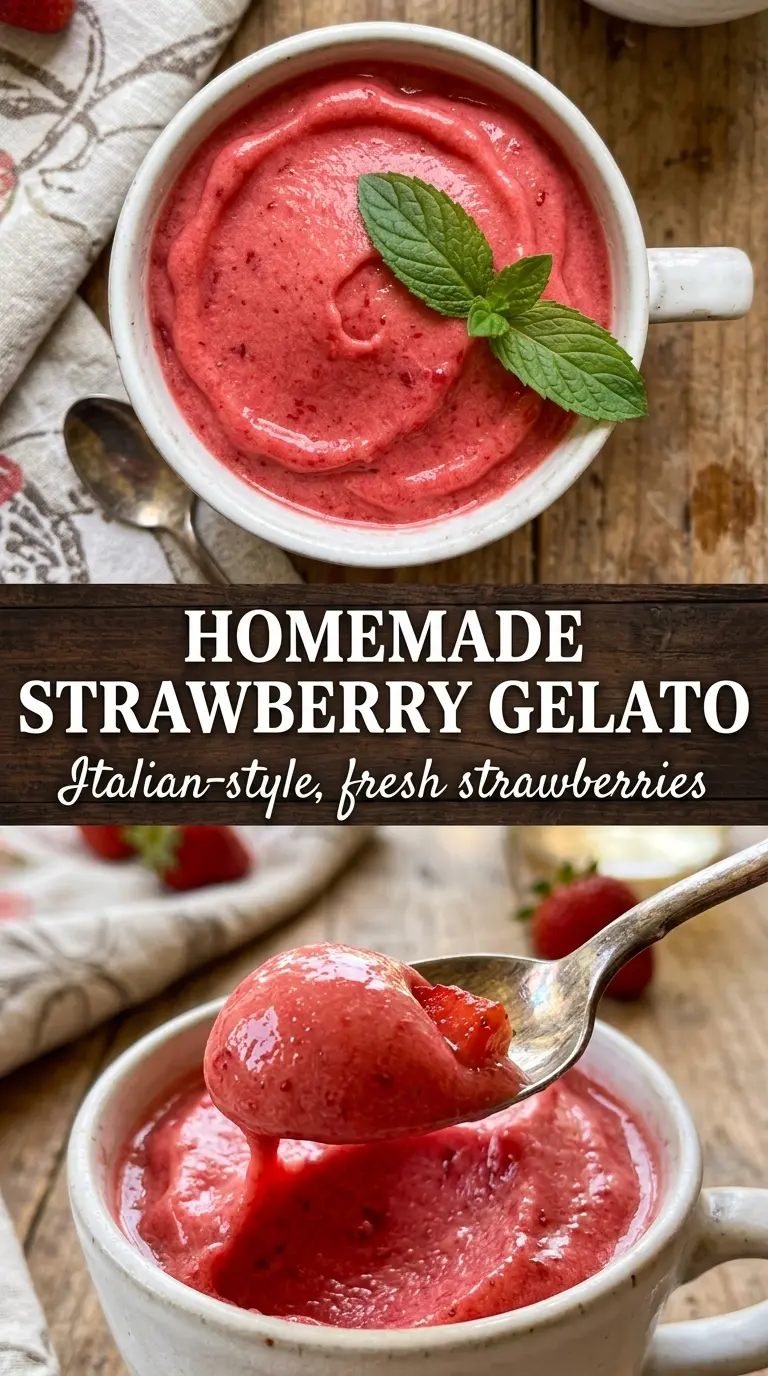
- Fresh strawberries — These are the center of the whole dessert, so use berries that smell sweet and ripe. If they’re pale or watery, the finished gelato will taste muted no matter how much sugar you add.
- Granulated sugar — It does more than sweeten. Part of it draws juice out of the berries for the puree, and the rest lowers the freezing point so the gelato stays scoopable.
- Whole milk and heavy cream — Milk keeps the base light enough to let the strawberry flavor come through, while cream adds enough fat for a smooth finish. Don’t swap in low-fat milk here if you want the same texture.
- Vanilla extract — Just a teaspoon rounds out the fruit and gives the base a softer finish. It shouldn’t taste like vanilla gelato; it should just make the strawberries taste fuller.
Building the Base Without Scrambling the Yolks
Strain the Strawberry Puree First
Blend the strawberries, sugar, and lemon juice until completely smooth, then strain out the seeds. That small extra step is what gives the finished gelato its polished, dense texture instead of a slightly gritty one. Set the puree aside while you build the custard so it’s ready to go when the base comes off the stove.
Temper the Eggs Slowly
Whisk the yolks, sugar, and cornstarch until the mixture looks pale and smooth, then drizzle in the hot milk and cream a little at a time. The goal is to raise the temperature gently so the eggs warm up without curdling. If you dump the dairy in all at once, the yolks can seize and leave you with little cooked bits in the pan.
Cook Until It Thickens Like Pudding
Return the mixture to the saucepan and cook over medium heat, stirring constantly with a spoon or heatproof spatula. After a few minutes it should thicken enough to coat the back of the spoon and hold a brief trail when you drag through it. Pull it early and the gelato will freeze thin and icy; push it too far and it can turn grainy.
Finish With Fruit and Chill Completely
Take the pan off the heat before stirring in the strawberry puree and vanilla. Cooling the base in an ice bath speeds things up and helps preserve that bright berry flavor, then the full chill in the refrigerator gives the mixture the body it needs before churning. Don’t churn a warm base; it won’t freeze evenly and the texture will suffer.
Three Ways to Adjust the Gelato Without Losing the Texture
Make it dairy-free with full-fat coconut milk
Replace the milk and cream with canned full-fat coconut milk for a rich frozen dessert that still churns smoothly. The result is a little less clean and dairy-like, and you’ll pick up a light coconut note, but the texture stays close if you keep the custard base well chilled before churning.
Use frozen strawberries when fresh berries aren’t at their best
Thaw them first and drain off any excess liquid before blending so you don’t water down the puree. Frozen berries can still make a good gelato, but the flavor is usually softer, so the lemon juice matters even more to keep it bright.
Make it egg-free with a slightly softer finish
Skip the yolks and increase the cornstarch slightly to help the base thicken, but expect a lighter, less velvety result. It will still freeze nicely, though it won’t have quite the same custardy depth or the same dense scoop as the original.
Storage and Reheating
- Refrigerator: The uncultured base keeps for up to 2 days before churning. After churning, the texture is best within 3 days in the freezer.
- Freezer: It freezes well, but homemade gelato firms up faster than store-bought. Press parchment or plastic wrap directly against the surface to reduce ice crystals.
- Reheating: No reheating is needed. Let it sit at room temperature for 5 to 10 minutes before scooping so it softens enough to serve without tearing or cracking.
Answers to the Questions Worth Asking
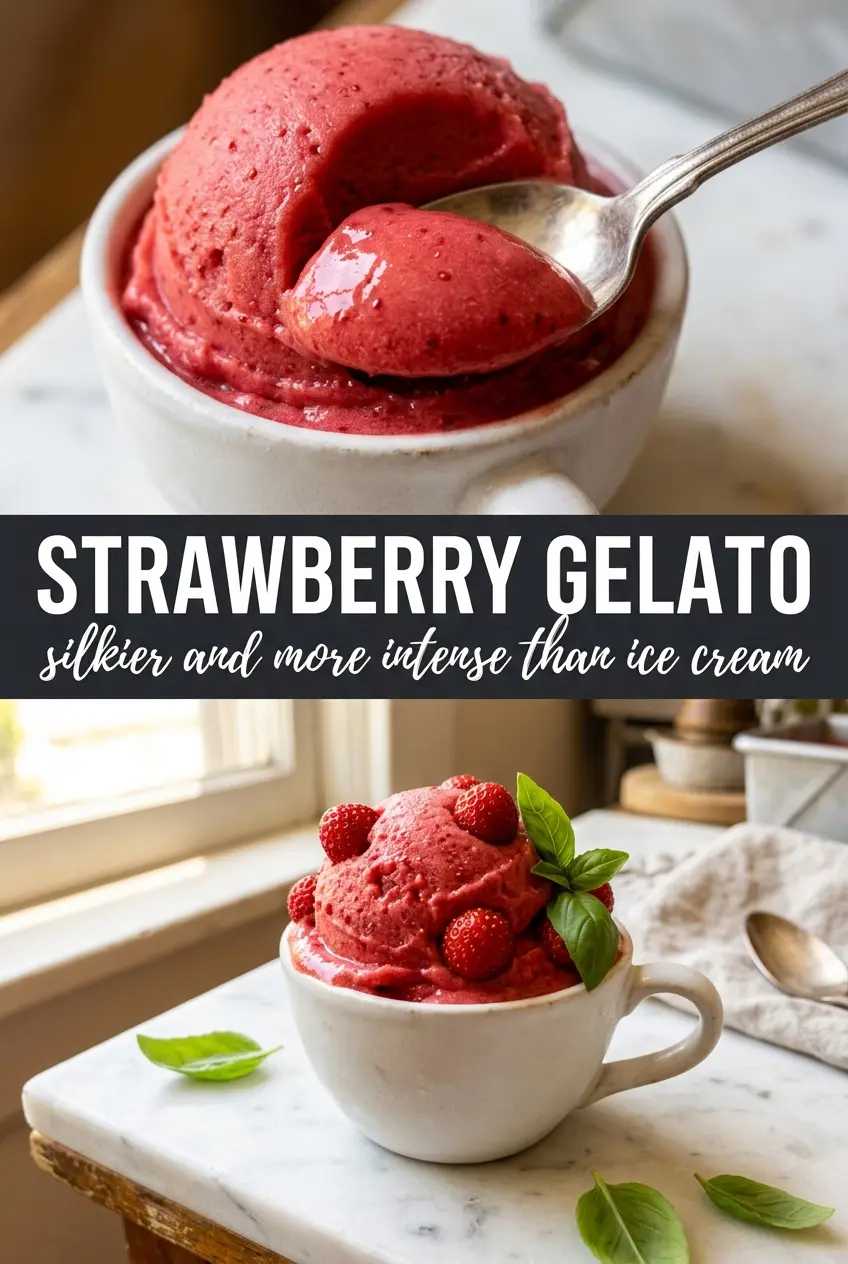
Strawberry Gelato
Ingredients
Equipment
Method
- Blend the fresh strawberries with 1/4 cup sugar and lemon juice until completely smooth, with no visible chunks. Strain the puree through a fine mesh to remove seeds and set aside.
- In a saucepan, combine whole milk and heavy cream and heat until steaming, about 3 to 5 minutes. Keep it just under a simmer so the dairy stays smooth.
- Whisk egg yolks, remaining 1/2 cup sugar, and cornstarch until smooth and glossy. Slowly drizzle the hot milk mixture into the yolks while whisking to temper them.
- Return the mixture to the saucepan and cook over medium heat, stirring constantly, until thickened like a pudding, about 5 minutes. The custard should coat the back of a spoon and hold a line when you draw a finger through it.
- Remove from heat and stir in the strawberry puree and vanilla extract until the mixture turns vivid pink-red and uniform.
- Cool the mixture completely over an ice bath, stirring occasionally so it doesn’t form a skin. Refrigerate at least 4 hours (chilling + freezing timeline starts here) until very cold.
- Churn in an ice cream maker on the lowest setting until dense and gelato-style. Serve soft for an immediate, silky texture, or freeze 1 to 2 hours for a firmer scoop.