Southern squash casserole earns its place on the table because it turns soft, mild squash into something rich, tender, and deeply satisfying without burying it under heavy sauce. The filling stays creamy and cohesive, and the buttery cracker top bakes into a crisp, golden crust that gives each bite a little crunch before you hit the soft squash underneath. It’s the kind of side dish people reach for twice before they’ve finished the first serving.
The key is managing the moisture. Yellow squash carries a lot of water, so cooking it first and draining it well keeps the casserole from turning soupy. The mix of sour cream, mayonnaise, and eggs gives the filling body and a little tang, while sharp cheddar adds enough bite to keep the whole dish from tasting flat. Ritz crackers bring a buttery finish that tastes old-fashioned in the best way.
Below, I’ve included the part that matters most: how to keep the casserole from getting watery, how to get the topping evenly crisp, and a few swaps that still keep the texture right.
The squash cooked down just enough, and after draining it well the casserole set up perfectly instead of turning watery. My husband went back for seconds before I even sat down.
Like this Southern Squash Casserole? Save it to Pinterest for the buttery cracker topping, tender squash, and creamy Southern-style filling.
The Reason Southern Squash Casserole Turns Watery
Most squash casseroles fail for one simple reason: the squash releases water after it bakes, and the whole dish loosens up in the pan. Cooking the squash with the onion first helps drive off some of that moisture, but the real safeguard is draining it thoroughly before it ever meets the eggs and dairy. If you skip that step, the custard has to fight excess liquid instead of setting into a creamy filling.
The other thing that matters is the ratio of binder to squash. You want enough egg and dairy to hold the casserole together, but not so much that it turns heavy. That’s why this version stays balanced: the cheese adds structure, the sour cream adds body, and the mayonnaise keeps the texture soft without making it greasy.
What Each Ingredient Is Actually Doing In This Dish
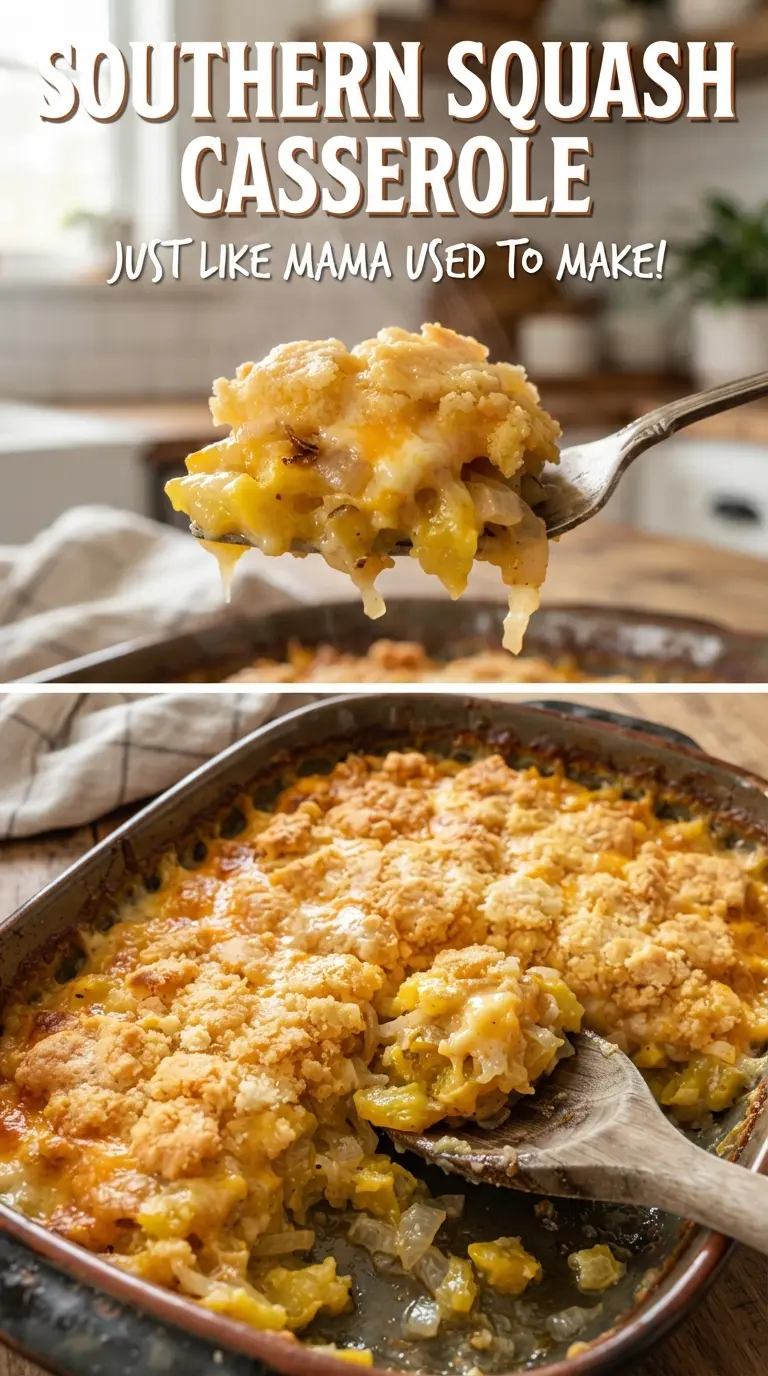
- Yellow squash — This is the bulk of the casserole, but it also brings the moisture that can ruin the texture if you don’t cook and drain it first. Younger squash is a little firmer and less watery, but standard grocery store squash works fine as long as you take the time to dry it out.
- Sharp cheddar — Sharp cheddar gives the filling enough bite to stand up to the mild squash. Pre-shredded cheese works, but freshly shredded melts a little smoother and gives you better control over the final texture.
- Sour cream and mayonnaise — These make the casserole creamy without thinning it out. Sour cream adds tang; mayonnaise adds richness and helps the filling stay tender after baking.
- Ritz crackers — They’re not just a topping. They bake into a buttery, lightly crisp crust that contrasts with the soft filling beneath it. Saltines can work in a pinch, but they won’t give you the same rich flavor.
- Eggs — The eggs set the casserole so it slices instead of puddling on the plate. Beat them before adding so they distribute evenly through the squash mixture.
Building the Filling So It Sets Instead of Slumping
Softening the Squash and Onion
Cook the squash and onion in butter until the squash is tender and the pan looks a little dry around the edges. You’re not trying to brown everything deeply here; you’re trying to collapse the squash enough that it releases moisture before it bakes. If liquid is still pooling in the pan, keep cooking for a minute or two longer. Then drain it in a colander and press gently with the back of a spoon so the excess water runs off.
Mixing the Custard Base
Stir together the cheese, sour cream, mayonnaise, eggs, salt, and pepper before folding in the squash. That order matters because it keeps the seasoning and dairy evenly distributed instead of clumping around the vegetables. The mixture should look thick, glossy, and spoonable. If it seems loose at this stage, the squash wasn’t drained enough, and the casserole will bake up soft instead of set.
Baking Until the Center Holds
Spread the mixture into a greased 9×13-inch dish, then add the buttery cracker topping in an even layer. Bake until the top is deep golden and the center no longer jiggles when you nudge the pan. If the top browns too fast, lay a loose piece of foil over it for the last 10 minutes. Let the casserole sit for a few minutes before serving so it firms up and slices cleanly.
How to Adapt It When You Need a Different Texture or Diet
Make It Gluten-Free
Use gluten-free buttery crackers or crushed gluten-free crackers in place of Ritz. The topping won’t be quite as rich, but you’ll still get the same crisp contrast on top of the creamy filling.
Swap the Cheese for a Milder Finish
Use mild cheddar or Colby Jack if you want the squash to stay center stage. The casserole will taste softer and less sharp, which works well when you’re serving it beside heavily seasoned mains.
Make It Lighter Without Losing the Set
You can use reduced-fat sour cream and mayonnaise, but don’t replace both with low-fat versions at once or the casserole can taste thin. Keep the eggs the same so the filling still bakes up with enough structure.
Add More Bite
A pinch of cayenne or a little diced pimento gives the casserole more personality without changing the texture. Keep additions modest so the squash and cracker crust still read as the main event.
Storage and Reheating
- Refrigerator: Store covered for up to 4 days. The topping softens a little, but the flavor holds well.
- Freezer: It freezes, but the texture turns softer after thawing because squash holds a lot of water. If you do freeze it, wrap it tightly after cooling and thaw overnight in the refrigerator.
- Reheating: Warm uncovered in a 325F oven until heated through. The oven keeps the topping from getting soggy; the microwave will steam the cracker crust and make it limp.
Answers to the Questions Worth Asking
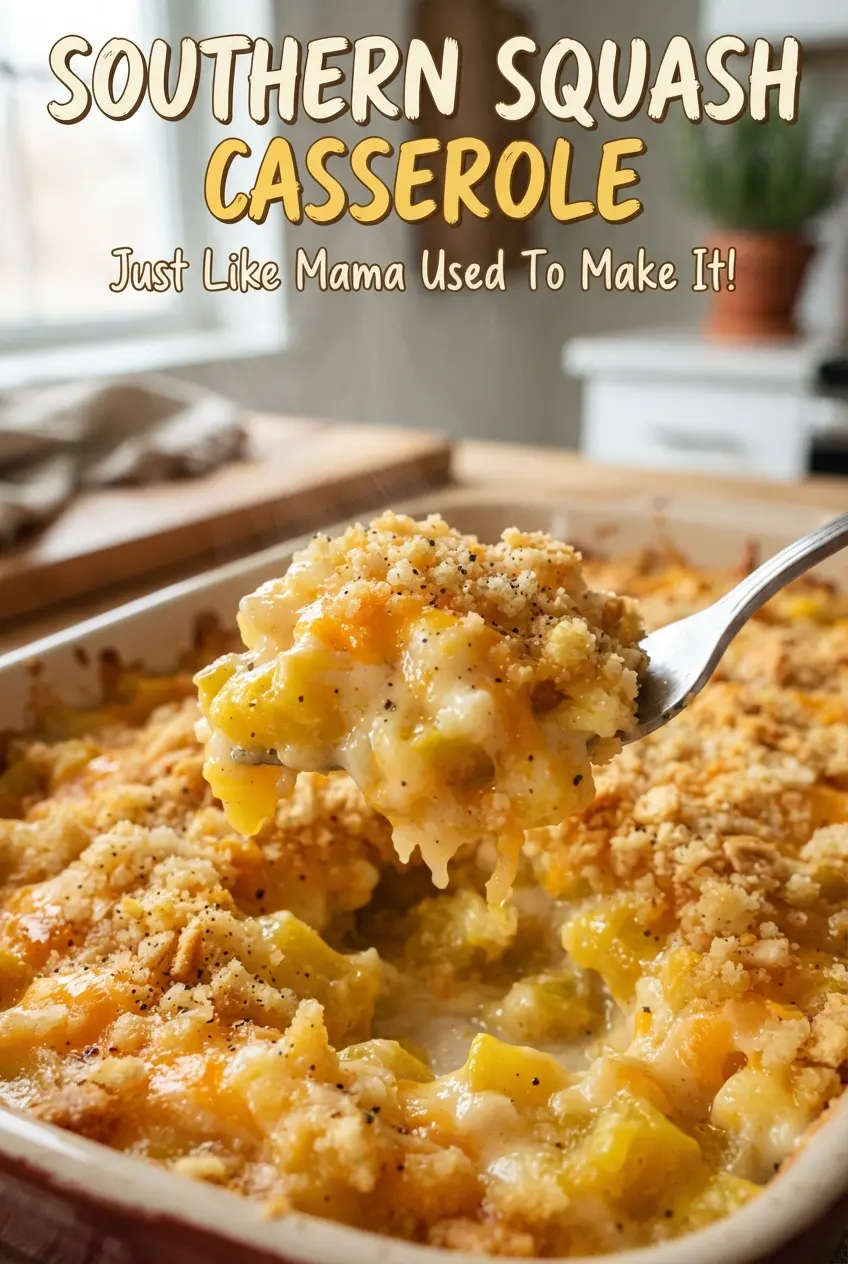
Southern Squash Casserole
Ingredients
Equipment
Method
- Preheat oven to 350°F, then grease a 9x13-inch baking dish so the casserole releases cleanly.
- Cook sliced yellow squash and diced onion in 2 tablespoons butter for 10-12 minutes until tender.
- Drain the squash and onion well in a colander to prevent watery casserole.
- Mix shredded sharp cheddar, sour cream, mayonnaise, beaten eggs, salt, and black pepper until smooth, then fold in the drained squash and onion.
- Spread the mixture into the greased baking dish in an even layer.
- Toss crushed Ritz crackers with 3 tablespoons melted butter, then sprinkle over the top for a golden crust.
- Bake for 30-35 minutes at 350°F until golden and set, with a visible bubbling edge.