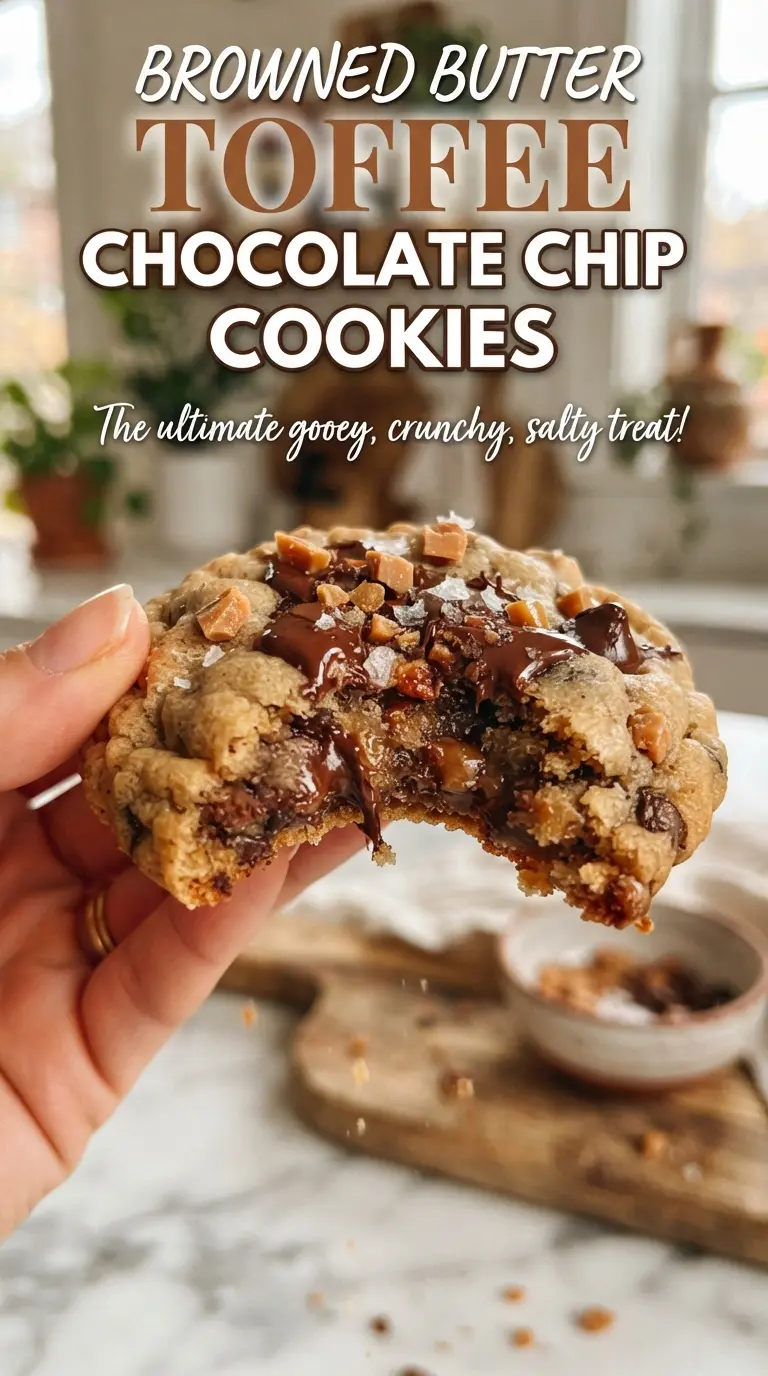
Browned butter toffee chocolate chip cookies bake up with crisp edges, chewy centers, and little pockets of melted chocolate tucked into every bite. The browned butter gives them a deeper, nutty backbone than a standard cookie, and the toffee bits add a crackly sweetness that keeps each bite interesting instead of one-note. A pinch of flaky salt on top pulls everything into focus.
The key here is patience with the butter. Browning it long enough to pick up those toasted milk solids changes the whole cookie, but it also means you need to cool it before adding the sugars or you’ll melt them and throw off the texture. Chilling the dough matters too. It gives the flour time to hydrate and keeps the cookies thick enough to stay chewy in the middle while the edges turn golden.
Below, I’ve broken down the part that matters most, what each ingredient is doing, and the small timing details that keep these cookies from spreading too much. If you’ve ever had toffee sink, chocolate smear, or a cookie bake up flat, the notes here will help.
The browned butter made these taste bakery-level rich, and chilling the dough kept them thick instead of flat. The toffee bits stayed crunchy on the edges and melted into the centers just enough.
Save these browned butter toffee chocolate chip cookies for when you want thick centers, crisp edges, and those deep caramel notes from browned butter.
The Reason Browned Butter Keeps These Cookies from Tasting Flat
Browned butter doesn’t just add flavor. It changes how the dough behaves. Once the water cooks off and the milk solids toast, you’re left with a butter that tastes nutty and caramelized, but it also needs a short cooling period before it meets the sugars. If you rush that step, the dough gets greasy and the cookies spread too fast.
The other thing that matters here is balance. Brown sugar brings moisture and chew, while granulated sugar helps the edges crisp. The egg plus yolk combination does the same kind of work: the whole egg gives structure, and the extra yolk adds richness and a softer center. That’s how you get a cookie that bends instead of snapping.
What Each Ingredient Is Actually Doing in the Dough
- Unsalted butter — Browning it is what gives these cookies their deep, toasted flavor. Salted butter works in a pinch, but unsalted gives you cleaner control over the final seasoning.
- Brown sugar — This keeps the centers moist and chewy. Light or dark brown sugar both work; dark brown sugar gives a little more molasses depth.
- Granulated sugar — This is what helps the edges bake up with a little snap. Don’t swap it out entirely or the cookies will lean too soft.
- Egg plus egg yolk — The extra yolk adds richness and helps the cookies stay tender without turning cakey. If you only use one whole egg, the cookies will be a little leaner and less plush.
- All-purpose flour — Standard all-purpose flour gives enough structure to hold the toffee and chocolate without making the cookies dense. Spoon and level it instead of packing it into the cup.
- Baking soda — This helps the cookies spread just enough and encourages browning. Baking powder won’t give the same chewy, crackly result.
- Dark chocolate chips — Dark chocolate keeps the sweetness in check and melts into bigger, puddly pockets. Semi-sweet chips work too, but the cookies will read sweeter.
- Toffee bits — These add crunch and a buttery caramel note that you can’t really fake with another mix-in. Chop up English toffee bars if you can’t find bits; just keep the pieces small so they distribute evenly.
- Flaky sea salt — This is the finish that keeps the sweetness from feeling heavy. Use it sparingly; you want little bright pops, not a salty cookie.
How to Keep the Dough Thick and the Centers Chewy
Browning the Butter Without Burning It
Cook the butter over medium heat and keep the pan moving so the milk solids toast evenly. At first it will foam, then you’ll start seeing golden specks at the bottom and smelling something nutty and almost like toasted hazelnuts. Pull it the second those bits turn amber, not dark brown, because the carryover heat keeps it cooking for a minute off the stove. Let it cool for about 15 minutes before you mix it with the sugars.
Building the Dough in the Right Order
Whisk the sugars into the cooled browned butter until the mixture looks glossy and a little thickened, then add the egg, yolk, and vanilla. That order matters because the sugars help cool and emulsify the butter, which gives the cookies a better texture. Stir in the dry ingredients just until no streaks of flour remain, then fold in the chocolate chips and toffee bits. Overmixing at this stage makes the cookies tougher and can make the dough feel greasy.
Chilling for Shape, Not Just Convenience
Give the dough a full hour in the fridge. That rest firms up the butter so the cookies don’t overspread, and it gives the flour time to absorb moisture. If you bake them too soon, they’ll come out thinner and the centers won’t have the same chew. Scoop the dough after chilling, not before, if it has become too firm to portion cleanly.
Baking to the Edges, Not Beyond
Bake at 350°F until the edges are golden and set but the centers still look a little soft and puffy. That underbaked-looking center is what turns chewy as the cookies cool on the sheet. Pull them from the oven, sprinkle on the flaky salt right away, and let them sit for 5 minutes on the pan before moving them. If you move them too soon, they’ll bend and break before they’ve had a chance to finish setting.
Three Ways to Adjust These Cookies Without Losing the Good Parts
Dairy-Free Version
Use a plant-based butter that browns well, not a soft tub spread. The flavor won’t be quite as nutty, but you’ll still get good caramel notes if you watch closely while it cooks. Skip any water-heavy substitutes or the dough will spread more.
Gluten-Free Swap
A 1:1 gluten-free baking flour blend usually works well here, especially one that already contains xanthan gum. The cookies may spread a touch more or bake up a little more delicate, so keep the chill time and watch the edges closely.
Extra Crunch, Less Sweet
Swap half the chocolate chips for chopped toasted pecans or walnuts. That pulls the sweetness back and gives the cookies more texture, but the result will be a little less molten in the middle. If you go this route, keep the toffee bits in place because they’re part of what makes the cookie taste complete.
Make-Ahead Dough
This dough does well in the fridge for up to 48 hours. The flavor deepens a little as it rests, and the cookies bake up with even better chew. If the dough gets too firm, let it sit at room temperature just long enough to scoop cleanly.
Storage and Reheating
- Refrigerator: Store baked cookies in an airtight container for up to 5 days. They stay chewy, though the toffee loses a little crunch after day one.
- Freezer: Freeze baked cookies for up to 2 months, or freeze scooped dough balls and bake from frozen with 1 to 2 extra minutes.
- Reheating: Warm baked cookies in a 300°F oven for 4 to 5 minutes or give them 10 seconds in the microwave. Don’t overheat them or the chocolate will turn greasy and the centers will dry out.
Questions I Get Asked About This Recipe

Browned Butter Toffee Chocolate Chip Cookies
Ingredients
Equipment
Method
- Heat unsalted butter in a cast iron skillet over medium heat and cook 5-6 minutes until golden and nutty, stirring often so the milk solids brown evenly. The butter should smell toasted and look amber with browned specks; turn off heat and cool 15 minutes.
- Whisk the cooled browned butter with brown sugar, packed and granulated sugar until glossy and the sugar looks dissolved. Whisk in the large egg plus 1 egg yolk, then whisk in vanilla extract until smooth.
- Stir in all-purpose flour, baking soda, and salt until just combined. Fold in dark chocolate chips and toffee bits so they’re evenly distributed without overmixing.
- Cover the dough and chill for 1 hour in the refrigerator. It should firm up enough to scoop without spreading too fast.
- Preheat the oven to 350F and line sheet pan(s) with parchment. Scoop 2-tablespoon balls onto the parchment-lined sheets, spacing them apart for spreading.
- Bake 10-12 minutes at 350F until golden at the edges but still slightly soft in the centers. For a visual cue, the tops will look set and the edges will be deeper brown.
- Sprinkle the cookies with flaky sea salt while warm. Cool 5 minutes on the sheet pan so the cookies finish setting before moving them.