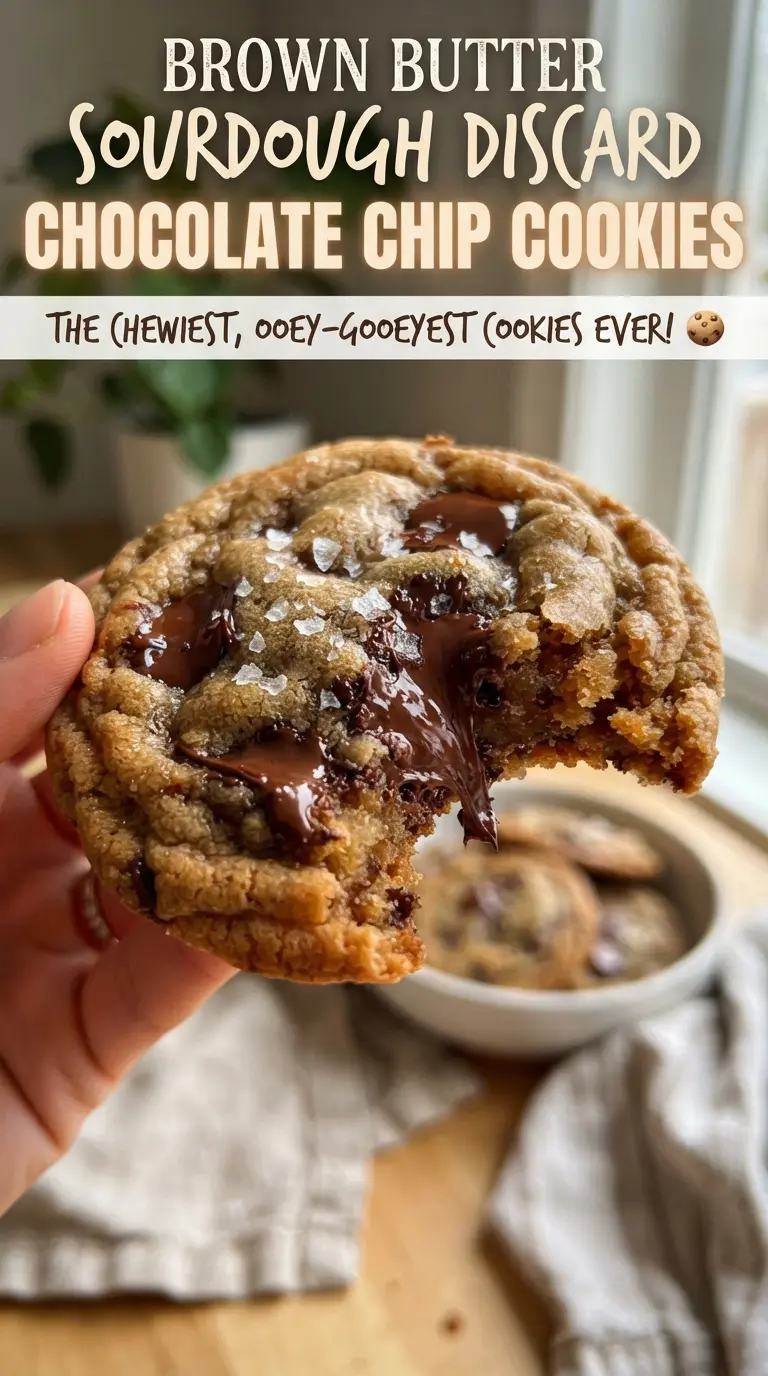
Brown butter sourdough discard chocolate chip cookies bake up with crisp edges, chewy centers, and those deep caramel notes that make a cookie worth reaching for twice. The sourdough discard doesn’t make them taste sour; it gives the dough a little more character and keeps the texture tender in the middle while the chocolate chunks stay soft and glossy.
The part that changes everything here is the brown butter. Once the milk solids toast, the flavor turns nutty and almost butterscotch-like, and that extra depth carries through the whole cookie. Chilling the dough matters too, because it gives the flour time to hydrate and keeps the cookies from spreading into thin puddles.
Below, you’ll find the small timing details that keep the centers soft, plus the one topping that makes the finished cookies taste bakery-level instead of just sweet.
The brown butter made these taste like a fancy bakery cookie, and the centers stayed soft and chewy even after cooling. My husband grabbed three before I could put the tray away.
Save these brown butter sourdough discard chocolate chip cookies for the nights when you want chewy centers, crackly tops, and deep caramel flavor.
The reason these cookies stay chewy instead of baking up flat
The biggest mistake with sourdough discard cookies is treating the discard like a wet add-in and not adjusting for the extra moisture. Here, the flour amount and the chill time work together so the dough firms up before baking. That gives you cookies that spread just enough to crinkle at the edges while keeping the center thick and soft.
Brown butter changes the whole structure of the dough, too. Once the butter cooks down and loses some water, the dough can feel looser at first, which is why the 15-minute cooling step matters. If the butter is too hot, the sugars melt too fast and the cookies bake greasy instead of chewy.
- Brown butter — This is the flavor engine. You want deep amber and toasted milk solids at the bottom of the pan, not pale yellow butter with a few bubbles.
- Sourdough discard — Use unfed discard that’s not overly acidic. Fresh discard gives the cookies a mild tang and helps the crumb stay tender without making the dough taste sour.
- Chocolate chunks — Chunks melt into pools better than standard chips. Semi-sweet keeps the cookies from turning cloying against the brown sugar and flaky salt.
- Flaky sea salt — This is not garnish fluff. A few flakes on top sharpen the sweetness and make the browned butter taste even more pronounced.
What each ingredient is doing in the dough
Brown sugar keeps the centers soft because of its molasses content. If you swap in all white sugar, the cookies bake drier and spread a little more.
Granulated sugar helps create those crisp, crackly edges. The mix of both sugars gives you contrast instead of one-note sweetness.
Egg binds the dough and gives the cookies lift. A room-temperature egg blends more smoothly into the brown butter mixture, which helps the dough come together without curdling.
All-purpose flour gives just enough structure to hold the chocolate chunks in place. If you spoon and level it instead of scooping straight from the bag, you avoid dense cookies.
Baking soda reacts with the sourdough discard and helps the cookies spread in a controlled way. Baking powder won’t give the same browning or texture here.
Building the dough, chilling it, and baking until the centers still look underdone
Brown the butter without rushing past nutty to burned
Set the butter over medium heat and keep it moving as it foams. First it will sputter, then the foam will thin and the milk solids will sink and turn golden brown. The smell changes from plain butter to toasted hazelnut. Pull it off the heat when the bits at the bottom are amber, because they go from perfect to burnt fast. Let it cool for 15 minutes so it doesn’t scramble the egg or melt the sugar into a slick batter.
Mix the dough until it just comes together
Whisk the brown butter with both sugars until it looks thick and glossy, then whisk in the egg, sourdough discard, and vanilla. The mixture may look a little loose at first, and that’s fine. Stir in the dry ingredients only until no flour streaks remain, then fold in the chocolate chunks. Overmixing builds gluten and gives you tougher cookies instead of chewy ones.
Chill the dough so the cookies hold their shape
At least an hour in the fridge gives the flour time to absorb the liquid and lets the brown butter firm back up. If you bake the dough warm, the cookies spread too fast and lose the thick center. The dough should feel scoopable but firm, almost like soft clay, before it goes on the tray.
Bake until the edges set and the centers still look soft
Scoop 3-tablespoon balls and space them out on parchment. Bake at 350F until the edges are golden and the middles still look slightly pale and puffy, usually 11 to 13 minutes. They finish setting on the hot pan, so don’t wait for the centers to look fully baked in the oven. The final sprinkle of flaky salt goes on right after they come out, before the chocolate firms up.
How to adapt these cookies when you want a different texture or need a swap
Gluten-free version with a 1:1 baking blend
A good cup-for-cup gluten-free flour blend can replace the all-purpose flour here. The cookies will be a little more delicate and slightly less chewy, but the brown butter and chocolate still carry the flavor. Let the dough chill the full hour, or the extra moisture from the discard can make the cookies spread too much.
Dairy-free version with plant butter and dairy-free chunks
Use a vegan butter that browns well, not a soft tub spread, and watch it closely because some plant butters scorch faster than dairy butter. You won’t get exactly the same toasted milk flavor, but the cookies still bake up chewy with crisp edges if the substitute has enough fat. Pair it with dairy-free chocolate chunks that hold their shape in the oven.
Extra gooey centers with a shorter bake
Pull the cookies at the 11-minute mark and leave them on the baking sheet for the full 10 minutes. The centers will stay softer, but the edges still need that set ring or the cookies fall apart when moved. This is the version to make when you want puddly chocolate pockets and a very soft middle.
Storage and Reheating
- Refrigerator: Store baked cookies in an airtight container for up to 5 days. They stay chewy, though the tops lose a little of their crinkle after the first day.
- Freezer: Freeze scooped dough balls on a tray, then transfer to a bag for up to 3 months. Bake from frozen and add 1 to 2 minutes, or freeze baked cookies if you want a quick treat later.
- Reheating: Warm baked cookies in a 300F oven for 3 to 5 minutes. The mistake is using the microwave too long, which turns the centers rubbery and softens the edges instead of reviving them.
Questions I get asked about these sourdough discard cookies

Brown Butter Sourdough Discard Chocolate Chip Cookies
Ingredients
Equipment
Method
- Brown the butter in a saucepan for 5-6 minutes, stirring, until it turns golden and smells nutty. Remove from heat and cool for 15 minutes.
- Whisk the cooled brown butter with both sugars until smooth. Whisk in the egg, sourdough discard, and vanilla extract.
- Stir in the all-purpose flour, baking soda, and salt until just combined. Fold in the semi-sweet chocolate chunks.
- Chill the dough for at least 1 hour until firm. The surface should look slightly matte and scoopable.
- Preheat the oven to 350°F and line sheet pans with parchment. Scoop 3-tablespoon balls and space them apart.
- Bake at 350°F for 11-13 minutes, until edges are golden and centers are still soft. The cookies should look slightly underdone in the middle.
- Top the hot cookies with flaky sea salt. Cool for 10 minutes on the sheet until they set.