Southern mac and cheese bakes up with a custardy center, browned edges, and a top that turns shatteringly golden where the cheese meets the heat. The magic is in that contrast: tender noodles underneath, a rich cheese set in the middle, and just enough structure to slice instead of slump. It’s the kind of side dish that disappears fast, whether it’s sitting next to fried chicken or showing up on a holiday table.
This version uses eggs, whole milk, and evaporated milk to build a true baked custard, which is what gives the dish its Southern-style body instead of a loose stovetop sauce. The cheddar brings the sharp bite, the Colby Jack keeps things smooth, and the Gruyere adds depth without making the flavor heavy. A little Dijon wakes up the cheese, and smoked paprika keeps the whole dish from tasting flat.
Below, I’ll walk through the part that matters most: how to layer and bake it so the center sets without turning grainy, plus the small ingredient choices that make the difference between decent and unforgettable.
The custard set up beautifully and the top got that deep golden crust without drying out. I loved the Gruyere in this — it made the whole pan taste richer without being overpowering.
Save this Southern mac and cheese for the nights when you want a creamy custard center and a crisp, buttery cheddar top.
The Part That Keeps This Mac and Cheese From Turning Grainy
The biggest mistake with baked mac and cheese is rushing the heat once the custard goes in the oven. Eggs and dairy need gentle, even baking so they set into a creamy slice instead of tightening up into something rubbery or separating around the edges. This dish stays tender because the pasta is already cooked, the cheese is layered instead of dumped in one mass, and the custard has enough milk to surround every noodle without becoming soupy.
The rest time matters too. Pull it when the center is set but still has the tiniest bit of give, then leave it alone for 10 minutes. That pause finishes the set and keeps the servings neat when you cut into them.
- Don’t overcook the macaroni — it should still have a little bite when it goes into the dish, since it keeps softening in the oven.
- Layer the cheese, don’t just mix it all in — that creates pockets of melted cheese and better structure in the finished bake.
- Bake until the center is just set — if it looks fully firm in the oven, it usually turns dry by the time it cools.
- Let it rest before serving — this is what turns the custard from loose to sliceable.
What Each Cheese Is Actually Doing Here

- Sharp cheddar — This is the backbone of the dish. It brings the familiar mac and cheese flavor and the best golden top. Buy a block and shred it yourself if you can, because pre-shredded cheese is coated with starches that can make the melt a little dull.
- Colby Jack — This keeps the texture smooth and mild so the cheddar doesn’t take over. It melts cleanly and helps the filling stay creamy instead of chalky.
- Gruyere — You don’t need a huge amount, but it adds a nutty depth that makes the whole pan taste more layered. If you need a swap, use Swiss cheese, though the flavor will be a little less rich.
- Evaporated milk — This is one of the reasons the custard tastes fuller than a regular milk-only version. It adds body without making the bake heavy.
- Dijon mustard — It doesn’t make the dish taste mustardy. It sharpens the cheese and keeps the flavor from flattening out.
Layering and Baking the Custard So It Sets Right
Building the Base
Butter the baking dish well, then spread in half the macaroni so the bottom layer has enough room to soak up the custard. Scatter the first layer of cheese evenly instead of dumping it in one pile, because clumps melt unevenly and create pockets that can turn oily. The goal here is coverage, not perfection.
Whisking the Custard
Whisk the eggs, whole milk, evaporated milk, Dijon, and spices until the mixture looks smooth and completely unified. You want the eggs fully broken up so they disappear into the bake; streaks of egg white or yolk can leave unpleasant bits in the finished dish. If the custard tastes a little bold at this stage, that’s right — the noodles and cheese will mellow it out.
Finishing the Pan
Add the remaining macaroni, pour the custard over everything, then dot the top with butter before the final layer of cheddar. Those butter cubes melt into the surface and help the top bronzed edge develop. Bake at 350°F until the center is set and the top is deeply golden, then let it rest so the custard can finish tightening outside the oven.
Three Smart Ways to Adjust This Pan for Your Kitchen
Gluten-Free Version
The recipe is already naturally gluten-free as written, as long as your cheeses and Dijon are certified gluten-free. Keep the same method and baking time. The texture stays just as creamy because the structure comes from the eggs and dairy, not flour.
Lighter Cheese Blend
If you want a slightly less rich pan, replace the Gruyere with more Colby Jack and use 3 cups cheddar instead of 4. The dish will still bake up creamy, but the flavor will be milder and the top a little less sharp. Don’t cut the fat too far or the custard loses the body that makes baked mac and cheese taste like itself.
Smoky Bacon Addition
Stir 1 cup cooked, crumbled bacon into the noodle layers if you want a smoky, salty edge. Keep the bacon pieces small so they don’t interrupt the custard too much. This version is heartier and a little more savory, which works well for a main-dish style serving.
Storage and Reheating
- Refrigerator: Store covered for up to 4 days. The custard will firm up as it chills, so the texture becomes denser but still stays creamy when warmed.
- Freezer: It freezes reasonably well in portions, though the custard can soften a little after thawing. Wrap tightly and freeze for up to 2 months for best results.
- Reheating: Reheat covered in a 325°F oven with a splash of milk if needed. The biggest mistake is blasting it in the microwave, which makes the eggs tighten and the cheese separate.
Answers to the Questions Worth Asking
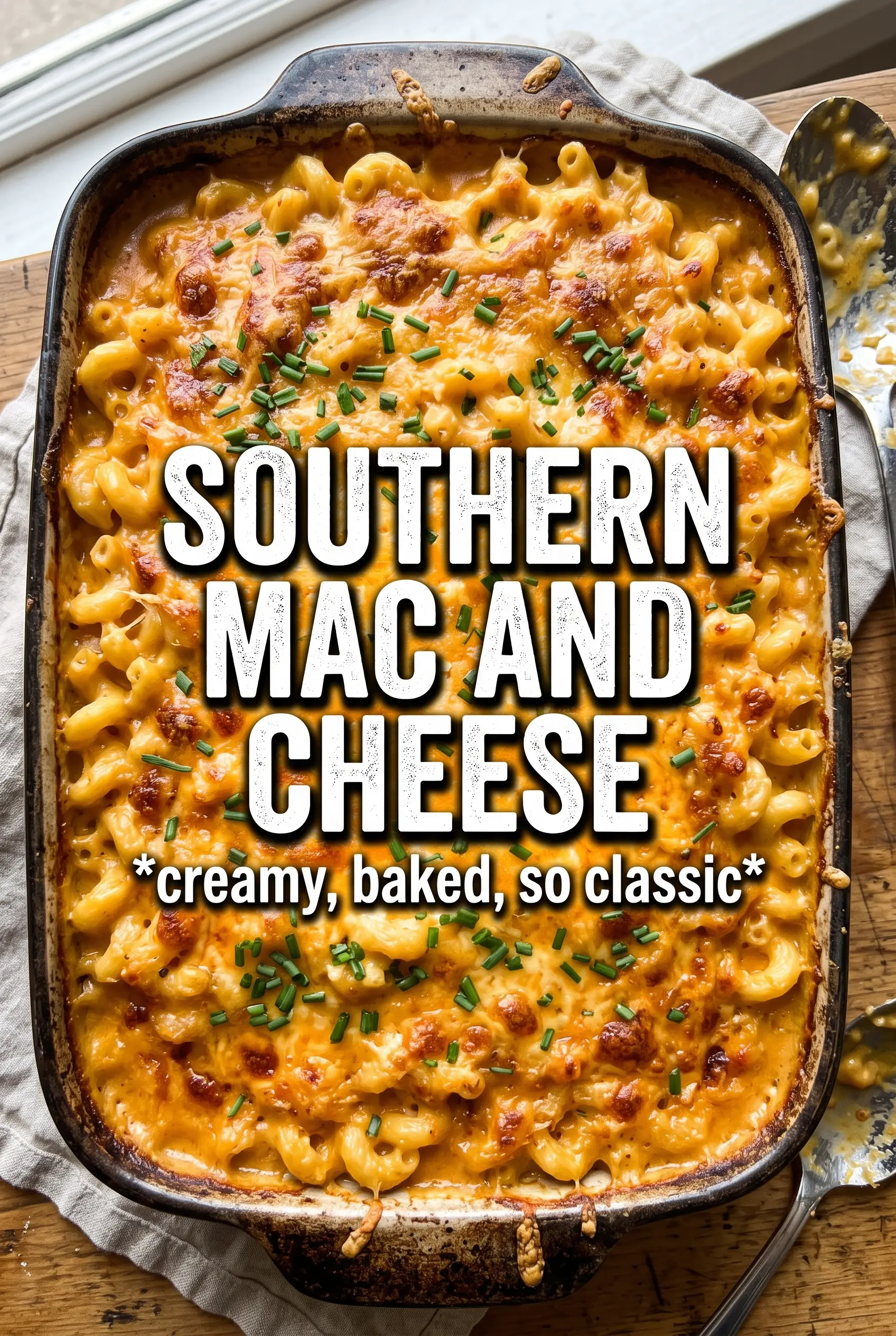
Southern Mac And Cheese
Ingredients
Equipment
Method
- Preheat the oven to 350F and butter a deep 9x13 baking dish so the mac doesn’t stick.
- Whisk eggs, whole milk, evaporated milk, Dijon, smoked paprika, garlic powder, cayenne, salt, and pepper until smooth and fully combined.
- Layer half the cooked macaroni in the baking dish, then scatter 2 cups sharp cheddar, all the Colby Jack, and Gruyere over the top for even melting.
- Add the remaining macaroni, then pour the egg-milk custard over everything so it seeps through the pasta.
- Dot the surface with butter cubes and top with the remaining 2 cups sharp cheddar for a crisp, golden crust.
- Bake for 40-45 minutes at 350F until the custard is set and the top is golden and bubbling at the edges.
- Rest the mac and cheese for 10 minutes before serving so the interior firms up into a creamy custard texture.