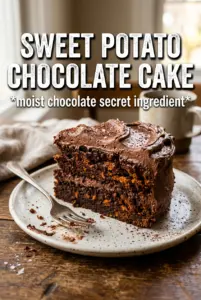
Moist chocolate cake gets a quieter kind of richness from sweet potato puree, and that’s what makes this one stand out. The crumb stays soft for days, the cocoa tastes deeper instead of bitter, and the frosting clings to every layer with that glossy, spoon-licking finish you want from a celebration cake.
The sweet potato doesn’t read as “sweet potato” in a loud way. It works more like a built-in texture booster, adding body and tenderness while letting the chocolate stay front and center. Buttermilk keeps the batter from turning heavy, and the combination of melted chocolate ganache and powdered sugar gives the frosting enough structure to slice cleanly without losing its shine.
Below, I’m walking through the part that matters most: how to keep the cake tender without making it dense, how to get the ganache to the right spreadable texture, and a few smart swaps if you want to adjust the recipe without losing what makes it good.
The cake stayed unbelievably moist for three days, and the sweet potato gave the crumb a soft, almost velvety texture without changing the chocolate taste at all. The ganache frosting was thick enough to spread cleanly but still had that smooth, fudgy finish.
Save this sweet potato chocolate cake for the days when you want a moist chocolate layer cake with a fudgy ganache finish.
The Trick to Keeping Sweet Potato Cake from Eating Heavy
The biggest risk here isn’t dryness. It’s density. Sweet potato puree adds moisture and body, but if the batter gets overmixed after the flour goes in, the cake turns tight and a little gummy instead of plush. Fold the dry ingredients in just until the last streak disappears, then stop. The batter should look thick and glossy, not whipped and airy.
The other place people lose this cake is in the bake time. The center should spring back lightly when touched and a toothpick should come out with a few moist crumbs, not wet batter. Pull it before the top turns overly dark, because cocoa cakes can look done before the middle has set.
What Each Ingredient Is Actually Doing in This Cake
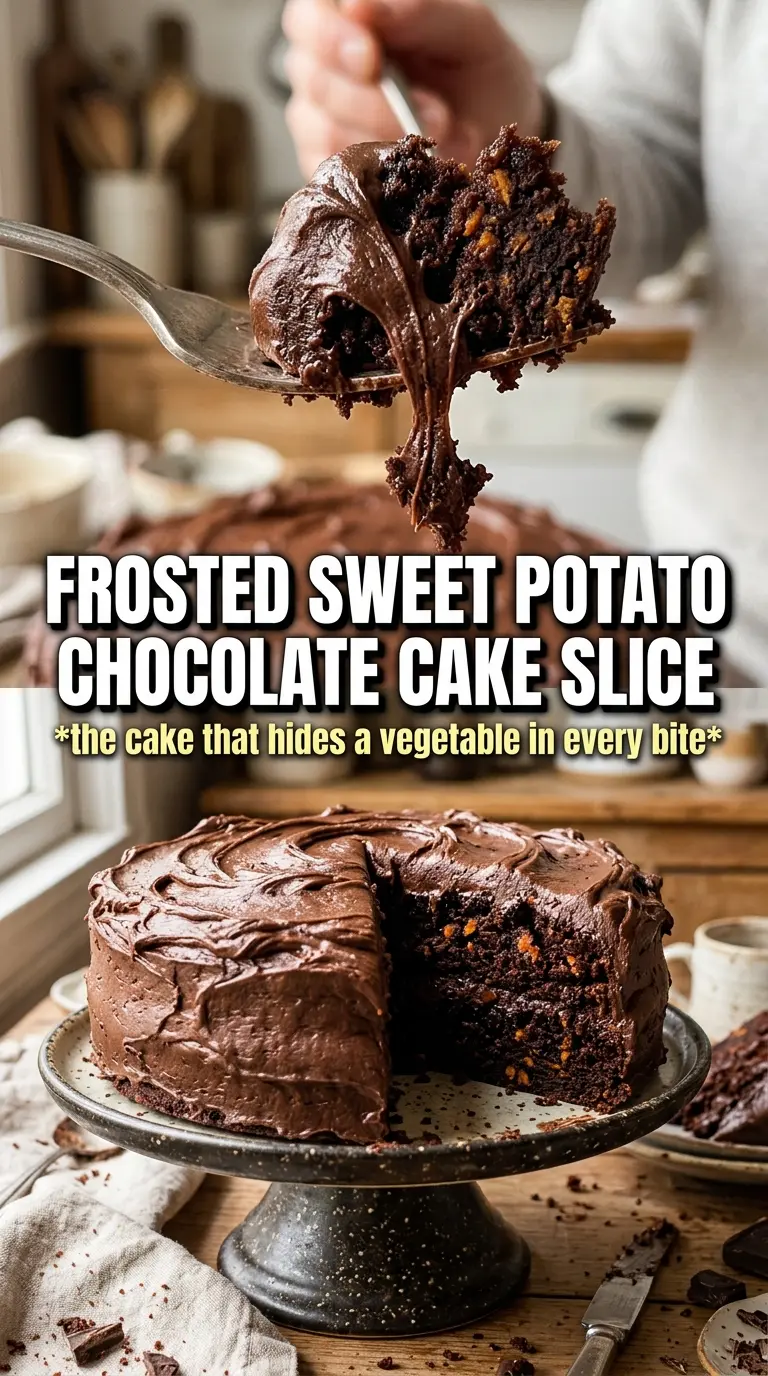
- Sweet potato puree — This is the ingredient that keeps the crumb soft for days. Use smooth puree, not chunky mashed sweet potato, so it blends cleanly into the batter. Canned puree works if it’s plain sweet potato with no sugar or spices added.
- Buttermilk — The acidity helps the cocoa taste fuller and keeps the cake from feeling flat. If you’re out of buttermilk, stir 1 tablespoon of lemon juice or vinegar into 1 cup of milk and let it sit for 5 minutes. It won’t be identical, but it gets close enough for this cake.
- Butter and sugar — This base creates the structure that holds up all the moisture from the sweet potato and buttermilk. Beat them until the mixture looks fluffy and paler in color; that helps the cake rise with a lighter texture.
- Dark chocolate chips — Good chocolate matters more here than in a cake that hides behind frosting. The ganache is only as smooth and flavorful as the chocolate you melt into it. Use chips that you’d actually snack on, because there’s nowhere for a bland chocolate to hide.
- Cocoa powder — This deepens the chocolate flavor and gives the cake its dark color. Natural cocoa powder works well with the baking soda in the batter, so don’t swap in Dutch-process unless you’re adjusting the leavening too.
Building the Batter and Ganache Without Losing Texture
Start with the butter and eggs at room temperature
Cream the butter and sugar until the mixture looks light and a little fluffy, then add the eggs one at a time. Cold eggs can make the batter look slightly curdled, which slows everything down and keeps the structure from blending evenly. Once the sweet potato, buttermilk, and vanilla go in, the batter should look smooth and thick before you add the dry ingredients.
Fold the flour mixture in just until it disappears
Whisk the flour, cocoa, baking powder, baking soda, cinnamon, and salt together first so the leavening is evenly distributed. Add the dry mixture in batches and mix gently, because cocoa cakes get tough fast when they’re beaten after the flour hits the bowl. Stop as soon as there are no visible dry pockets; a few small lumps are fine and will bake out.
Watch the ganache, not the clock
Heat the cream until it just starts to steam, then pour it over the chocolate and butter and let it sit for two minutes before stirring. If you stir too soon, the chocolate can seize in little bits instead of melting smoothly. After it comes together, let it cool until spreadable, then beat in the powdered sugar and vanilla for a frosting that holds its shape without going stiff.
Frost only after the layers are completely cool
Warm cake will melt the ganache and slide the filling right out from under you. Let the layers cool all the way, then frost the middle first and work outward with an offset spatula or the back of a spoon. If the frosting starts looking too soft, chill it for a few minutes and try again rather than adding more sugar immediately.
How to Adapt This Cake for Different Kitchens
Dairy-Free Version
Swap the butter in the cake for a plant-based baking stick and use full-fat coconut cream in place of the heavy cream for the ganache. The cake still bakes up moist, but the frosting will taste a little more rounded and less sharply chocolatey. Choose an unsweetened dairy-free butter, or the cake can lean greasy.
Gluten-Free Swap
Use a 1:1 gluten-free flour blend that already includes xanthan gum. The cake will stay tender, but it may bake with a slightly more delicate crumb, so let it cool fully before removing it from the pans. A straight rice flour swap won’t work here; the texture will fall apart.
Lighter Chocolate Finish
If you want the cake less rich, thin the ganache frosting with an extra splash of cream and stop short of fully whipping it. You’ll get a softer, more spreadable topping instead of a dense fudgy layer. The cake itself stays the same, but the finished look will be smoother and a little less dramatic.
Storage and Reheating
- Refrigerator: Store covered for up to 5 days. The ganache firms up in the fridge, but the cake stays moist.
- Freezer: Freeze unfrosted layers tightly wrapped for up to 2 months, or freeze sliced frosted pieces on a tray before wrapping. The ganache holds up better than buttercream, so this cake freezes well.
- Reheating: Let refrigerated slices sit at room temperature for 20 to 30 minutes before serving. If you warm it too much, the frosting will go glossy and soft before the crumb has a chance to relax.
Answers to the Questions Worth Asking
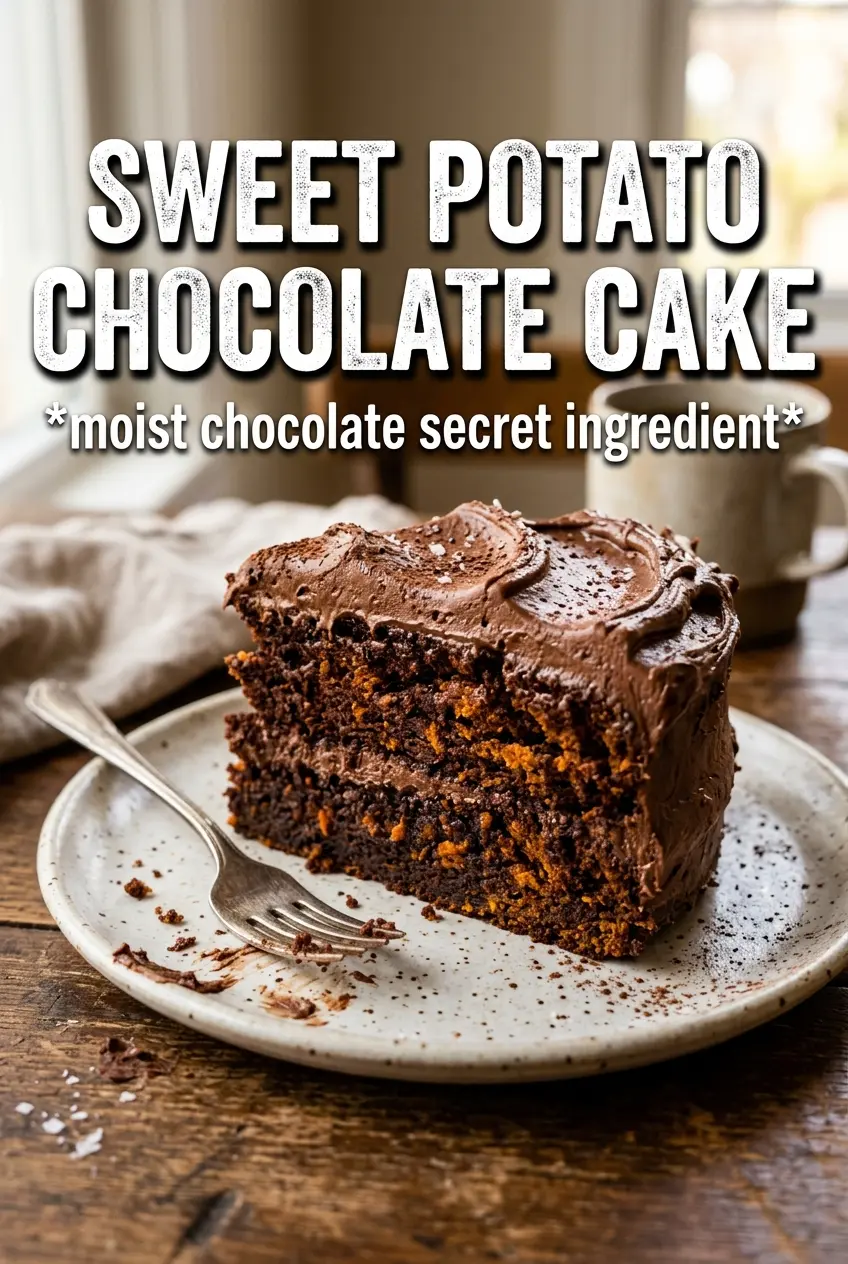
Sweet Potato Chocolate Cake
Ingredients
Equipment
Method
- Preheat the oven to 350F, then grease two 9-inch round pans so the cakes release cleanly.
- Beat the butter and sugar until smooth, then add the eggs, sweet potato puree, buttermilk, and vanilla and mix until the batter looks evenly blended.
- Fold in the flour, cocoa powder, baking powder, baking soda, cinnamon, and salt just until no dry streaks remain, keeping the batter thick and smooth.
- Divide the batter between the two pans and tap lightly to settle the surface.
- Bake for 35-40 minutes at 350F, until the centers spring back and a toothpick comes out with moist crumbs.
- Cool the cakes completely in the pans before frosting, so the ganache won’t melt.
- Heat the heavy cream until steaming, then pour it over the dark chocolate chips and add the unsalted butter.
- Rest for 2 minutes, then stir until the ganache is smooth and glossy.
- Cool the ganache until it is spreadable, then beat in the powdered sugar and vanilla until fluffy.
- Frost between the layers with a thick ribbon of fluffy frosting, then spread the remaining frosting over the top and sides.