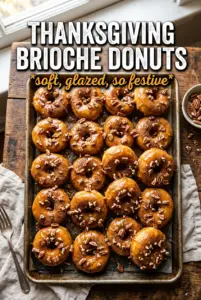
Pillowy brioche donuts make Thanksgiving feel a little more playful without losing the cozy, spiced flavors people expect from the table. These fry up with a light, feather-soft crumb and a thin golden crust that gives way the second you bite in. The glazes keep each donut distinct — pumpkin spice for warmth, maple for depth, cranberry for a bright, tart finish — so the tray looks festive before anyone even takes a bite.
What makes this dough work is the timing. The butter goes in after the flour has had a chance to build some structure, which keeps the dough supple instead of greasy and slack. Bread flour gives the donuts enough strength to puff without collapsing in the oil, and the long knead is what turns the dough smooth enough to fry up with that airy, layered texture brioche is known for. If the dough feels sticky at first, that’s normal; it should be soft and slightly tacky, not dry.
Below, I’ve included the detail that matters most for fried dough — how to handle the proof so the centers stay fluffy instead of dense — plus the glaze variations I use when I want the platter to look extra special.
The dough was unbelievably soft and the donuts stayed light even after frying. I used the maple glaze and cranberry glaze, and the pumpkin spice one was gone first because it set up with just the right sheen instead of sliding off.
Like these brioche donuts? Save them to Pinterest for a Thanksgiving dessert tray with pumpkin spice, maple, and cranberry glazes.
The Part That Keeps Brioche Donuts Light Instead of Greasy
Brioche dough gets its tenderness from butter and eggs, but that richness can turn against you if the dough never develops enough strength before frying. The biggest mistake is rushing the knead after the butter goes in. At first the dough looks slippery and broken. Keep going until it turns smooth, elastic, and only lightly tacky. That’s the point where the gluten can hold the gases from the yeast and give you that soft, puffy center instead of a heavy ring.
The other place people lose the texture is in the second rise. If the donuts go into the oil under-proofed, they spring unevenly and can burst. If they over-proof, they flatten and absorb too much fat. They should look airy and a little jiggly, but still hold their shape when lifted. A gentle fingertip press should spring back slowly, not snap back instantly.
- Yeast — Warm milk wakes it up, but the milk should feel warm, not hot. If it’s too hot, the dough won’t rise. If your kitchen runs cold, give the first rise the full hour and don’t judge by the clock alone.
- Bread flour — The higher protein content gives these donuts enough chew to stay tall in the fryer. All-purpose flour works in a pinch, but the texture will be softer and a little less structured.
- Butter — Softened butter needs to be added gradually so it emulsifies into the dough. Dumping it all in at once makes the dough greasy and harder to knead evenly.
- Pumpkin pie spice — It seasons the dough itself, not just the glaze, so every bite tastes like fall instead of just the topping. If you only have cinnamon, use it, but the flavor will be narrower and less aromatic.
What Each Ingredient Is Actually Doing in This Recipe
- Primary ingredient (the star) — Quality matters most. Choose the best you can find.
- Cooking medium (oil, butter, or broth) — This carries flavors and prevents dryness.
- Seasonings (salt, pepper, spices, herbs) — Layer flavors so nothing overpowers. Build depth gradually.
- Aromatics (garlic, onion, herbs) — Cook with fat to bloom flavors. Become the foundation.
- Supporting ingredients — Complement the main ingredient without overpowering it.
- Sauce or liquid (if applicable) — Brings flavors together. Balance richness with acid.
- Acid (lemon, vinegar, wine, or other) — Brightens and prevents flat-tasting results.
- Final finish (garnish, glaze, or sauce) — Prevents one-dimensional taste and adds visual appeal.
Building the Dough, Proving It, and Frying at the Right Moment
Activating the yeast
Stir the yeast into warm whole milk with the sugar and let it sit until foamy, then add the eggs. That foam tells you the yeast is alive and ready to work. If the mixture stays flat after 10 minutes, start over with fresh yeast, because the dough won’t recover later. The milk should feel comfortably warm on your wrist, about body temperature, not hot enough to sting.
Developing the brioche dough
Add the flour, salt, and pumpkin pie spice and knead until the dough starts to come together, then work in the softened butter a little at a time. The dough will look messy at first, then slowly turn smooth and stretchy as the butter disappears. Keep kneading for the full time so the gluten can catch up with the richness. You’re looking for a dough that’s soft, satiny, and only slightly sticky when touched with a dry finger.
Shaping and proofing the donuts
After the first rise, roll the dough to a 1/2-inch thickness and cut 3-inch circles. Re-roll scraps once; after that, the dough gets tougher and the second batch won’t fry as light. Let the cut donuts rise until they look puffy and airy, because this final proof is what keeps them from turning dense in the oil. If they spread too much, they were over-proofed; if they still feel tight and heavy, give them more time.
Frying and glazing
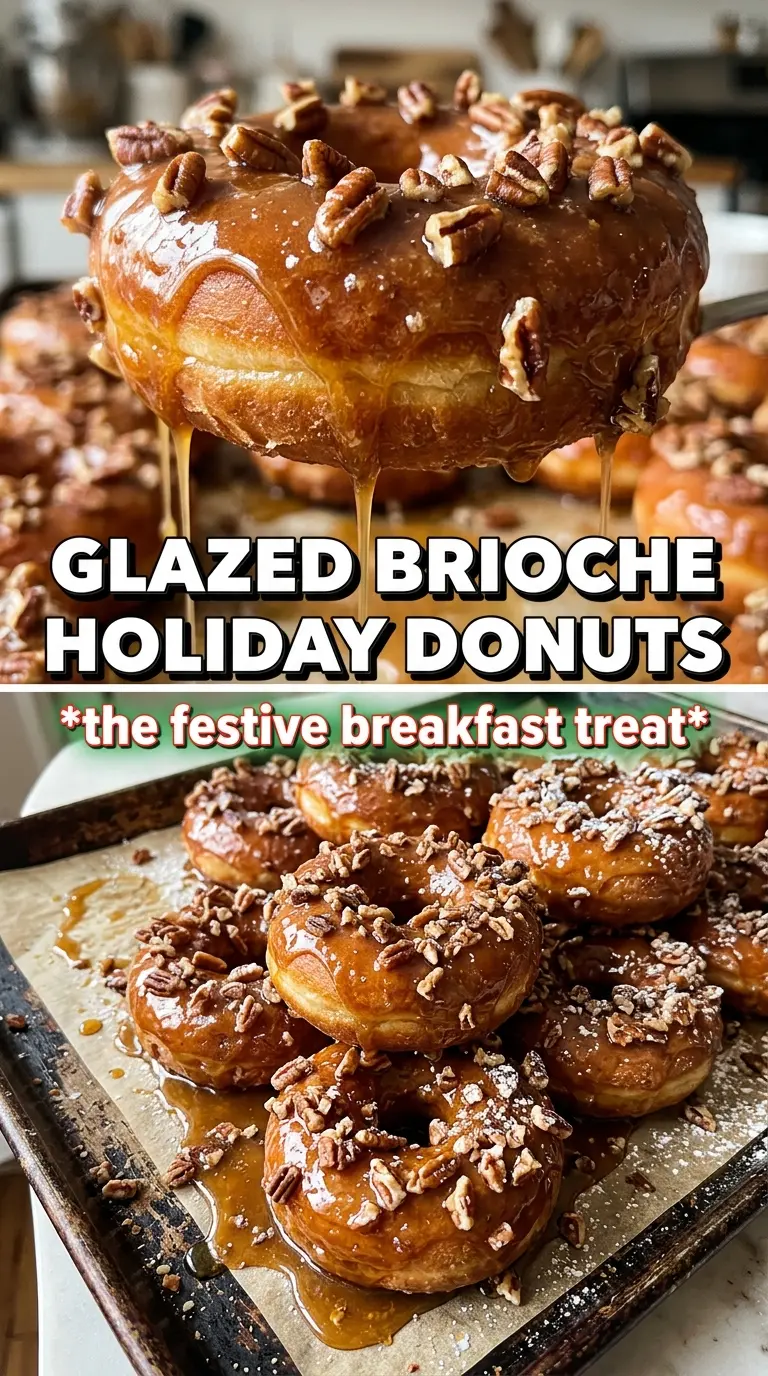
Fry at 350°F for about 90 seconds per side, just until the donuts are deep golden and lift easily from the oil. If the oil runs too cool, they soak up grease; too hot, and the outside browns before the middle cooks through. Drain them briefly, then dip while still warm so the glazes cling in a thin, even coat. Decorate right away with sprinkles or edible leaves before the glaze starts to set.
How to Change the Glazes Without Losing the Holiday Feel
Dairy-Free Donuts
Swap the whole milk for an unsweetened non-dairy milk and use a plant-based butter that stays firm at room temperature. The dough will still rise, but the crumb will be slightly less rich. For the glazes, use the same liquid swaps and keep them on the thicker side so they set cleanly instead of running off the donuts.
Maple Only, For a Softer Finish
If you want the whole batch to feel more unified, skip the separate glazes and coat everything in the maple version. It’s the least tart and the smoothest-looking glaze, so it gives you a cleaner bakery-style finish. Add the milk a drop at a time until it drips slowly off the spoon; too thin and it won’t stay on the warm donuts.
Cranberry Glaze With More Bite
Use whole berry cranberry sauce if you want a little texture and a sharper fruit note. Blend it well before mixing so the glaze stays smooth and glossy. This version is the brightest of the three, and it balances the richness of the brioche especially well.
Storage and Reheating
- Refrigerator: Store glazed donuts in a single layer for up to 2 days. The glaze softens in the fridge, and the dough loses some of its fresh-fried lift.
- Freezer: Freeze unglazed donuts for up to 1 month, tightly wrapped. Thaw at room temperature, then glaze after they’re fully defrosted so the coating stays smooth.
- Reheating: Warm unglazed donuts in a 300°F oven for 5 to 7 minutes. Skip the microwave if you can; it makes brioche rubbery and can melt the glaze into a sticky mess.
Questions I Get Asked About This Recipe
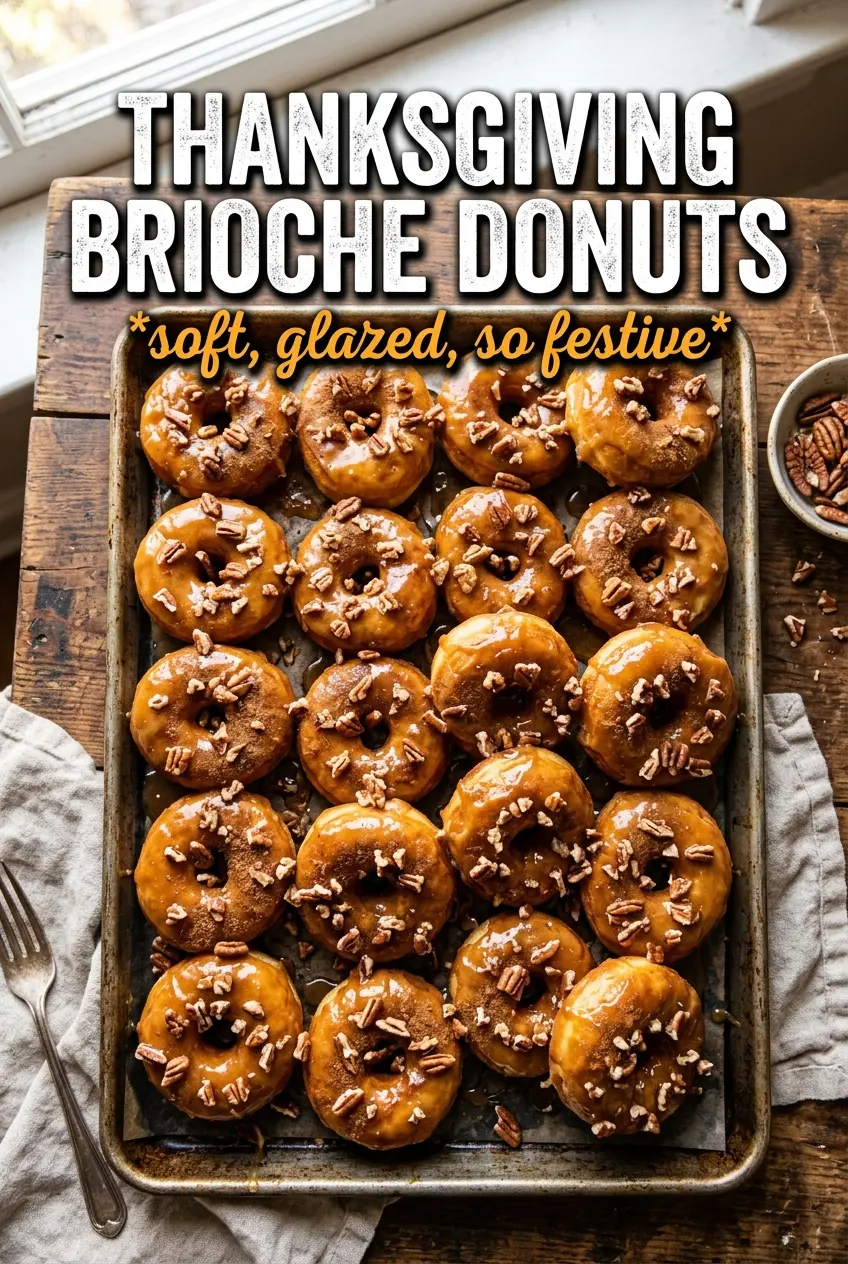
Thanksgiving Brioche Donuts
Ingredients
Equipment
Method
- Activate the yeast in the warm whole milk by stirring in the sugar, then add the eggs. Knead in the bread flour, salt, and pumpkin pie spice until combined, about 6 minutes, until the mixture looks uniform (slightly shaggy is okay).
- Knead in the softened unsalted butter gradually, about 8 more minutes, until the brioche dough is smooth and slightly tacky (it should stretch without tearing).
- Cover and rise the dough for 1 hour, until it has noticeably puffed and looks airy. Roll the dough to about 1/2-inch thickness and cut 3-inch circles.
- Arrange the cut donuts on a lined surface and rise 30 to 45 minutes, until puffy and slightly increased in size.
- Heat vegetable oil in a Dutch oven to 350°F. Fry the donuts for 90 seconds per side, until golden, flipping once when the underside is browned.
- Drain the fried donuts briefly, then dip each one in your chosen glaze (pumpkin spice, maple, or cranberry) while warm. Immediately top with fall sprinkles and edible decorations so they stick as the glaze sets.