Slow cooker beef bourguignon turns into deep, wine-braised comfort with almost no babysitting once the early browning is done. The beef comes out fork-tender, the carrots hold their shape, and the sauce settles into that glossy, burgundy richness that tastes like it cooked all day because it did. The mushrooms and pearl onions at the end keep the whole pot from tasting flat or overdone.
The part that makes this version worth making is the layering. Bacon starts the pan, then the beef gets browned in that fat, and the onion-tomato paste-wine base picks up every bit of flavor left behind. I also keep the mushrooms and pearl onions out of the slow cooker until the end so they stay meaty and don’t disappear into the stew. That small extra step makes the final bowl taste more like classic bourguignon and less like a generic beef stew.
Below you’ll find the timing that keeps the beef tender without shredding into strings, plus the few ingredient swaps that still give you a proper, rich result.
The sauce got that deep red wine color and the beef was fall-apart tender after 8 hours on low. I added the mushrooms at the end like you said and they stayed perfectly meaty instead of getting lost.
Save this slow cooker beef bourguignon for the nights when you want tender wine-braised beef, mushrooms, and pearl onions with almost no last-minute work.
The Part Most People Get Wrong: Browning Before the Slow Cooker
The biggest mistake in beef bourguignon is putting everything straight into the slow cooker and hoping time will create depth. It won’t. Without a proper sear, the beef tastes boiled and the sauce never gets that dark, savory base that makes this dish worth the effort. Browning in batches matters because crowded meat steams, and steamed meat doesn’t build flavor.
The bacon fat gives the chuck a head start, but the real payoff comes from the browned bits left in the pan after the beef goes in. When the onion, garlic, tomato paste, and wine hit that pan, they loosen all of it back into the sauce. That’s where the stew gets its body and its edge. The slow cooker is for tenderness; the skillet work is for taste.
What Each Ingredient Is Actually Doing in This Stew
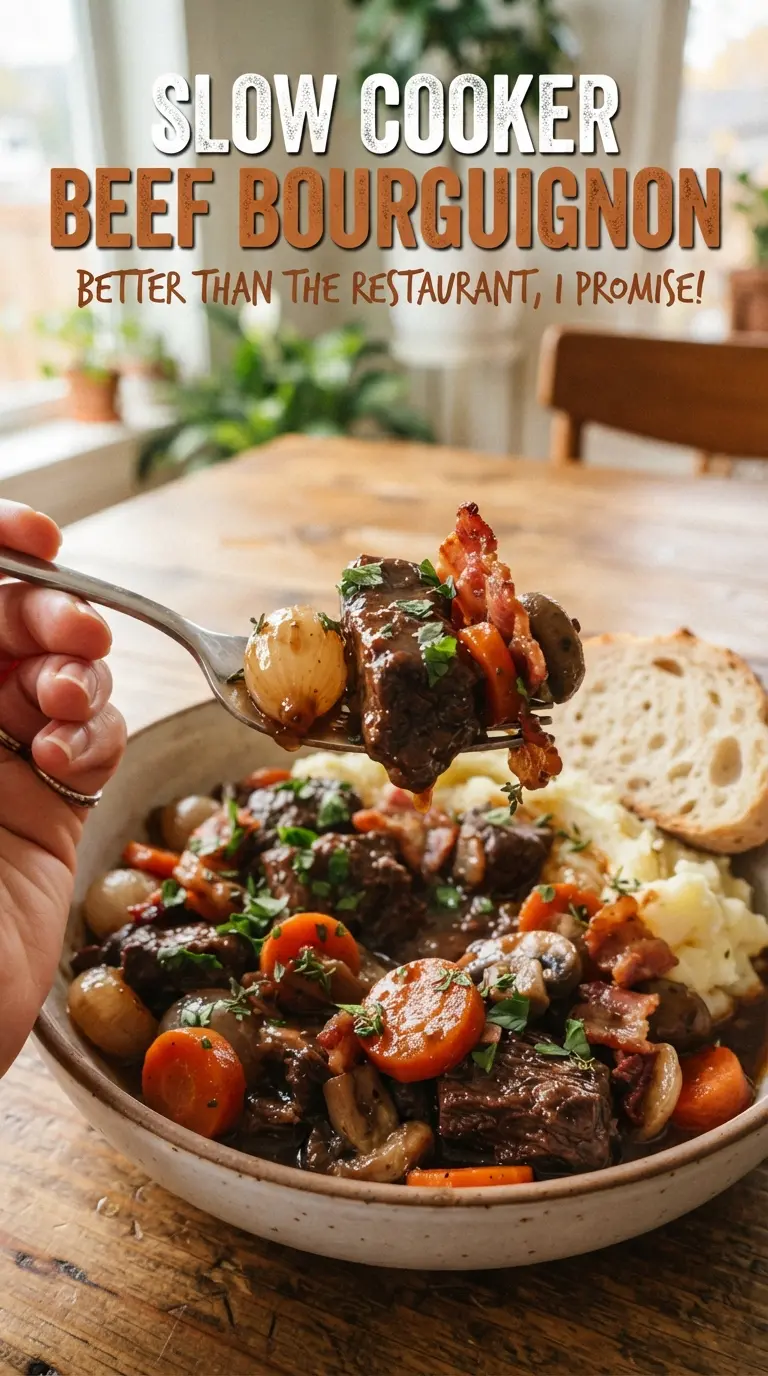
- Beef chuck — This is the cut that breaks down into spoon-tender pieces without falling apart too early. If you swap in a leaner roast, you’ll lose that silky, braised texture.
- Dry red wine — This is the backbone of the sauce, so use a wine you’d drink. A Cabernet, Merlot, or Pinot Noir all work; if you need to skip alcohol, use more beef broth plus a tablespoon of red wine vinegar at the end for brightness, though it won’t taste exactly the same.
- Bacon — It seasons the whole pot from the start and gives you fat for browning the beef. Thick-cut bacon holds up best and leaves enough rendered fat to do the job.
- Tomato paste — A small amount deepens the color and rounds out the wine. Let it cook for a few minutes until it darkens slightly; that short step takes away the raw edge.
- Cremini mushrooms and pearl onions — Adding them near the end keeps their texture intact. If you put them in for the full cook, they’ll soften into the sauce and lose the classic bourguignon feel.
- Flour — It lightly coats the beef and helps the braising liquid thicken as it cooks. Don’t skip it unless you need gluten-free; in that case, use a cornstarch slurry at the end instead.
Building the Braise So the Sauce Stays Glossy, Not Flat
Rendering the Bacon and Browning the Beef
Cook the bacon until crisp, then leave the fat in the pan. That fat carries the first layer of flavor into the beef, and the crisp pieces go straight into the slow cooker where they soften just enough without turning chewy. Brown the beef in batches and keep the pieces in a single layer so they actually sear; if the pan looks crowded, split it into more rounds. You’re looking for a dark crust on the outside, not cooked-through meat.
Cooking Down the Aromatics and Wine
After the beef is out, cook the onion, garlic, and tomato paste until the tomato paste darkens and smells a little sweet. Pour in the wine and scrape the bottom hard enough to release every browned bit; that’s the flavor you worked for. Let it simmer for a few minutes so the sharp edge of the wine softens before it goes into the slow cooker. If you rush this step, the finished stew can taste thin and sour.
Letting the Slow Cooker Do the Tenderizing
Add the broth, carrots, thyme, and bay leaves, then cook on LOW for 7 to 8 hours. Low heat gives the beef time to turn tender without shredding into dry fibers. If you cook it on high, the outside can get stringy before the center has fully softened. The stew is ready when a fork slips through the beef with almost no resistance and the carrots are tender but not collapsing.
Finishing With the Mushrooms and Pearl Onions
Sauté the mushrooms and pearl onions in butter until the mushrooms pick up some color and the onions lose their frozen chill. Stir them into the stew for the last 30 minutes. This keeps them distinct and gives the finished bowl some texture instead of one-note softness. Pull the bay leaves before serving, then spoon the stew over mashed potatoes or egg noodles so the sauce has something to cling to.
How to Adapt This Slow Cooker Beef Bourguignon Without Losing the Plot
Gluten-Free Version
Swap the all-purpose flour for a cornstarch coating or skip the flour entirely and thicken the finished stew with a cornstarch slurry. You’ll lose a little of the subtle body that flour gives during the long cook, but the final texture will still be rich and glossy.
No Alcohol Needed
Use extra beef broth in place of the wine and add 1 tablespoon red wine vinegar or balsamic at the end for a little brightness. The stew will still be savory and comforting, but it won’t have the same deep wine note that defines bourguignon.
Using a Different Cut of Beef
Brisket or boneless short ribs can replace chuck if that’s what you have. Short ribs give you a silkier, richer result, while brisket needs the full low-and-slow time or it can stay tight and chewy in the center.
Storage and Reheating
- Refrigerator: Store for up to 4 days. The flavor gets even deeper overnight, and the sauce will thicken as it chills.
- Freezer: It freezes well for up to 3 months. Cool it completely, portion it into airtight containers, and leave a little space for expansion.
- Reheating: Warm it gently on the stove over low heat or in the microwave at medium power. Don’t boil it hard or the beef can tighten up and the sauce can separate.
Answers to the Questions Worth Asking
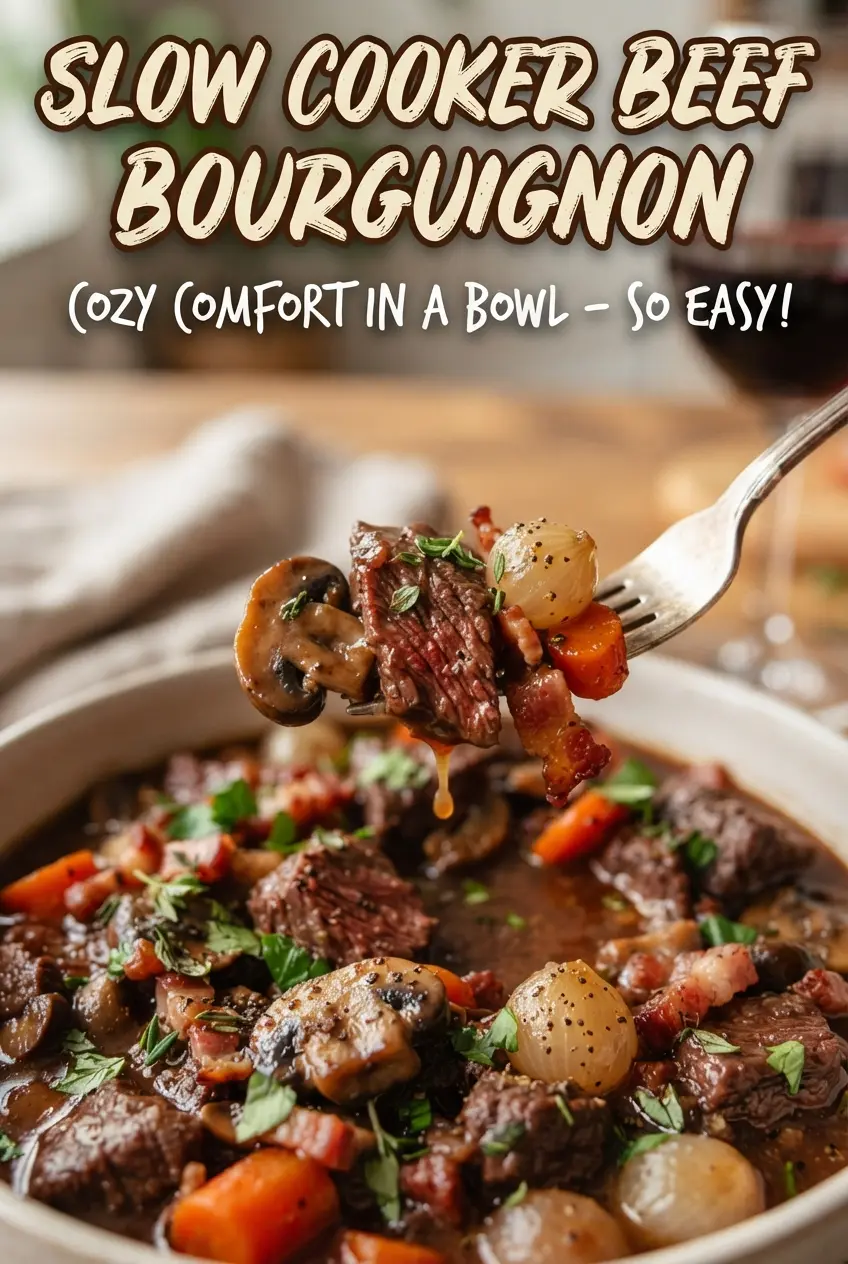
Slow Cooker Beef Bourguignon
Ingredients
Equipment
Method
- Cook the thick-cut bacon in a cast iron skillet until crisp, then transfer the crisp bacon to the slow cooker and leave the bacon fat in the pan.
- Season the beef chuck cubes with salt and black pepper, then toss with all-purpose flour and brown in batches in the bacon fat in the skillet.
- Add the browned beef (and any floury bits) to the slow cooker with the bacon.
- Add diced onion, minced garlic, and tomato paste to the skillet and cook for 3 minutes to soften and deepen in color.
- Pour in the dry red wine and simmer for 3 minutes, scraping up browned bits from the pan, then pour the mixture into the slow cooker.
- Add beef broth, sliced carrots, dried thyme, and bay leaves to the slow cooker, cover, and cook on LOW for 7-8 hours until the beef is very tender.
- Melt the butter in the skillet and sauté the cremini mushrooms and frozen pearl onions until golden.
- Stir the sautéed mushrooms and pearl onions into the stew, then continue cooking for the last 30 minutes on LOW.
- Remove the bay leaves, then serve the beef bourguignon over mashed potatoes or egg noodles.