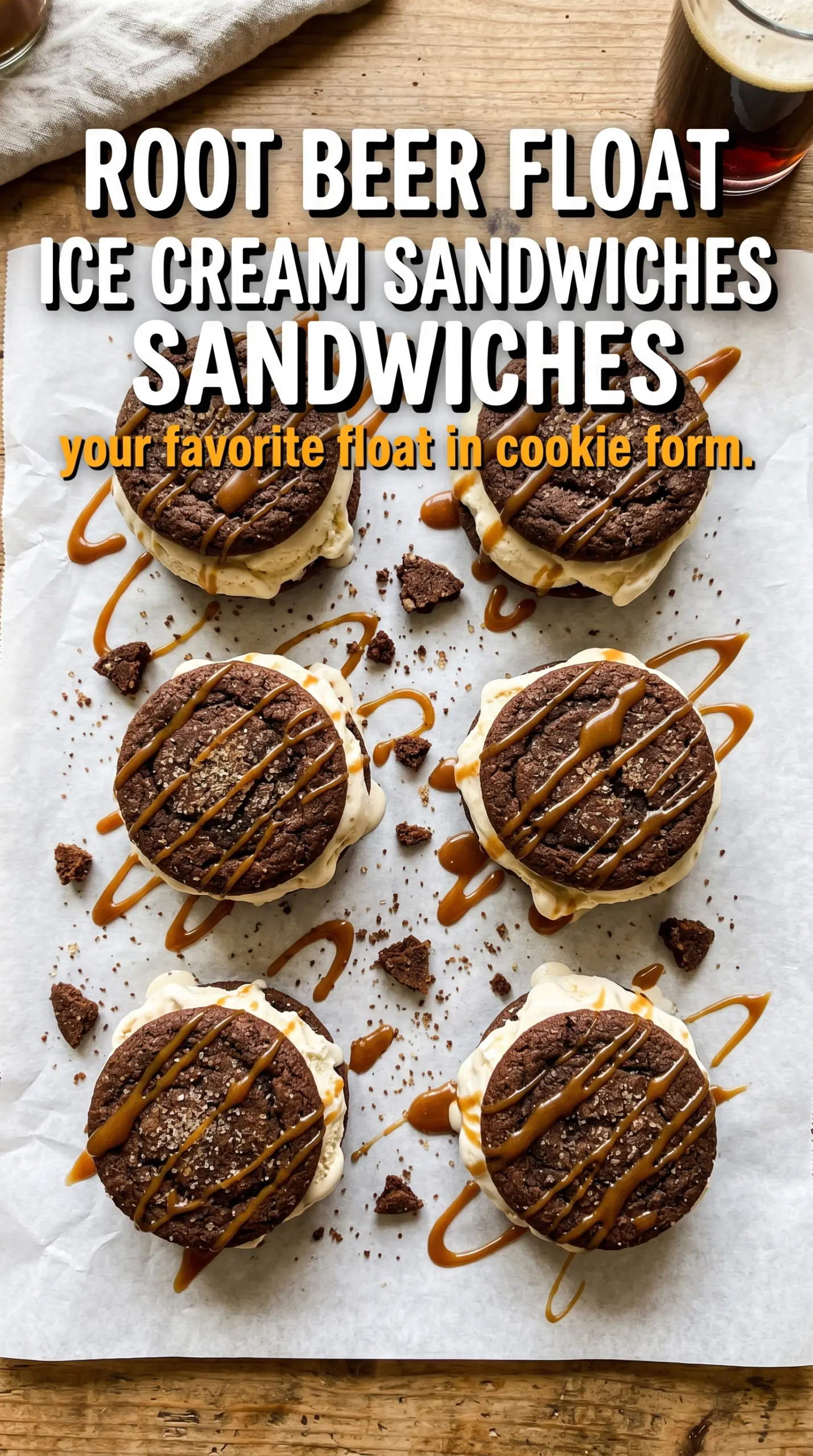
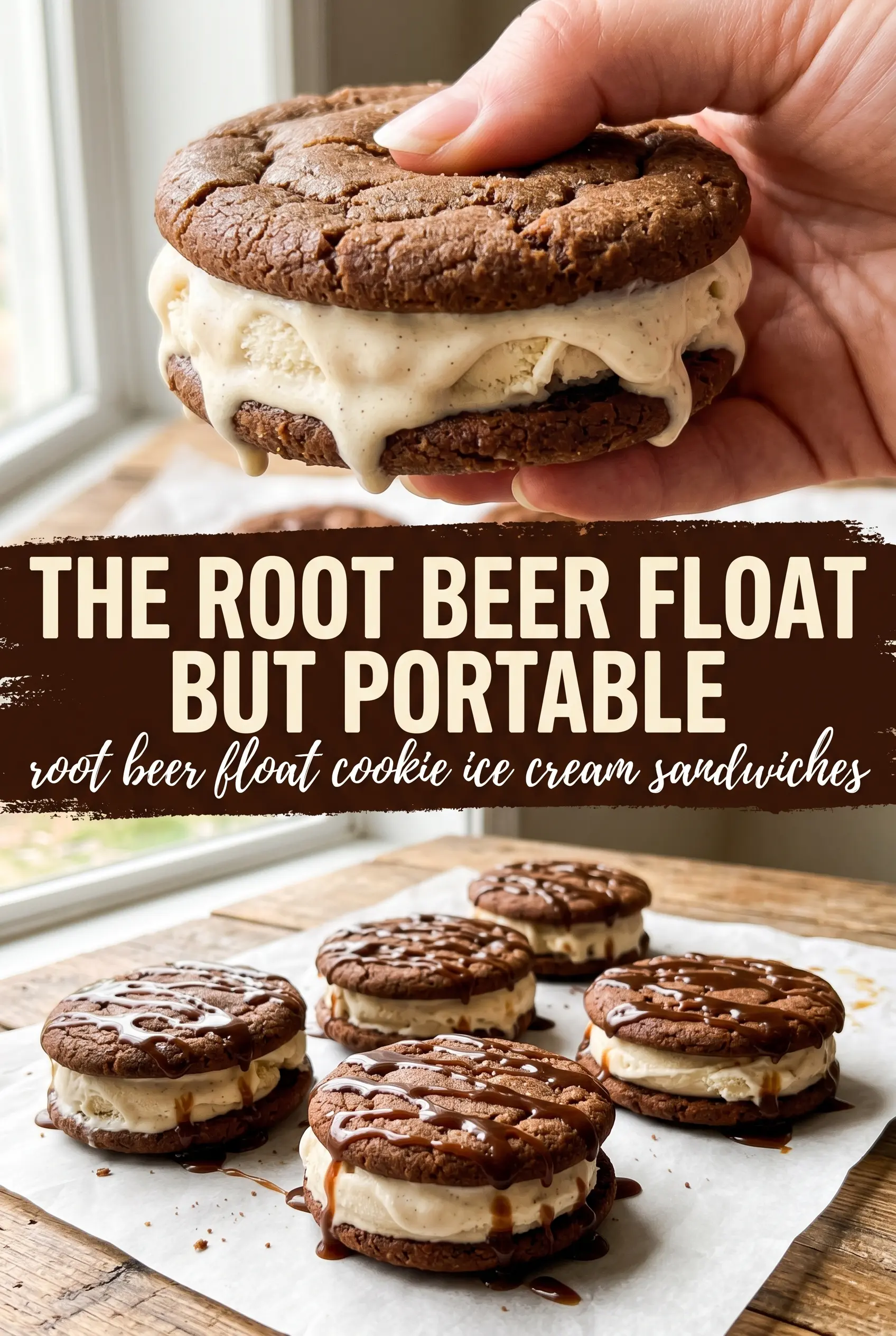
Root beer float cookie ice cream sandwiches deliver that old-school soda fountain feeling in a frozen handheld package: soft molasses cookies, vanilla bean ice cream, and a root beer caramel drizzle that tastes like the last sip of a float. The cookies stay tender enough to bite cleanly from the freezer, which matters more here than a crisp edge ever would.
The trick is leaning into both molasses and root beer extract without letting either one get loud. Molasses gives the cookie a deep, almost toasty backbone, while the root beer flavor comes through best when it’s mixed into the dough and again in the caramel drizzle. That second hit is what makes the whole sandwich read like a float instead of just a vanilla cookie sandwich.
Below, you’ll find the small timing details that keep the cookies soft, the ice cream from squishing out, and the drizzle from turning the sandwich into a sticky mess. The whole thing freezes up beautifully once assembled, which makes it an easy dessert to pull out when you want something nostalgic but still polished.
The cookies stayed soft even after freezing, and the root beer caramel gave it that real float taste. I served them after one hour in the freezer and they held together perfectly.
Save these root beer float cookie ice cream sandwiches for the kind of dessert that tastes like a soda fountain float with a soft cookie bite.
The Reason These Cookies Stay Soft After Freezing
The biggest mistake with ice cream sandwiches is baking cookies that turn hard in the freezer. Here, the dough is built to stay tender: molasses brings moisture, butter gives the cookies richness, and a short bake keeps the centers just set instead of dry. That texture matters because the cookie has to survive freezing without cracking when you bite into it.
Root beer extract does the heavy lifting for flavor, but it works best when it’s paired with vanilla and molasses instead of trying to stand alone. If the cookies taste flat before freezing, they’ll taste even flatter once cold. You want them to read a little stronger than you think in the oven; the freezer softens everything down.
What Each Ingredient Is Actually Doing in the Float Flavor
The dough is simple, but every part earns its place.
- Molasses — This is what gives the cookie that dark, old-fashioned soda fountain depth. There’s no real substitute that brings the same color, moisture, and slightly bittersweet edge, so keep it in if you can.
- Root beer extract — This is the signature flavor. Some brands are stronger than others, so start with the amount listed and taste the dough if your brand allows it; too much and the cookies can turn medicinal.
- Vanilla bean ice cream — Use a dense, good-quality ice cream if you can. Soft, airy ice cream melts too fast during assembly and squashes out at the edges.
- Caramel sauce — The caramel makes the root beer flavor feel rounded instead of sharp. Stir the extract in after the caramel is off the heat so the flavor stays clean and doesn’t cook off.
- All-purpose flour — This gives the cookies enough structure to hold the sandwich together without making them dry. Don’t swap in a heavy whole-grain flour here unless you want a firmer, denser result.
Assembling Them Before the Ice Cream Wins
Mixing the Cookie Dough
Beat the butter and sugar until the mixture looks fluffy and slightly pale, then add the molasses, egg, root beer extract, and vanilla. The dough should look glossy before the flour goes in. Once you stir in the dry ingredients, stop as soon as the flour disappears; overmixing makes the cookies tough, and tough cookies get even harder once frozen.
Baking to the Soft Set
Scoop the dough into rounds and press them slightly flat so they bake into sandwich-sized cookies instead of domes. Pull them when the edges look set and the centers still look a little soft. They finish as they cool on the pan, and that last carryover heat is what keeps them tender instead of crumbly.
Filling and Freezing Cleanly
Let the cookies cool completely before adding ice cream, or the filling will melt immediately and slide around. Work with the ice cream when it’s firm but scoopable, then sandwich the cookies gently and press just enough to spread the filling to the edges. Drizzle the root beer caramel after assembly, then freeze the sandwiches for at least an hour so they set into neat, hand-held treats.
How to Adapt These Without Losing the Float Effect
Dairy-Free Version
Use a plant-based butter and a dairy-free vanilla ice cream with a dense texture, not a whipped one. The sandwich will still freeze well, but a lighter ice cream can get icy and separate at the edges.
Cream Soda Swap
Swap the root beer extract in the caramel for cream soda extract if you want a softer vanilla-forward version. The cookies will still bring the molasses note, but the overall flavor lands lighter and a little sweeter.
Gluten-Free Option
A 1:1 gluten-free baking flour blend works here as long as it includes xanthan gum. The cookies may spread a little less, so flatten the dough rounds before baking and keep an eye on the bake time.
Make-Ahead Freezer Stash
Assemble the sandwiches, wrap each one tightly, and freeze them on a tray until firm before moving them to a container. That extra step keeps them from sticking together and protects the cookie edges from freezer burn.
Storage and Reheating
- Refrigerator: Not the best place for these. The cookies soften too much and the ice cream melts into a sticky layer.
- Freezer: Store wrapped sandwiches for up to 2 weeks. After that, the cookies start picking up freezer flavor and the ice cream texture gets dull.
- Reheating: No reheating needed. Let a frozen sandwich sit at room temperature for 3 to 5 minutes before eating so the cookie softens slightly and the ice cream isn’t rock hard.
Answers to the Questions Worth Asking
Root Beer Float Cookie Ice Cream Sandwiches
Ingredients
Equipment
Method
- Preheat oven to 350F and place a sheet pan in the oven to warm slightly. Whisk all-purpose flour, baking soda, cinnamon, and salt in a bowl until evenly combined.
- Beat unsalted butter and granulated sugar until fluffy, scraping the bowl as needed. Add molasses, egg, root beer extract or flavoring, and vanilla extract and mix until smooth.
- Stir the flour mixture into the wet ingredients until just combined and no dry streaks remain. Scoop into rounded mounds and press flat onto the sheet pan.
- Bake at 350F for 10-12 minutes until the cookies look set at the edges. Cool completely before assembling.
- Stir 1 teaspoon root beer extract into 1/2 cup caramel until the sauce tastes evenly flavored. Sandwich vanilla bean ice cream between two cooled root beer cookies to form ice cream sandwiches.
- Drizzle root beer caramel over the top of each sandwich so it lightly coats the cookie surface. Freeze at least 1 hour until firm.