Juicy tomatoes, creamy mozzarella, and sweet blueberries make this Caprese salad land with more contrast than the classic version, while the basil and balsamic keep it grounded in familiar territory. The wreath-style arrangement does more than look festive. It gives each bite a little of everything: soft cheese, bright fruit, ripe tomato, and that sharp-sweet finish from the glaze.
The part that makes this work is balance. Use tomatoes that actually taste like something, because bland tomatoes drag the whole platter down. Slice the mozzarella thick enough to stay plush, then tuck the blueberries into the gaps so they don’t roll away or dominate the dish. A light hand with salt matters here too. Too much and the berries start to taste muted; too little and the tomatoes won’t wake up.
Below, I’ll walk through the easiest way to build the wreath so it holds its shape, plus the small adjustments that keep the salad crisp and polished right up to serving.
The wreath looked gorgeous on the table, but what sold me was the flavor. The blueberries added just enough sweetness against the balsamic and salty mozzarella, and it stayed fresh for the whole party.
Save this red, white, and blue Caprese wreath for a patriotic appetizer that looks festive and comes together in 15 minutes.
The Trick to Keeping This Caprese Wreath Bright, Not Watery
The biggest failure point in a layered Caprese platter is moisture. Tomatoes weep, mozzarella can leave a little liquid behind, and if you season too early the whole board starts to look sloppy before it reaches the table. The fix is simple: slice everything close to serving time, pat the tomato rounds dry if they seem especially juicy, and build the platter on a wide surface so the ingredients aren’t stacked into a soggy pile.
The other thing that matters is proportion. This is not a salad where the blueberries should be scattered randomly in handfuls. They work best when they act like a third color in the pattern, tucked into the gaps so each bite still reads as Caprese first, fruit second. That keeps the salad from tipping into dessert territory and preserves the savory edge that makes it work.
What Each Ingredient Is Actually Doing in This Dish
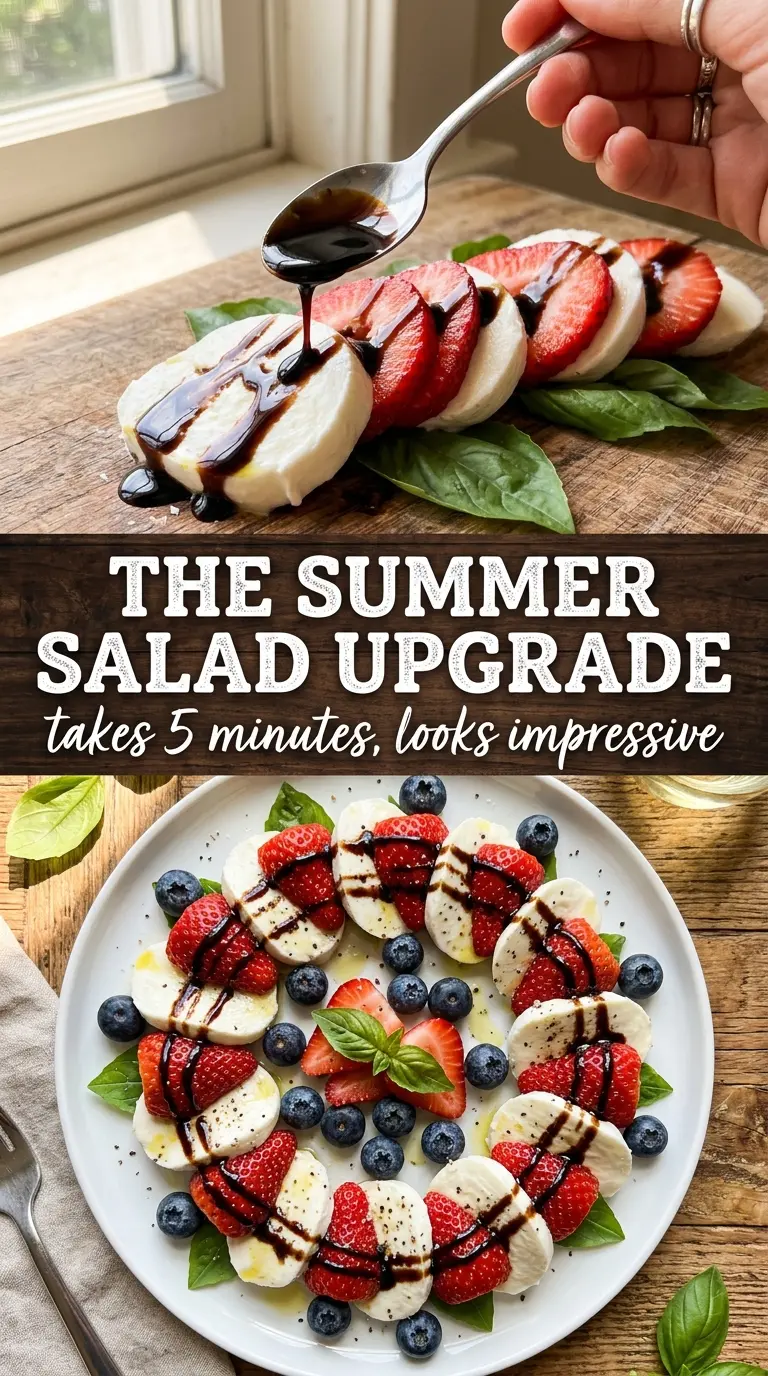
The tomatoes need to be ripe and full-flavored. Heirloom or beefsteak tomatoes give you enough surface area for the wreath and enough juice to taste like summer without turning mushy. If you only have smaller tomatoes, slice them thicker so they still read as a layer instead of a smear.
Fresh mozzarella matters here. The pre-shredded or low-moisture kind will taste rubbery and won’t give you the soft, milky bite this salad needs. If mozzarella pearls are what you have, they can work in a pinch, but slice them in half and keep the arrangement tight so the wreath still looks intentional.
Blueberries are the ingredient that makes this version different, so use berries that are firm and dry. If they’re soft or leaking juice, they’ll stain the cheese and make the platter look dull. Basil should be torn or left whole, depending on size; both work, but tearing larger leaves helps release a little aroma as soon as the olive oil hits them. Balsamic glaze is better than straight vinegar here because it clings to the salad instead of running to the bottom of the plate.
Building the Wreath So the Pattern Stays Clean
Lay the base in overlapping rounds
Start with the tomato and mozzarella slices, alternating them in a circle on a large platter. Overlap them just enough to hold the wreath shape without hiding the edges. If the slices are too far apart, the blueberries become the main visual element and the salad loses its Caprese look. If they’re packed too tightly, the platter gets heavy and hard to drizzle cleanly.
Use the berries as color accents, not filler
Tuck the blueberries into the spaces between the slices and around the outside edge. They should complete the pattern, not sit in one crowded mound. This keeps the blue color distributed evenly and gives you a neater bite when people serve themselves. The most common mistake here is piling them in the center, which makes the platter look unbalanced.
Finish after the platter is assembled
Add the olive oil, balsamic glaze, salt, and pepper at the very end. Once the dressing goes on, the tomatoes begin releasing juice and the basil wilts faster, so the salad should go straight from board to table. A light drizzle across the whole platter works better than pooling everything in one spot. You want sheen, not puddles.
How to Adapt This for Different Tables and Dietary Needs
Make it dairy-free
Swap the mozzarella for a good plant-based fresh mozzarella alternative. The texture won’t be identical, but you’ll keep the soft white layer and the salad will still hold its red-white-blue color story. Choose one that slices cleanly, not a spreadable version, or the wreath shape gets messy fast.
Use cherry tomatoes when large tomatoes aren’t worth buying
Halve the cherry tomatoes and arrange them cut-side down in the wreath. The flavor is often better than a bland out-of-season slicing tomato, and the smaller pieces give the platter a more jeweled look. You lose the dramatic layered rounds, but you gain better texture and less sogginess.
Add prosciutto for a heartier appetizer
Tuck folded ribbons of prosciutto between a few of the tomato and mozzarella sections. It adds salt and makes the platter more substantial without changing the basic assembly. Keep the amount modest, since too much cured meat crowds out the clean red-white-blue look.
Make it ahead without losing the finish
Slice the tomatoes and mozzarella a few hours ahead and keep them chilled separately, then assemble the platter right before serving. Hold the basil, oil, and glaze until the last minute. If you dress it too early, the basil darkens and the tomatoes start pooling liquid underneath.
Storage and Reheating
- Refrigerator: Best eaten the same day. Leftovers keep for about 1 day, but the tomatoes soften and the basil darkens.
- Freezer: This doesn’t freeze well. The mozzarella turns grainy and the tomatoes collapse when thawed.
- Reheating: No reheating needed. If you’re serving leftovers, let them sit at room temperature for 15 to 20 minutes so the cheese loses its fridge chill and the olive oil tastes fuller.
Questions I Get Asked About This Recipe
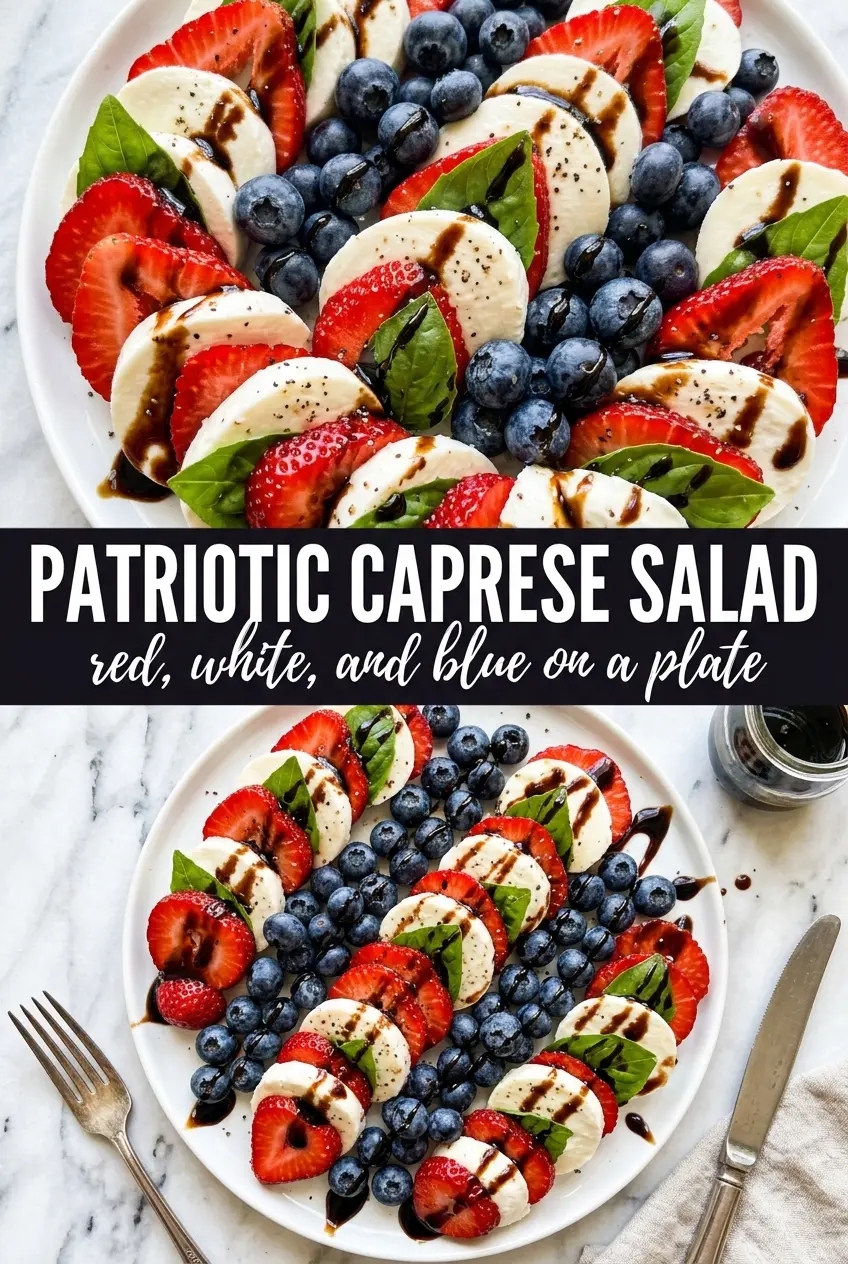
Red, White & Blue Caprese Salad
Ingredients
Method
- Arrange alternating tomato and mozzarella slices in an overlapping circle or wreath pattern on a large serving platter. Keep the layers even so each crimson and white band is visible.
- Tuck fresh blueberries between and around the slices to fill gaps and create the blue element. Place them close enough that the wreath looks full, not spaced out.
- Scatter fresh basil leaves throughout the wreath, tucking a few under the edges of the tomato and mozzarella. Aim for an even spread so you get basil in every bite.
- Drizzle extra virgin olive oil and balsamic glaze evenly across the whole platter. Use a gentle spiral or crosshatch so the glaze lightly coats rather than pools.
- Finish with flaky sea salt and cracked black pepper to taste, then serve immediately. The colors should look crisp and fresh, not softened by excess time.