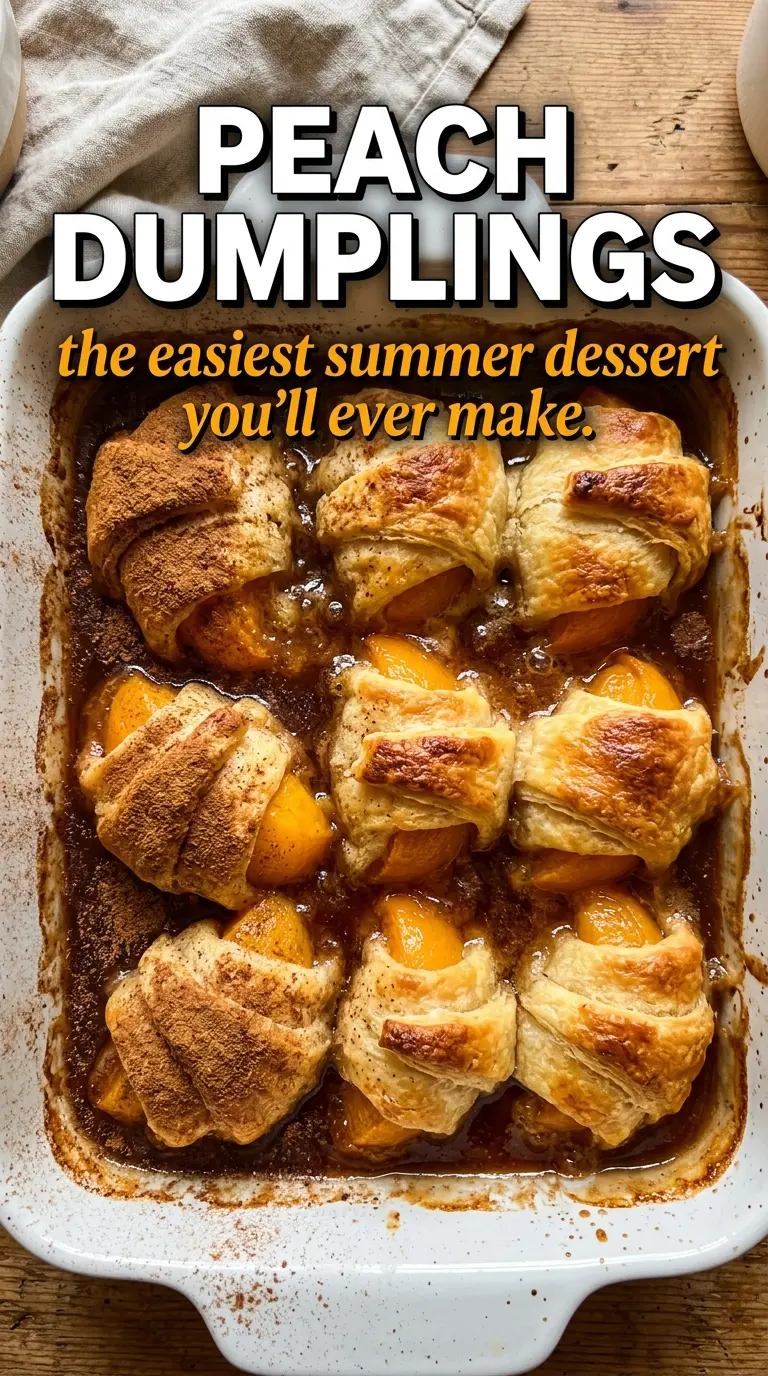
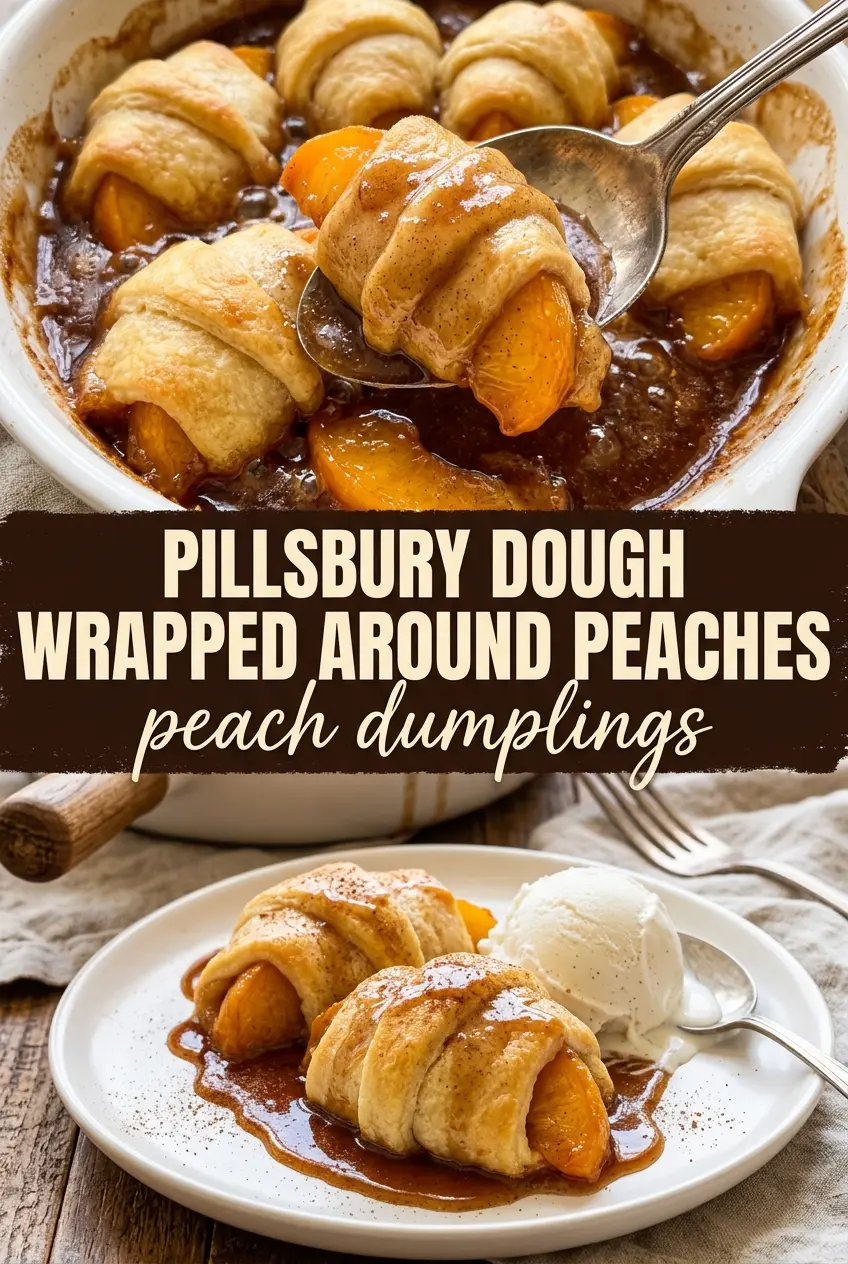
Golden, pillowy peach dumplings bake up with crisp edges, soft jammy fruit inside, and a buttery cinnamon sauce that pools at the bottom of the pan. The crescent dough turns deeply golden while the peaches steam under the pastry, so every bite lands somewhere between fruit cobbler and warm breakfast pastry. This is the kind of dessert that disappears fast because it looks simple, but tastes like you spent a lot more time on it.
The part that makes these work is the balance of fat, sugar, and carbonation. The butter-sugar mixture caramelizes into the sauce, while the Mountain Dew or ginger ale adds a little lift and keeps the pan from baking dry. Pour it around the dumplings, not over them. That keeps the tops crisp enough to brown instead of turning soggy.
Below you’ll find the exact wrapping method that keeps the peaches sealed inside the dough, plus the small timing detail that keeps the sauce bubbling without overcooking the fruit. If you’ve ever had crescent dumplings come out pale or gummy, this version fixes that.
The peaches stayed tender without turning mushy, and the sauce bubbled up thick around the dumplings just like it should. I served it with vanilla ice cream and everyone wanted the crispy edges from the pan.
These crescent roll peach dumplings bake into the kind of caramelized, buttery dessert that tastes best warm from the dish.
The Reason These Peach Dumplings Don’t Turn Soggy
The biggest mistake with peach dumplings is wrapping fruit that’s too wet or baking them under too much liquid. Crescent dough needs direct oven heat to puff and brown. If the peaches are dripping, the dough steams before it has a chance to set, and you end up with soft pastry instead of crisp, golden edges.
Placing the soda around the dumplings instead of over them does two things at once. It creates steam from the bottom of the pan, which helps the fruit soften and the sauce bubble, but it leaves the tops exposed so they can caramelize. That small detail is the difference between a pan of pale pastry and dumplings that come out glossy, browned, and layered.
What Each Ingredient Is Actually Doing in This Dish
- Peaches — Use ripe peaches that still hold their shape when cut. Too firm and they stay crunchy; too soft and they collapse inside the dough. If your peaches are small, quarter them neatly so each wedge wraps without tearing the crescent triangle.
- Crescent roll dough — This is what gives you the light, flaky shell without extra work. It’s worth using refrigerated dough here because it bakes fast and puffs around the fruit in a way homemade pastry doesn’t quite replicate in this specific dessert.
- Butter — Melted butter carries the cinnamon and sugar into a real sauce. If you use margarine, the sauce can taste flat and won’t give you the same rich finish.
- Mountain Dew or ginger ale — The soda creates steam and helps the sauce bubble without drying out the pan. Ginger ale gives a slightly cleaner, less sweet finish; Mountain Dew is a little more old-school and a touch sweeter. Either works.
- Cinnamon and vanilla — These are the flavor bridge between the fruit and the buttery sauce. Don’t skip the vanilla; it rounds out the sugar and keeps the sauce from tasting one-note.
Building the Dumplings So the Sauce Bakes Right
Wrapping the Peaches Cleanly
Separate the crescent dough into triangles and place one peach wedge near the wide end of each triangle. Roll it up snugly without stretching the dough thin, then tuck the tip underneath so it stays closed. If the dough tears, the peach juice leaks out and the dumpling can split open in the oven. A tight wrap gives you a neat, puffed shape and keeps the fruit contained while it softens.
Pouring the Sauce in the Right Order
Mix the melted butter, sugar, cinnamon, and vanilla until the sugar looks evenly moistened, then spoon or pour that over the dumplings. After that, add the soda around the sides of the baking dish. Pouring it on top washes off the butter mixture and keeps the dough from browning properly. Around the edges is where you want the liquid — it steams the fruit, bubbles into a syrup, and leaves the tops free to caramelize.
Watching for the Finish
Bake until the dumplings are deeply golden and the sauce is bubbling steadily around the edges of the pan. The pastry should look set and lightly crisp on the ridges, not pale and doughy. If the tops brown too fast before the fruit softens, tent the dish loosely with foil for the last few minutes. Serve them warm so the sauce stays loose enough to spoon over ice cream.
Three Ways to Adjust These Peach Dumplings Without Losing the Point
Make Them Dairy-Free
Swap the butter for a plant-based butter that melts cleanly and has a similar fat content. The sauce will still caramelize and coat the dumplings, but it may taste a little less rich, so the vanilla matters even more here.
Use Canned Peaches When Fresh Aren’t Good
Drain canned peach slices very well and blot them dry before wrapping. They’re softer than fresh peaches, so the dumplings will be a little more delicate, but they still bake into a workable dessert when fresh fruit isn’t in season.
Skip the Soda and Use Sparkling Ginger Ale Syrup
If you don’t want the full sweetness of soda, use half a can of ginger ale and half a can of plain sparkling water. You’ll still get the steaming action that helps the fruit soften, but the sauce will land a little lighter and less sugary.
Storage and Reheating
- Refrigerator: Store leftovers covered for up to 3 days. The dough softens as it sits, but the flavor stays good.
- Freezer: These freeze best after baking. Wrap tightly and freeze for up to 2 months, then thaw in the fridge before reheating.
- Reheating: Warm in a 325F oven until heated through. The microwave makes the pastry limp, so use it only if you don’t care about the texture.
Answers to the Questions Worth Asking
Peach Dumplings
Ingredients
Equipment
Method
- Preheat the oven to 350F and grease a 9x13 baking dish.
- Separate the refrigerated crescent roll dough into triangles, then roll one peach wedge tightly in each triangle from the wide end to the tip.
- Place the wrapped dumplings in the prepared baking dish, spacing them so the sauce can bubble around each one.
- Mix the melted butter, granulated sugar, cinnamon, and vanilla extract, then pour evenly over the dumplings.
- Pour the Mountain Dew or ginger ale around the dumplings in the dish—do not pour over them.
- Bake for 30-35 minutes at 350F until the dumplings are golden and the sauce is bubbling.
- Serve warm with vanilla ice cream, then spoon the caramel sauce from the pan over the top.