Rich, spoon-coating beef stew is exactly what a slow cooker does best when the base is built properly first. The beef turns tender without falling apart, the potatoes hold their shape, and the broth picks up enough body from the flour, tomato paste, and long cook time to eat like a meal, not just a bowl of soup.
The difference here is the browning. Tossing the beef with flour, salt, and pepper before searing gives the stew a head start on both flavor and thickness, and deglazing the pan with red wine pulls every bit of that browned fond back into the pot. That step matters. Skip it, and the stew can taste flat no matter how long it cooks.
Below, I’ve broken down the parts that actually change the outcome: how to keep the beef from steaming, when the vegetables should go in, and what to do if you want a version without wine. There’s also a storage note for the leftovers, because this stew gets even better after a night in the fridge.
The beef came out fork-tender and the broth had this deep, rich flavor from the wine and tomato paste. I loved that the potatoes stayed intact instead of turning to mush.
Save this red wine crockpot beef stew for the kind of dinner that gets deeper, richer, and more tender the longer it cooks.
The Browning Stage Is What Gives This Stew Its Depth
The stew tastes like it simmered all day because the flavor starts before the slow cooker ever comes into play. Browning the beef in batches matters more than almost anything else in the recipe. If you crowd the pan, the meat releases moisture, steams, and loses the dark crust that gives the broth its backbone.
The flour on the beef is doing two jobs: it helps the meat sear with a little more surface color, and it lightly thickens the liquid as the stew cooks. You don’t want a heavy gravy here, just enough body that the broth clings to the vegetables and beef instead of running thin. The wine deglaze is another non-negotiable. Those browned bits are pure flavor, and scraping them up keeps the stew from tasting like it came out of a slow cooker and nowhere else.
What Each Ingredient Is Actually Doing In This Crockpot Stew
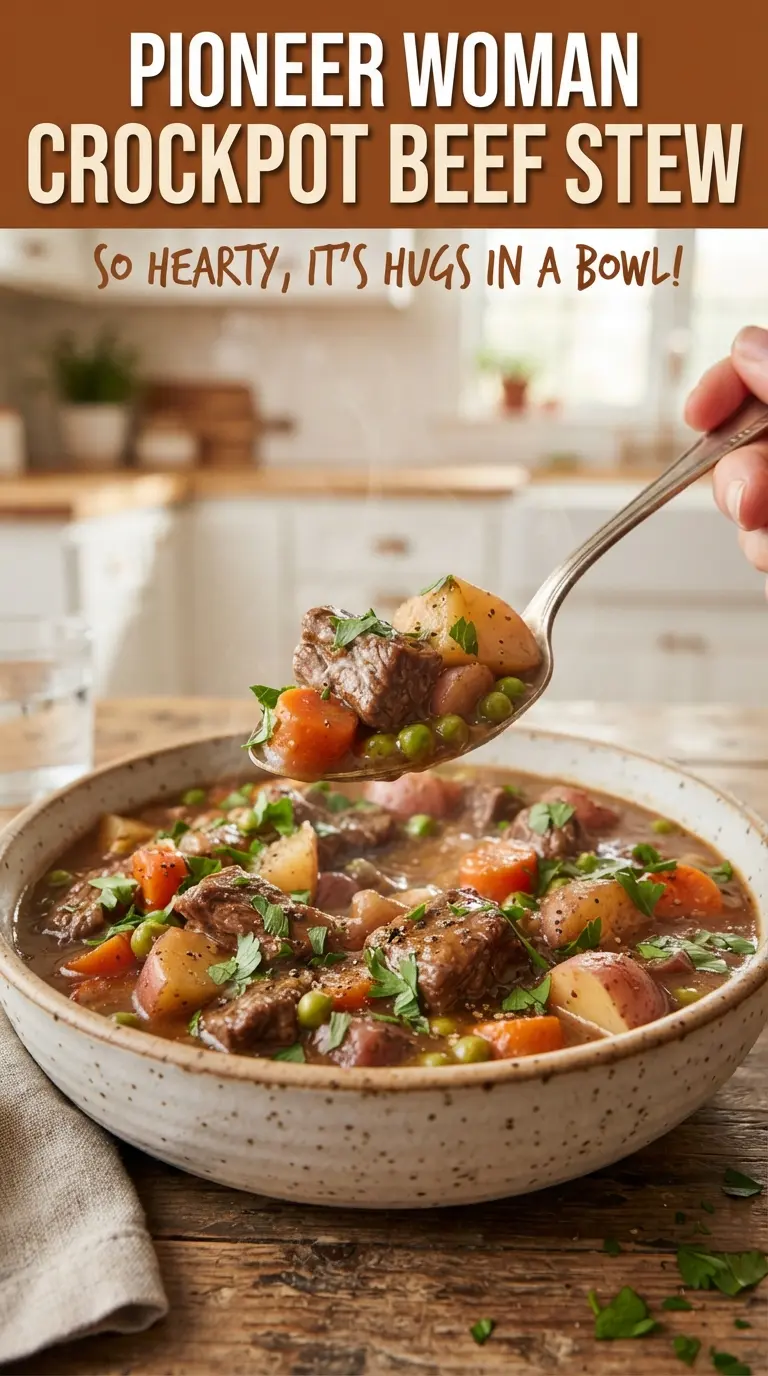
- Beef stew meat — Chuck or a similar well-marbled cut is the right choice because it has enough connective tissue to turn tender during a long cook. Lean beef won’t give you the same silky texture.
- Red wine — This adds acidity and depth that broth alone can’t replicate. Use something dry and drinkable; cooking wine will flatten the flavor.
- Tomato paste — It doesn’t make the stew taste like tomato. It concentrates the base and gives the broth a darker, richer edge.
- Baby potatoes — Halved baby potatoes hold their shape better than diced russets. If you only have russets, cut them large so they don’t disintegrate.
- Carrots — They need the full cook time here, which is why they go in with the potatoes. Cutting them on the thicker side keeps them from turning soft and dull.
- Worcestershire sauce — This is the quiet umami ingredient. It adds savory depth without making the stew taste like any one thing.
Building the Crockpot Stew So The Vegetables Stay Whole
Coating and Browning the Beef
Toss the beef with flour, salt, and pepper until every piece looks lightly dusted, then brown it in batches in the olive oil and butter. You want a deep brown crust, not just a gray exterior. Pull each batch as soon as it takes on color, because leaving it in too long starts to cook it through and steals the sear you’re after.
Softening the Onion and Garlic
Cook the onion in the same pan for about 3 minutes, then add the garlic for a short finish. The goal is to loosen the pan drippings and build sweetness, not to caramelize the vegetables deeply. If the garlic goes in too early, it can burn in the hot skillet and make the whole stew taste bitter.
De-glazing and Loading the Slow Cooker
Pour in the red wine and scrape the pan until the bottom is clean. Let it simmer for 2 minutes so the harsh alcohol edge cooks off, then transfer everything to the crockpot with the tomato paste, broth, Worcestershire, sugar, thyme, carrots, and potatoes. Give it one good stir, cover it, and cook on LOW for 8 hours. High heat is how potatoes break down before the beef is actually tender.
Finishing with Salt and Parsley
When the beef yields easily to a fork, taste the broth before serving. Slow cookers mute seasoning, so the final adjustment matters. Add the parsley right at the end for freshness. If it sits in the stew for hours, it loses the bright top note that keeps the whole bowl from tasting heavy.
How to Adapt This Stew Without Losing What Makes It Good
Make It Without Wine
Replace the red wine with an equal amount of beef broth plus 1 tablespoon of balsamic vinegar or red wine vinegar. You’ll lose a little of the wine’s complexity, but the vinegar gives you back the acidity that keeps the stew from tasting flat.
Gluten-Free Version
Use a gluten-free all-purpose flour blend or skip the flour and dust the beef lightly with cornstarch before browning. The stew won’t thicken quite as much, but the texture stays satisfying and the broth still clings nicely to the meat and vegetables.
Add Mushrooms for a Deeper, Earthier Pot
Brown sliced mushrooms with the onion or stir them in during the last 2 hours of cooking if you want them to keep more shape. They add a savory note that plays well with the beef and makes the stew taste even fuller.
Storage and Reheating
- Refrigerator: Store in an airtight container for up to 4 days. The broth thickens as it chills, and the flavor gets even better.
- Freezer: Freeze for up to 3 months. Cool it completely first, then freeze in portions for the easiest reheating.
- Reheating: Warm gently on the stovetop over medium-low heat or in the microwave at reduced power. Don’t boil it hard, or the beef can tighten up and the potatoes can break apart.
Answers to the Questions Worth Asking
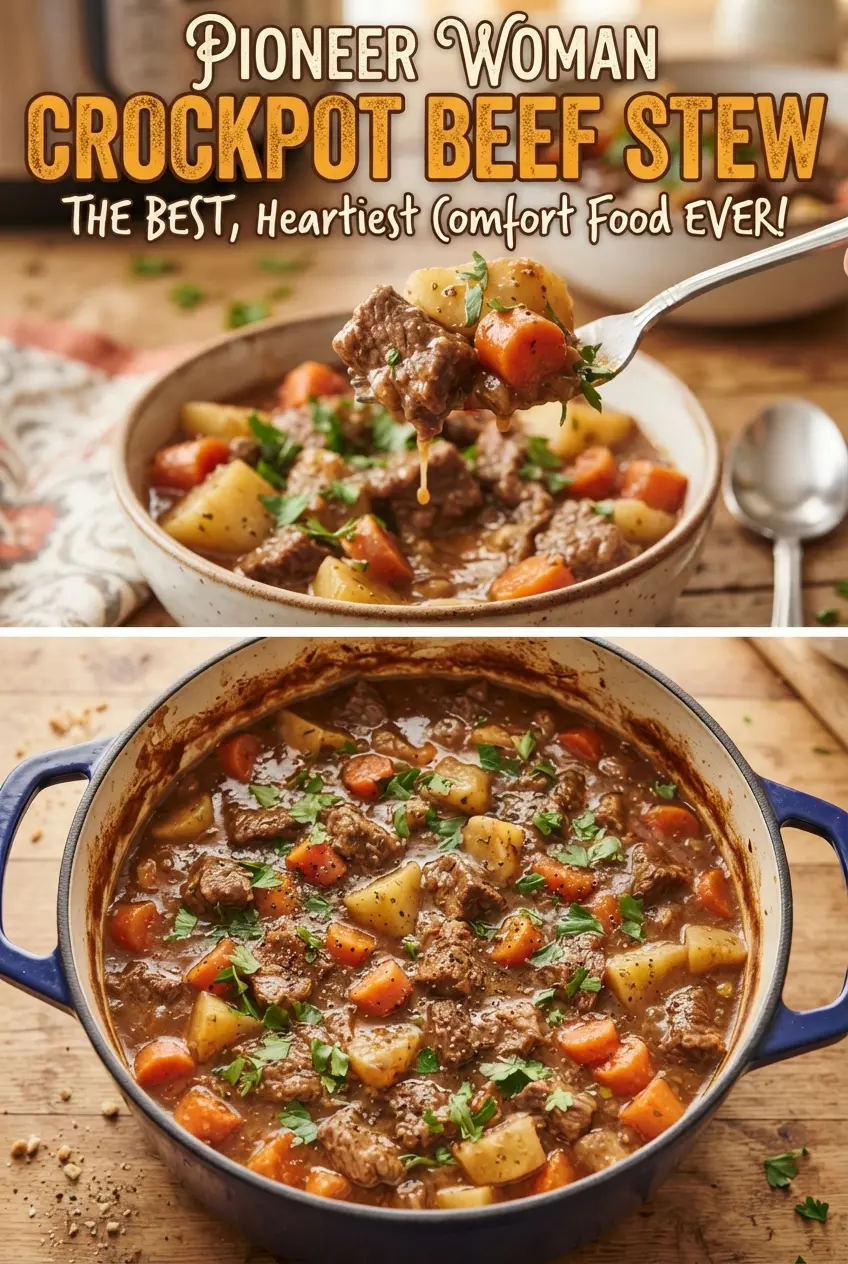
Pioneer Woman Crockpot Beef Stew
Ingredients
Equipment
Method
- Toss the beef stew meat with the all-purpose flour, salt, and black pepper, coating evenly.
- Heat olive oil and butter in a Dutch oven over medium-high heat, then brown the beef in batches until deeply browned; transfer browned beef to the crockpot.
- In the same pan, cook the diced onion and minced garlic for 3 minutes, stirring, until softened.
- Pour in the red wine and scrape up the browned bits from the pan; simmer for 2 minutes, then pour into the crockpot.
- Stir in the tomato paste, beef broth, Worcestershire sauce, sugar, dried thyme, sliced carrots, and halved baby potatoes.
- Cover and cook on LOW for 8 hours, until the beef is fork-tender; look for meat that breaks apart easily when pressed with a spoon.
- Season to taste and top with chopped fresh parsley right before serving for a fresh green finish.