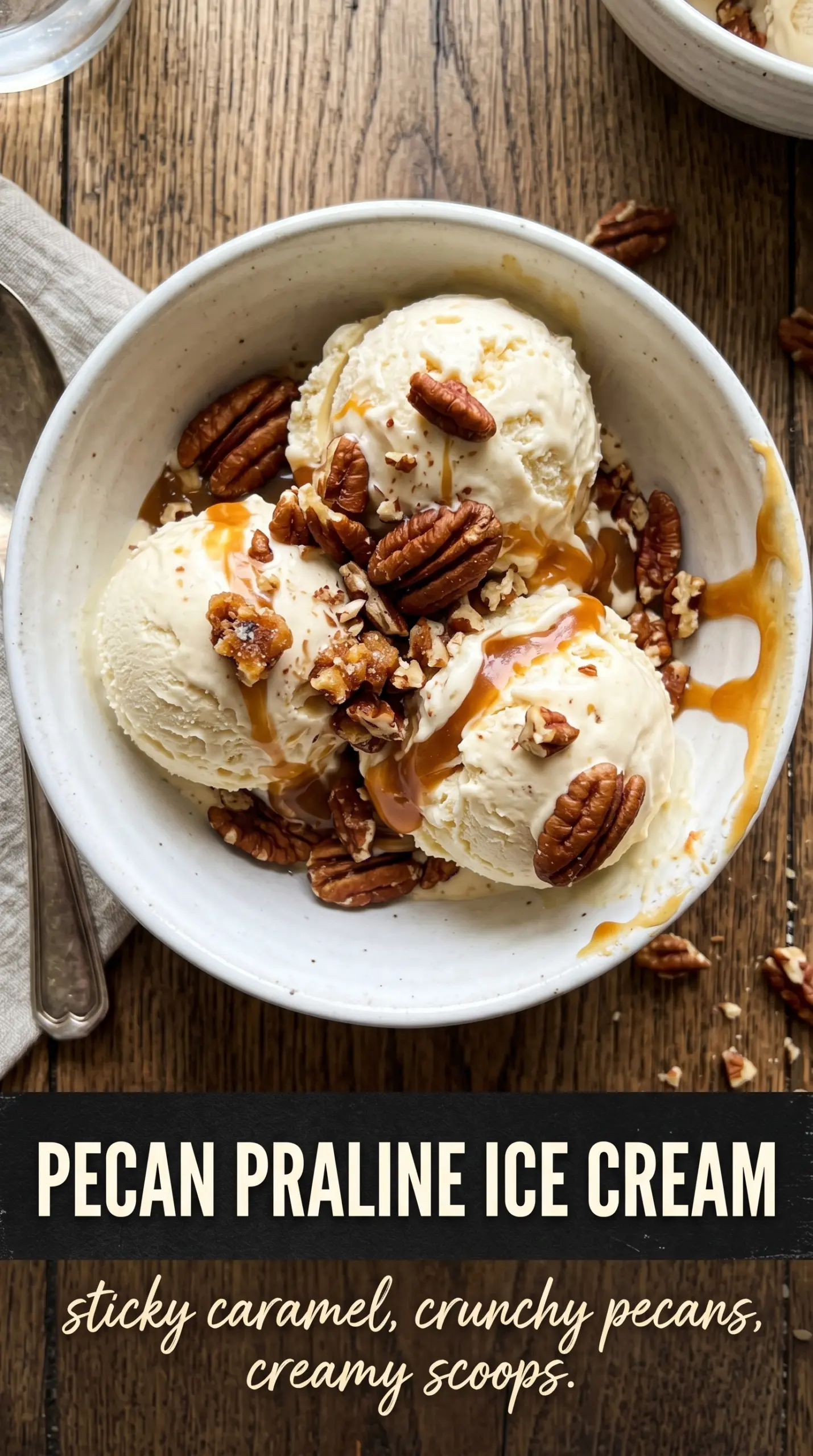
Creamy vanilla custard ice cream loaded with crackly praline pecans has a way of disappearing faster than anything else in the freezer. The contrast is what makes it worth making: smooth, rich ice cream that melts cleanly on the tongue, then those caramelized nut clusters that stay crisp enough to give you a real bite. Every spoonful tastes like the balance between candy and custard, which is exactly why this flavor keeps getting requested.
The pralines matter just as much as the base. Cooking the sugar mixture to soft-ball stage gives the pecans a brittle shell instead of a sticky coating, and folding them in near the end of churning keeps the chunks from sinking or turning soggy. The custard base gives the finished ice cream its dense, scoopable texture, but it has to be chilled all the way through before it ever meets the machine or it will freeze soft and loose.
Below you’ll find the timing cues that keep the custard smooth, the best way to get those praline clusters crisp, and a few smart swaps if you want to change the flavor without losing the candy-and-cream contrast.
The praline pieces hardened up perfectly and stayed crunchy even after a night in the freezer. The custard was silky, and the brown sugar gave it this deep caramel taste that made it hard to stop at one bowl.
Save this pecan praline and cream ice cream for the days when you want a silky custard base with crunchy candy clusters in every scoop.
The Custard Has to Set Before the Churn Begins
The biggest mistake with homemade ice cream is rushing the base while it still tastes warm. A custard that hasn’t fully chilled will churn into a soft, slushy mix that never firms up the way it should in the freezer. Letting it rest for four full hours gives the fat time to settle and the texture time to tighten before air gets folded in.
The other failure point is the yolks. If the hot dairy goes in too fast, you’ll get scrambled eggs instead of custard. Stream the warm mixture into the yolks slowly while whisking, then return everything to the pan and cook just until it thickens enough to coat a spoon and reach 175F.
- Egg yolks — These give the ice cream its body and that dense, scoopable finish. Whole eggs won’t give quite the same velvet texture, and skipping them means a more icy result.
- Brown sugar — It deepens the base and echoes the praline coating. Light or dark brown sugar both work; dark brown gives a stronger caramel note.
- Heavy cream — This keeps the custard rich and helps the finished ice cream stay soft enough to scoop. There isn’t a good substitute here if you want the same texture.
- Pecans — Use pecan halves for the praline stage so they stay intact while the candy shell sets. Chopped pecans can work, but the clusters won’t look as dramatic and they break down faster in the churn.
What Each Ingredient Is Actually Doing in This Frozen Treat
- Base ingredient (cream, yogurt, or fruit) — This determines the texture and richness. Cream makes it scoopable; yogurt makes it tangy; fruit makes it refreshing.
- Sweetener (sugar or honey) — This prevents the mixture from freezing rock-solid and creates a smooth texture. Too much and it won’t freeze; too little and it’s icy.
- Egg yolks (if using custard method) — These create richness and a silky texture. Tempering is important so they don’t scramble.
- Thickener (cornstarch, gelatin, or egg) — This prevents ice crystals from forming and keeps the texture smooth instead of grainy.
- Flavoring (vanilla, chocolate, fruit, or spices) — Use quality flavorings because they’re essential to the taste. Dilute-tasting ice cream comes from cheap extract.
- Stabilizers (gum, gelatin, or dairy) — These keep the ice cream from becoming icy during storage. They prevent large ice crystals from forming.
- Mix-ins (nuts, chunks, or swirls) — These add texture and interest. Freeze-stable chocolate works better than regular chocolate, which gets hard.
- Proper chilling and churning (the technique) — This incorporates air and prevents ice crystals. An ice cream maker makes a huge difference in texture.
Cooking the Praline and Tempering the Custard Without a Grainy Result
Making the Praline Shell
Combine the brown sugar, cream, and butter in a saucepan over medium heat and cook until the mixture reaches 235F. That temperature matters: too low and the coating stays sticky, too high and the sugar turns hard and bitter. Stir in the pecans, vanilla, and salt, then spread them on parchment in a single layer so they cool into separate clusters instead of one big sheet.
Building the Ice Cream Base
Warm the cream, milk, and brown sugar just until the sugar dissolves and the mixture is steaming, not boiling. Whisk the hot dairy into the egg yolks slowly so the yolks warm up gradually and thicken the base instead of curdling. When you return the mixture to the pan, cook over medium-low heat and stir constantly until it coats the back of a spoon and reaches 175F.
Straining, Chilling, and Churning
Strain the custard through a fine sieve as soon as it comes off the heat. That catches any tiny bits of cooked egg and leaves you with a smoother finish. Stir in the vanilla and salt, then chill it completely before churning; if the base is even a little warm, it won’t freeze with the same structure.
Adding the Praline at the End
Break the cooled pralines into chunks and add them during the last five minutes of churning. That keeps the pieces from sinking to the bottom or turning muddy from too much mixing. When the ice cream is done, it should look thick and softly mounded, with the praline scattered evenly through the machine.
Bourbon Pecan Praline
Add 1 to 2 tablespoons of bourbon to the praline mixture after it comes off the heat. It gives the candy a warmer, deeper edge without making it boozy, but too much will keep the sugar from hardening properly.
Dairy-Free Version
Use full-fat coconut milk in place of the cream and milk, then swap in a dairy-free butter for the pralines. The texture will be a little softer and the coconut flavor will come through, but it still churns into a rich frozen dessert.
Pecan-Free Crunch
If pecans are the problem, make the praline with chopped almonds or walnuts instead. Almonds stay crunchier, while walnuts bring a softer, more earthy note that tastes closer to a classic candy shop ice cream.
Storage and Freezing
- Refrigerator: The churned base should be chilled before freezing, but finished ice cream doesn’t belong in the refrigerator.
- Freezer: Store in an airtight container with parchment pressed on top for up to 2 weeks. After that, the praline can soften and the texture gets icier.
- Reheating: Not applicable. Let it sit at room temperature for 5 to 10 minutes before scooping so the custard relaxes instead of tearing into hard shards.
Answers to the Questions Worth Asking
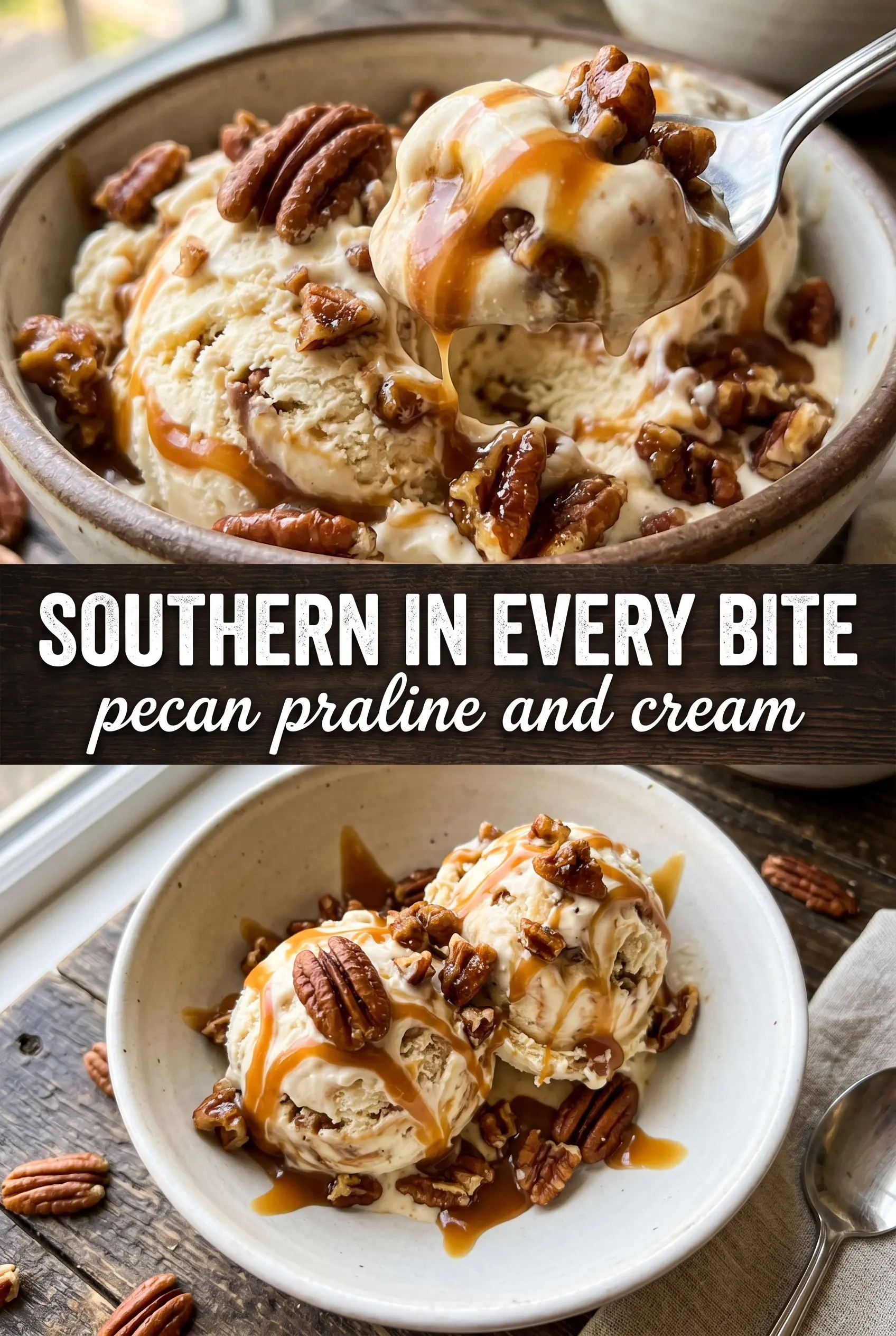
Pecan Praline and Cream Ice Cream
Ingredients
Equipment
Method
- Combine brown sugar, heavy cream, and butter in a saucepan over medium heat, then cook until 235F (soft ball stage). Stir constantly and watch for a thick caramel consistency as it reaches temperature.
- Stir in pecan halves, vanilla extract, and salt until every nut is glossy with caramel. Keep the heat at medium so the sugar stays fluid and coats evenly.
- Spread the praline mixture on parchment and cool until hardened. Let it cool at room temperature until the caramel is firm, then break into crunchy chunks.
- Heat heavy cream, whole milk, and brown sugar in a saucepan until the sugar fully dissolves. Warm until steaming but not boiling, so the mixture stays smooth.
- Slowly whisk the warm cream mixture into the egg yolks to temper them. Pour gradually while whisking to prevent scrambling.
- Return the mixture to the saucepan and cook until it reaches 175F, stirring as it thickens. The custard should coat a spoon lightly when it hits temperature.
- Strain the custard through a fine-mesh strainer, then stir in vanilla extract and salt. Straining removes any tiny curds for a silkier ice cream texture.
- Cool the custard completely, then refrigerate for 4 hours. Cover to prevent a skin from forming while it chills.
- Churn the custard in an ice cream maker according to the manufacturer’s instructions. Churn until thickened to a soft-serve consistency.
- Fold in praline pecan chunks during the last 5 minutes of churning. Add them near the end so the crunch stays intact without over-crushing.
- Transfer to a container and freeze until firm. Freeze until scoopable and set, at least several hours for best texture.