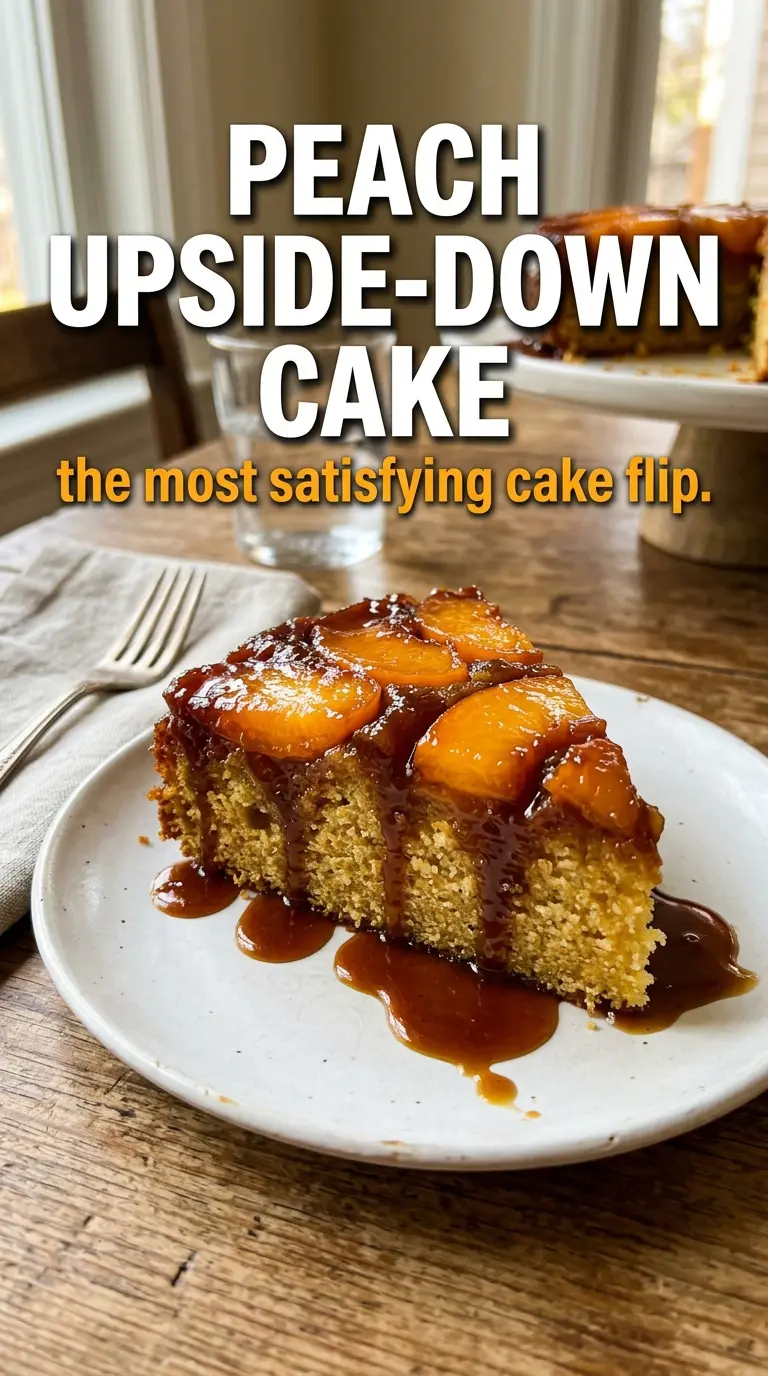
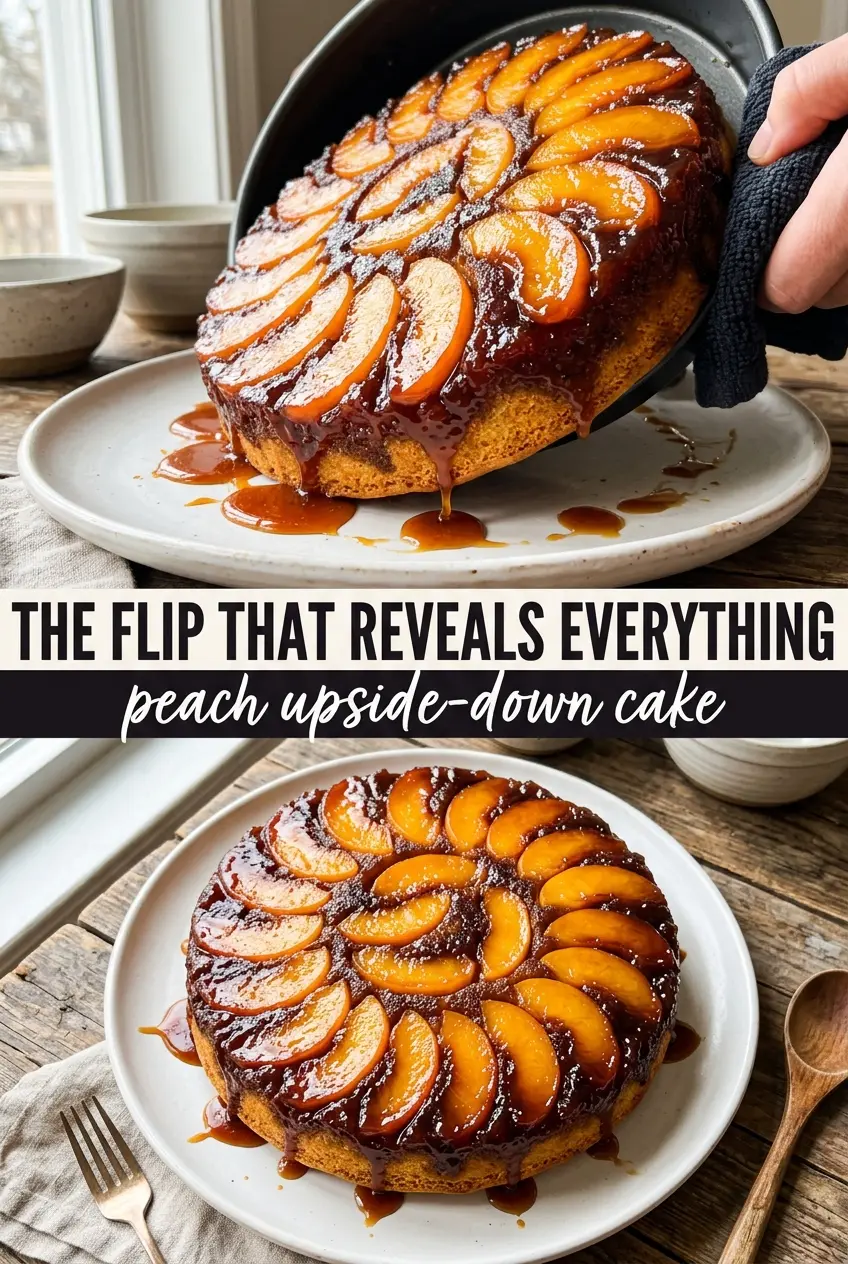
Peach upside-down cake lands with the kind of finish that makes people stop talking for a second. The fruit on top turns glossy and jammy in the oven, the brown sugar melts into a thin caramel layer, and the cake underneath stays tender enough to soak up all that syrup without going soggy. When you flip it out, you get clean rings of peaches and a buttery crumb that tastes like it took a lot more effort than it did.
The trick is building the topping first so the peaches cook in direct contact with the butter and sugar. That gives you the caramelized layer people want from an upside-down cake instead of a watery fruit topping. The batter is kept simple and structured with buttermilk, which gives the cake enough moisture to stay soft while still lifting around the fruit. If your peaches are especially juicy, the bake time and the brief cooling window matter even more, because that topping sets up fast once the cake comes out of the oven.
Below, I’ve included the exact timing that keeps the cake from sticking, the peach swap that still works when fresh fruit isn’t at its peak, and the one detail that makes the flip clean instead of nerve-racking.
The peaches caramelized beautifully and the cake came out of the pan in one clean piece after 5 minutes. The brown sugar layer was glossy, not runny, and the crumb stayed soft the next day.
Love the glossy peach topping and tender crumb? Save this peach upside-down cake for the next time ripe peaches are begging to be baked.
The Peach Layer That Can Stick if You Wait Too Long
The part that trips people up isn’t the batter. It’s the flip. Once the cake is out of the oven, the caramel layer starts setting almost immediately, and if you leave it in the pan too long, the peaches glue themselves down. Five minutes is the sweet spot: long enough for the cake to firm up, short enough that the sugar topping still releases cleanly.
The other common failure is slicing peaches too thick. Thick wedges don’t settle into a neat pattern, and they can leave gaps that make the finished cake look patchy. Aim for slices that overlap just enough to form a complete fruit layer, because that tight arrangement keeps the topping even and gives you those pretty concentric rings after inverting.
- Peaches — Use ripe but still firm fruit. Soft peaches break down too much and can make the topping watery. If your peaches are very juicy, pat the slices dry after peeling and slicing.
- Brown sugar — This is the caramel base. Light or dark brown sugar both work, but dark brown sugar gives a deeper molasses note and a slightly darker finish.
- Buttermilk — It keeps the crumb tender and adds a slight tang that balances the sweetness of the topping. If you don’t have it, use milk with 1/2 teaspoon vinegar or lemon juice stirred in and let it sit for 5 minutes.
- Unsalted butter — You need the butter in both the pan and the batter. Salted butter can work in a pinch, but the result will taste a little less controlled and a little more aggressive in the caramel layer.
What Each Ingredient Is Actually Doing in This Peach Cake
- Fresh or preserved peaches (the flavor centerpiece) — Fresh peaches add brightness; preserved peaches add depth. Dice or slice evenly.
- Sugar (the sweetness and structure) — This tenderizes the cake and creams with butter to create volume. Don’t reduce too much.
- Butter (the richness and crumb) — Proper creaming adds air and creates tender cake. Use room temperature butter.
- Eggs (the binder and lift) — These create structure and help the cake rise. Beat eggs in gradually for best volume.
- Flour (the structure base) — Don’t overmix or the cake becomes tough. Mix just until combined.
- Leavening (baking powder or soda) — This creates rise and light crumb. Too much makes it bitter and dome-shaped.
- Spices (cinnamon, nutmeg, or allspice) — These warm up the peach flavor. Use in balance so they support, not overpower.
- Frosting or glaze (the finish) — This adds moisture and flavor. Cream cheese frosting works especially well with peach.
Building the Batter Around the Fruit, Not Overworking It
Start with the Caramel Base
Pour the melted butter into the pan first, then sprinkle the brown sugar over it in an even layer. That order matters because the butter helps the sugar melt into a smooth glaze instead of clumping into dry pockets. Arrange the peaches on top in concentric circles, overlapping the slices just slightly so the whole surface is covered. If you leave big gaps, the cake can bake with uneven pockets of caramel instead of one clean fruit layer.
Beat the Butter and Sugar Until Light
Mix the softened butter and granulated sugar until it looks pale and fluffy, about 2 minutes. That step builds air into the batter, which keeps the cake from feeling dense under the heavy fruit topping. Add the eggs one at a time so the batter stays smooth; if you dump them in together, the mixture can look broken before the flour goes in, and that usually leads to a heavier crumb.
Alternate the Flour and Buttermilk
Add the dry ingredients and buttermilk in alternating additions, starting and ending with flour. This keeps the batter from curdling and helps it stay even without overmixing. Stop stirring as soon as the flour disappears. If you keep going, the cake gets tight instead of tender, and that’s the fastest way to lose the soft contrast that makes upside-down cake worth baking.
Bake, Rest, and Invert with Confidence
Spread the batter gently over the peaches and smooth it just enough to cover the fruit. Bake until a toothpick comes out clean and the top springs back when pressed lightly in the center. Let it rest for 5 minutes, then run a thin knife around the edge and invert onto a plate in one steady motion. If the cake sits too long, the caramel layer hardens in the pan; if it comes out too early, the fruit topping can slide. That short rest is the whole trick.
How to Adapt This Peach Upside-Down Cake Without Losing the Caramel Top
Make it dairy-free
Use a good plant-based butter for both the pan and the batter, and swap the buttermilk for unsweetened non-dairy milk mixed with 1/2 teaspoon vinegar. You’ll lose a little of the classic tang, but the cake still bakes up soft and the topping still caramelizes well.
Use frozen peaches when fresh ones aren’t ready
Thaw the peaches completely and drain them well before arranging them in the pan. Frozen fruit releases more liquid, so if you skip the draining step, the topping can turn syrupy instead of glossy.
Turn it into a gluten-free cake
Use a 1:1 gluten-free baking flour that includes xanthan gum. The cake will still rise and slice well, though the crumb may be a touch more delicate, so let it cool the full 5 minutes before inverting.
Bake it in a cast iron skillet
A 9-inch cast iron skillet gives you a deeper caramel note and a prettier edge on the fruit. The only catch is heat retention, so watch the last 5 minutes closely; the top can go from golden to overbrowned faster than in a regular cake pan.
Storage and Reheating
- Refrigerator: Store covered for up to 3 days. The fruit layer softens a bit as it sits, but the cake stays moist.
- Freezer: Freeze slices tightly wrapped for up to 2 months. The topping won’t look quite as glossy after thawing, but the flavor holds up well.
- Reheating: Warm individual slices in a 300F oven for about 10 minutes. The microwave softens the topping too much and can make the cake rubbery around the edges.
Answers to the Questions Worth Asking
Peach Upside-Down Cake
Ingredients
Equipment
Method
- Preheat oven to 350F.
- Pour the melted butter into a 9-inch round cake pan or cast iron skillet, then sprinkle brown sugar evenly over the bottom.
- Arrange peach wedges in concentric circles over the brown sugar, slightly overlapping so the pattern covers the pan evenly.
- Beat the softened butter and granulated sugar for 2 minutes until fluffy.
- Add the eggs one at a time, mixing well after each, then beat in vanilla extract.
- Alternate adding the flour mixture (all-purpose flour, baking powder, and salt) and buttermilk to the batter, starting and ending with flour.
- Pour the batter gently over the peaches, then smooth the top so the fruit stays evenly covered.
- Bake for 35-40 minutes at 350F until a toothpick comes out clean, with the top turning golden brown.
- Cool for 5 minutes, then invert immediately onto a plate so the caramelized peaches release cleanly and drip slightly at the edges.