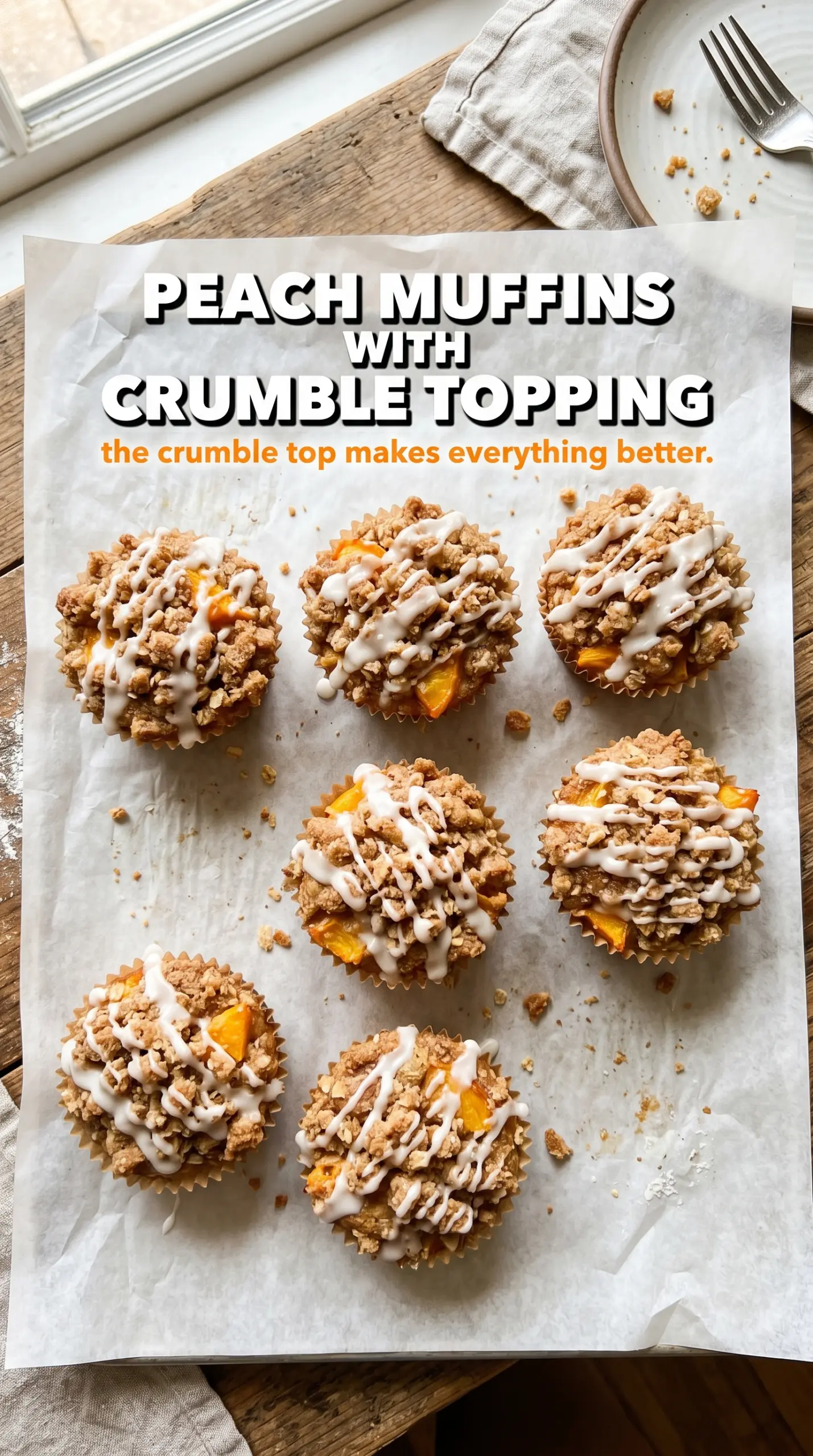
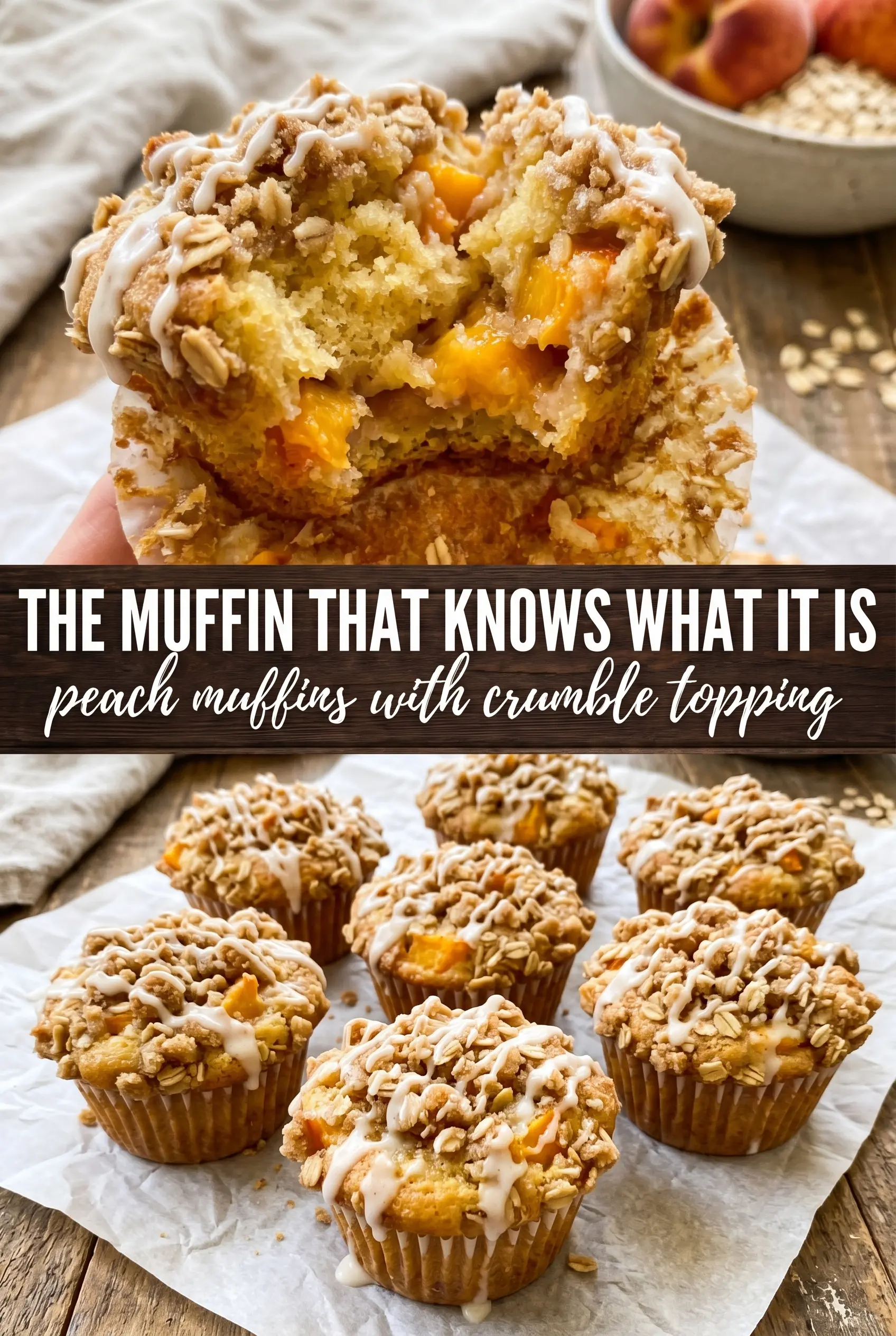
Bakery-style peach muffins have a way of disappearing faster than almost anything else on the table, especially when the tops bake up tall and the crumble turns crisp instead of sandy. The best ones give you a soft, tender crumb under a thick cinnamon streusel, with little pockets of juicy peach in every bite. That contrast is what makes them worth repeating.
This version leans on sour cream for a plush, moist crumb and vegetable oil for a muffin that stays soft on day two instead of drying out. The crumb topping stays distinct because the butter goes in cold and the muffins bake hot enough to set the tops before the peaches can sink. Fresh peaches matter here, but the batter is sturdy enough to handle the extra moisture as long as you don’t overmix it.
Below you’ll find the cue I watch for when the crumble is ready, the reason the batter shouldn’t be beaten smooth, and a few swaps that still keep the muffins tasting like the real thing.
The crumble baked up thick and crunchy instead of melting into the batter, and the muffins stayed soft all the way to the next morning. My kids picked the peach chunks out first and then asked for another one.
Save these peach muffins with crumble topping for the mornings when you want tall bakery-style tops and buttery peach-filled bites.
The Reason the Crumble Stays Crisp Instead of Sinking In
The crumb topping is the first place these muffins can go wrong. If the butter softens too much, the topping turns pasty and disappears into the batter instead of baking into those chunky, crunchy bits you want on top. Cold butter, a light hand, and a quick chill in the fridge keep the crumble separate long enough to bake properly.
The other trap is overfilling the cups. These muffins rise best when the batter has room to dome, and the crumble needs space to set on top instead of sliding off the sides. Fill the liners about three-quarters full and bake until the tops are set and a toothpick comes out clean or with a few moist crumbs, not wet batter.
- Fresh peaches — Use ripe but still firm peaches. Overripe fruit turns watery and can make the muffins heavy. Peel them if the skins are thick or fuzzy, then dice them small so they spread through the batter instead of collapsing in one soggy pocket.
- Sour cream — This is what gives the crumb a soft, bakery-style texture. Plain full-fat Greek yogurt works in a pinch, but sour cream gives a richer, more tender result and keeps the batter from tasting sharp.
- Brown sugar in the crumble — Brown sugar helps the topping bake into a crisp, caramelized crust. Granulated sugar will work, but the streusel will taste flatter and won’t clump as well.
- Vegetable oil — Oil keeps the muffins moist for longer than melted butter does. It doesn’t add much flavor, but that’s fine here because the peaches, cinnamon, and crumble do the talking.
What Each Ingredient Is Actually Doing in This Peach Bread
- Fresh or preserved peaches (the flavor) — Fresh peaches add brightness; preserved adds deeper flavor. Choose based on desired intensity.
- Flour (the structure) — Don’t overmix or the bread becomes tough. Mix just until dry ingredients are incorporated.
- Sugar (the sweetness and tenderizer) — This tenderizes baked goods and adds moisture. Adjust based on peach sweetness.
- Butter or oil (the richness and moisture) — This creates tender crumb. Oil makes moister breads; butter makes them richer.
- Eggs (the binder) — These hold everything together and add structure. Room temperature eggs incorporate better.
- Leavening (baking powder or soda) — This creates rise and light crumb. Too much makes it taste bitter.
- Spices (cinnamon, nutmeg, or ginger) — These complement peach without overpowering it. Layer spices so no single one dominates.
- Crumble topping (optional texture) — This adds texture contrast and visual appeal. Bake until golden brown and crunchy.
Building the Batter Without Beating the Air Out of It
Start With the Crumble
Mix the flour, brown sugar, and cinnamon first, then cut in the cold butter until you have rough, uneven crumbs. You want some pieces the size of peas and some smaller bits; that mix is what gives the topping texture. Once it looks sandy with a few clumps, stop. Overworking it makes a paste that bakes flat, and the fridge time helps the butter stay firm until the muffins go in the oven.
Mix the Wet and Dry Just Until They Meet
Whisk the dry ingredients in one bowl and the eggs, sugar, oil, sour cream, and vanilla in another. When you combine them, stir only until the flour streaks disappear. The batter should look thick and a little uneven, not glossy and smooth. If you beat it until it looks perfect, the muffins bake up tighter and less tender.
Fold in the Peaches at the End
Add the diced peaches after the batter is mixed, then fold gently so the fruit stays intact. A heavy hand here crushes the peaches and turns the batter streaky and wet. If your peaches are extra juicy, pat them dry with a paper towel before folding them in. That one small step helps the batter hold its shape and keeps the muffin tops from going damp.
Bake for Height, Not Just Color
Spoon the batter into the liners and heap the crumble generously on top. Bake at 375°F until the tops are golden and the center springs back lightly when touched. The muffins are done when a tester comes out clean or with a few moist crumbs, but not wet batter. Let them sit in the pan for a few minutes before moving them to a rack so the tops set instead of tearing off.
How to Adapt These Peach Muffins Without Losing the Bakery-Style Top
Make Them Gluten-Free
Use a cup-for-cup gluten-free flour blend in both the muffins and the crumble. The texture will be a touch more delicate, but the sour cream keeps them from turning crumbly or dry. Let the batter rest for 10 minutes before baking so the flour hydrates and the muffins rise more evenly.
Swap in Frozen Peaches
Frozen peaches work when fresh peaches aren’t in season. Thaw them first and drain off the excess liquid, then pat them dry before folding them in. If you add them frozen, they release too much water in the oven and the centers can bake up gummy.
Make Them Dairy-Free
Use a thick dairy-free yogurt in place of the sour cream and plant-based butter for the crumble. The muffins will still be soft and tall, but the topping may be a little less rich and will brown a bit faster, so start checking near the end of the bake time.
Storage and Reheating
- Refrigerator: Keep in an airtight container for up to 4 days. The crumble softens a little in the fridge, but the muffins stay moist.
- Freezer: These freeze well for up to 2 months. Wrap each muffin individually and thaw at room temperature so the topping doesn’t get soggy from trapped condensation.
- Reheating: Warm in a 300°F oven for 8 to 10 minutes or in the toaster oven until the tops crisp back up. The microwave softens the crumble, so use it only if you don’t mind losing that bakery-style texture.
Answers to the Questions Worth Asking
Peach Muffins with Crumble Topping
Ingredients
Equipment
Method
- Preheat the oven to 375F and line a 12-cup muffin tin with liners.
- Refrigerate the crumble after making it in a separate bowl while you prepare the batter.
- Combine the flour, brown sugar, and cinnamon, then cut in the cold butter until the mixture looks like coarse crumbs.
- Refrigerate the crumble until it is ready to be added.
- Whisk the flour, baking powder, baking soda, cinnamon, and salt in a large bowl.
- Beat the eggs, granulated sugar, vegetable oil, sour cream, and vanilla extract in a separate bowl until smooth.
- Stir the wet mixture into the dry ingredients until just combined, then fold in the diced peaches.
- Divide the batter among the muffin cups, filling each about 3/4 full.
- Top each muffin generously with the refrigerated crumble for a thick, domed finish.
- Bake for 20 to 22 minutes at 375F until golden and a toothpick comes out clean.