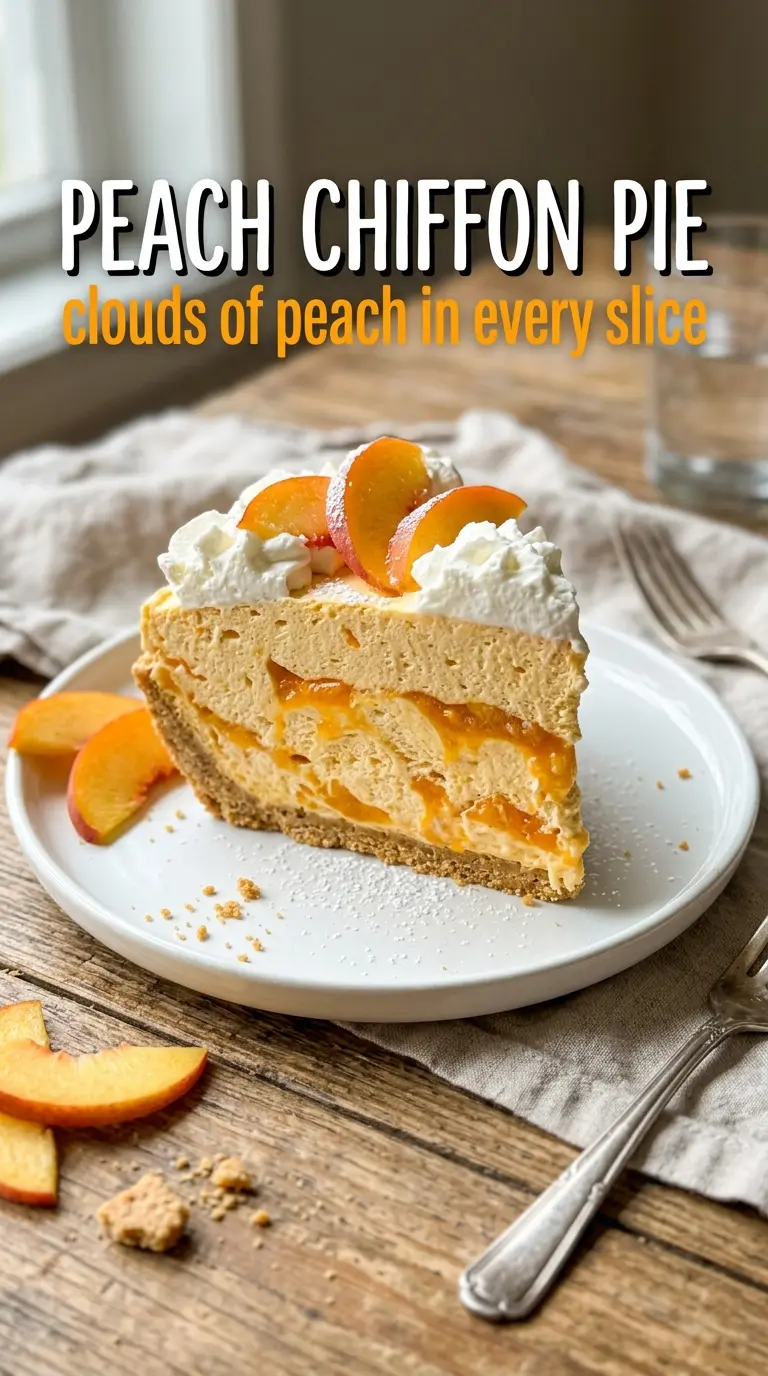
Peach chiffon pie has the kind of filling that disappears the second the knife slides through it. The texture lands somewhere between mousse and cloud: cool, airy, and peach-forward, with just enough structure to hold a clean slice. In a graham cracker crust, it feels light without tasting thin, which is exactly why it earns a permanent spot when fresh peaches are at their best.
The trick is giving the peach base time to thicken before the whipped elements go in. That step keeps the filling from collapsing into a loose pudding later. Gelatin does the quiet work here, but it needs to be fully dissolved and then mixed into the puree before the whole bowl chills down to that egg-white consistency. Once it reaches that point, the whipped egg whites and cream fold in cleanly and stay airy instead of deflating.
Below, I’m walking through the part that matters most: how to tell when the peach mixture is ready for folding, how to avoid a grainy or runny filling, and what to change if you need to work with canned or frozen peaches instead of fresh.
The filling set up beautifully after chilling, and the whipped cream folded in without going flat. My slices held their shape, and the peach flavor was light but still clear.
Love the pale peach mousse and graham cracker crunch? Save this peach chiffon pie for the next time you want a chilled dessert that slices clean and tastes like summer.
The Part Most Peach Chiffon Pies Get Wrong
The filling should thicken before it meets the whipped egg whites and cream. If you fold everything together while the peach mixture is still loose, the mousse never gets the structure it needs and the pie sets up soft in the wrong way. You want the puree to chill until it looks like raw egg whites: glossy, thick, and just barely able to slide off a spoon.
That middle stage is what protects the texture. Gelatin alone won’t save a filling that never thickened enough before folding, and overwhipping the cream won’t fix a base that is still warm. The recipe works because each component is handled separately, then brought together at the right point, when the peach mixture can support all that air.
- Gelatin — This gives the pie its sliceable set. Bloom it in cold water first so it hydrates evenly, then dissolve it gently. If the gelatin has gritty bits left in it, the filling will never feel smooth.
- Fresh peaches — Their flavor is the point of the dessert, so use ripe fruit with real aroma. If yours are a little bland, a tiny squeeze of lemon helps wake them up, but it won’t replace good peaches.
- Heavy cream — This folds in richness and volume. Lower-fat cream won’t hold the same airy body, and whipped topping changes the flavor and texture noticeably. Whip to stiff peaks, not soft ones, or the filling will lean too loose.
- Graham cracker crust — A store-bought crust is fine here because the filling is the star, but it needs to be fully cooled and dry. A soggy crust turns the whole pie soft at the bottom, so don’t fill it while it’s still warm.
What Each Ingredient Is Actually Doing in This Peach Pie
- Pie crust (the foundation) — A good crust is flaky and tender. Blind baking helps prevent a soggy bottom.
- Fresh peaches (the filling star) — Use ripe but firm peaches. Slice them evenly so they cook uniformly.
- Sugar and thickener (the filling structure) — This creates a saucy filling that slices cleanly. Too little and it’s runny; too much and it’s gummy.
- Lemon juice (the brightness) — This prevents the pie from tasting flat and keeps peaches from browning. It’s essential, not optional.
- Spices (cinnamon, nutmeg, or cardamom) — These warm up the peach flavor. Use in small amounts so peach remains the star.
- Butter dots on filling (optional richness) — A few dots of cold butter add richness to the filling. Dot just before the top crust goes on.
- Top crust or lattice (the golden finish) — This creates visual appeal and protects the filling. A lattice shows off beautiful filling underneath.
- Egg wash and sugar (the sparkle) — This creates a golden brown crust with sparkly texture. Apply just before baking for best results.
How to Build the Filling So It Stays Cloud-Light
Blooming and Dissolving the Gelatin
Sprinkle the gelatin over cold water and let it sit for a full 5 minutes. It should look swollen and opaque before you warm it. Heat it just until the granules disappear; if it starts simmering, you risk weakening its setting power. A smooth, fully dissolved gelatin base is what keeps the filling from turning lumpy later.
Thickening the Peach Base
Stir the dissolved gelatin into the peach puree with half the sugar and the vanilla, then chill it until it reaches that egg-white thickness. This is the point people rush, and it’s where the whole dessert either works or doesn’t. If the mixture still pours like juice, it will never hold enough air. Stop chilling when it looks glossy and mounded on a spoon, not fully firm.
Whipping the Air Into the Filling
Beat the egg whites with cream of tartar until soft peaks form, then add the rest of the sugar gradually and beat to stiff peaks. In a separate bowl, whip the cream until it also holds stiff peaks. Fold both into the peach base in batches, using broad strokes and stopping as soon as the mixture looks evenly pale and fluffy. If you stir hard, the filling deflates and bakes in none of that airy height.
Chilling Until the Slice Holds
Pour the mixture into the crust and refrigerate it for at least 4 hours. Overnight is even better if you want the cleanest slices. The top should look set and lightly springy when touched. Add whipped cream and peach slices right before serving so the garnish stays fresh and the crust doesn’t soften under extra moisture.
What to Change When the Peaches Aren’t Perfect
Using Frozen Peaches
Thaw them fully and drain off the extra liquid before pureeing. Frozen fruit usually brings more water, so if you skip that step the filling can end up softer and less peachy. The flavor still works well, especially when fresh peaches are out of season.
Using Canned Peaches
Drain them very well and taste before adding sugar, since canned peaches are usually sweeter than fresh. The texture will be a little softer and the flavor less bright, but the pie still sets properly if the puree is thick before folding. Choose peaches packed in juice rather than heavy syrup when you can.
Making It Dairy-Free
Use a full-fat dairy-free whipping cream that whips to stiff peaks, not a pourable coffee creamer. The pie won’t taste exactly the same, but it can still hold a light, mousse-like texture if the alternative whips well. Check the package first, because some substitutes never set firmly enough for folding.
Making It Ahead
This pie is at its best made the day before. The filling firms up fully, the slices come out cleaner, and the flavors settle into each other. Add the whipped cream topping right before serving so it keeps its shape.
Storage and Reheating
- Refrigerator: Store covered for up to 3 days. The crust softens a little, but the filling stays sliceable.
- Freezer: I don’t recommend freezing this pie. The chiffon texture turns icy and the whipped filling can separate when thawed.
- Reheating: No reheating needed. Serve it cold straight from the fridge, and use a sharp knife wiped clean between slices for the neatest cuts.
Answers to the Questions Worth Asking

Peach Chiffon Pie
Ingredients
Equipment
Method
- Bloom gelatin in cold water for 5 minutes, then heat gently until dissolved.
- Keep the gelatin warm just until fully dissolved so it stirs in smoothly.
- Stir dissolved gelatin into peach puree along with 1/2 cup sugar and vanilla, then refrigerate until thickened to the consistency of egg whites, about 30 minutes.
- Beat egg whites with cream of tartar until soft peaks form, then gradually add remaining 1/4 cup sugar and beat to stiff peaks.
- Whip heavy cream to stiff peaks in a separate bowl.
- Fold beaten egg whites and whipped cream into the thickened peach mixture until light and airy.
- Pour filling into the graham cracker crust and refrigerate at least 4 hours until fully set.
- Top with whipped cream and fresh peach slices before serving.