Puffed pastry tarts with brie, ripe peach, and rosemary honey hit that sweet-savory spot that disappears fast on a party tray. The pastry turns crisp and deeply golden around the edges while the brie melts into a creamy layer underneath the fruit, and the peppered honey keeps the whole thing from leaning too sweet.
What makes these work is the balance of textures and heat management. The pastry bakes best when the edges are scored but not cut through, which gives you a defined rim that rises around the filling. The peaches soften just enough in the oven to turn glossy and fragrant without collapsing, and the rosemary-honey drizzle goes on after baking so it stays bright instead of cooking down to something flat.
Below, I’ve included the small details that matter most here: how to keep the pastry from puffing unevenly, why the brie rind stays on, and the one drizzle timing that keeps the honey from disappearing into the pastry before it reaches the table.
The pastry puffed into clean little squares and the brie melted just enough to hold the peach slices in place. That peppery rosemary honey was the part everybody kept asking about.
Save these peach brie pastry tarts for the appetizer table — the flaky pastry, molten brie, and peppered rosemary honey make them worth coming back to.
The Small Detail That Keeps the Puff Pastry From Sinking
The biggest mistake with fruit-and-cheese pastry tarts is loading the filling straight onto unmarked dough and expecting a neat rise. Puff pastry needs structure. Scoring a border gives the edges a place to lift while the center stays low enough to hold the brie and peach without sliding off the sides.
Brushing only the border with egg wash matters too. If you brush the center, the pastry can seal itself down and lose some of that dramatic lift. The brie should sit in the middle in a single layer, not stacked high, because too much cheese crowds the fruit and can leak before the pastry sets. You want the cheese to melt into a creamy base, not flood the tray.
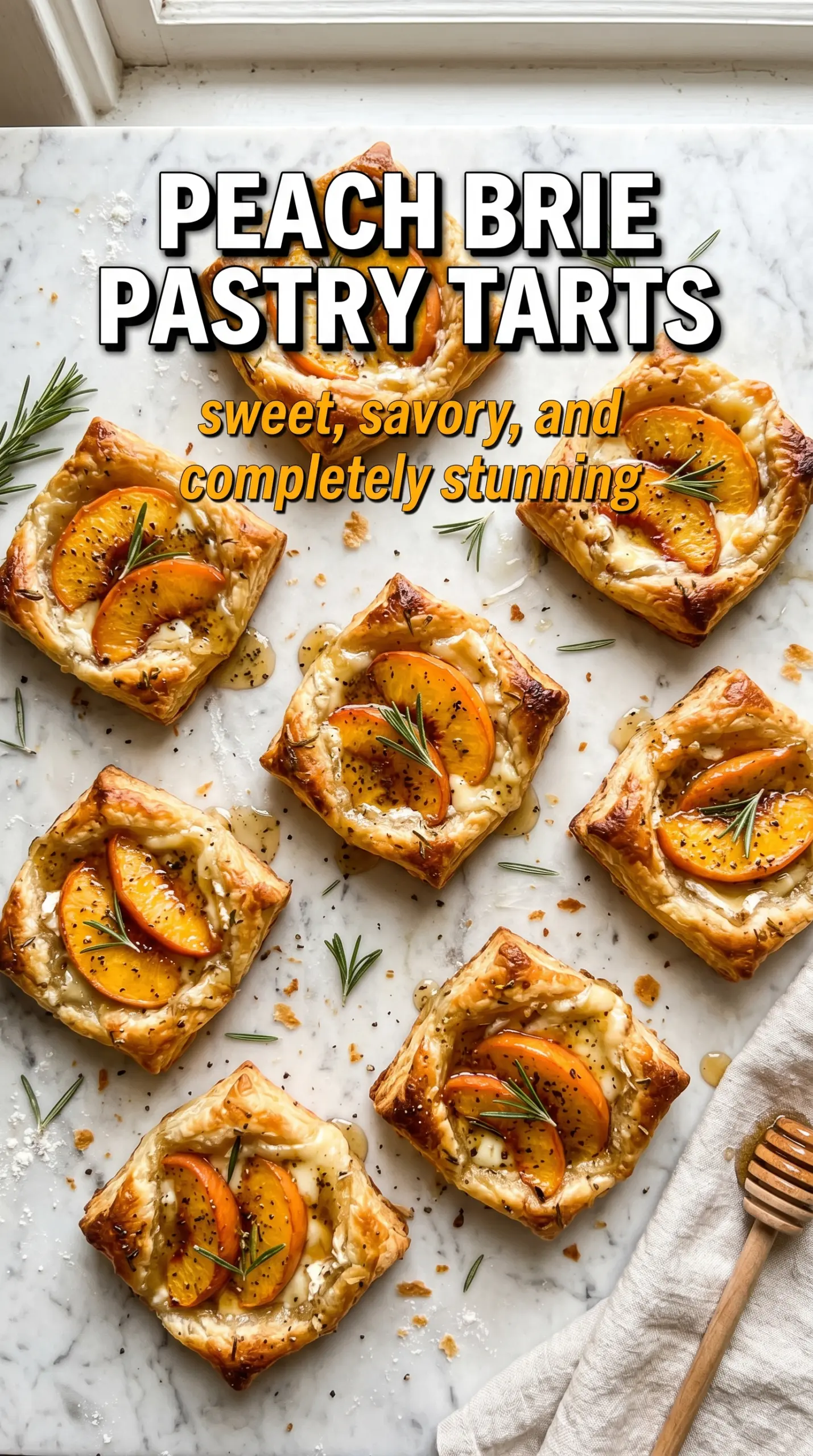
- Puff pastry — Thawed pastry is the whole engine here. Keep it cold until the last minute so it puffs instead of melting into butter puddles. If it gets soft while you work, slide the tray into the fridge for 10 minutes before baking.
- Brie — Use rind-on brie. The rind helps the cheese hold its shape long enough to melt into a soft center, and it disappears into the bite once baked. A firmer brie works better than an ultra-soft one, which tends to run too quickly.
- Peaches — Ripe but still sliceable peaches are ideal. If they’re too soft, they slump and flood the pastry; if they’re underripe, the flavor gets dull. Thin slices heat through faster and give you that glossy, just-baked look.
- Honey, rosemary, and black pepper — This is the part that makes the tart taste finished. The rosemary perfumes the honey, the pepper adds a gentle bite, and the lemon juice keeps the drizzle from tasting heavy. Don’t skip the pepper; it’s what pulls the sweet and savory pieces together.
- Flaky salt — Add it at the end, after the honey. It gives you little sharp pops against the creamy cheese and sweet fruit, which keeps each tart from tasting one-note.
Building the Tarts So They Bake Crisp Instead of Greasy
Scoring and Shaping the Pastry
Cut the puff pastry into 12 even squares and score a narrow border around each one without cutting all the way through. That border rises into a frame, which keeps the center slightly sunken and ready for the filling. If the pastry starts warming and going limp while you cut, stop and chill it before the oven goes on; soft pastry won’t puff as cleanly.
Loading the Filling
Place the brie in the center first, then top it with the peach slice. That order keeps the cheese from sliding when you move the tray. Keep the fruit to a single slice per tart so the pastry can bake through under the weight; too much fruit traps steam and leaves the bottom soggy instead of crisp.
Baking to the Right Color
Bake until the pastry is puffed and deeply golden, not pale gold. Pale pastry tastes floury and can collapse as it cools. The brie should look melted and soft at the edges, and the peaches should have slightly caramelized spots. If the bottoms are still blonde, give them another minute or two rather than pulling them early.
Finishing With the Warm Honey
Warm the honey gently with rosemary and black pepper just long enough to perfume it, then stir in the lemon juice after you remove the rosemary. Drizzle it over the hot tarts while they’re still on the tray so it spreads into the corners. Finish with flaky salt immediately; the heat helps it cling, and the contrast is what makes the bite sing.
Three Easy Ways to Adjust These Tarts Without Losing the Balance
Make them gluten-free with a sturdy pastry base
Use a gluten-free puff pastry if you can find one that bakes into layers. The filling works the same way, but GF pastry can brown faster and sometimes needs a few extra minutes to set fully, so watch the color rather than the clock.
Swap in nectarines or plums when peaches aren’t at their best
Nectarines work almost exactly the same way and give you a slightly cleaner slice. Plums add a sharper edge and a deeper color, but they’re juicier, so keep the pieces thin and expect a little more syrup on the tray.
Make the honey dairy-free by changing the cheese
If you need a dairy-free version, replace the brie with a vegan soft cheese that melts cleanly and has some richness. The tart will lose the exact buttery flavor of brie, but the peach and rosemary honey still carry the same sweet-savory idea.
Add prosciutto for a saltier appetizer version
A thin fold of prosciutto under the peach gives these more edge and makes them feel even more appetizer-friendly. The only catch is salt: keep the flaky salt light at the end, since the ham already brings plenty.
Storage and Reheating
- Refrigerator: Store leftovers in an airtight container for up to 2 days. The pastry softens in the fridge, and the honey will soak in a little.
- Freezer: These don’t freeze well after baking. The peaches go watery and the pastry loses its crisp layers.
- Reheating: Reheat on a sheet pan in a 375F oven for 5 to 7 minutes. The oven brings back the pastry’s crunch; the microwave just turns everything limp.
Questions I Get Asked About This Recipe

Peach Brie Pastry Tarts with Peppered Rosemary Honey
Ingredients
Equipment
Method
- Preheat the oven to 400F and line a baking sheet with parchment, using a rack in the center position for even browning.
- Score a 1/4-inch border around each puff pastry square without cutting through, then brush the border with beaten egg so it puffs into a raised frame.
- Place a slice of brie in the center of each pastry square, then set a peach slice on top so it covers the brie slightly.
- Bake for 18-20 minutes at 400F until pastry is puffed and deeply golden and the brie is melted and bubbling at the edges.
- While tarts bake, heat honey, rosemary, and black pepper in a small saucepan over low heat for 3 minutes, stirring until fragrant; remove rosemary.
- Stir lemon juice into the honey, then keep it warm just off the heat so it drizzles easily.
- Drizzle peppered rosemary honey over the hot tarts so it pools into the corners of the puffed border.
- Finish with flaky salt and serve immediately while the brie is still molten.