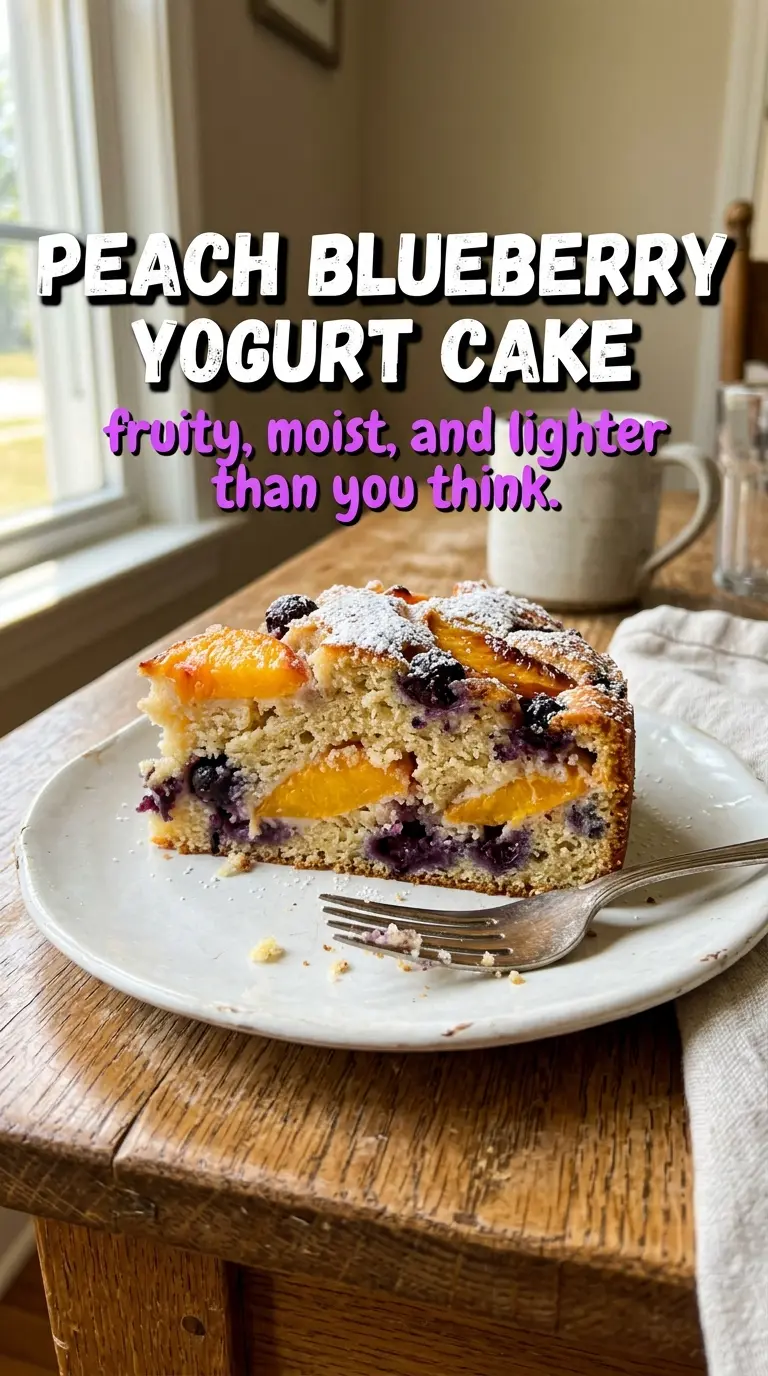
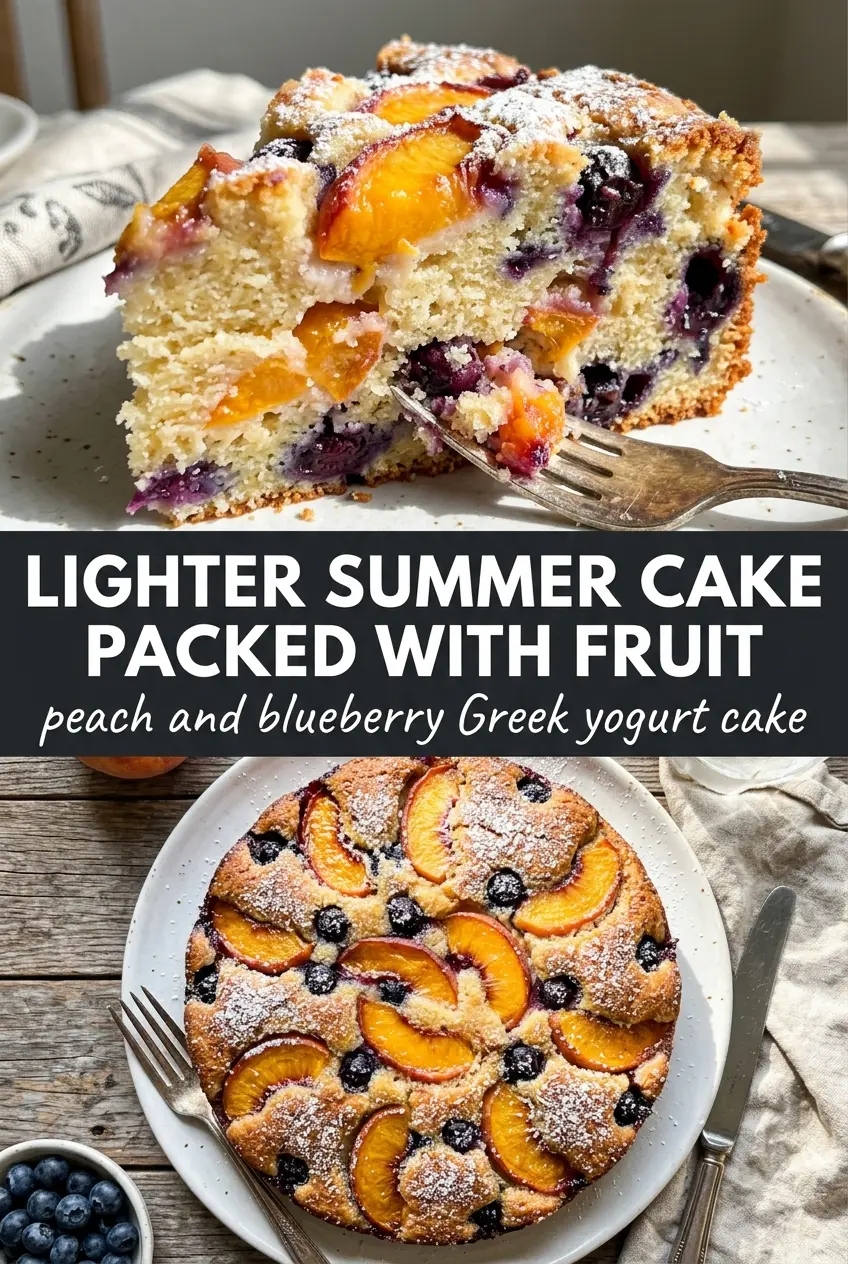
Peach and blueberry Greek yogurt cake bakes up with a tender crumb, a golden top, and pockets of juicy fruit in every slice. The yogurt keeps the crumb soft without making the cake heavy, while the blueberries burst just enough to leave little streaks of purple through the top and sides. It’s the kind of cake that disappears fast because it feels light enough for an afternoon slice but still has the comfort of a proper dessert.
The trick here is balance: enough flour to hold the fruit, enough yogurt to keep the crumb moist, and just enough oil to make the texture stay tender after the cake cools. Tossing the peaches and blueberries in a little flour before folding them in keeps them from sinking to the bottom, and mixing the batter only until combined keeps the crumb from turning tight. A gentle hand matters more than speed.
Below, you’ll find the small details that make this cake bake evenly, plus a few ways to adapt it when your fruit changes or you need to work with what’s in the fridge.
The cake came out incredibly moist and the fruit stayed suspended instead of sinking. I loved that the blueberries burst a little on top, and it was still soft the next day.
Save this peach and blueberry Greek yogurt cake for the days when you want a soft, fruit-filled dessert that stays moist for days.
Why the Fruit Won’t Sink in This Yogurt Cake
This cake has enough structure to hold fresh fruit, but only if you treat the batter gently and respect the flour coating on the peaches and blueberries. The extra tablespoon of flour around the fruit absorbs a little surface moisture and helps it grip the batter instead of sliding straight to the bottom. Skip that step and you’ll usually end up with a dense layer of fruit under a plain top.
The other thing that matters is the batter itself. Greek yogurt gives you a thick, sturdy base, but once the wet and dry ingredients are combined, overmixing builds gluten fast and tightens the crumb. Stir just until the last streaks of flour disappear, then fold the fruit in with a few slow turns of the spatula.
- Flour-coated fruit — This is the simplest way to keep the peaches and blueberries distributed through the cake. Use the full tablespoon and toss the fruit right before folding it in so the coating stays dry and useful.
- Greek yogurt — Thick yogurt gives the batter body and a moist crumb without turning the cake soupy. Regular yogurt works in a pinch, but it’s thinner, so the batter will be looser and the fruit may sink a little more.
- Vegetable oil — Oil keeps this cake soft even after it cools. Butter will work, but the texture won’t stay quite as plush on day two.
What Each Ingredient Is Doing in the Pan
- All-purpose flour — This gives the cake enough backbone to hold the fruit without collapsing. For a gluten-free version, use a good 1:1 gluten-free baking blend; the crumb will be a little more delicate, but it still bakes well.
- Baking powder and baking soda — These work together to lift the batter and keep the crumb from feeling heavy. The yogurt brings acidity, which wakes up the baking soda and helps the cake rise evenly.
- Greek yogurt — This is the ingredient that makes the cake taste rich while keeping it light. Full-fat yogurt gives the softest crumb, but low-fat works too if that’s what you have.
- Peaches and blueberries — Fresh fruit gives the best texture here because it holds its shape and bakes into juicy pockets instead of turning watery. If your peaches are very ripe, dice them a little larger so they don’t disappear into the batter.
- Cinnamon — It doesn’t turn this into a spice cake; it just rounds out the fruit and gives the top a warm finish. Leave it out if you want a cleaner, more fruit-forward flavor.
Getting the Batter Right Before the Fruit Goes In
Mix the dry ingredients first
Whisk the flour, baking powder, baking soda, salt, and cinnamon together before anything else. That step keeps the leaveners evenly distributed, which matters because you want the cake to rise at the same rate across the pan instead of puffing in one spot and sinking in another. If you see little pockets of flour in the finished batter, the cake will bake with pale streaks.
Build the wet mixture until smooth
Beat the eggs, sugar, Greek yogurt, oil, and vanilla until the mixture looks glossy and fully blended. You don’t need to whip air into it; you just want the sugar to dissolve a little and the yogurt to loosen into a smooth base. If the mixture looks curdled, the yogurt may have been very cold, but it will come together once the dry ingredients go in.
Fold gently and stop early
Stir the wet into the dry until you still see a few streaks of flour, then stop and fold those in with the fruit. This keeps the crumb tender instead of tough. Once the blueberries and peaches are in, use as few strokes as possible; the batter should look thick and dotted, not fully beaten smooth.
Bake until the center sets
Pour the batter into the prepared pan and bake until the top is golden and a toothpick comes out clean or with a few moist crumbs. If the top is browning too quickly but the middle still jiggles, lay a loose piece of foil over the cake for the last 10 minutes. Let it cool in the pan for 15 minutes before turning it out, or it can tear while it’s still fragile.
How to Adapt This Cake When the Fruit Changes
Swap in nectarines or plums
Use the same total amount of fruit and dice it to the same size as the peaches. Nectarines give you the same sweet juiciness without peeling, while plums add a little tang and a deeper color in the crumb.
Make it dairy-free
Use a thick unsweetened dairy-free yogurt with the same texture as Greek yogurt. Coconut yogurt works best if it’s not too sweet; thinner almond-based yogurts can make the batter looser, so choose the thickest one you can find.
Bake it as a loaf instead of a round cake
This batter can go into a standard loaf pan, but it will need a longer bake time and a lower, slower finish in the center. Start checking around 50 minutes and expect it to take closer to 60, since the taller shape holds heat differently.
How to store leftovers
- Refrigerator: Store covered for up to 4 days. The crumb stays moist, and the fruit flavor deepens a little by day two.
- Freezer: This cake freezes well. Wrap individual slices tightly and freeze for up to 2 months, then thaw at room temperature while still wrapped so condensation doesn’t make the top sticky.
- Reheating: Warm slices in a low oven or give them 10 to 15 seconds in the microwave. Don’t heat them hard or the fruit can turn watery and the crumb can dry out at the edges.
Answers to the Questions Worth Asking
Peach and Blueberry Greek Yogurt Cake
Ingredients
Equipment
Method
- Preheat the oven to 350F and grease a 9-inch round cake pan so the cake releases cleanly after baking.
- Whisk all-purpose flour, baking powder, baking soda, salt, and cinnamon in a large bowl until evenly combined.
- Beat eggs, granulated sugar, plain Greek yogurt, vegetable oil, and vanilla extract in a separate bowl until smooth.
- Stir the wet mixture into the dry ingredients until just combined, stopping as soon as no dry streaks remain.
- Toss the peaches and blueberries with 1 tablespoon flour, then fold them gently into the batter so the fruit stays intact.
- Pour the batter into the prepared pan and bake at 350F for 40-45 minutes until golden and a toothpick comes out clean, with the center set.
- Cool for 15 minutes in the pan, letting the cake firm up so slices hold their shape.
- Turn the cake out and lightly dust with powdered sugar to serve, highlighting the golden surface and fruit-studded top.