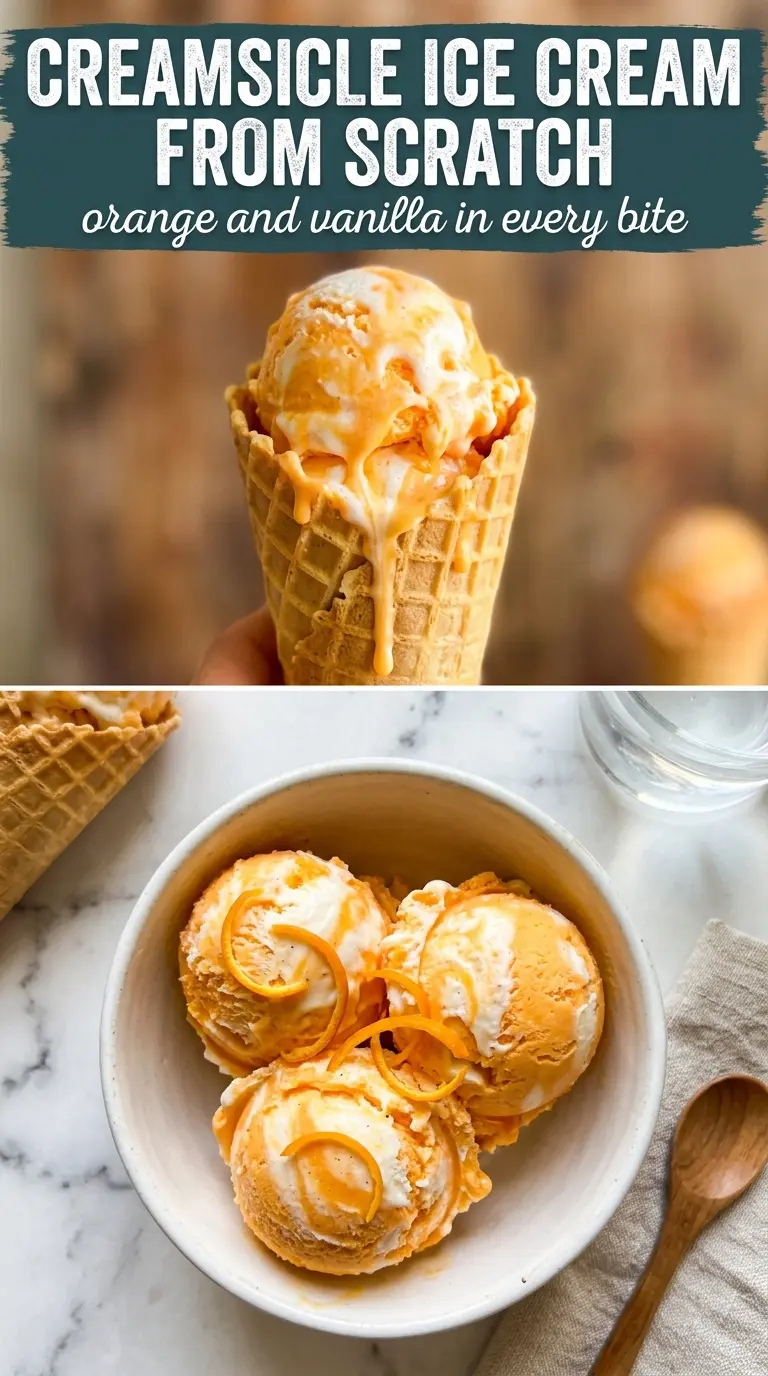
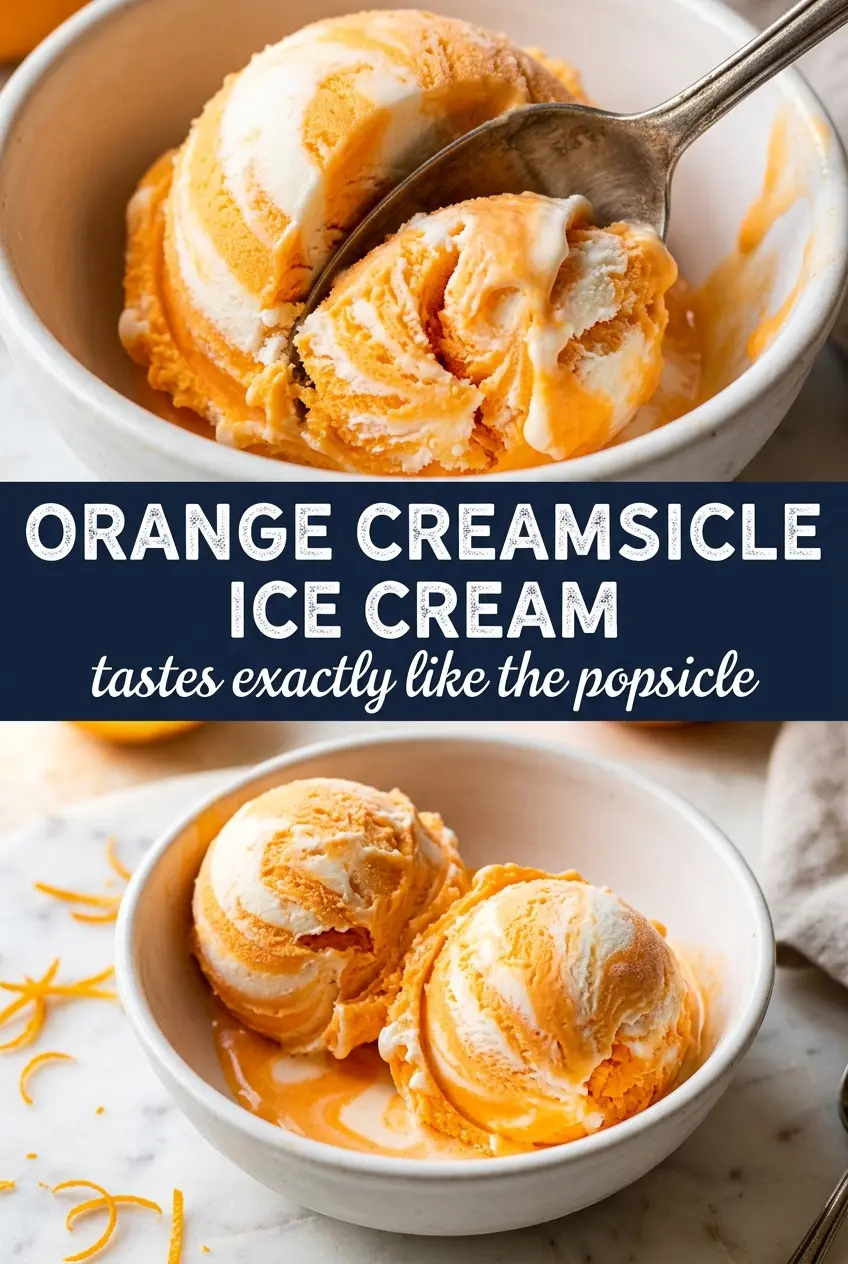
Swirls of bright orange and vanilla custard make this Orange Creamsicle Ice Cream taste like the frozen treat from childhood, only creamier and richer. The orange stays lively instead of muddy, and the vanilla base gives it that classic creamsicle finish without turning heavy or flat.
What makes this version work is the balance between a cooked custard base and a reduced orange syrup. The custard gives the ice cream body and a smooth scoop, while the syrup concentrates the citrus flavor so it stands up to all that cream. If you skip the reduction, the orange can taste thin and the extra liquid can make the texture icy.
Below, I’ll walk through the part that matters most: keeping the custard silky, cooking the orange just enough, and adding the swirl at the right moment so you get distinct ribbons instead of one blended pale orange batch.
The custard turned out smooth and the orange swirl stayed separate after freezing. My kids kept asking for “the orange and cream ice cream” and it scooped beautifully after the 4-hour freeze.
Creamy Orange Creamsicle Ice Cream with a real citrus swirl and that nostalgic vanilla finish
The Reason the Orange Swirl Stays Bright Instead of Turning Flat
The biggest mistake with creamsicle ice cream is adding raw orange juice straight into the custard. That sounds efficient, but it waters down the base and dulls the flavor. Reducing the orange juice with sugar and zest does two things at once: it concentrates the citrus and turns it into a syrup that stays ribboned through the churned ice cream instead of disappearing into the mix.
The other thing that matters is temperature. The vanilla custard has to be fully chilled before it hits the machine, and the orange syrup has to be cool too. If either one is warm, the churn starts from a soft, loose base and you lose the clean swirl that makes this dessert look and taste like a true creamsicle.
What the Custard, Citrus, and Zest Are Each Doing Here
- Heavy cream — This is what gives the ice cream its plush texture and slow melt. You need the fat here; lower-fat cream won’t churn into the same rich, scoopable base.
- Whole milk — Whole milk keeps the custard from becoming cloying. Skim or reduced-fat milk makes the finished ice cream lean and icy.
- Egg yolks — The yolks thicken the custard and help it freeze smoothly. If you rush this part and overheat the eggs, you’ll get little bits of scrambled custard, so keep the heat gentle and strain it if anything looks even slightly grainy.
- Fresh orange juice and zest — Fresh juice gives brightness, but the zest is where the real orange aroma lives. Bottled juice tastes flat here, and without zest the swirl loses that creamsicle perfume.
- Vanilla extract — Vanilla bridges the citrus and cream. Use a good extract if you can, because it shows up in a simple ice cream like this.
- Orange food coloring — Optional, but a tiny bit gives that classic orange creamsicle look without changing the flavor. If you use it, add just enough to tint the syrup before swirling.
Building the Custard and Swirl Without Losing the Texture
Heating the Dairy
Warm the cream and milk until they steam and tiny bubbles form around the edges. Don’t let them boil. A full boil can make the custard base harder to control when it hits the yolks, and you don’t need that kind of heat to get the right thickness. The goal is hot dairy, not aggressive dairy.
Tempering the Egg Yolks
Whisk the hot dairy into the yolks and sugar slowly so the eggs rise in temperature without curdling. Once the mixture goes back into the pan, cook it over medium-low heat until it reaches 175°F and lightly coats the back of a spoon. If it goes much hotter, the custard gets grainy instead of silky.
Reducing the Orange Syrup
Cook the orange juice, zest, and sugar until it turns slightly syrupy and smells more like orange candy than plain juice. That takes the raw edge off the citrus and gives you a swirl that stays distinct in the freezer. Cool it completely before using it, or it will melt tunnels through the churned ice cream.
Swirling at the End
Churn the vanilla base until it’s thick and soft-serve-like, then drizzle in the orange syrup during the last couple of minutes. Stop before it blends fully. Layer spoonfuls into your container and give just a few turns with a knife or spatula so you get visible orange ribbons instead of a uniform pale batch.
Three Ways to Adjust the Recipe Without Losing the Creamsicle Feel
Dairy-Free Version
Use full-fat coconut milk in place of the cream and whole milk, then expect a subtle coconut note in the background. The texture will still be rich, but it won’t taste exactly like the classic version because coconut fat behaves differently from dairy fat.
No-Ice-Cream-Maker Option
Pour the custard into a shallow container and freeze it, stirring every 30 to 40 minutes until it firms up. The texture won’t be quite as airy as churned ice cream, but the flavor stays on point and the orange swirl still works.
Extra Bright Orange Flavor
Add a little more zest to the syrup if you want the citrus to come forward harder. That’s the cleaner way to boost orange flavor than adding more juice, which can make the base too loose and dilute the custard.
Storage and Reheating
- Refrigerator: The custard base can be chilled up to 2 days before churning.
- Freezer: The finished ice cream keeps well for about 2 weeks. After that, the texture starts to get icier and the swirl loses some of its definition.
- Reheating: Not applicable for this dessert. For the best scoop, let it sit at room temperature for 5 to 10 minutes before serving so the custard softens instead of cracking the scoop.
Questions I Get Asked About This Recipe
Orange Creamsicle Ice Cream
Ingredients
Equipment
Method
- Heat heavy cream and whole milk in a pot over medium heat until steaming, stirring to prevent scorching (about 3 to 4 minutes). A thin steam should rise consistently from the surface.
- In a bowl, whisk egg yolks with 1/2 cup granulated sugar until smooth and slightly lighter in color. The mixture should look glossy with no sugar lumps.
- Slowly whisk the hot cream mixture into the egg yolks to temper, then return everything to the pot. Keep whisking so the custard stays smooth.
- Cook, stirring constantly, until the custard reaches 175°F and coats the back of a spoon (about 6 to 7 minutes). It should thicken noticeably and leave a clear trail when you swipe your finger through.
- Strain the custard into a clean container, then stir in vanilla extract and salt. The liquid should be silky with no egg bits visible.
- Cool completely before churning. The custard should be room temperature or colder.
- Combine fresh orange juice, orange zest, and the remaining 1/4 cup granulated sugar in a small saucepan. Make sure the sugar is evenly distributed.
- Simmer the mixture for 5 minutes, stirring occasionally, until slightly syrupy. It should look glossy and coat the back of a spoon lightly.
- Cool completely. The syrup should thicken a bit as it cools.
- Churn the vanilla custard in an ice cream maker until thick, following your machine’s instructions (about 20 to 30 minutes). It should hold soft-serve peaks when you lift the paddle.
- During the last 2 minutes, drizzle in the orange syrup and stop mixing immediately after the drizzle. You should see distinct orange ribbons rather than fully blended color.
- Transfer the ice cream to a freezer-safe container and layer spoonfuls to maintain the swirl. The top should show visible orange-and-vanilla streaks.
- Freeze at least 4 hours until firm. The texture should scoop cleanly with minimal melting at the edges.