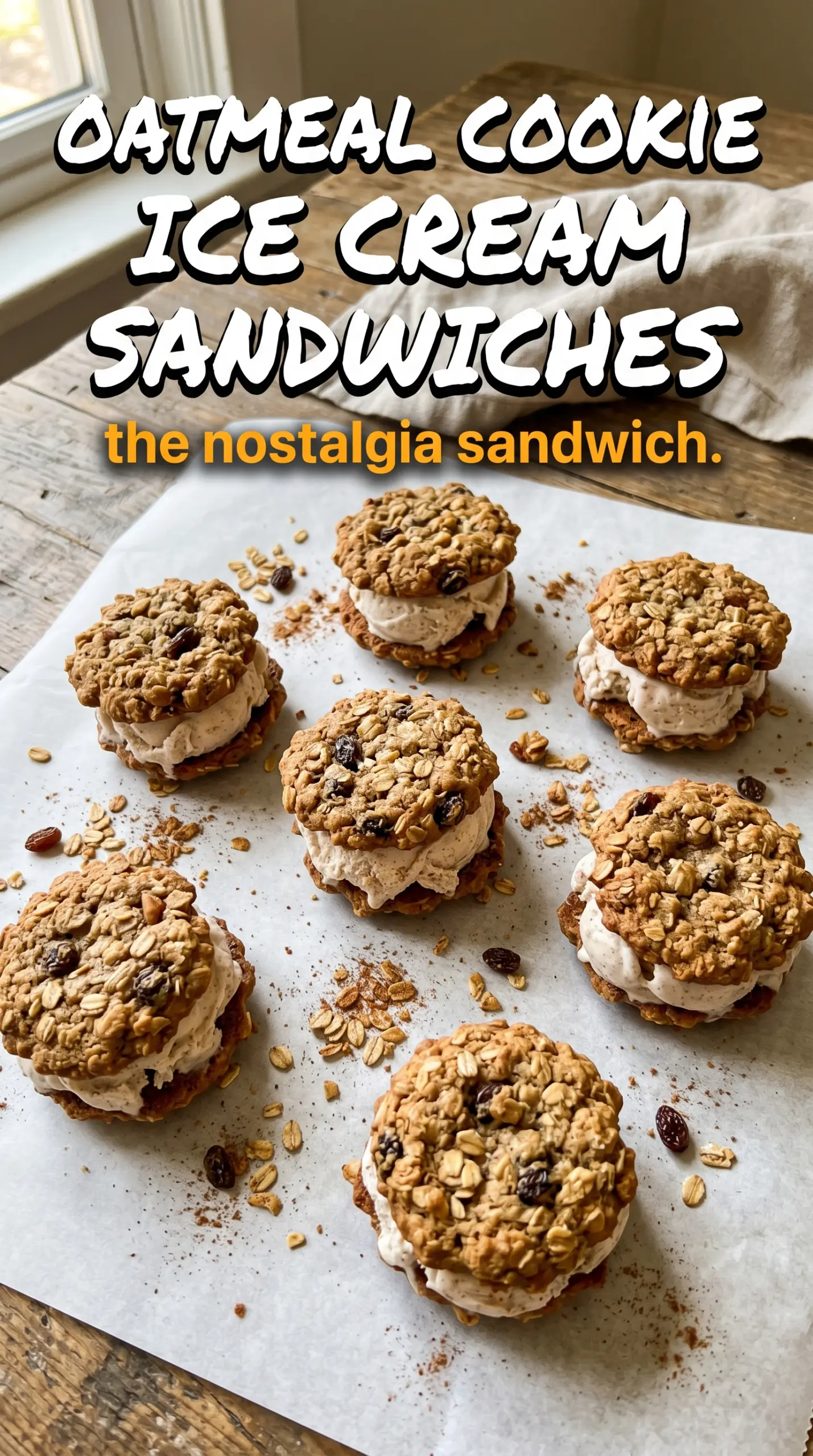
Thick oatmeal cookies and cold ice cream are a hard combination to beat, especially when the cookies stay chewy instead of turning crisp and dry in the freezer. These oatmeal cookie ice cream sandwiches hit that sweet spot: warm cinnamon, a sturdy oat texture, and just enough softness in the cookie to bite cleanly through the frozen center without shattering into crumbs.
The cookie dough leans on brown sugar for moisture and depth, and the oats do the heavy lifting for texture. I keep the cookies on the thicker side, then flatten them before baking so they spread into neat, sandwichable rounds instead of doming up. That extra step matters. If the cookies are too puffy, the ice cream squeezes out the sides the second you take a bite.
Below, you’ll find the little details that make these easier to assemble, plus a few ways to change the filling or finish so they fit whatever ice cream you’ve got on hand.
The cookies stayed chewy even after freezing, and the cinnamon ice cream made the whole sandwich taste like a warm oatmeal cookie in frozen form. The edges held together perfectly once I let them freeze the full hour.
Love the chewy oat cookies and creamy ice cream center? Save these oatmeal cookie ice cream sandwiches for the next time you want a frozen dessert with real homemade texture.
The Cookie Texture That Keeps These Sandwiches from Crumbling
The biggest mistake with ice cream sandwiches is baking cookies that are too delicate. Thin, crisp cookies taste fine on their own, but once they’ve been frozen around ice cream, they crack when you bite into them and leave you with a mess instead of a neat sandwich. These oatmeal cookies are built to stay bendy: enough butter for flavor, enough brown sugar for chew, and enough oats to give them structure without turning them dry.
The other detail that matters is size. Large cookies give you a better ice cream-to-cookie ratio and hold up better after assembly. Bake them until the edges are set and golden, but pull them before they look fully dry in the center. That slight underbake is what keeps them soft after freezing.
- Brown sugar — This is what keeps the cookies chewy. Granulated sugar helps with spread, but brown sugar is what gives these sandwiches that soft bite after freezing.
- Rolled oats — Use old-fashioned oats, not quick oats, if you want a rugged texture that reads clearly in the finished sandwich. Quick oats make the cookies denser and smoother.
- Cinnamon — It doesn’t just add spice; it makes the cookie taste warmer and more bakery-style once the ice cream chills everything down.
- Raisins — Optional, but they bring a classic oatmeal-cookie note. If you skip them, the sandwiches are still great; if you use them, chop them a little if you want cleaner bites.
- Ice cream — Vanilla is the safest choice, but cinnamon ice cream turns these into something special. Let it soften just enough to spread, not melt into soup.
What Each Ingredient Is Actually Doing in This Ice Cream Sandwich
- Cookie or bread base (the structural holder) — This needs to be sturdy enough to hold ice cream without crumbling, but tender enough to bite through. Freshness matters.
- Ice cream or frozen yogurt (the filling) — This should be slightly soft so it adheres to the cookies without melting off. Temperature matters here.
- Texture of the cookies (crispy vs. soft) — Crispy cookies stay crunchy; soft cookies meld with the ice cream. Choose based on the texture experience you want.
- Coating (optional chocolate, sprinkles, or nuts) — This adds visual appeal and texture. Dip in melted chocolate while ice cream is still cold so it sets immediately.
- Sandwich technique (speed matters) — Assemble sandwiches quickly so the ice cream doesn’t melt. Work in batches and keep ice cream scoops in the freezer.
- Freezing before serving (the set-up) — Let assembled sandwiches freeze for 30 minutes so they hold together when eaten. This also prevents ice cream from squishing out.
- Flavor pairing (cookies and ice cream together) — The cookie flavor should complement the ice cream, not compete. Think chocolate with vanilla or peanut butter with chocolate.
- Storage in the freezer (wrapped well) — Wrap individually so they don’t absorb freezer odors. They last 2-3 weeks when wrapped tightly.
Building the Sandwiches Before the Ice Cream Gets Away from You
Mixing the Dough for Chewy Edges
Start by whisking the dry ingredients so the cinnamon and baking soda disperse evenly. Then beat the butter and sugars until the mixture looks pale and fluffy. That step traps air and helps the cookies spread in a controlled way. When you add the flour, stop mixing as soon as it disappears; overmixing makes the cookies tougher, which is the last thing you want in a frozen sandwich.
Shaping Cookies That Match Up Cleanly
Scoop generous portions of dough, then press them into flat rounds before baking. That shape is important because it gives you two matching halves that stack neatly. If the dough balls stay domed, the ice cream slides out from the middle and the sandwich never sits flat. Space them out on lined baking sheets, because these cookies spread enough to need room.
Baking to the Right Point
Bake until the edges are golden and the centers look set but still a touch soft. If you wait until they seem completely firm in the oven, they’ll be too dry once frozen. Let them cool all the way before you add ice cream. Warm cookies melt the filling on contact, and then the whole thing turns messy instead of layered.
Assembling and Freezing
Use a small scoop or a thick spoonful of softened ice cream between two cookies, then press gently until it reaches the edges. Don’t overfill; a thin, even layer freezes more cleanly and gives you a better bite. If you want the edges coated, roll them in mini chocolate chips or cinnamon sugar right after assembling, while the ice cream is still tacky. Freeze the sandwiches for at least an hour so the filling firms up and the cookies settle into each other.
How to Change the Filling Without Losing the Chewy Cookie Magic
Vanilla Ice Cream for the Classic Version
Vanilla keeps the oatmeal cookie front and center, which is the right move if you want that nostalgic cookie-shop flavor. Use a good-quality vanilla with a strong dairy base, because a bland one tastes flat once it’s frozen inside the cookie.
Cinnamon Ice Cream for a Bigger Spice Hit
Cinnamon ice cream turns the whole dessert into a deeper, cozier version of itself. It doubles down on the spice in the cookie and makes the sandwiches taste more intentional, but the filling can read sweeter, so keep the cookie edges only lightly sugared.
Gluten-Free Oatmeal Sandwiches
A 1:1 gluten-free flour blend usually works well here, as long as it includes xanthan gum. The cookies may spread a little less, so press them flatter before baking. The oats still give you the familiar chewy texture, and the frozen sandwich holds together just fine.
Dairy-Free Version
Use a plant-based butter with a solid fat content and a dairy-free vanilla or cinnamon ice cream that scoops smoothly after softening. The cookie texture stays close to the original, but the flavor is a little less rich, so the cinnamon becomes even more important.
Storage and Reheating
- Refrigerator: Not ideal for storage. The cookies soften too much and the ice cream melts before it ever gets properly set.
- Freezer: Wrap each sandwich tightly and freeze up to 2 weeks for the best texture. After that, the cookies start to pick up freezer flavors and the edges dry out.
- Reheating: Don’t reheat these. Let them sit at room temperature for 5 to 8 minutes before serving so the cookie softens enough to bite without the ice cream turning slushy.
Answers to the Questions Worth Asking
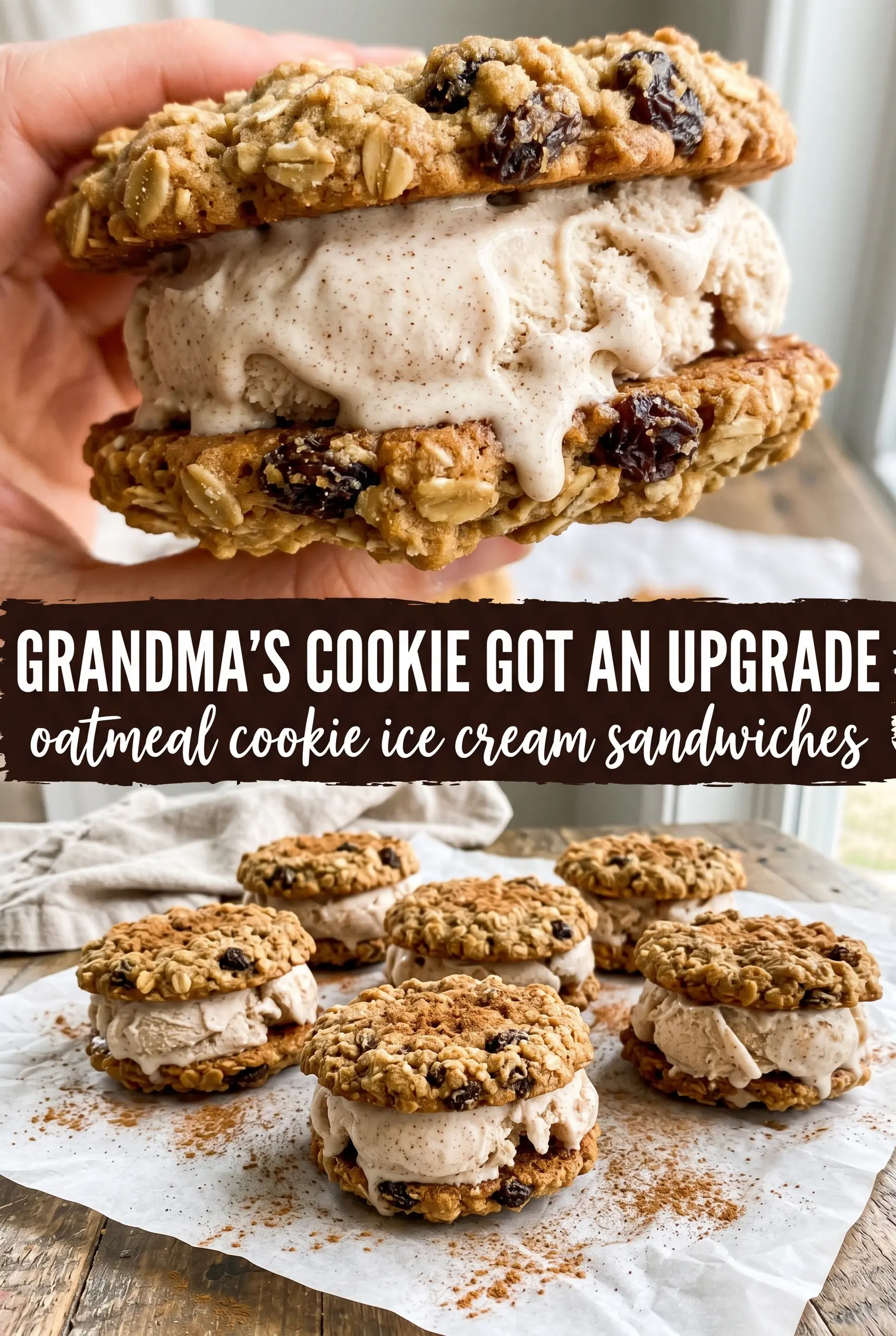
Oatmeal Cookie Ice Cream Sandwiches
Ingredients
Equipment
Method
- Preheat the oven to 375F. Whisk together flour, baking soda, cinnamon, and salt until evenly combined, with no visible streaks of spice.
- In a stand mixer, beat butter, brown sugar, and granulated sugar until fluffy. Stop once the mixture looks lighter in color and holds a soft, airy texture on the beater.
- Add eggs and vanilla extract to the mixer and beat just until combined. Scrape the sides so no dry pockets remain.
- Add the flour mixture to the mixer and stir until the dough comes together. Mix only until you no longer see dry flour.
- Fold in rolled oats, and fold in raisins if using. The dough should look thick and textured with visible oat pieces.
- Scoop dough into large rounds (about 3 tablespoons each) and press flat on a lined sheet pan. Space them apart and flatten slightly for even baking.
- Bake for 10-12 minutes at 375F, until the edges are golden. Look for set centers and lightly browned, rustic crinkled edges.
- Cool the cookies completely on the baking sheet. Let them cool to room temperature so the ice cream won’t melt when assembled.
- Place one cookie on a flat surface and sandwich cinnamon or vanilla ice cream between two oatmeal cookies. Use enough ice cream to fill the gap without overflowing, then press gently to seal.
- Roll the edges of each sandwich in mini chocolate chips or cinnamon sugar. Coat the sides lightly so the texture contrasts with the smooth ice cream layer.
- Freeze the sandwiches for at least 1 hour before serving. Keep them cold until firm enough to slice with clean edges.