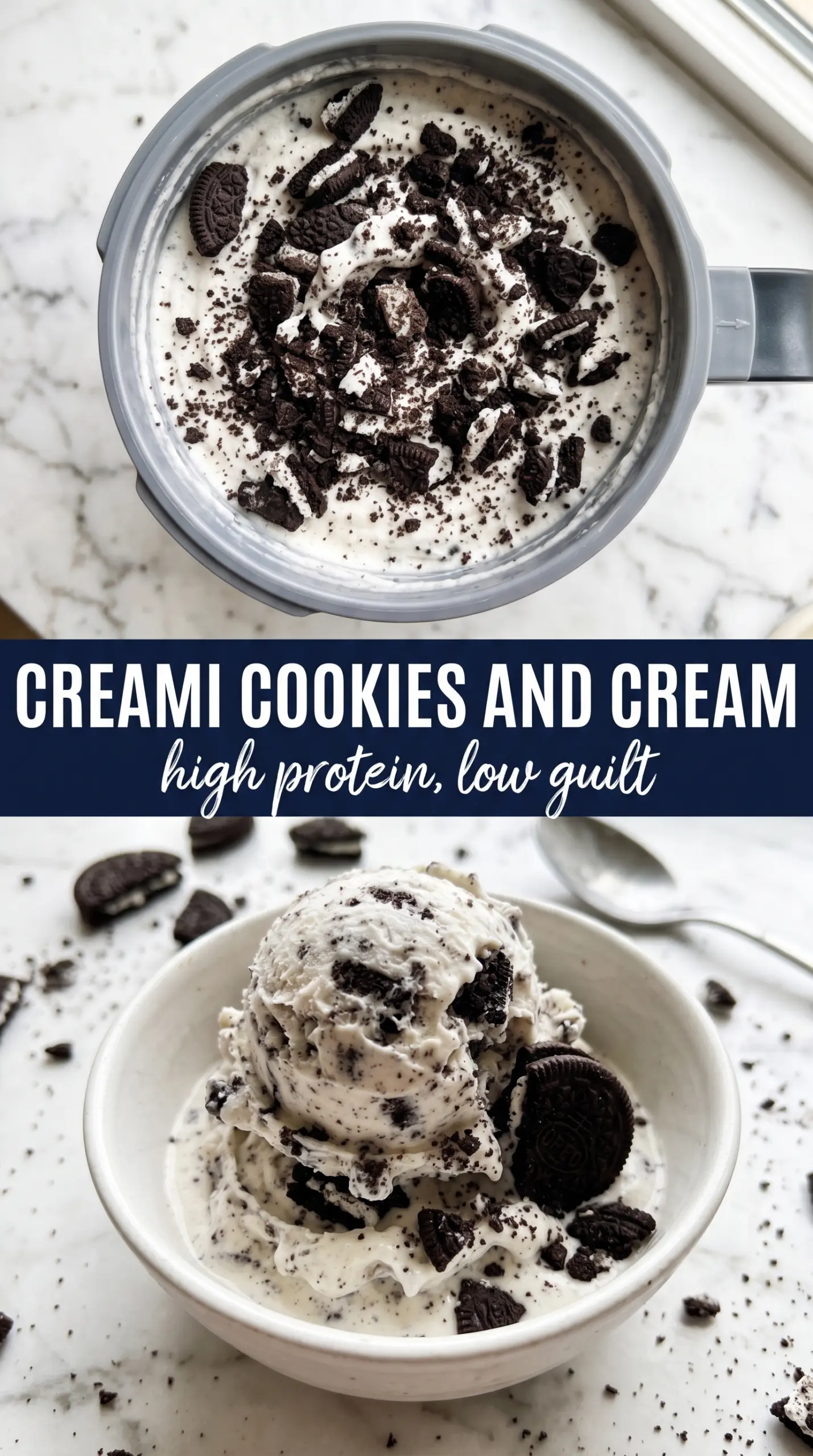
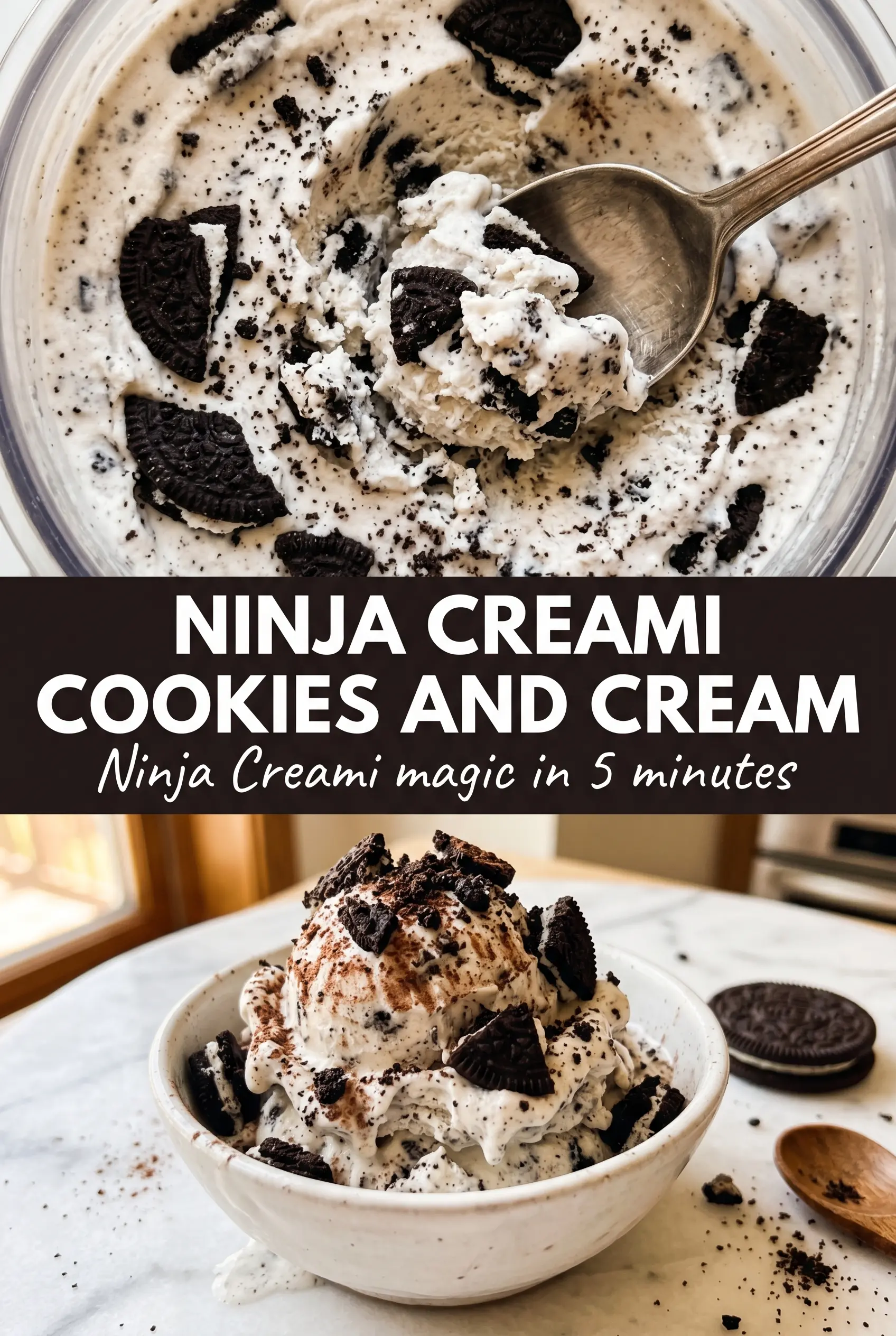
Cookies and cream ice cream turns out best when the base freezes dense, smooth, and just rich enough to stay scoopable after the Ninja Creami does its job. This version gives you that classic white-and-black speckled pint with a clean vanilla finish, creamy body, and cookie bits that stay crunchy instead of dissolving into the base.
The small amount of cream cheese is the detail that keeps the texture from tasting thin or icy. It blends into the milk and cream without making the base tangy, but it adds enough body to help the finished ice cream feel more like the store-bought version people actually want to keep eating. Crushing the cookies separately at the end matters, too. If they go in too early, they soften and disappear into the mix instead of giving you those proper Oreo pockets.
Below, I’ve included the freezing time that matters, the fix for a pint that comes out too hard, and the best way to get the cookie pieces mixed in without overworking the texture.
The base froze up perfectly and the Mix-In step kept the cookie pieces chunky instead of turning them into crumbs. It tasted like a real ice cream shop pint, not a watered-down copy.
Keep this Ninja Creami Cookies and Cream recipe handy for the nights when you want a thick, cookie-packed pint with almost no effort.
Why the Base Has to Freeze Smooth Before the Machine Can Save It
The Ninja Creami is forgiving, but it can’t fix a base that was never blended properly. Cream cheese needs to disappear completely into the milk and cream before freezing, or you’ll get little dense flecks in the finished pint that never fully break down. The other thing people miss is headspace. If you fill the container too high, the top can freeze unevenly and the machine has a harder time shaving through it cleanly.
This recipe also depends on the right fat balance. Whole milk keeps the base from becoming too heavy, while heavy cream brings the rich, dense texture that reads like real ice cream instead of frozen milk. That ratio is what gives the pint enough structure to process smoothly after 24 hours in the freezer.
- Cream cheese — This is the texture insurance. It helps the base emulsify and gives the finished ice cream a denser, more stable body. Use it softened, not cold, or it won’t blend in cleanly.
- Heavy cream — This is what makes the pint taste lush after freezing. A lighter cream swap will work in a pinch, but the texture will be thinner and more icy.
- Chocolate sandwich cookies — Crush them right before mixing in so you get distinct pieces. If they sit in the base too long, they soften and lose that classic cookie bite.
- Vanilla extract — Don’t skip it. It rounds out the dairy and keeps the base from tasting flat against the chocolate cookies.
What Each Ingredient Is Actually Doing in This Recipe
- Primary ingredient (the star) — This carries the main flavor. Quality matters here most.
- Base ingredient (if applicable) — This provides structure or creaminess. Choose quality options.
- Seasonings (salt, spices, herbs) — These define the personality and prevent flat-tasting results.
- Acid (lemon, vinegar, citrus) — This brightens and prevents heavy dishes from tasting one-dimensional.
- Fat (oil, butter, or cream) — This carries flavors and creates satisfying mouthfeel. Don’t skip it.
- Aromatics (garlic, onion, herbs) — These add depth and complexity. They change character as they cook.
- Texture element (crunch, creaminess, etc.) — This makes the dish interesting and prevents monotony.
- Final finish (garnish, fresh herbs, glaze) — These prevent one-dimensional taste and add visual appeal.
Getting the Pint to Spin Creamy Instead of Powdery
Blending the Base Until It’s Fully Emulsified
Blend the milk, cream, sugar, softened cream cheese, vanilla, and salt until the mixture looks completely uniform and no specks of cream cheese remain. That step matters more than people think, because a lumpy base freezes unevenly and spins into a gritty pint. If you’re using a blender, stop and scrape the sides once so nothing hides under the blade.
Freezing the Pint Flat and Undisturbed
Pour the base into the Ninja Creami pint and leave about 1 inch of headspace. Freeze it on a level shelf for a full 24 hours so the texture sets evenly from top to bottom. If the container is tilted, the machine ends up shaving an uneven surface and the result can be chalky in spots.
Processing, Respinning, and Folding in Cookies
Run the Ice Cream setting first. If the pint comes out dry or crumbly, add 1 tablespoon milk and use Re-spin rather than adding more liquid right away. Once the base turns creamy and scoopable, switch to Mix-In and fold in the crushed cookies so they stay in distinct pieces instead of disappearing into the ice cream.
How to Adapt the Pint When You Need a Different Finish
Dairy-Free Cookies and Cream
Swap in full-fat canned coconut milk for the cream and a rich unsweetened oat milk or almond milk for the whole milk. The texture will still be creamy, but it won’t taste quite as dairy-rich, so the vanilla matters even more here. Use dairy-free sandwich cookies if you want the whole pint to stay fully plant-based.
Higher-Protein Version
Replace part of the milk with a plain or vanilla protein shake that blends smoothly and keeps the total liquid volume the same. This gives you a firmer pint with a more frozen-yogurt style bite, but it can taste less rich than the original, so the cookies do a lot of the heavy lifting. Don’t use a chalky protein drink, or that texture will carry straight into the final ice cream.
Less Sweet, More Cookie-Focused
Cut the sugar back by 1 tablespoon if you want the cookie flavor to stand out more. The ice cream will taste a little less soft straight from the spin, but the cookies and cream balance gets sharper and less dessert-sweet. That works best if your cookies are already on the sweeter side.
Storage and Reheating
- Refrigerator: Not a refrigerator dessert. The base should go straight from mixing to the freezer.
- Freezer: Store the spun ice cream in the pint with plastic wrap pressed on top of the surface if you’re saving leftovers. It keeps for about 1 week, but the cookie pieces soften as it sits.
- Reheating: There’s no reheating here. If the frozen pint gets too hard after storage, let it sit on the counter for 5 to 10 minutes, then re-spin with a splash of milk if needed.
Questions I Get Asked About This Recipe
Ninja Creami Cookies and Cream
Ingredients
Equipment
Method
- Blend whole milk, heavy cream, granulated sugar, softened cream cheese, vanilla extract, and salt until completely smooth and the cream cheese is fully incorporated, with no visible lumps.
- Pour the smooth mixture into the Ninja Creami pint container, leaving 1 inch of headspace.
- Freeze for 24 hours until firm.
- Process on the Ice Cream setting; if the pint is too firm, add 1 tablespoon milk and Re-spin.
- Use the Mix-In function to fold in crushed chocolate sandwich cookies so the pieces are distributed throughout the white base.
- Serve immediately for a soft, dense texture, or return the pint to the freezer if you need to hold it.