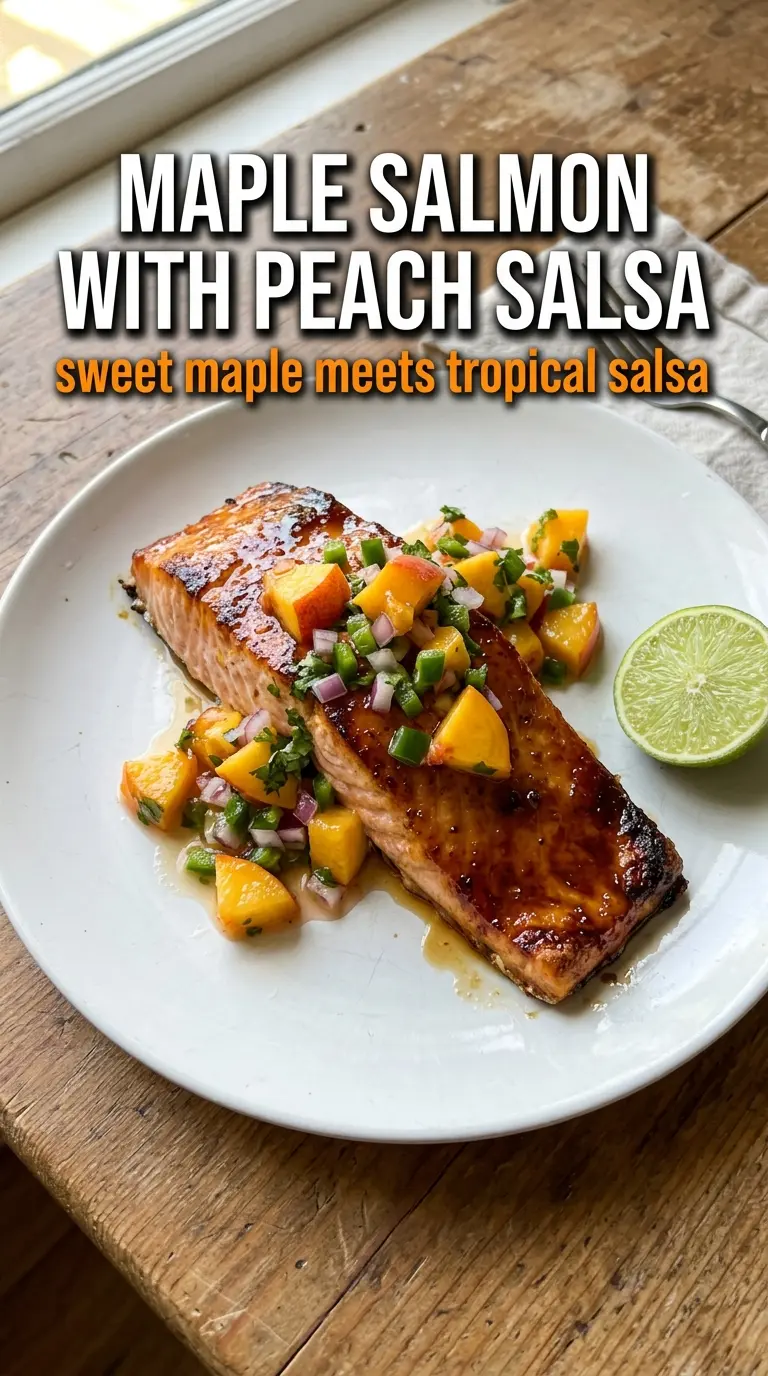
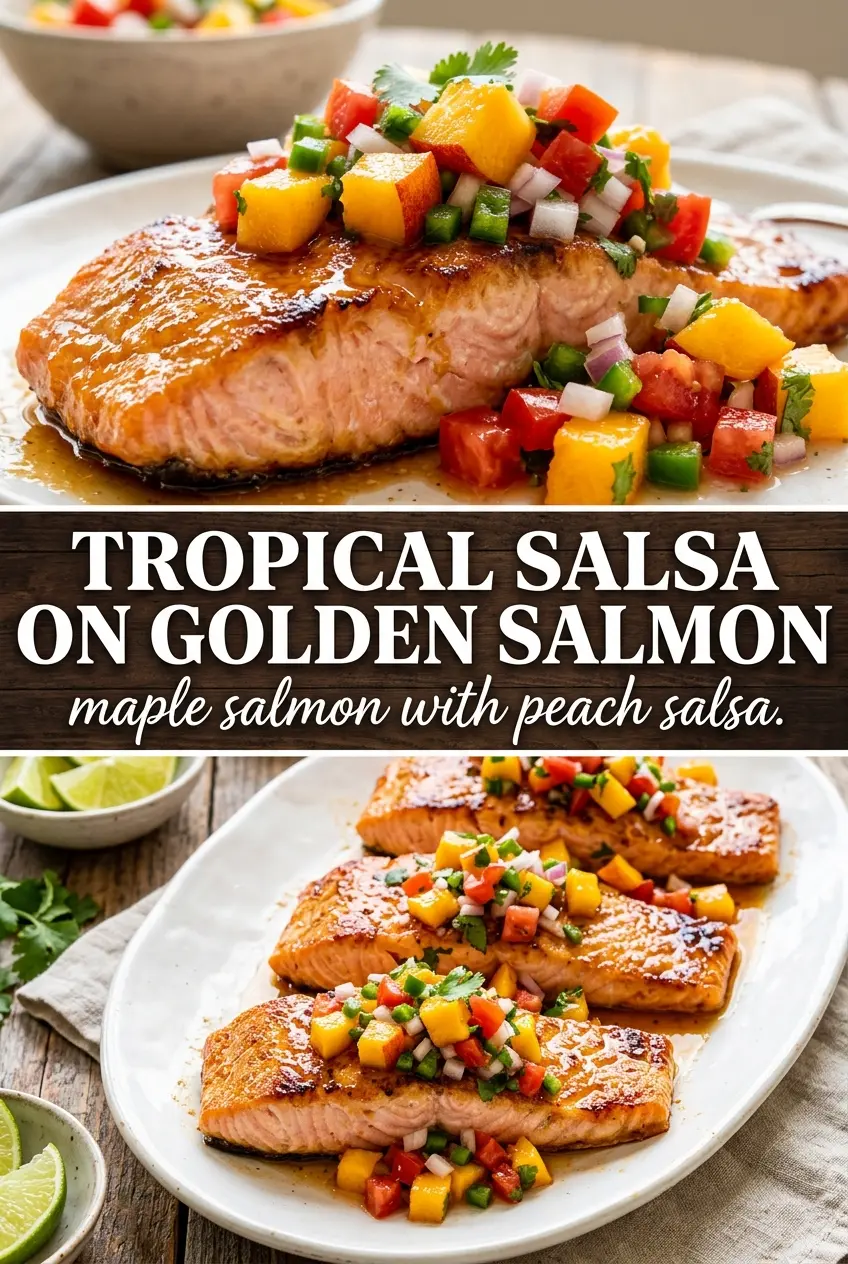
Maple-glazed salmon gets a deep caramelized crust here, then the fresh peach salsa cuts straight through with sweetness, lime, and a little heat. That contrast is what keeps this dish from tasting heavy. Every bite lands with crisp edges, tender fish, and a bright, chunky topping that tastes clean instead of cloying.
The trick is in the balance. Maple syrup alone can go sticky-sweet fast, but soy sauce brings salt and depth, and a little olive oil helps the glaze brush on evenly instead of clumping. On the salsa side, ripe peaches need enough firmness to hold their shape after dicing, and the lime juice keeps everything lively while the jalapeño and red onion keep the sweetness in check.
Below, I’ve included the timing that gives the salmon that lacquered finish without overcooking it, plus the one texture cue that tells you the salsa is ready to serve. Once you’ve made it once, it’s the kind of dinner that feels polished without asking for much.
The glaze turned shiny and caramelized in the pan, and the peach salsa stayed crisp and fresh on top. I was worried the maple would be too sweet, but the lime and jalapeño kept it balanced perfectly.
Save this maple salmon with peach salsa for the nights when you want caramelized fish, juicy summer peaches, and a dinner that looks as good as it tastes.
The Detail That Keeps the Glaze Caramelized Instead of Burnt
The biggest mistake with maple salmon is rushing the heat. Maple syrup browns fast, and if the pan is too hot when the glaze goes on, the sugars can go from glossy to scorched before the fish has a chance to cook through. Medium-high heat is the sweet spot here: hot enough to build color, controlled enough to keep the glaze readable and the salmon moist.
The other thing that matters is when you brush on the extra glaze. A light coat at the start helps the surface set, but the real shine comes from brushing on a little more as the salmon cooks. That layered approach gives you a lacquered finish instead of a thick, sticky shell.
If your salmon sticks, it usually means the pan wasn’t hot enough before the fish went in. Let it warm fully, then place the salmon down and leave it alone until it releases on its own. That’s when the crust is forming properly.
What Each Ingredient Is Actually Doing in This Dish
- Pure maple syrup — This is the base of the glaze, and it’s what gives the salmon that glossy, bronzed finish. Use real maple syrup, not pancake syrup, because imitation syrup can taste flat and won’t caramelize the same way.
- Soy sauce — It reins in the sweetness and adds the savory backbone that keeps the glaze from tasting one-note. If you need a gluten-free version, tamari works cleanly here without changing the texture.
- Olive oil — A small amount helps the glaze spread across the fish and encourages even browning. You don’t need much, but skipping it makes the maple mixture cling in patches.
- Peaches — Ripe, fragrant peaches are what make the salsa sing, but they need to be firm enough to dice cleanly. If they’re overly soft, you’ll end up with mush instead of a fresh topping.
- Jalapeño and red onion — These two keep the salsa sharp and balanced. If you want less heat, remove the jalapeño seeds and ribs; if you want a milder onion bite, rinse the diced onion under cold water and pat it dry.
- Lime juice and cilantro — Lime wakes up the peaches, and cilantro gives the salsa its fresh finish. Lemon works in a pinch, but lime matches the fruit better and keeps the whole dish brighter.
Building the Salsa and Salmon So They Finish at the Same Time
Mix the Salsa First
Combine the peaches, red onion, jalapeño, cilantro, lime juice, and salt before you start the fish. That short rest in the fridge lets the lime pull a little juice from the peaches, which helps the salsa taste blended instead of chopped separately. You want the peaches still holding their shape, not collapsing into syrup.
Brush on the Glaze Before the Pan Heats Up
Stir the maple syrup, soy sauce, and olive oil together until the glaze looks smooth and loose. Brush it onto the salmon before it hits the pan, then add more as it cooks. If you wait until the fish is already dry in the skillet, the glaze can streak instead of forming an even coat.
Cook to the Point Where the Crust Sets
Place the salmon in a hot skillet and let it cook without moving it for a few minutes. You’re looking for a caramelized surface that lifts cleanly and a center that still looks just slightly translucent if you peek at the thickest part. Overcooking is the easiest way to lose this dish, because the salmon goes from silky to dry fast.
Finish with the Salsa on Top
Move the salmon to plates and spoon the peach salsa generously over each fillet. The warm fish softens the edges of the fruit just enough, and the contrast between the hot salmon and cool salsa is part of what makes each bite work. Add lime wedges if you want a sharper finish.
How to Adapt This for Different Tastes and Dinners
Make It Gluten-Free
Use tamari instead of soy sauce. The glaze stays glossy and savory, and you won’t lose the balance that keeps the maple from tasting too sweet.
Tone Down the Heat
Leave out the jalapeño seeds and membranes, or use just half the pepper. You’ll still get a fresh, lively salsa, just with less bite on the finish.
Swap the Fruit
Nectarines or firm mango can stand in for peaches if that’s what you have. Nectarines keep the same bright, juicy feel, while mango makes the salsa a little softer and sweeter.
Store Leftovers the Right Way
- Refrigerator: Store the salmon and salsa separately for up to 2 days. The fish stays best if you don’t let the salsa sit on top overnight, since the acid will soften it.
- Freezer: The salmon freezes well for up to 2 months, but the peach salsa does not. Freeze the cooked fish plain, then make a fresh batch of salsa when you’re ready to serve.
- Reheating: Warm the salmon gently in a 300°F oven or in a covered skillet over low heat. High heat dries it out fast and burns the maple glaze before the center is heated through.
Answers to the Questions Worth Asking
Maple Salmon with Peach Salsa
Ingredients
Equipment
Method
- Combine diced peaches, red onion, jalapeño, chopped cilantro, lime juice, and salt in a bowl, then stir until evenly mixed. Chill in the refrigerator until ready to serve for a fresher bite.
- Mix pure maple syrup, soy sauce, and olive oil together in a small bowl until glossy and smooth. Keep it ready for brushing during cooking.
- Season the salmon fillets with salt and pepper, then brush generously all over with the maple glaze. Make sure every surface is coated for a caramelized crust.
- Heat a cast iron skillet over medium-high heat until hot, then place the salmon in the skillet. Cook for 4-5 minutes per side, brushing with the remaining glaze as you cook, until cooked through and caramelized with browned edges.
- Place the salmon on plates and pile the peach salsa generously on top. Serve with rice or salad and add extra lime wedges on the side.