Macaron ice cream sandwiches turn two classic textures into one frozen dessert that feels far more polished than the effort suggests. Crisp-edged shells give way to that faint chew in the center, then the ice cream melts just enough against the almond cookie to make each bite feel clean, cold, and luxurious. They look like something from a pastry case, but they eat like the kind of treat you want to make again because the payoff is so obvious.
The shells matter here. Almond flour gives macarons their signature bite, while aged egg whites whip more reliably and hold a stronger meringue. The dry rest before baking is what keeps the tops smooth and helps form the ruffled feet underneath; skip that, and the shells can crack or spread without the right lift. Matching the ice cream flavor to the shell color keeps the sandwich balanced and makes the finished dessert feel intentional instead of random.
Below, I’ve included the little details that keep the shells neat, the filling centered, and the whole dessert easy to serve straight from the freezer. If macarons have ever felt fussy, this is the version that makes the process feel worth it.
The shells came out with perfect feet and didn’t crack, and the strawberry ice cream softened just enough to fill them without squishing the cookies. I froze the sandwiches for two hours and they sliced cleanly enough to serve to company.
Save these macaron ice cream sandwiches for the next time you want a frozen dessert with crisp shells, chewy centers, and a polished finish.
The Hidden Step That Keeps Macaron Shells From Turning Hollow
Macarons fail in predictable ways: hollow tops, cracked shells, lopsided feet, or a batter that spreads into little puddles. The fix usually isn’t baking longer. It’s controlling the meringue and the macaronage so the batter lands in that narrow place where it flows slowly but still holds its shape when piped.
For this dessert, that matters even more because the shells need to be sturdy enough to hold ice cream without shattering, but not so dry that they bake up brittle. The brief rest before baking gives the surface enough skin to set in the oven, which helps the shells rise evenly. If the tops still feel tacky after resting, give them more time; putting them in the oven too soon is how you lose the smooth finish.
- Egg whites — Aged whites whip up with more structure and less excess moisture, which gives you a steadier meringue. Room temperature helps them foam faster and fold more evenly.
- Almond flour — This is the flavor and the texture of the shell, so a fine grind matters. If your almond flour looks coarse, sift it and discard the bigger pieces instead of forcing them into the batter, or the tops will be speckled and rough.
- Powdered sugar — It blends with the almond flour and helps create a smoother shell. If you only have granulated sugar on hand, it won’t behave the same way here; this isn’t the place to swap casually.
- Gel food coloring — Gel gives you bright color without thinning the batter. Liquid coloring adds extra moisture and can throw off the texture, which is one of the fastest ways to end up with spread-out shells.
- Ice cream — Use a flavor that matches or complements the shell color so the sandwich feels cohesive. Slightly softened ice cream is easier to portion, but it should still be cold enough to hold its shape once assembled.
What Each Ingredient Is Actually Doing in This Ice Cream Sandwich
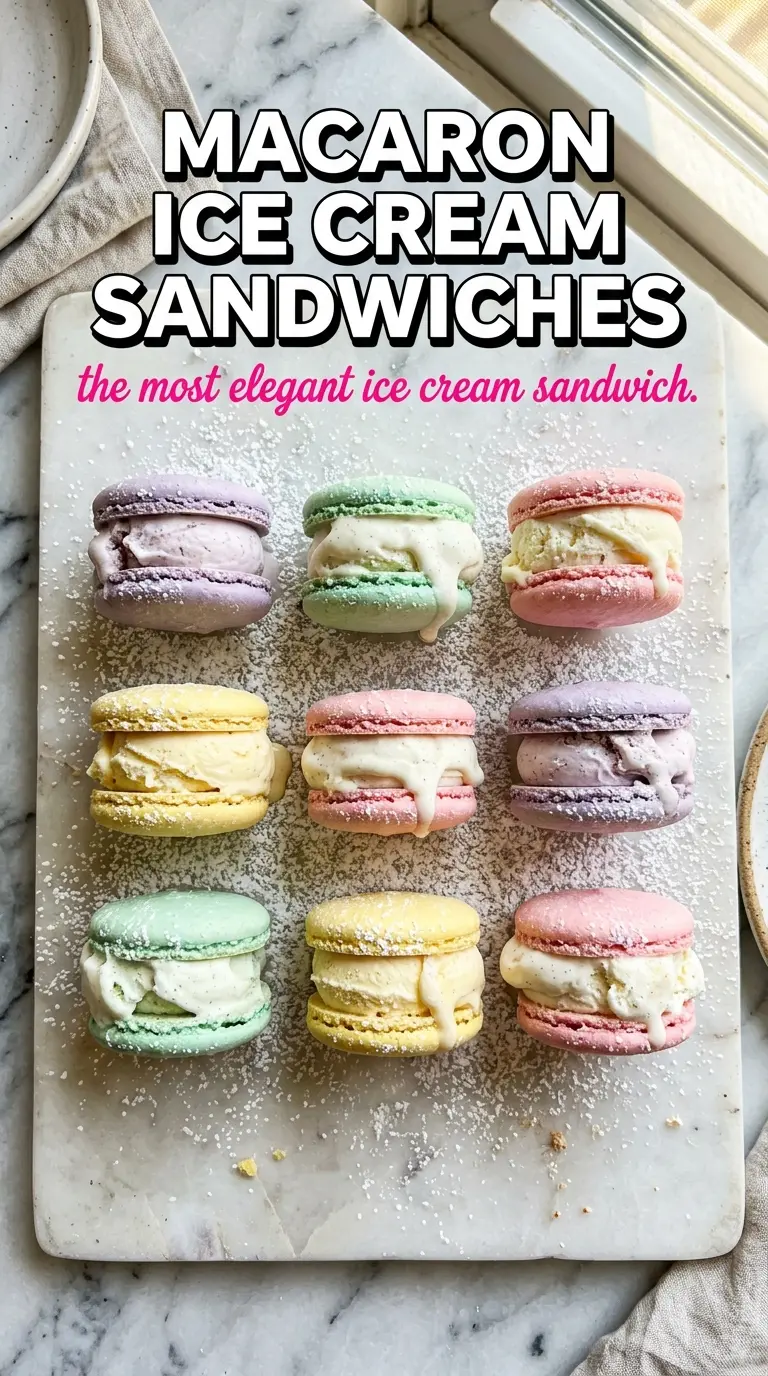
- Cookie or bread base (the structural holder) — This needs to be sturdy enough to hold ice cream without crumbling, but tender enough to bite through. Freshness matters.
- Ice cream or frozen yogurt (the filling) — This should be slightly soft so it adheres to the cookies without melting off. Temperature matters here.
- Texture of the cookies (crispy vs. soft) — Crispy cookies stay crunchy; soft cookies meld with the ice cream. Choose based on the texture experience you want.
- Coating (optional chocolate, sprinkles, or nuts) — This adds visual appeal and texture. Dip in melted chocolate while ice cream is still cold so it sets immediately.
- Sandwich technique (speed matters) — Assemble sandwiches quickly so the ice cream doesn’t melt. Work in batches and keep ice cream scoops in the freezer.
- Freezing before serving (the set-up) — Let assembled sandwiches freeze for 30 minutes so they hold together when eaten. This also prevents ice cream from squishing out.
- Flavor pairing (cookies and ice cream together) — The cookie flavor should complement the ice cream, not compete. Think chocolate with vanilla or peanut butter with chocolate.
- Storage in the freezer (wrapped well) — Wrap individually so they don’t absorb freezer odors. They last 2-3 weeks when wrapped tightly.
Building the Batter, Baking the Shells, and Freezing the Sandwiches
Whipping the Meringue
Beat the egg whites with cream of tartar until they reach soft peaks, then add the granulated sugar slowly so the meringue turns glossy and firm instead of grainy. You want stiff peaks that stand up straight, but they should still look smooth and satiny. If the meringue looks dry or clumpy, it’s been overbeaten and won’t fold cleanly with the almond mixture.
Macaronage: The Fold That Decides Everything
Fold the dry ingredients into the meringue with a light hand, scraping around the bowl and pressing some of the air out as you go. The batter should flow like lava and fall from the spatula in a thick ribbon that settles back into itself after a few seconds. Stop too early and the shells will have peaks; go too far and they spread flat in the oven.
Piping and Resting the Shells
Pipe 1.5-inch rounds onto parchment-lined baking sheets, then bang the pans firmly on the counter to pop trapped air bubbles. That part matters; hidden air pockets are a common reason macarons crack or develop hollow shells. Let them rest until the tops form a dry skin you can touch without sticking, usually 30 to 60 minutes depending on the room.
Baking and Cooling Completely
Bake at 300°F until the shells are set and the bottoms lift cleanly from the parchment, usually 14 to 16 minutes. They should not wobble in the center when nudged gently. Cool them all the way before you even think about filling them, because warm shells melt the ice cream too fast and make assembly messy.
Filling and Freezing
Pair similar-sized shells, then sandwich a generous disc of matching ice cream between them. Press just enough to spread the filling to the edges without cracking the shells. Freeze the sandwiches for about 2 hours so they firm up enough to serve cleanly; straight from the freezer is the best texture for both the cookie and the ice cream.
How to Adapt These Macaron Ice Cream Sandwiches Without Losing the Texture
Pistachio Shells with Vanilla Ice Cream
Swap a portion of the almond flour for very finely ground pistachios and color the batter a soft green if you want the flavor to match the look. The shells will taste a little nuttier and richer, while vanilla ice cream keeps the sandwich from getting too sweet or heavy.
Dairy-Free Filling
Use a dense dairy-free ice cream made with coconut or oat milk, not a soft frozen dessert that turns slushy. The shells stay the same, but the filling needs enough body to hold its shape between the cookies after freezing.
Chocolate Macarons with Raspberry Ice Cream
Add a small amount of cocoa powder to the dry ingredients for a deeper shell and pair it with raspberry ice cream for a sharper, more grown-up dessert. Cocoa can dry the batter a little, so keep an eye on the macaronage and stop folding as soon as the batter flows smoothly.
Storage and Reheating
- Refrigerator: Don’t store these in the fridge. The shells soften fast and the ice cream turns sticky before you can serve them properly.
- Freezer: Wrap each sandwich individually and freeze for up to 1 week for the best texture. After that, the shells can start to lose their clean bite from freezer moisture.
- Reheating: There isn’t a reheating step here. Pull the sandwiches from the freezer and let them sit for 1 to 2 minutes at room temperature so the ice cream isn’t rock hard, but don’t let them soften long enough for the shells to get damp.
Questions I Get Asked About This Recipe
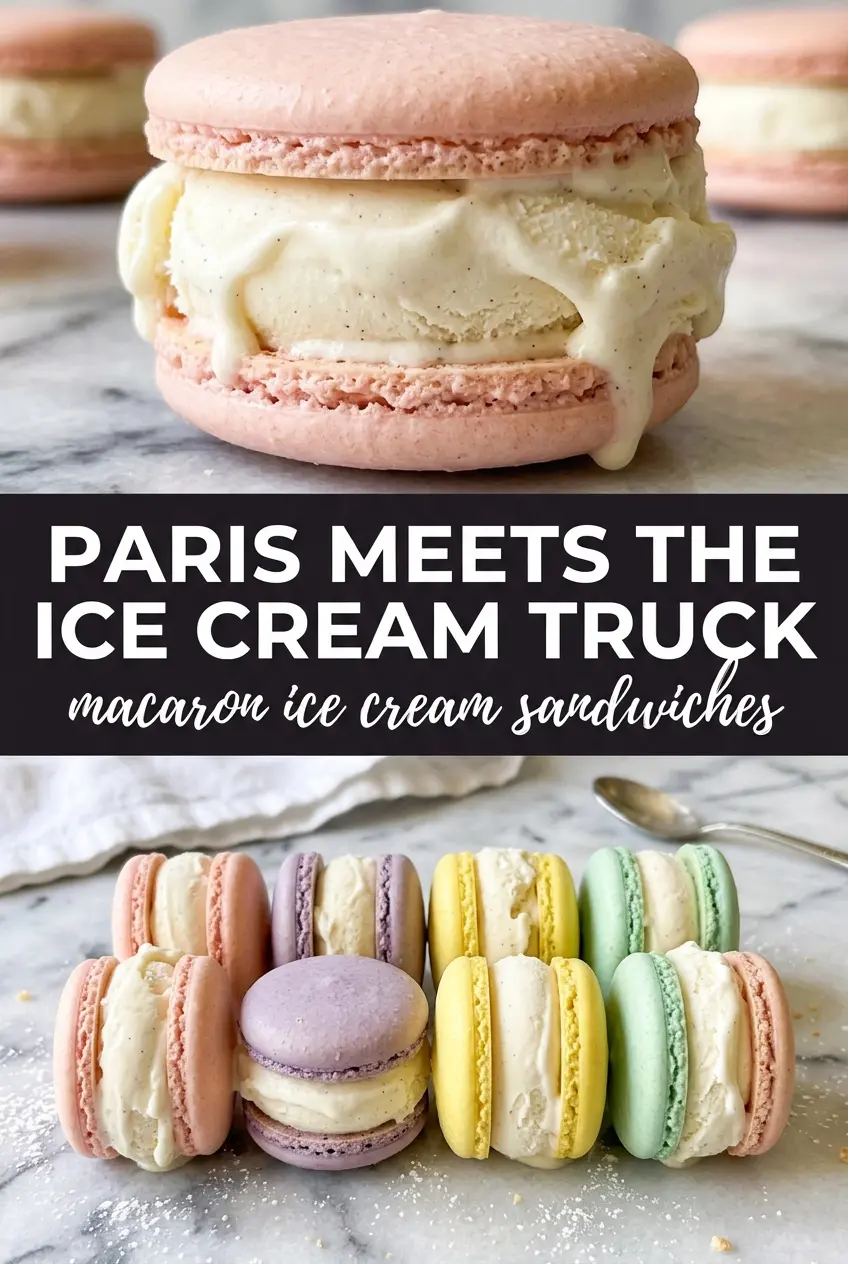
Macaron Ice Cream Sandwiches
Ingredients
Equipment
Method
- Sift powdered sugar and almond flour into a bowl, discarding large almond pieces to keep the shells smooth.
- Add egg whites and cream of tartar to a stand mixer and beat to soft peaks.
- With the mixer running, add granulated sugar gradually and beat until stiff, glossy peaks form.
- Add gel food coloring and mix just until the batter is evenly colored.
- Fold the dry ingredients into the meringue using macaronage until the batter flows like lava.
- Transfer batter to a piping bag and pipe 1.5-inch rounds onto parchment-lined baking sheets.
- Bang the sheet pan firmly on the counter to release air bubbles.
- Rest 30-60 minutes until the tops form a dry skin that does not look wet or tacky.
- Bake at 300F for 14-16 minutes, until the shells set with their characteristic feet.
- Cool completely before assembling.
- Match shells by size and sandwich a generous disc of matching ice cream between two shells.
- Freeze for 2 hours, then serve straight from the freezer.