Silky, sharp, and clean on the finish, lemon sorbet is the kind of dessert that wakes up the whole table. It doesn’t lean on cream or butter to carry it, so every spoonful lands with a bright citrus snap and a cold, shimmering texture that feels almost weightless. When it’s done right, it tastes like pure lemon in frozen form, not just sweet ice with a little juice in it.
The difference here comes from balance and temperature. The simple syrup has to cool completely before it meets the lemon juice, or you lose the fresh edge and end up waiting forever for the base to chill. Zest earns its place too, because it adds the aromatic oils that make the sorbet taste fuller and more vivid than juice alone. If you choose to use egg white, it softens the texture just enough to make scoops feel a little creamier without turning the sorbet heavy.
Below, I’ve laid out the small details that matter: how cold the base needs to be before churning, what to watch for if your sorbet freezes too hard, and how to adjust the texture depending on whether you want it extra icy or a touch smoother.
The lemon flavor was incredibly clean, and the texture stayed scoopable after an hour in the freezer. I loved that the zest made it taste fresh instead of just sweet and icy.
Save this lemon sorbet for the nights when you want something icy, intensely tart, and refreshingly simple.
Why the Base Has to Chill Before It Churns
Sorbet can look finished while still being too warm at the center, and that’s where a lot of homemade batches go wrong. If the base goes into the machine even a little warm, the churning takes longer, the texture gets coarse, and the final sorbet can freeze into a hard, icy block instead of a smooth scoop.
The simple syrup needs to dissolve completely and cool all the way down before the lemon juice goes in. That keeps the citrus flavor bright and prevents the mixture from losing its fresh, aromatic edge. Once the lemon mixture is refrigerated until cold, it churns faster and traps smaller ice crystals, which is the difference between a polished sorbet and a grainy one.
What Each Ingredient Is Actually Doing in This Sorbet
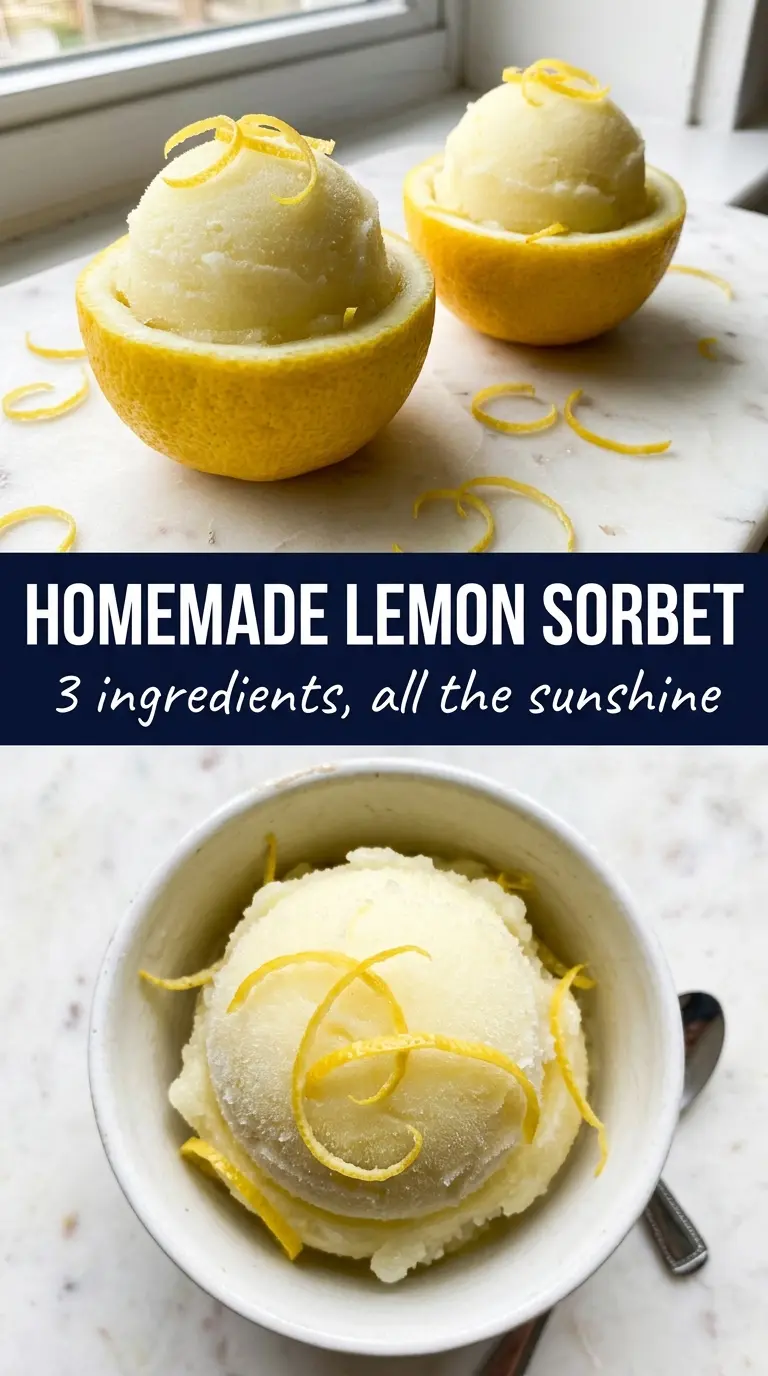
- Fresh lemon juice — This is the backbone of the sorbet, and bottled juice won’t taste the same. Fresh lemons give you a cleaner, sharper flavor and less of the dull, processed note that can show up in anything shelf-stable.
- Lemon zest — The zest carries the fragrant oils that make the sorbet smell and taste like real lemon, not just acid and sugar. Use a fine microplane and stop before you hit the bitter white pith.
- Granulated sugar — Sugar does more than sweeten. It also keeps the sorbet from freezing into a rock-hard block, so don’t reduce it unless you’re ready for a much icier texture.
- Egg white, optional — Folded in at soft peaks, it adds a little air and gives the sorbet a lighter, smoother mouthfeel. Skip it if you want a more classic, intensely icy finish; use pasteurized egg white if that’s a concern.
- Salt — Just a pinch sharpens the lemon and keeps the sweetness from flattening out. It won’t make the sorbet taste salty, but you’d notice if it were missing.
Turning the Lemon Base Into a Fine, Scoopable Sorbet
Building the Simple Syrup
Combine the sugar and water in a saucepan and warm it over medium heat, stirring until the sugar disappears completely. You’re not cooking it down for color or thickness here; you just want a clear syrup with no grit left at the bottom. If the mixture looks cloudy with undissolved sugar, keep stirring a little longer. Pull it off the heat as soon as it’s smooth, then let it cool without rushing it.
Adding the Lemon at the Right Temperature
Once the syrup is fully cool, stir in the lemon juice, zest, and salt. This is the moment where the flavor turns from plain sweet syrup into sorbet base, so the lemon has to go into a cold mixture to stay bright. Refrigerate it until it’s very cold all the way through. If you churn it while the center is still warm, the machine has to work too hard and the ice crystals end up larger.
Using Egg White for a Softer Finish
If you want a slightly creamier texture, whip the egg white to soft peaks and fold it gently into the cold lemon base. The egg white should look billowy, not stiff and dry, or it won’t blend in cleanly. Fold with a light hand so you don’t knock out all the air. This step is optional, but it does round out the texture if you like sorbet that scoops a little softer straight from the freezer.
Churning and Freezing
Pour the chilled mixture into your ice cream maker and churn until it looks thick, slushy, and pale, usually 20 to 25 minutes. It should hold soft mounds on the dasher and look like frozen lemon snow. Transfer it to a container and freeze until firm, at least 2 hours. If it freezes very hard, let it sit at room temperature for a few minutes before scooping instead of forcing it and tearing the texture apart.
How to Adapt This for a Smoother, Sweeter, or Dairy-Free Scoop
Make it extra tart
Use the full amount of lemon juice and don’t add extra sugar to soften the edge. The result is sharper and more palate-cleansing, which works well if you want a sorbet that tastes intensely citrus-forward instead of candy-sweet.
Skip the egg white for a firmer, icier texture
Leave it out for a classic dairy-free sorbet with a cleaner freeze and a slightly sharper bite. You lose a bit of softness, but the lemon flavor comes through even more clearly.
Use Meyer lemons when you want a softer citrus note
Meyer lemons make a gentler, slightly floral sorbet with less bite than standard lemons. They’re a good choice if you want something sweeter and rounder, but the finished sorbet won’t have the same sharp punch.
Storage and Reheating
- Refrigerator: Not recommended. Sorbet turns slushy and loses the texture you worked for.
- Freezer: Keeps well for up to 2 weeks in a tightly covered container. Press parchment or plastic wrap directly on the surface to slow ice crystal formation.
- Reheating: Not applicable. For serving, let it sit on the counter for 5 to 10 minutes so it softens just enough to scoop cleanly.
Answers to the Questions Worth Asking
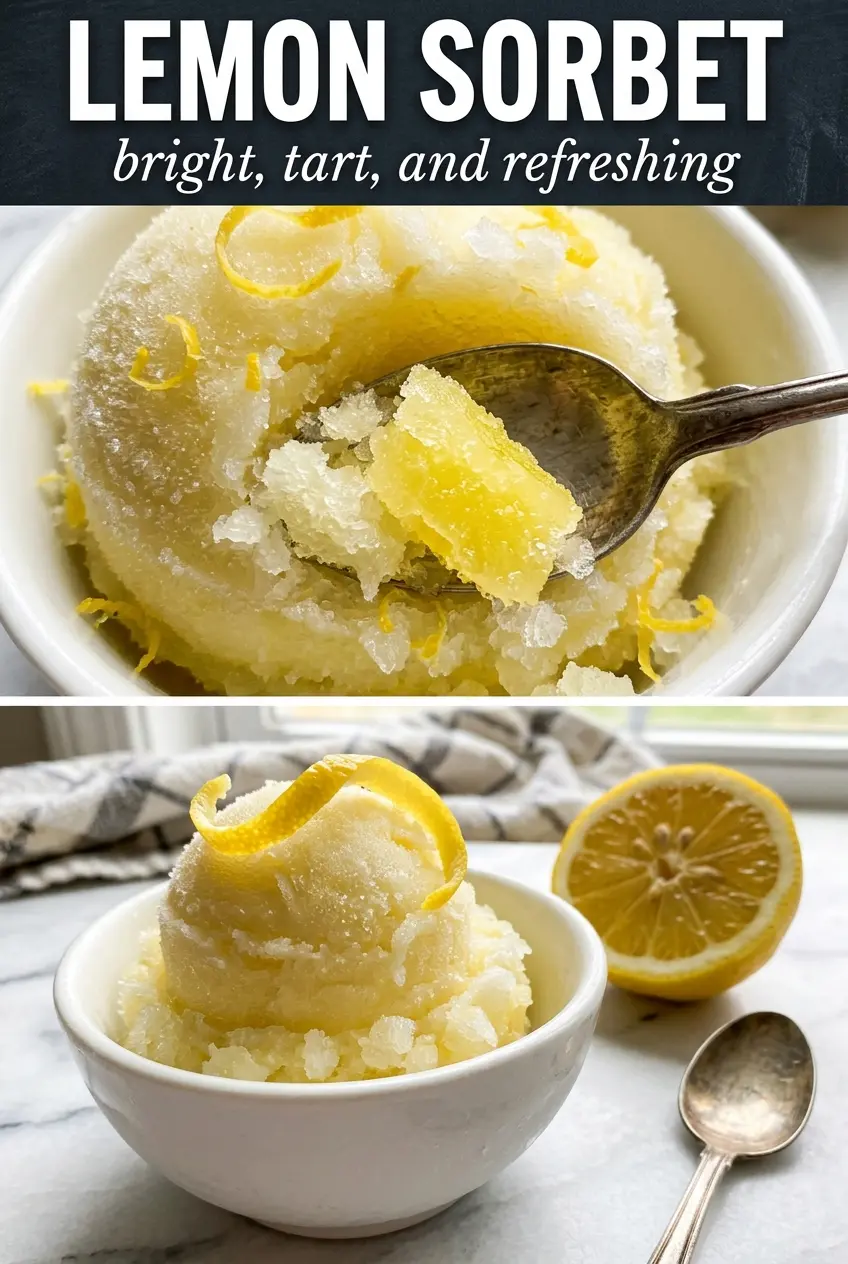
Lemon Sorbet
Ingredients
Equipment
Method
- Combine granulated sugar and water in a saucepan and heat over medium, stirring, until the sugar fully dissolves. Heat for about 5 minutes, until the mixture looks clear.
- Cool the simple syrup completely at room temperature before using. The liquid should return to a fully cool, room-temperature feel with no warmth in the center.
- Stir the cooled simple syrup with fresh lemon juice, lemon zest, and salt until evenly combined. Mix until the liquid looks uniformly bright and pale yellow.
- Refrigerate the lemon mixture until very cold for 4 hours. It should feel chilled through with a noticeably colder temperature when poured.
- If using egg white, whip it to soft peaks until it holds gentle folds. You should see airy peaks that droop slightly rather than staying stiff.
- Fold the whipped egg white into the cold lemon mixture until no streaks remain. The mixture should look lighter and slightly more opaque, staying pale.
- Churn the mixture in an ice cream maker until thick and slushy for 20-25 minutes. Watch for a spoonable, icy texture that visibly thickens.
- Transfer the sorbet to a container and freeze for at least 2 hours until firm. It should scoop cleanly with a solid, icy surface.
- Serve in chilled bowls or scoop into hollowed lemon halves. The sorbet should look brilliantly pale and shimmering with a crisp-edged, icy scoop.