Lemon meringue ice cream brings the sharp, sunny bite of lemon curd together with creamy ice cream and crisp little shards of toasted meringue in every scoop. What makes it memorable is the contrast: cold and smooth at first, then a burst of tart lemon, then those sweet, airy meringue pieces that still hold some crunch instead of disappearing into the base. It tastes like a lemon meringue pie that got dressed up for summer and went straight into the freezer.
The key is keeping the lemon flavor bright without making the base thin or icy. Sweetened condensed milk gives body and sweetness at the same time, which means you don’t need an egg custard or a machine. The lemon curd brings concentrated flavor and a silky texture, while the zest adds the fresh edge that keeps the ice cream from tasting flat. The meringue is baked low and slow until crisp, then broken into pieces so it stays distinct in the frozen dessert instead of dissolving into sugar.
Below, you’ll find the small details that matter here: how to get the meringue dry enough to stay crisp, how to swirl the curd without overmixing the base, and what to expect after the long freeze. A little care on those points is what turns this from a sweet lemon ice cream into something that actually tastes like pie.
The lemon flavor stayed bright after freezing, and the meringue pieces stayed crisp instead of turning chewy. I’ve made it twice now, and the swirl of lemon curd on top makes each scoop taste like pie filling.
Lemon meringue ice cream stays bright, creamy, and full of crisp meringue pieces — pin it for the dessert nights when you want pie flavor without turning on the oven.
The Trick to Keeping Meringue Crisp in a Frozen Dessert
Most frozen desserts with meringue run into the same problem: the sugar pulls moisture from the base, and the pretty pieces turn soft once they’ve sat in the freezer for a day or two. That’s why the meringue here needs to be baked until it’s dry all the way through, not just lightly golden on the edges. You’re looking for pieces that sound hollow when tapped and break cleanly, because any softness left in the center will show up later as chew.
The second part is when you add it. Fold some pieces in just before freezing, then layer a few more with the lemon curd so you get pockets of texture instead of one mushy cluster. If you stir it through like cookie dough, the meringue disappears into the base. If you keep the pieces larger and spread them out, they stay recognizable and give you that pie-like bite in each scoop.
What Each Ingredient Is Actually Doing Here
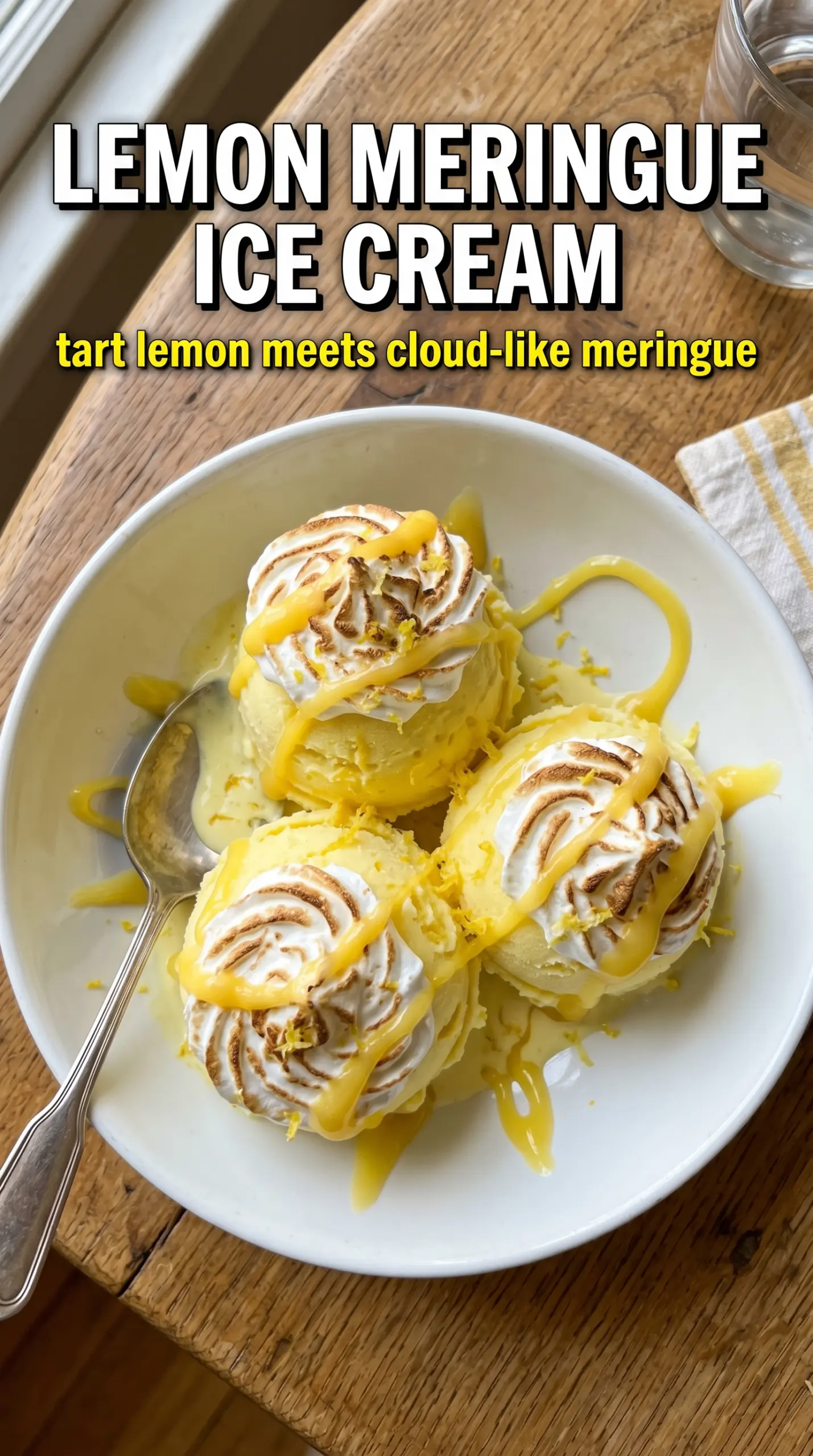
- Heavy cream — This is what gives the base its body and that plush, scoopable texture. Whip it to stiff peaks, but stop there; if it turns grainy, it won’t fold smoothly and the final ice cream will feel dense.
- Sweetened condensed milk — This does the job of both sugar and part of the dairy base, which is why the recipe freezes soft without an ice cream machine. Don’t swap in regular milk here; you’d lose the thickness that keeps the dessert creamy instead of icy.
- Lemon curd — Use a good, thick curd with real lemon flavor. It brings concentrated tartness and also helps stabilize the base, while a thin or watery curd can make the mixture loose and dull the citrus punch.
- Lemon zest — The zest is what makes the lemon taste fresh instead of one-note sweet. Grate only the yellow part; the white pith turns bitter fast and will show up in every bite.
- Egg whites, sugar, and cream of tartar — This trio makes the meringue pieces. Cream of tartar helps the whites hold their structure, and the low oven dries them out slowly so they stay crisp after freezing.
- Vanilla and salt — Vanilla rounds out the lemon, and the salt keeps the sweetness from flattening the flavor. Don’t skip the salt even though it’s a small amount; it keeps the dessert from tasting sugary instead of bright.
Building the Ice Cream Base Without Deflating It
Whipping the Cream to the Right Peak
Start with cold cream and a chilled bowl if you have one. Beat until the cream holds firm peaks that stand up when you lift the beaters, but stop before it looks clumpy or buttery. If you overwhip it, the base won’t fold in smoothly and you’ll end up with streaks instead of a uniform texture.
Blending the Lemon Filling
Whisk the condensed milk, lemon curd, zest, vanilla, and salt together until the mixture looks smooth and glossy. Thick curd should loosen a little as it mixes in, but it shouldn’t look runny. If your curd is straight from the fridge and stiff, let it sit out for a few minutes so it blends without overworking the whipped cream later.
Folding, Layering, and Swirling
Add the lemon mixture to the whipped cream in two or three additions and fold with a spatula using broad strokes. The base should stay airy, with only a few pale streaks visible before you stop. Transfer it to the loaf pan, then layer in the meringue pieces and a few ribbons of extra curd; drag a knife through once or twice for swirls, not so much that the whole pan turns one color.
The Freeze That Sets the Texture
Cover the pan and freeze it for at least 6 hours, and overnight is even better if you want clean scoops. The center should feel firm all the way through before you serve it. If you try to portion it too early, the edges may look ready while the middle stays soft and the meringue pieces sink into the base.
How to Tweak Lemon Meringue Ice Cream for Different Kitchens
Dairy-Free Version
Use full-fat coconut cream in place of the heavy cream and a thick dairy-free sweetened condensed milk if you can find one. The texture will be a little softer and the coconut note will come through, but the lemon still stays bright. Keep the meringue pieces traditional if you’re not avoiding egg, or skip them and add toasted coconut for crunch instead.
More Tart, Less Sweet
Increase the lemon zest and add an extra tablespoon or two of lemon curd, but don’t add straight lemon juice to the base unless you want it thinner and a little icier. If you want a sharper finish, swirl a thin spoonful of curd on top just before freezing so the tartness lands in concentrated pockets.
No-Time Shortcut for the Meringue
Store-bought meringue cookies can stand in if you’re short on time. Break them into larger pieces and add them at the very end so they keep some crunch. They won’t have the same toasted flavor as homemade meringue, but they still give you the right contrast against the creamy base.
Storage and Reheating
- Refrigerator: This dessert is meant for the freezer, not the fridge. If it sits in the refrigerator, it melts into a loose custard and the meringue loses its texture.
- Freezer: Keep it tightly covered for up to 2 weeks. Press a piece of parchment or plastic wrap directly against the surface to limit ice crystals and protect the meringue pieces from absorbing moisture.
- Reheating: There’s no reheating here. For the best scoops, let the pan sit at room temperature for 5 to 10 minutes before serving so the edges soften slightly without melting the whole base.
Answers to the Questions Worth Asking
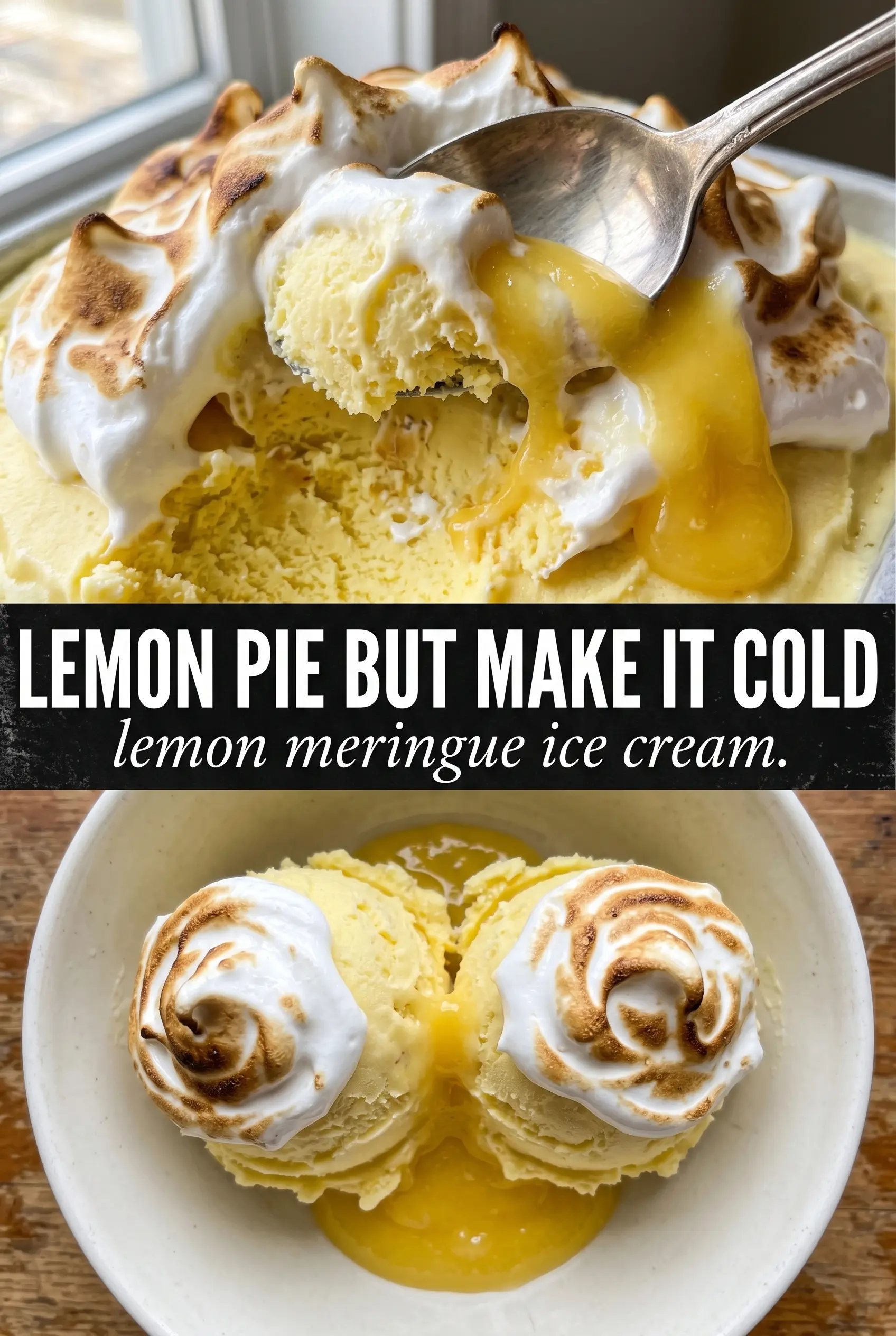
Lemon Meringue Ice Cream
Ingredients
Equipment
Method
- Preheat the oven to 225F and line a sheet pan with parchment.
- Beat the egg whites with the cream of tartar until they form soft peaks.
- Gradually add the sugar while beating, then continue until stiff glossy peaks form.
- Spread the meringue on the lined sheet pan in an even layer, then bake at 225F for 90 minutes until crisp and lightly golden at the edges.
- Cool completely, then break into bite-size pieces for layering.
- Whip the heavy cream to stiff peaks until it holds ridged lines.
- Whisk the sweetened condensed milk, lemon curd, lemon zest, vanilla extract, and salt until smooth.
- Fold the lemon mixture into the whipped cream until no streaks remain.
- Spoon a thin layer of lemon cream into a 9x5 loaf pan, then add broken meringue pieces and swirl in extra lemon curd.
- Repeat layers until all lemon cream is used, finishing with lemon curd swirls on top.
- Freeze for at least 6 hours until firm, then slice and serve.