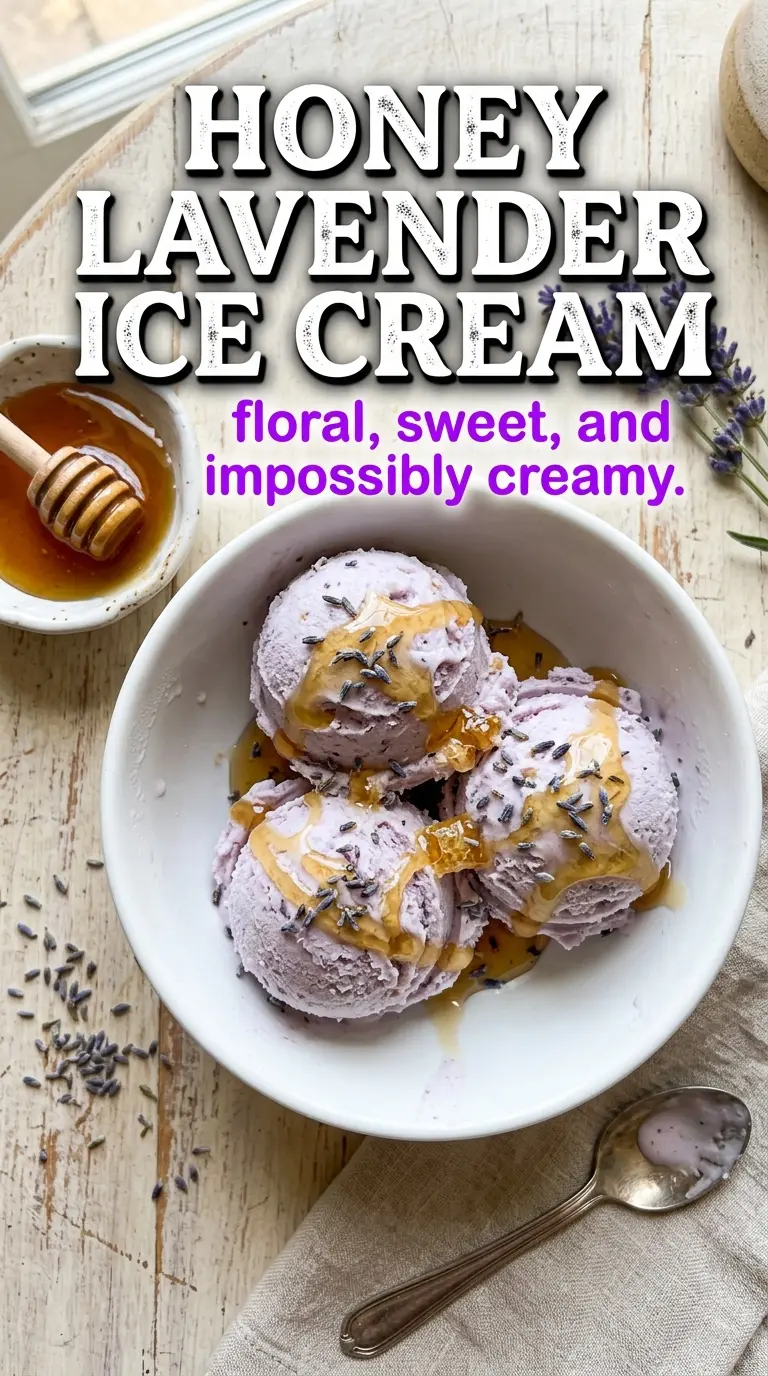
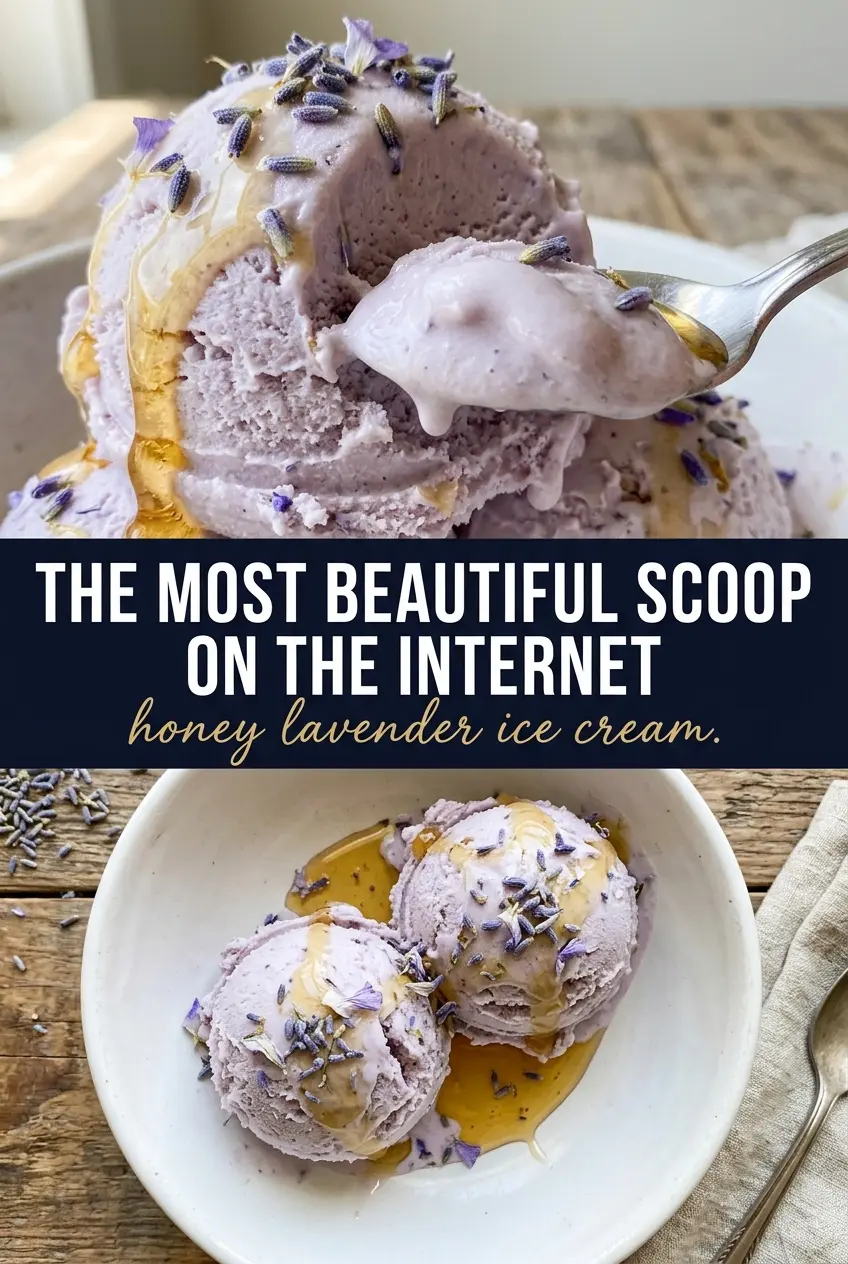
Honey lavender ice cream lands in that rare space between elegant and comforting. It’s smooth, pale, and fragrant without tasting perfumey, with the honey giving it a round sweetness that keeps the lavender from turning sharp. When it’s done right, the first spoonful tastes like a soft floral note folded into real custard, not like candle wax or soap.
The trick is in the balance. Dried culinary lavender needs a short steep in hot cream, then it has to come out before the flavor gets bitter or medicinal. Honey also changes the texture here; it stays softer than sugar alone, which gives the finished ice cream a scoop that feels silky instead of icy. The custard base adds richness and helps carry the floral flavor all the way through the freeze.
Below, I’ll walk through the steeping time that matters most, the point where the custard can go from smooth to scrambled, and the best way to adjust the color without messing with the flavor.
The lavender came through as a clean floral note, and the honey kept it from tasting too perfumy. Mine churned up smooth and creamy, and it was still scoopable straight from the freezer.
Like this honey lavender ice cream? Save it for the days when you want a floral custard with silky texture and a honeyed finish.
The Lavender Steep Is Where the Flavor Lives or Dies
Lavender ice cream goes wrong when the herb is treated like a spice dump instead of an infusion. Dried culinary lavender is potent, and the difference between fragrant and soapy is usually a matter of minutes, not hours. Heat the dairy until it’s steaming, pull it off the burner, then let the lavender sit just long enough to perfume the cream without dragging out bitterness.
The other failure point is overcooking the custard once the yolks go in. You want the mixture to thicken enough to coat a spoon and reach 175F, but not so hot that the eggs seize. If you’ve ever had grainy ice cream base before, the pan was probably too hot or the custard was left unattended for the last minute.
- Culinary dried lavender — Use culinary-grade buds only. Decorative lavender often tastes harsh, and the flavor can turn medicinal fast.
- Honey — Honey softens the finished texture and gives this ice cream its signature rounded sweetness. A mild honey keeps the lavender clean; a darker honey will taste deeper and more floral.
- Egg yolks — These create the custard base that makes the ice cream rich and smooth. There isn’t a true shortcut here if you want that classic scoopable texture.
- Purple food coloring — This is for color only, not flavor. One tiny drop is enough if you want a pale lavender tone; skip it if you prefer the natural cream color.
What Each Ingredient Is Actually Doing in This Ice Cream Cake
- Crust or base layer (cookies, brownies, or cake) — This provides structure and texture contrast. A sturdy base keeps the whole cake from crumbling when served.
- Ice cream (the main event) — Choose quality ice cream or frozen yogurt. Soft-serve or premium ice cream works better than hard-packed store brands.
- Cake layer (optional but recommended) — A thin cake layer adds substance and keeps the cake from being all frozen texture. Make it thin so it doesn’t overpower the ice cream.
- Sauce or syrup layer (fudge, caramel, or fruit) — This adds flavor depth and prevents the cake from tasting one-dimensional. Freeze between layers so sauces stay distinct.
- Toppings (chocolate chips, cookies, candy, or nuts) — These add texture and visual appeal. Mix-ins stay crispy longer if frozen separately first.
- Frosting or whipped cream (optional topping) — This adds richness to the outside. Keep it simple or it overwhelms the cake.
- Freezing time (the patience that pays off) — Each layer needs time to set so they stay distinct when sliced. Rushing this step means layers muddy together.
- Storage and serving technique (thaw 5 minutes before slicing) — A brief thaw makes slicing clean and easy. Serve slices immediately for best texture.
Building the Custard Without Scrambling the Yolks
Steeping the Lavender
Combine the cream, milk, honey, and lavender in a saucepan and heat it until the edges are steaming and small wisps rise from the surface. Don’t boil it. Once it’s hot, take it off the burner and let the lavender steep for 15 to 20 minutes, then strain it well. If you leave the buds in longer, the flavor gets muddy and the finish can taste dusty.
Tempering the Yolks
Reheat the infused dairy until it’s steaming again, then whisk it slowly into the egg yolks in a thin stream. That gradual pour matters. If you dump the hot cream in all at once, the yolks can curdle into little bits before they ever make it back to the saucepan. Whisk constantly and keep the mixture moving.
Cooking to the Right Thickness
Return the custard to the pan and cook it over medium-low heat, stirring constantly with a spatula or wooden spoon. Stop at 175F, or when the custard thickens enough to coat the back of the spoon and leaves a clean line when you swipe a finger through it. Pull it immediately and strain it again. That second strain catches any tiny cooked egg bits before they end up in the freezer.
Chilling and Churning
Stir in the vanilla, salt, and optional food coloring once the custard comes off the heat. Then cool it completely before it goes into the refrigerator for at least 4 hours. If the base is even a little warm, it won’t churn as smoothly and the machine has to work harder, which leads to a looser, icier texture. Churn until it looks like soft-serve, then freeze it until firm.
How to Adjust the Floral Note, the Color, or the Dairy
Make It More Floral
Use the full 2 tablespoons of lavender and steep for the full 20 minutes, then strain well. This gives you a more pronounced perfume, but it also gets you closer to the edge of bitterness, so don’t walk away from it.
Keep It Dairy-Free
Swap in full-fat coconut cream and unsweetened oat milk, then use an eggless custard or a stabilizer-based base instead of the yolks. The texture will be a little less rich and a bit more coconut-forward, but it still gives you a creamy frozen dessert with the same lavender-honey pairing.
Skip the Purple Food Coloring
The ice cream tastes the same without it. The coloring just nudges the base toward that pale lilac look, and if you want a more natural presentation, the creamy ivory color looks elegant on its own.
Storage and Reheating
- Refrigerator: Keep the churned base chilled for up to 3 days before freezing if you’re making it ahead. The flavor deepens a little as it sits.
- Freezer: Freeze in an airtight container for up to 2 weeks. After that, it can pick up freezer flavor and get a bit icier around the edges.
- Reheating: This recipe isn’t reheated, but if it freezes hard, let it sit at room temperature for 8 to 10 minutes before scooping. If you try to force the scoop right away, you’ll mash the surface and crack the base instead of getting clean curls.
Answers to the Questions Worth Asking
Honey Lavender Ice Cream
Ingredients
Equipment
Method
- Combine heavy cream, whole milk, honey, and culinary dried lavender buds in a saucepan and heat until steaming, with tiny bubbles forming around the edges. Pull the saucepan off the heat and steep for 15-20 minutes, watching for a fragrant floral aroma.
- Strain the infused cream through a fine strainer to remove the lavender buds, pressing gently until most liquid passes through.
- Reheat the strained cream until steaming, then immediately remove from the heat so it stays hot without boiling.
- Whisk the steaming cream slowly into the egg yolks to temper them, keeping the stream steady to prevent scrambling. Stop whisking once the mixture looks smooth and lighter in color.
- Return the custard to the saucepan and cook, stirring constantly, until it reaches 175°F, thick enough to coat the back of a spoon. Keep the temperature controlled so it stays silky.
- Strain the custard again to ensure a smooth texture, then stir in vanilla extract and salt until fully incorporated.
- Add a drop of purple food coloring if desired for a lavender hue, then mix until the color looks evenly distributed.
- Cool the custard completely until no longer warm to the touch, then refrigerate for 4 hours to chill thoroughly.
- Churn the chilled custard in an ice cream maker until it becomes a thick, soft-serve consistency, with increased volume and a pale purple appearance.
- Transfer the churned ice cream to a freezer-safe container and freeze until firm, with no visible liquid or soft edges.