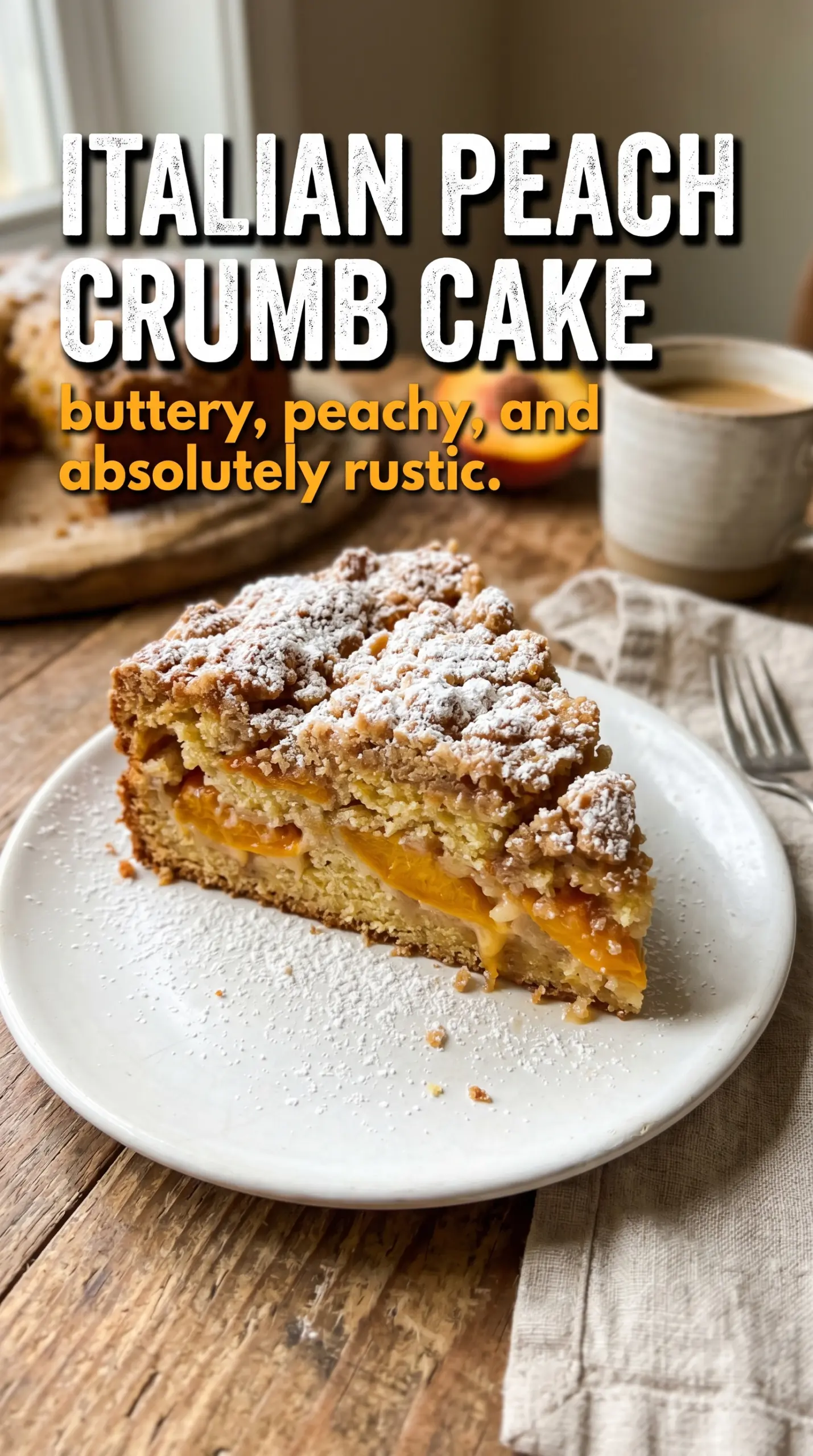
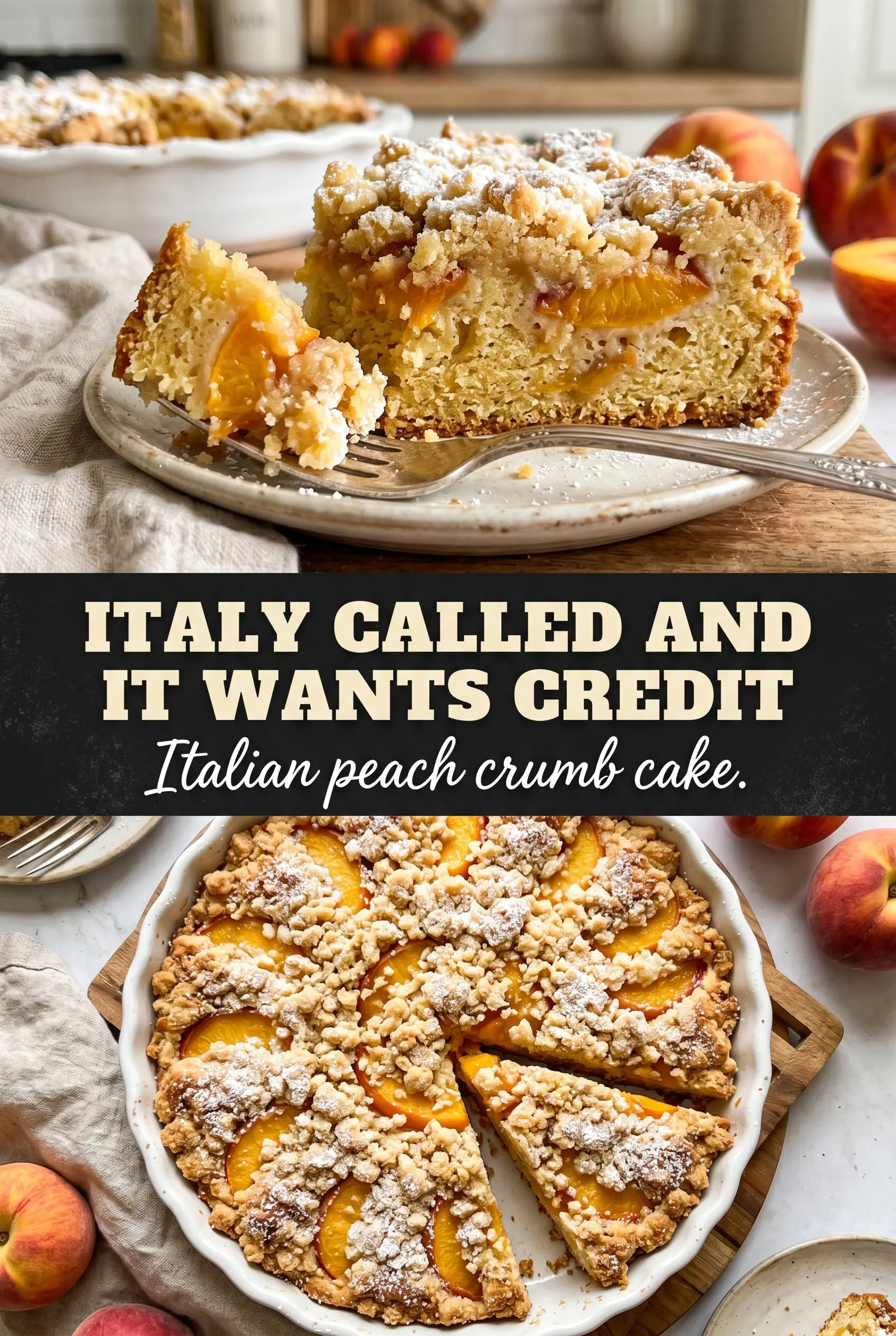
Italian peach crumb cake lands with a sandy, buttery top that gives way to a jammy layer of peaches underneath, and that contrast is exactly why it earns a place on repeat. The bottom bakes into a tender crust, the middle stays juicy without turning watery, and the crumb on top stays loose enough to break apart under your fork instead of sealing into a hard lid.
The trick is keeping the dough crumbly from the start. Cold butter gets rubbed into the flour until it looks like coarse sand, then the eggs are mixed in just long enough to bring the mixture together in clumps. That rough texture is what creates the classic sbriciolata-style bite. The peaches get a little sugar before they go in, which draws out just enough juice to turn the center soft and glossy without flooding the pan.
Below you’ll find the small details that matter most here, including how to keep the crumb from turning dense and what to change if your peaches aren’t quite at peak ripeness.
The crumb stayed sandy instead of turning cakey, and the peaches baked into this thick, jammy layer that held its shape when I sliced it. I dusted it with powdered sugar and it disappeared before coffee was finished.
Love the sandy crumble and juicy peach layer? Save this Italian peach crumb cake for the next time you want a rustic dessert that slices cleanly and tastes like summer in every bite.
The Reason the Crumb Stays Tender Instead of Packing Down
Most crumb cakes go wrong when the dough gets worked like cookie dough. That turns the topping dense and bready instead of sandy and delicate. Here, the mixture should look uneven from the start, and it should still look uneven when it goes into the pan. The little clumps are what bake into those craggy, buttery ridges on top.
The other place people lose the texture is the peach layer. If the fruit is tossed too aggressively or left sitting too long with sugar, it can leak enough juice to soak the bottom. A brief toss is enough. You want the peaches lightly coated, not swimming, so they soften into a thick layer without collapsing the base.
What Each Ingredient Is Doing in the Pan
- All-purpose flour — This gives the cake its sturdy, rustic structure. It doesn’t need anything fancy here; the texture comes from how it’s mixed, not from specialty flour.
- Granulated sugar — Sugar sweetens the crumb and also helps it brown into that golden top. A little extra goes with the peaches so the fruit turns glossy and juicy as it bakes.
- Cold unsalted butter — Cold butter is non-negotiable. It has to stay in little pieces long enough to create the crumbly texture, and salted butter would make the final cake taste flat and less clean.
- Lemon zest — This lifts the peaches and keeps the cake from tasting heavy. Fresh zest matters more than bottled citrus flavor ever will.
- Eggs and vanilla — These bring the dough together just enough to hold its shape. The goal isn’t a smooth batter; it’s a shaggy, pressable crumble.
- Fresh peaches — Peak peaches give you the best payoff because they soften into a jammy layer without needing extra liquid. If yours are a little firm, let them sit with the sugar for a few minutes longer before assembling.
Building the Layers Without Losing the Crumble
Mixing the Sandy Base
Start by combining the flour, sugar, baking powder, salt, and lemon zest, then rub in the cold butter with your fingertips until the mixture looks like damp sand with some pea-sized bits mixed in. That mix of fine and coarse crumbs is what gives the cake its texture after baking. If the butter softens too much, the dough starts to smear instead of crumble, and the final cake bakes up heavier than it should.
Bringing the Dough Together
Add the eggs and vanilla and mix only until the dough starts to clump. It should still look rough and broken, not smooth or elastic. If it starts to feel like a normal cake batter, stop mixing immediately. The moment you overwork it, you lose the layered, crumbly bite that makes this cake different.
Layering the Pan
Press about two-thirds of the mixture into the bottom of the prepared springform pan and slightly up the sides. Use just enough pressure to form a base that holds together, but don’t pack it down hard. Toss the peaches with sugar, spread them over the base, then scatter the remaining crumble over the top without pressing it in. Leaving the top loose gives you those crisp, golden peaks instead of a compact lid.
Baking to the Right Finish
Bake until the top is deeply golden and the edges look set, about 40 to 45 minutes. The center should not look wet, but it can still give a little when you touch the pan lightly. Cool the cake before removing it from the springform pan so the peach layer settles and slices cleanly. A final dusting of powdered sugar gives it the classic finish and hides any rough edges in the best way.
How to Adapt This for Different Peaches and Different Tables
Use nectarines instead of peaches
Nectarines work one for one and save you the peeling step. The flavor is a little brighter and the texture stays slightly firmer, which can be a plus if your fruit is very ripe.
Make it dairy-free
Use a high-quality plant-based butter stick that behaves like real butter in baking. Soft tub spreads won’t hold the crumb structure the same way, so the cake can turn greasy instead of sandy.
Add a little almond flavor
A small splash of almond extract in place of part of the vanilla gives the cake a bakery-style note that pairs nicely with stone fruit. Keep it light, though, because almond can take over fast.
Bake it for breakfast
Leave the powdered sugar off until serving and slice the cake while it’s still just warm. That gives you a softer, more coffee-cake style finish without changing the structure of the bake.
Storage and Reheating
- Refrigerator: Keep covered for up to 4 days. The crumb softens a little as it sits, but the flavor stays excellent.
- Freezer: It freezes well in slices. Wrap tightly and freeze for up to 2 months, then thaw in the refrigerator so the peaches don’t turn soggy.
- Reheating: Warm slices in a 300F oven for 8 to 10 minutes. The oven keeps the topping crisp; the microwave makes the crumb turn damp and pasty.
Answers to the Questions Worth Asking
Italian Peach Crumb Cake
Ingredients
Equipment
Method
- Preheat the oven to 350F and grease a 9-inch springform pan for easy release.
- Combine all-purpose flour, granulated sugar, baking powder, salt, and lemon zest, then rub in cold cubed butter until the mixture resembles coarse, sandy crumbs.
- Add the eggs and vanilla extract and mix briefly until the dough stays crumbly rather than smooth.
- Press two-thirds of the crumble mixture into the bottom of the pan, slightly up the sides.
- Toss sliced peaches with 3 tablespoons sugar and layer them over the base.
- Scatter the remaining crumble over the peaches without pressing it down.
- Bake for 40–45 minutes at 350F until the top is golden, then cool before removing from the pan and dust with powdered sugar.