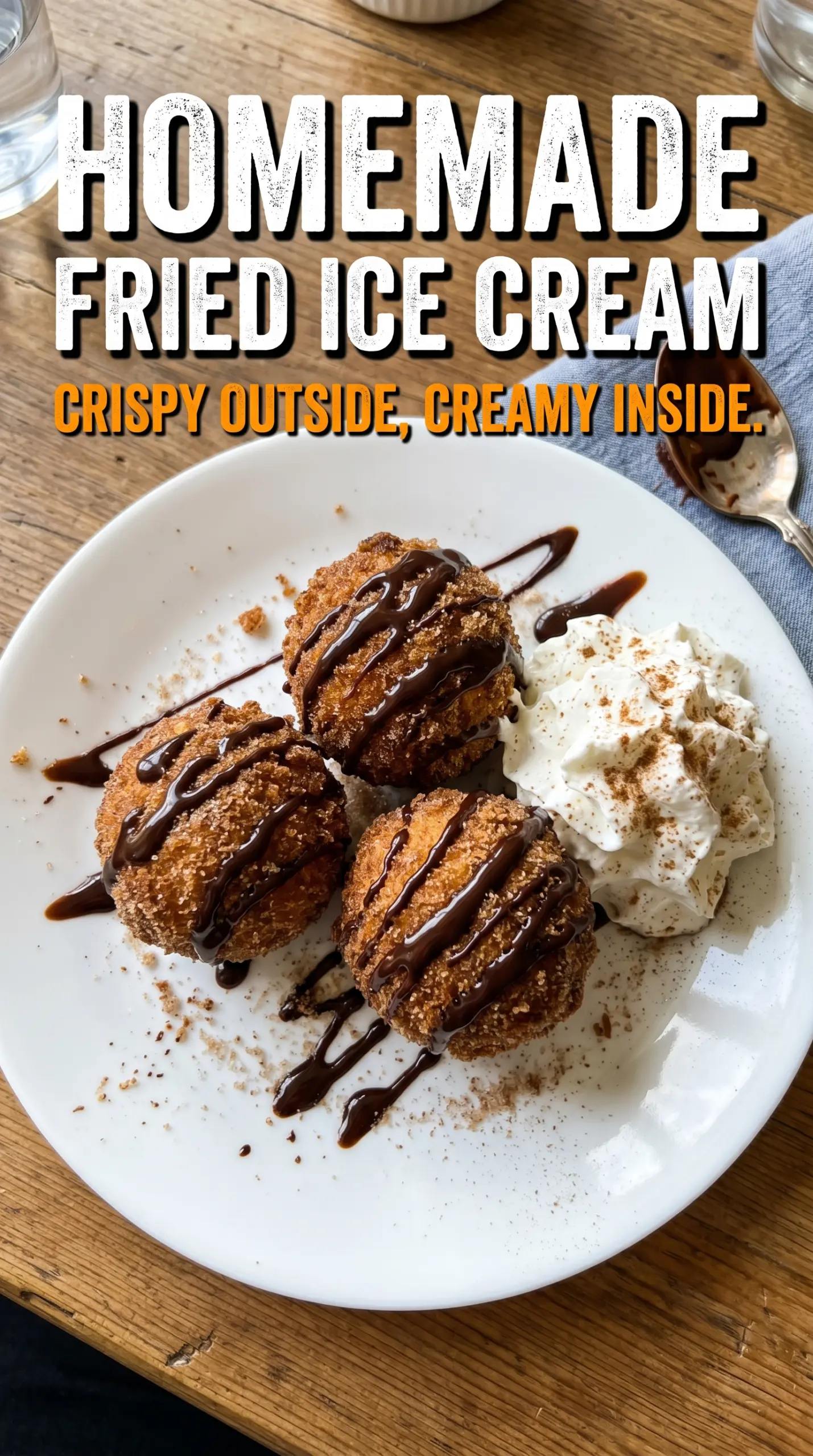
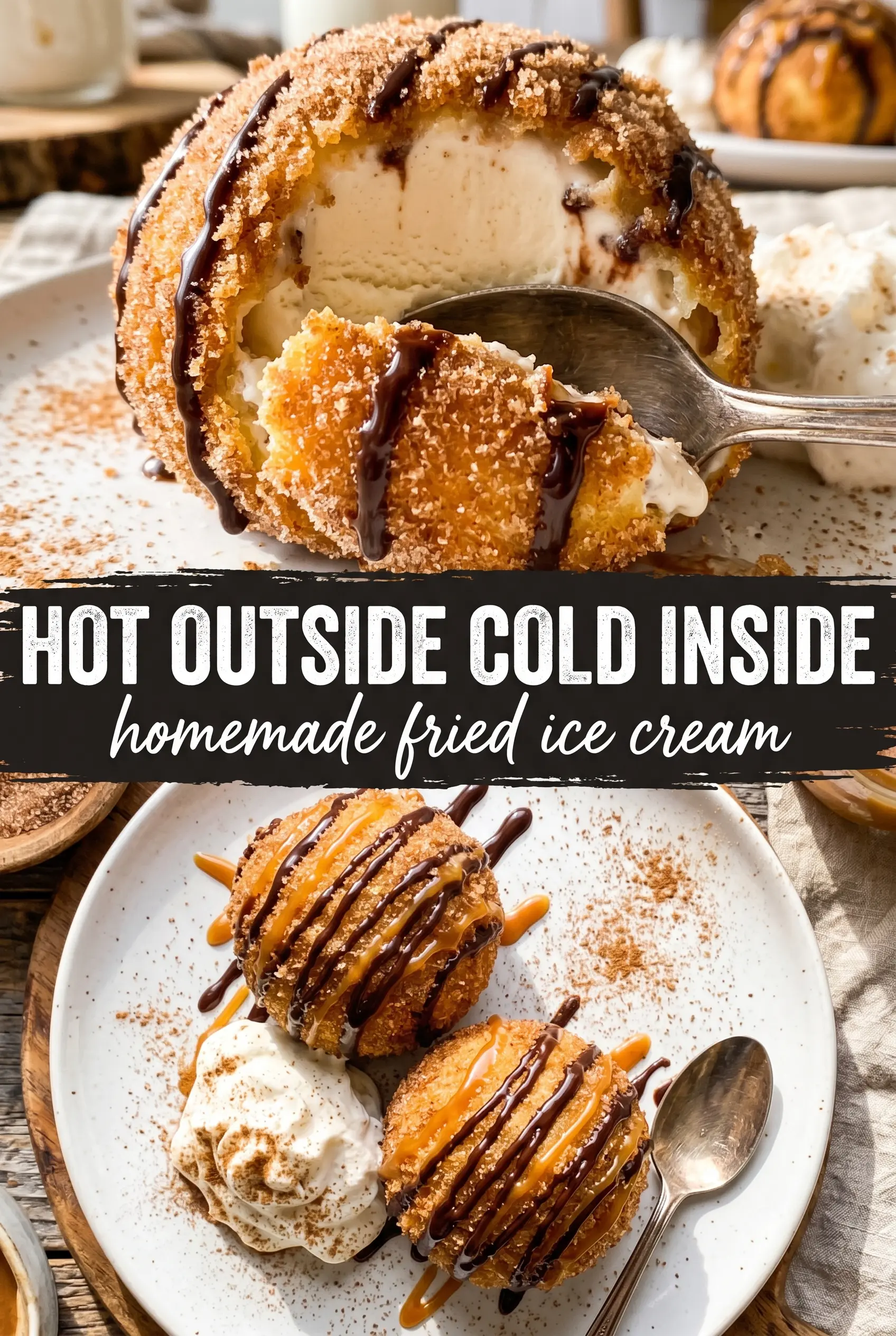
Homemade fried ice cream is all about the contrast: a shatteringly crisp cinnamon-cornflake shell that gives way to cold, creamy vanilla ice cream the second your spoon breaks through. When it’s done right, the coating stays crunchy instead of soggy, and the ice cream inside holds its shape long enough for you to get that perfect hot-and-cold bite.
The trick is freezing the scoops until they’re rock solid, then freezing them again after coating. That double freeze is what keeps the shell from sliding off and gives you a real shot at a quick fry without turning the center into soup. The egg helps the crumbs cling, and the corn flakes bring the kind of crunch you can’t get from fine crumbs alone.
Below, I’m walking through the parts that matter most: how to coat the ice cream fast enough, how to fry it without overdoing it, and what to do if you want to make the whole thing ahead for a dinner party.
The coating stayed crisp for every single bite, and the ice cream didn’t leak out because I froze it exactly as directed. Even the second scoop looked picture-perfect.
Save this fried ice cream for the nights when you want a crunchy shell, a cold creamy center, and a dessert that disappears in seconds.
The Part That Keeps the Ice Cream From Melting Too Fast
The biggest mistake with fried ice cream is trying to work like you’re breading chicken. You can’t linger. The ice cream has to be frozen hard enough that the outer layer only softens for a moment while you coat it, and the oil has to be hot enough to set the shell before the center has time to collapse. If either one is off, you get a greasy crust and a puddle instead of a scoop.
That’s why the second freeze matters just as much as the first. Once the corn flake coating is on, the surface needs time to firm back up so the egg can set and the crumbs can lock together. Skip that rest and the coating is more likely to slip off in the fryer.
- Ice cream: Vanilla is the classic choice because it stays clean and simple against the cinnamon coating, but any sturdy flavor works as long as it’s a hard-frozen supermarket-style ice cream, not a soft artisanal pint.
- Corn flakes: These give you the right jagged crunch. Crush them by hand or with a rolling pin so you keep some larger pieces; powdery crumbs turn muddy in hot oil.
- Egg: The beaten egg acts like glue for the coating. It won’t make the outside eggy if you move fast, but it does help the crumbs form a real shell instead of a loose crust.
- Cinnamon and sugar: This isn’t just for sweetness. The sugar helps the coating brown fast, and the cinnamon gives the shell that classic warm dessert smell as soon as it hits the oil.
What Each Ingredient Is Actually Doing in This Ice Cream Cake
- Crust or base layer (cookies, brownies, or cake) — This provides structure and texture contrast. A sturdy base keeps the whole cake from crumbling when served.
- Ice cream (the main event) — Choose quality ice cream or frozen yogurt. Soft-serve or premium ice cream works better than hard-packed store brands.
- Cake layer (optional but recommended) — A thin cake layer adds substance and keeps the cake from being all frozen texture. Make it thin so it doesn’t overpower the ice cream.
- Sauce or syrup layer (fudge, caramel, or fruit) — This adds flavor depth and prevents the cake from tasting one-dimensional. Freeze between layers so sauces stay distinct.
- Toppings (chocolate chips, cookies, candy, or nuts) — These add texture and visual appeal. Mix-ins stay crispy longer if frozen separately first.
- Frosting or whipped cream (optional topping) — This adds richness to the outside. Keep it simple or it overwhelms the cake.
- Freezing time (the patience that pays off) — Each layer needs time to set so they stay distinct when sliced. Rushing this step means layers muddy together.
- Storage and serving technique (thaw 5 minutes before slicing) — A brief thaw makes slicing clean and easy. Serve slices immediately for best texture.
Coating and Frying Before the Center Has a Chance to Soften
Freezing the Scoops Solid
Scoop the ice cream into balls and set them on a parchment-lined sheet, then freeze until they’re hard enough to handle without squishing. If the scoops are too soft at the start, the coating will never sit evenly and the fryer will win before you do. Four hours is safer than two if your freezer runs warm.
Building the Crunchy Shell
Mix the crushed corn flakes with cinnamon and sugar, then work one scoop at a time. Dip quickly in the beaten egg, roll in the crumbs, and press gently so the coating sticks. For a thicker shell, repeat the egg-and-crumb step right away, then get the coated scoops back into the freezer.
The Flash Fry
Heat the oil to 375°F and fry one ball at a time for just 10 to 15 seconds, until the coating looks deeply golden. The oil should be hot enough that the outside crisps on contact; if it’s too cool, the ice cream sits there and starts melting before the crust sets. Lift it out immediately and drain for only a second or two before serving.
Serving It at Its Best
Serve fried ice cream the moment it comes out of the oil. Drizzle with honey, add whipped cream, and finish with a dusting of cinnamon if you want that extra warm spice on top. Once it sits, the shell starts to soften, so this is the dessert you plate first and eat right away.
How to Change the Coating Without Losing the Crunch
Use gluten-free cereal for a gluten-free version
Swap in a gluten-free crispy cereal or gluten-free corn flakes with the same crumb size. The result stays light and crunchy, but you’ll want to check the texture before frying because some gluten-free cereals go dusty when crushed too fine.
Go dairy-free with a frozen dessert that holds its shape
Use a dairy-free vanilla frozen dessert that firms up well in the freezer, not a soft sorbet. You’ll still get the hot-and-cold contrast, but the melt rate can be a little different, so freeze it even longer before coating and frying.
Swap the corn flakes for crushed cinnamon cereal
Cinnamon toast cereal gives a sweeter, more aggressively spiced shell. It tastes great, but it browns a little faster because of the added sugar, so watch the fry time closely and pull it the second the crust turns golden.
Make the coating ahead, not the frying
You can crush the cereal and mix the cinnamon-sugar hours ahead, then keep it covered at room temperature. The finished coated scoops also hold well in the freezer for a few hours, which makes this a much calmer dessert for guests than it looks on paper.
Storage and Reheating
- Refrigerator: This dessert doesn’t hold in the fridge once fried; the coating turns soft and the ice cream melts.
- Freezer: The coated ice cream balls can be frozen for up to 1 day before frying. Keep them on a lined tray and cover them loosely once fully frozen.
- Reheating: Don’t reheat fried ice cream. The whole point is the instant fry and immediate serving; reheating will melt the center and collapse the shell.
Questions I Get Asked About This Recipe
Homemade Fried Ice Cream
Ingredients
Equipment
Method
- Scoop 4 large balls of vanilla ice cream and place them on a parchment-lined sheet. Freeze for at least 2 hours until very firm, with visible hardness at the edges.
- Mix the crushed corn flakes with cinnamon and sugar until evenly combined. The mixture should look uniformly speckled and lightly sandy.
- Working very quickly, dip each frozen ice cream ball in the beaten eggs. Stop the moment the surface is coated so it stays fully frozen underneath.
- Roll the egg-coated ball in the corn flake mixture and press to help it adhere. You should see crumbs clinging firmly with no large bald spots.
- Dip the coated ball in beaten egg again, then re-roll in the corn flake mixture for a thick layer. The second coat should look noticeably thicker and more compact.
- Freeze the coated balls for at least 2 more hours until very firm. They should be hard enough that they hold shape instantly when lifted.
- Heat vegetable oil to 375°F (maintain this temperature). Use small batches so the oil doesn’t drop too far.
- Fry each ball for 10-15 seconds until golden, and remove immediately. Keep fry time short—any longer will cause melting and soft centers.
- Serve immediately with honey and whipped cream, and dust with cinnamon if desired. The coating should shatter on the first bite while the center stays cold.