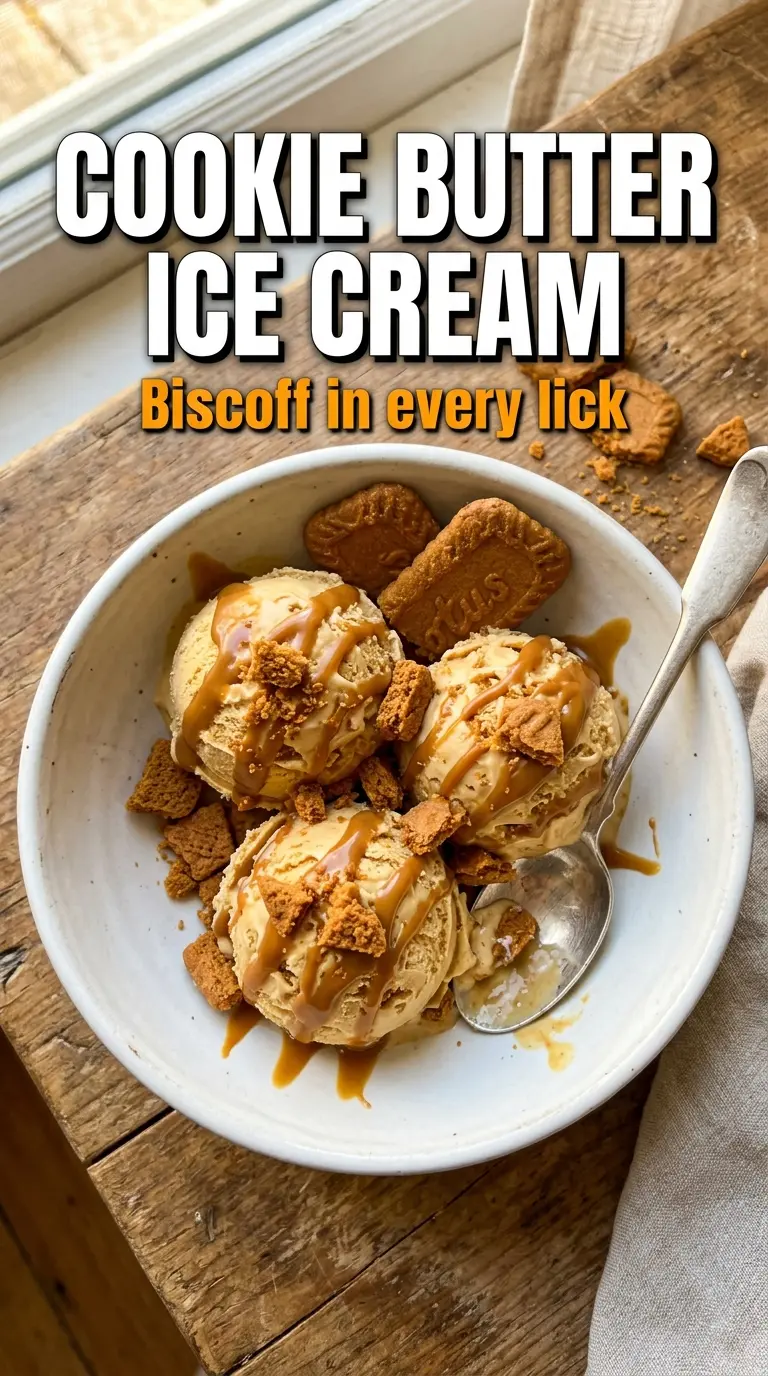
Cookie butter ice cream is the kind of dessert that disappears fast because it tastes like a scoopable version of the best part of a Biscoff cookie: warm spice, caramelized sweetness, and a creamy base that stays rich instead of icy. The flavor lands somewhere between speculoos and brown sugar custard, with crushed cookies folded through for little crunchy pockets that break up the smoothness in the best way.
The custard base matters here. Egg yolks give the ice cream body, and cooking the mixture to 175°F is what keeps it silky without tasting eggy. The cookie butter goes in while the base is still warm, which helps it melt in completely and stay emulsified instead of leaving little greasy streaks in the churn. I also like a small amount of cinnamon and salt to sharpen the spice in the spread rather than flattening it.
Below, I’ve included the small details that make this frozen dessert churn up creamy, plus the easiest way to keep the cookie pieces from getting soggy in the freezer.
The custard came out unbelievably smooth, and the Biscoff flavor stayed strong even after freezing overnight. Those cookie pieces on top of each scoop made it taste like a bakery ice cream.
Like this creamy Biscoff ice cream? Save it to Pinterest for the nights when you want a custard-style frozen dessert with warm spice and cookie crunch.
The Part That Keeps Cookie Butter Ice Cream from Turning Grainy
Cookie butter is dense and naturally oily, which means it can turn patchy if you whisk it into a base that isn’t hot enough. The trick is to add it after the custard is cooked, while the mixture is still warm enough to loosen the spread and disperse it completely. If you rush this and the base cools too soon, you’ll get tiny specks of unmelted cookie butter instead of a smooth, even custard.
The other place people run into trouble is overcooking the egg yolks. Once the custard reaches 175°F, pull it off the heat. That temperature gives you enough thickness for a scoopable ice cream without crossing into scrambled-egg territory. Stir constantly and keep the pan moving over steady heat, not high heat.
- Egg yolks — These give the ice cream its body and that dense, custard-style texture. Whole eggs won’t give the same richness, and skipping the yolks leaves you with a thinner, icier result.
- Warmed Biscoff cookie butter — Warm it first so it melts into the custard instead of clumping. If your jar is stiff, a few seconds in the microwave or a gentle spoonful of hot custard stirred into it will loosen it enough to blend smoothly.
- Heavy cream and whole milk — The cream brings richness, while the milk keeps the base from becoming too heavy. You can swap in 2% milk in a pinch, but the finished ice cream won’t be as plush.
- Biscoff cookies — Fold them in at the end so they stay crunchy enough to notice after freezing. Crushed too finely, they disappear; left in bigger pieces, they give you those little cookie pockets in every scoop.
What Each Part Does While the Custard Is Coming Together
The sugar does more than sweeten the base. It helps the custard stay softer once frozen, which matters in a recipe built on a thick egg base. The vanilla rounds out the spice in the cookie butter, and the cinnamon pushes the whole thing toward that familiar speculoos warmth without making it taste like cinnamon ice cream.
Salt is tiny here, but it matters. It sharpens the caramel notes in the spread and keeps the finished ice cream from reading flat. If your cookie butter is already on the sweeter side, the salt is what keeps the final scoop balanced instead of one-note.
- Granulated sugar — Essential for sweetness and texture. It lowers the freezing point, which keeps the ice cream scoopable instead of icy.
- Vanilla extract — This doesn’t make the ice cream taste like vanilla; it softens the edges of the spice and gives the custard a rounder finish.
- Cinnamon — Use the full amount listed if you want the speculoos flavor to come through clearly. Too little and the cookie butter dominates; too much and it starts tasting like a spice cake base.
- Salt — Don’t skip it. It pulls the caramelized notes out of the cookie butter and keeps the flavor from tasting heavy.
The Custard, the Churn, and the Freeze
Heating the Dairy Without Scorching It
Warm the cream and milk until they’re steaming and just starting to move around the edges. You don’t want a boil here. If the dairy gets too hot, it can shock the yolks and make the custard uneven when you combine them. Steaming is enough to temper the eggs gently and start the thickening process without curdling.
Cooking to the Right Thickness
After you whisk the hot dairy into the yolks and sugar, return everything to the saucepan and stir constantly over medium-low heat. Watch for the custard to lightly coat the back of a spoon, then hit 175°F and stop. If the mixture starts to look slightly foamy or the whisk leaves clear tracks across the pan, you’re at the right place; if it starts to look lumpy, it’s gone too far.
Blending in the Cookie Butter
Take the pan off the heat before you add the warmed cookie butter. Whisk until the custard turns completely smooth and glossy, with no streaks left behind. If the cookie butter seizes or looks oily, the base was probably too cool when you added it, so return to gentle warmth only long enough to dissolve the last bits.
Chilling, Churning, and Folding
Strain the custard, then chill it completely before it goes into the ice cream maker. A cold base churns faster and freezes with smaller ice crystals. Fold in the crushed Biscoff cookies near the end of churning so they stay distinct, then freeze the finished ice cream until firm. If you add the cookies too early, they’ll soften and lose that crunch.
How to Adapt This for a Different Texture or Diet
Dairy-Free Version
Use full-fat coconut milk in place of the cream and milk, and expect a slightly softer set with a hint of coconut in the background. The custard will still need careful cooking, but the flavor will be a little less clean and a little more rounded.
Extra Cookie Crunch
Add half the crushed cookies during the last minute of churning and sprinkle the rest over each container before freezing. This gives you a stronger cookie bite, but the pieces will soften a little faster in the freezer than they would if all of them stayed on top.
Gluten-Free Swap
Use a gluten-free cookie butter and gluten-free spiced cookies if you want the same style of mix-ins. The custard base itself is naturally gluten-free, so the only real change is choosing a cookie with the right snap and warm spice.
Softer, Scoop-Right-Out-of-the-Freezer Texture
For a softer finish, reduce the freeze time a bit and store the container in the back of the freezer where the temperature stays steadier. This won’t make the ice cream less rich, but it will make it easier to scoop without letting it sit on the counter for long.
Storage and Reheating
- Refrigerator: Not recommended. This is an ice cream base, so it belongs in the freezer once churned.
- Freezer: Keeps well for about 2 weeks in a tightly covered container. After that, the texture starts to pick up more ice crystals and the cookie pieces soften.
- Reheating: No reheating needed. For the cleanest scoops, let the container sit at room temperature for 5 to 10 minutes before serving, but don’t let it melt around the edges.
Questions I Get Asked About This Recipe

Homemade Cookie Butter Ice Cream
Ingredients
Equipment
Method
- In a saucepan, combine heavy cream and whole milk and heat until steaming, then keep it just below a simmer. Visual cue: small bubbles form at the edges and you can see steam rising.
- In a bowl, whisk egg yolks with granulated sugar until smooth and slightly paler. Visual cue: ribbons from the whisk hold briefly on the surface.
- Slowly whisk the steaming cream mixture into the beaten egg yolks. Visual cue: the mixture thickens slightly as it combines, without curdling.
- Return everything to the saucepan and cook to 175°F, stirring constantly. Visual cue: the custard coats the back of a spoon and you can draw a line with your finger that stays momentarily.
- Remove the saucepan from heat and whisk in warmed Biscoff cookie butter spread until completely smooth. Visual cue: no streaks remain and the color turns golden-tan.
- Whisk in vanilla extract, cinnamon, and salt, then strain the custard. Visual cue: strained custard looks silky with no spice lumps.
- Cool the custard completely before chilling. Visual cue: it reaches cool room temperature and no longer feels warm to the touch.
- Refrigerate the custard for 4 hours until very cold. Visual cue: the mixture feels chilled throughout when the container is held.
- Churn the chilled custard in an ice cream maker until thick and scoopable. Visual cue: it expands and becomes the texture of soft-serve.
- Fold in crushed Biscoff cookies. Visual cue: cookie bits distribute evenly with visible speckles.
- Transfer to a freezer-safe container and freeze until firm. Visual cue: it holds its shape when scooped and looks dense, not airy.