Hobo dinner cheeseburgers come off the fire with a smoky edge, juicy beef, and vegetables that soak up every bit of melted butter and burger drippings. The potatoes turn tender underneath the patty, the onions soften just enough to sweeten, and the cheese melts right over the top in the last few minutes so it stays creamy instead of disappearing into the foil.
The trick is building each packet in the right order. The vegetables go on the bottom so they can steam and cook through, while the thinner burger patty sits above them and finishes at the same time. Heavy-duty foil matters here because regular foil can tear when you flip the packets or open them over the heat.
Below, I’ve included the small details that keep these packets from turning soggy or undercooked, plus a few easy swaps for making them work over a campfire, on the grill, or in the oven.
The potatoes came out tender and the burger stayed juicy, and the cheese melted perfectly after just a couple minutes back in the foil.
Hobo dinner cheeseburgers with buttery potatoes and melted American cheese belong on your campfire menu.
The Reason the Potatoes Go Under the Burger, Not Beside It
The potatoes need the longest cooking time, and the burger drippings help them along. If you tuck everything side by side in the packet, the beef can finish before the vegetables are tender. Layering the sliced potatoes under the patty lets them catch the heat, the butter, and the juices all at once.
Thin slices matter more than people think. Thick potato rounds stay firm long after the burger is done, especially over a campfire where the heat moves around. Slice them evenly and no thicker than about 1/8 inch so they steam through in the same window as the meat.
What Each Ingredient Is Actually Doing in the Packet
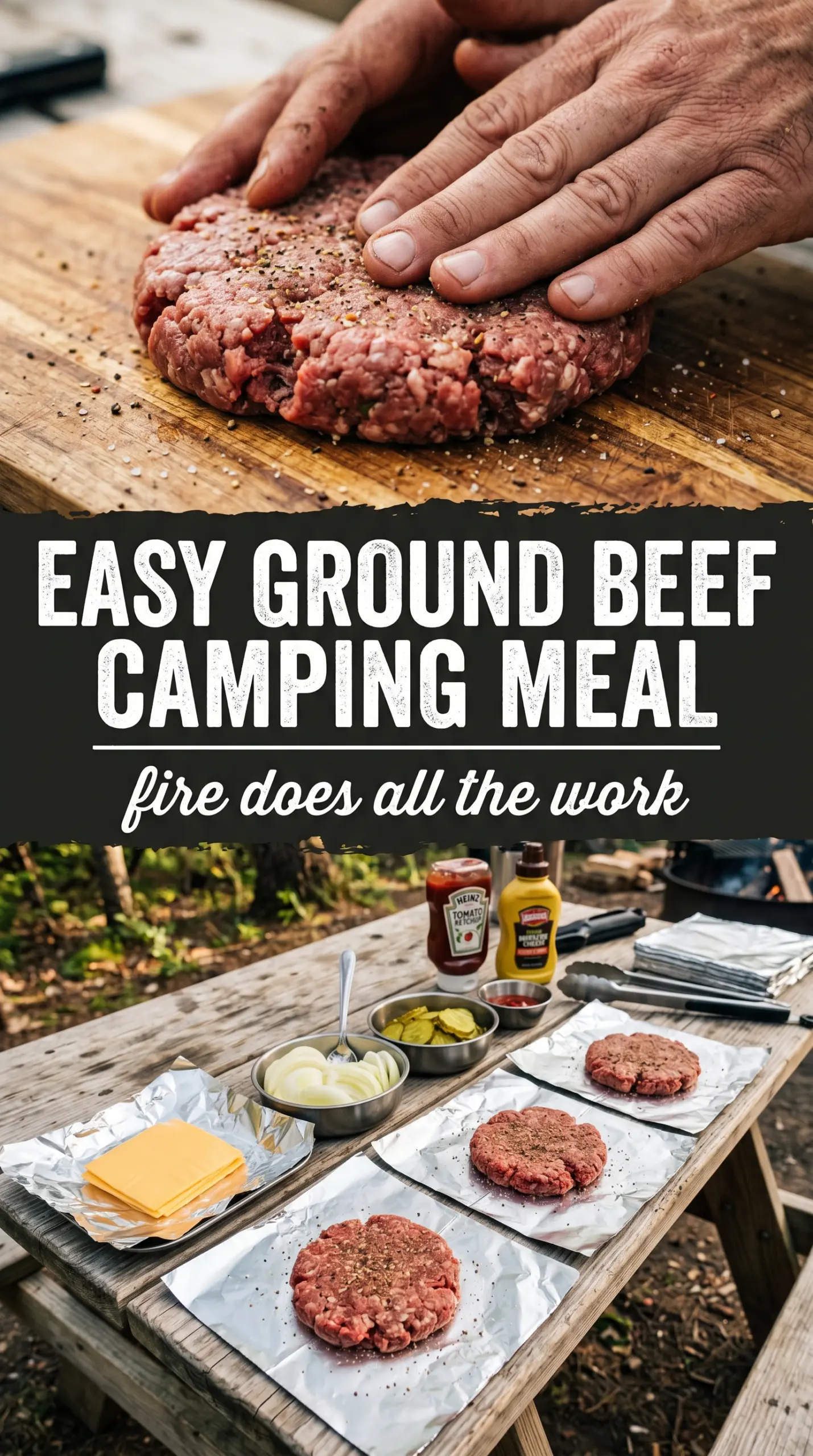
- Ground beef — Use beef with enough fat to stay juicy, ideally 80/20. Lean beef works, but it dries out faster in foil, especially over open flames.
- American cheese — This melts cleanly and blankets the burger without turning grainy. Cheddar works too, but it won’t give you the same soft, even melt.
- Potatoes — Thin slicing is the difference between tender and underdone. Yukon Golds hold their shape nicely, but russets will work if you don’t mind a softer texture.
- Butter — One tablespoon per packet keeps the vegetables from tasting steamed and flat. It also carries the seasoning into the potatoes and onions as everything cooks.
- Heavy-duty foil — This is not the place to use the thin roll from the kitchen drawer. The packets need to survive flipping and opening without tearing, especially over a grate.
Building the Foil Packet So Everything Finishes Together
Shaping the Burger Thin Enough to Cook Through
Form each portion of beef into a thin patty, a little wider than you think you need. The patties shrink as they cook, and a thick center is the fastest way to end up with overcooked vegetables and an underdone middle. Season both sides with salt and pepper before the packet goes together so the meat carries its own flavor.
Stacking the Vegetables for Even Heat
Lay the potatoes down first, then the onions and bell peppers. That order keeps the potatoes closest to the heat and lets the softer vegetables release moisture above them. If the potatoes are cut too thick, they’ll still be firm when the burger is ready, so keep the slices uniform.
Sealing, Flipping, and Melting the Cheese
Fold the foil tightly so the packets trap steam, but leave a little room inside for the heat to circulate. Cook over medium heat for 20 to 25 minutes, flipping halfway through so one side doesn’t scorch while the other stays pale. When the burgers are done, open the packets carefully, lay the cheese on top, and seal them again just long enough for the cheese to melt into a soft layer.
Letting the Packets Rest Before Serving
Give the packets about 5 minutes off the heat before opening them fully. That short rest keeps the juices in the burger instead of spilling all over the foil the second you cut in. The vegetables will also finish softening in the trapped heat, which is what makes the whole packet taste cohesive instead of separately cooked.
Three Easy Ways to Adapt These Campfire Burgers
Make it dairy-free without losing the buttery finish
Swap the butter for a plant-based butter that melts well, or use a neutral oil if that’s what you have. You’ll lose a little of the rich, round flavor, but the packets will still cook evenly and the vegetables won’t stick to the foil.
Use cheddar or pepper jack for a sharper burger
American cheese melts the smoothest, but cheddar gives a stronger bite and pepper jack adds a little heat. Slice the cheese thin so it softens fast when the packets go back on the heat.
Turn it into an oven dinner on busy nights
Bake the sealed packets on a sheet pan at 400°F for about 30 to 35 minutes instead of cooking over a fire. The result is nearly the same, though you won’t get the smoky campfire edge.
Storage and Reheating
- Refrigerator: Store leftovers in an airtight container for up to 3 days. The potatoes soften a little more after chilling, but the flavor holds well.
- Freezer: I don’t recommend freezing the finished packets. The potatoes and peppers turn mealy and watery after thawing.
- Reheating: Reheat in a covered skillet over low heat or in a 350°F oven until hot. High heat dries out the burger before the vegetables warm through.
Answers to the Questions Worth Asking
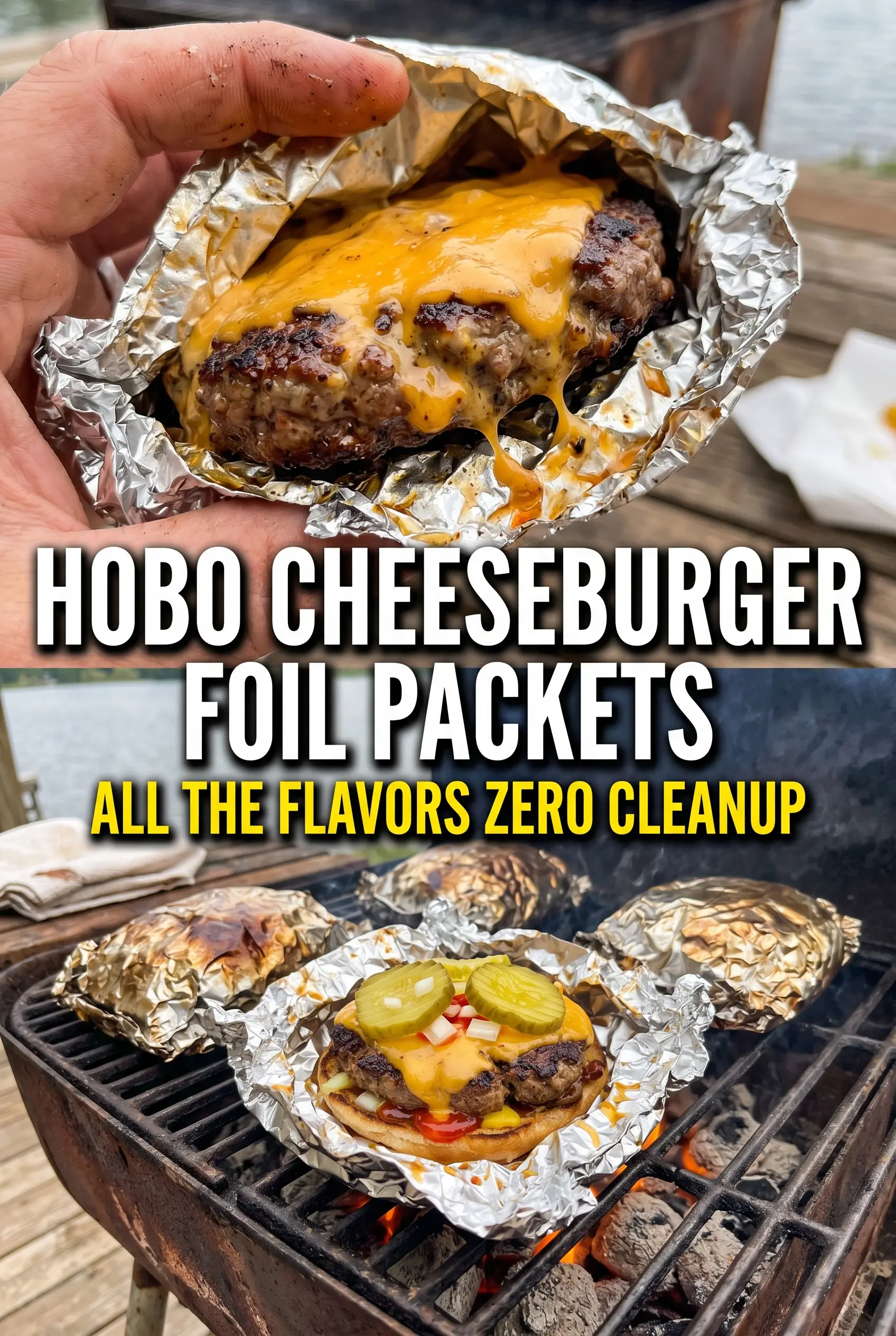
Hobo Dinner Cheeseburgers
Ingredients
Equipment
Method
- Divide the ground beef into 4 portions and form thin patties, then season with salt and pepper.
- Lay out 4 heavy-duty aluminum foil sheets and layer the sliced potatoes, onions, and bell peppers on each sheet.
- Place a burger patty on top of the vegetables and add 1 tbsp butter to each packet.
- Fold the foil into sealed packets, pressing edges firmly so steam stays inside.
- Place packets on a campfire grate over medium heat and cook for 20-25 minutes, flipping halfway.
- After the cooking time, open packets carefully to avoid steam burns and add 1 cheese slice per burger.
- Reseal packets briefly so the cheese melts.
- Let packets cool for 5 minutes before serving from the packets.