Creamy dill pickle bacon pasta salad hits that sweet spot between tangy, salty, and rich, with enough crunch from the pickles and red onion to keep every bite interesting. The dressing clings to the pasta instead of sliding off, and the bacon brings the kind of savory bite that makes people go back for a second scoop before the bowl even hits the table.
What makes this version work is the pickle juice in the dressing. It gives the mayo a sharp, briny backbone so the salad tastes bright instead of heavy. Rinsing the pasta after cooking matters here, too, because you want it cool and clump-free so it can soak up the dressing evenly during the chill time.
Below, I’ve added the small details that make a pasta salad hold up better after chilling, plus a few variations if you want to adjust the richness, skip the bacon, or change the cheese.
The pickle juice dressing gave this pasta salad the best tang, and after two hours in the fridge the noodles were still creamy, not dry. My husband kept sneaking forkfuls straight from the bowl.
Creamy dill pickle bacon pasta salad with tangy pickle-juice dressing, bacon, and cheddar is worth pinning for potlucks and cookouts.
The Secret to Keeping the Dressing Creamy After Chilling
The biggest mistake with pasta salad is underdressing it. Cold pasta drinks up dressing as it chills, and if you start with just enough to coat the bowl, it can taste dry by the time you serve it. This recipe leans into that by using a mayo-based dressing loosened with pickle juice, which stays creamy while still cutting through the richness of the bacon and cheddar.
Rinsing the pasta under cold water does more than cool it down. It stops the cooking fast, removes surface starch, and keeps the noodles from turning gummy while they sit in the fridge. If you skip that step, the dressing can get thick and the salad turns heavy instead of bright.
- Pickle juice — This is the sharpest part of the dressing, and it brings the dill flavor through every bite. Regular vinegar won’t give you the same pickle brine edge.
- Mayonnaise — Full-fat mayo gives the best body and keeps the dressing from splitting after chilling. Light mayo works, but the salad won’t feel as lush.
- Dijon mustard — It adds lift and helps the dressing taste balanced instead of flat. Yellow mustard won’t give the same depth.
- Cheddar cheese — Sharp cheddar stands up to the pickle juice and bacon. Mild cheddar disappears a little in the mix.
What Each Ingredient Is Actually Doing in the Bowl
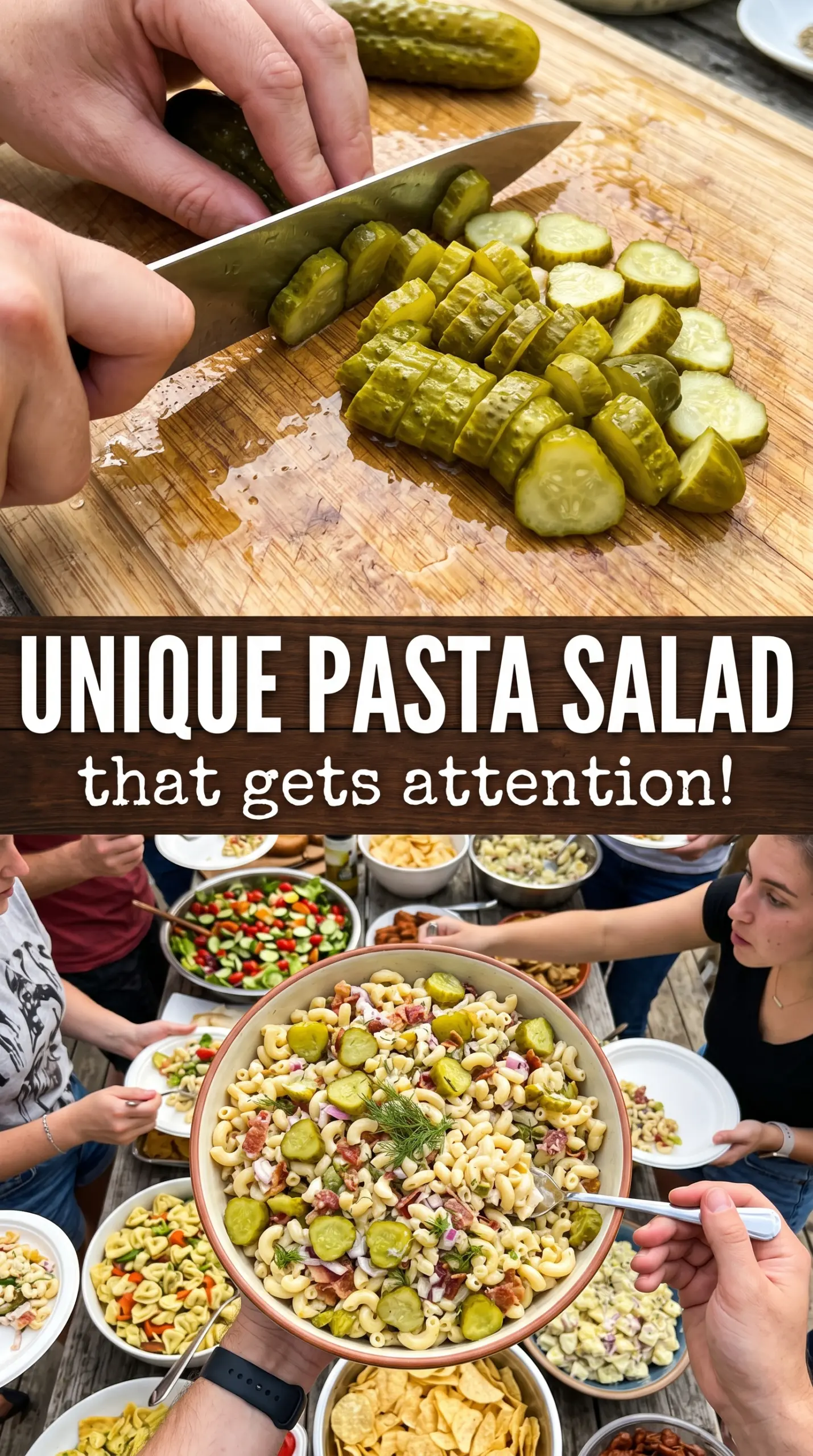
- Elbow macaroni — The curves trap dressing and small bits of pickle, bacon, and onion. Short pasta matters here; long noodles won’t hold the mix the same way.
- Dill pickles — Go for a firm, crunchy pickle. Soft pickles lose their snap and make the salad mushy.
- Bacon — Cook it until crisp enough to crumble cleanly. If it’s chewy, it turns greasy in the salad instead of giving you little salty bites.
- Red onion — A fine dice keeps the sharpness spread out instead of landing in one harsh bite. If yours is strong, soak it in cold water for 10 minutes and drain well.
- Fresh dill — Fresh gives the cleanest herbal note, but dried works if that’s what you have. Use less dried dill, since it reads more concentrated.
How to Build the Salad So It Stays Creamy, Not Heavy
Cooking the Pasta Past Al Dente
Cook the macaroni according to the package, then stop at the point where it’s tender but still has a little firmness at the center. You don’t want it mushy, because pasta salad gets softer as it sits in the dressing. Drain it well and rinse it under cold water until it’s fully cool and no longer sticky.
Whisking the Dressing Until It Tastes Too Sharp
Whisk the mayo, pickle juice, Dijon, dill, salt, and pepper until smooth. It should taste a little bolder than you want the final salad to taste, because the pasta and cheese will mellow it out. If the dressing tastes flat now, it’ll taste flat later.
Letting the Chill Time Do the Work
After you combine everything, cover the bowl and refrigerate it for at least 2 hours. That resting time lets the pasta pull in the dressing and gives the pickle and bacon flavors time to spread through the salad. Toss it again before serving, because the dressing settles at the bottom as it chills.
Make it a little lighter
Swap half the mayo for plain Greek yogurt if you want more tang and a slightly lighter texture. The dressing will be a touch brighter and less rich, but it still clings nicely to the pasta.
Skip the bacon and keep the bite
Use chopped celery or extra red onion in place of the bacon if you want a vegetarian version. You’ll lose the smoky saltiness, so add a little extra black pepper and a pinch more salt to keep the salad from tasting one-note.
Change the cheese, not the balance
Colby Jack or Monterey Jack makes the salad milder and a little creamier, while sharp white cheddar gives it more bite. Keep the amount the same so the dressing-to-pasta ratio stays balanced.
Storage and Reheating
- Refrigerator: Store covered for up to 4 days. The pasta will absorb more dressing over time, so expect it to thicken a bit.
- Freezer: Don’t freeze this salad. Mayo-based dressings break after thawing, and the pickles lose their crunch.
- Reheating: This salad is best served cold. If it tightens up after chilling, stir in a spoonful of mayo or a splash of pickle juice instead of warming it.
Answers to the Questions Worth Asking
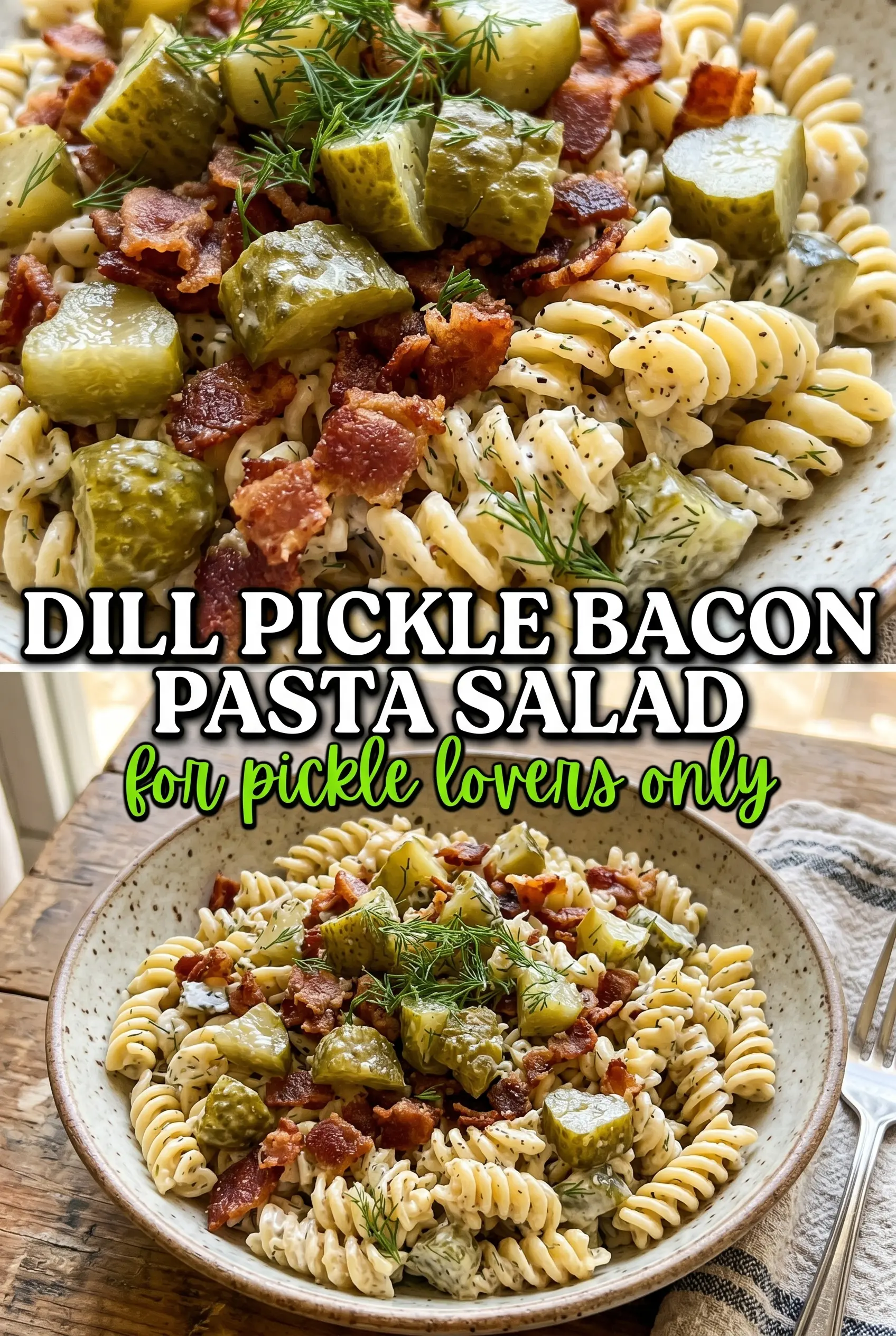
Dill Pickle Bacon Pasta Salad
Ingredients
Equipment
Method
- Cook the elbow macaroni according to package directions until tender but not mushy, then drain and rinse with cold water to stop the cooking.
- Spread the drained pasta on a sheet pan to help it cool quickly before assembling, letting it sit until fully cool to the touch.
- Whisk together mayonnaise, pickle juice, Dijon mustard, fresh dill, salt, and pepper until smooth and creamy.
- Combine the cooled pasta, diced dill pickles, crumbled bacon, shredded cheddar, and finely diced red onion in a large bowl.
- Pour the dressing over the salad and toss until everything is evenly coated and glossy.
- Refrigerate for 2 hours to chill and let the flavors meld.
- Toss again before serving and adjust seasoning with additional salt and pepper if needed.