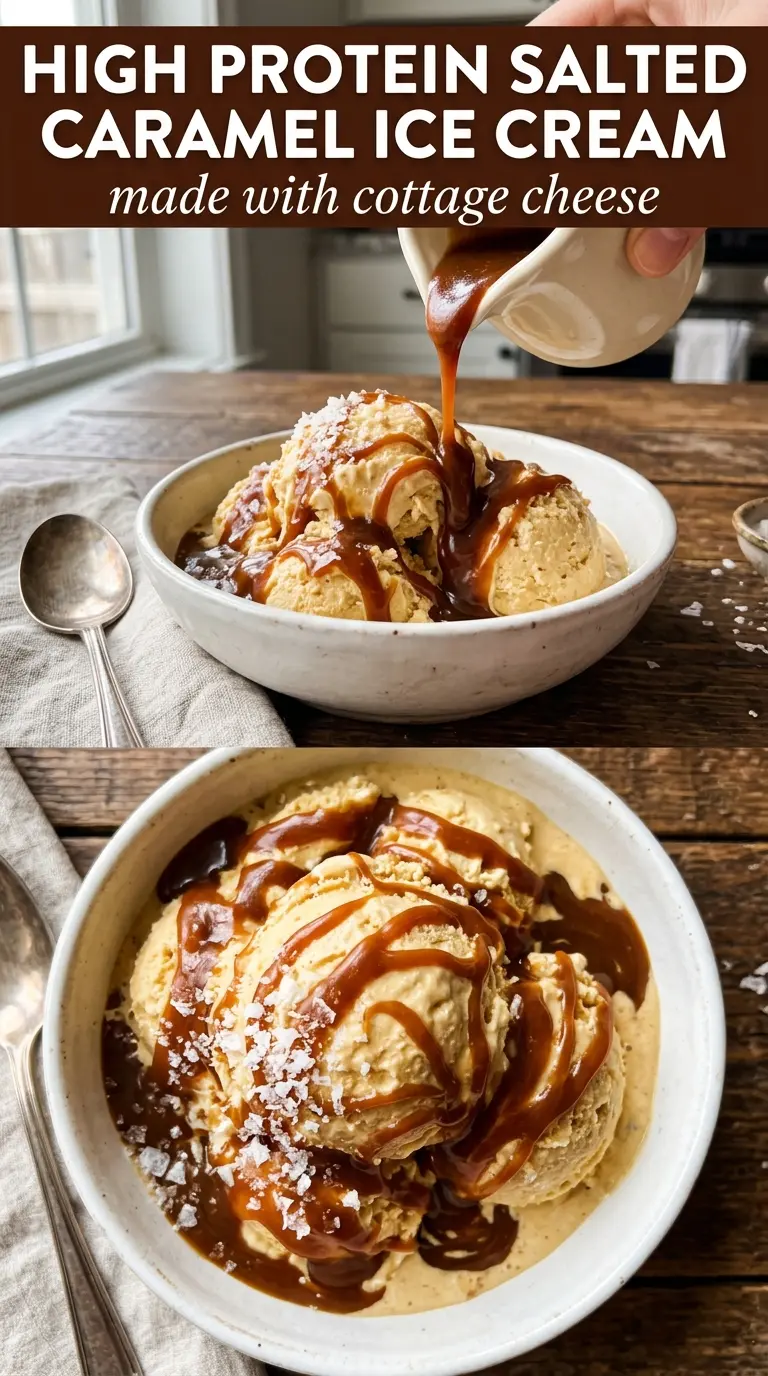
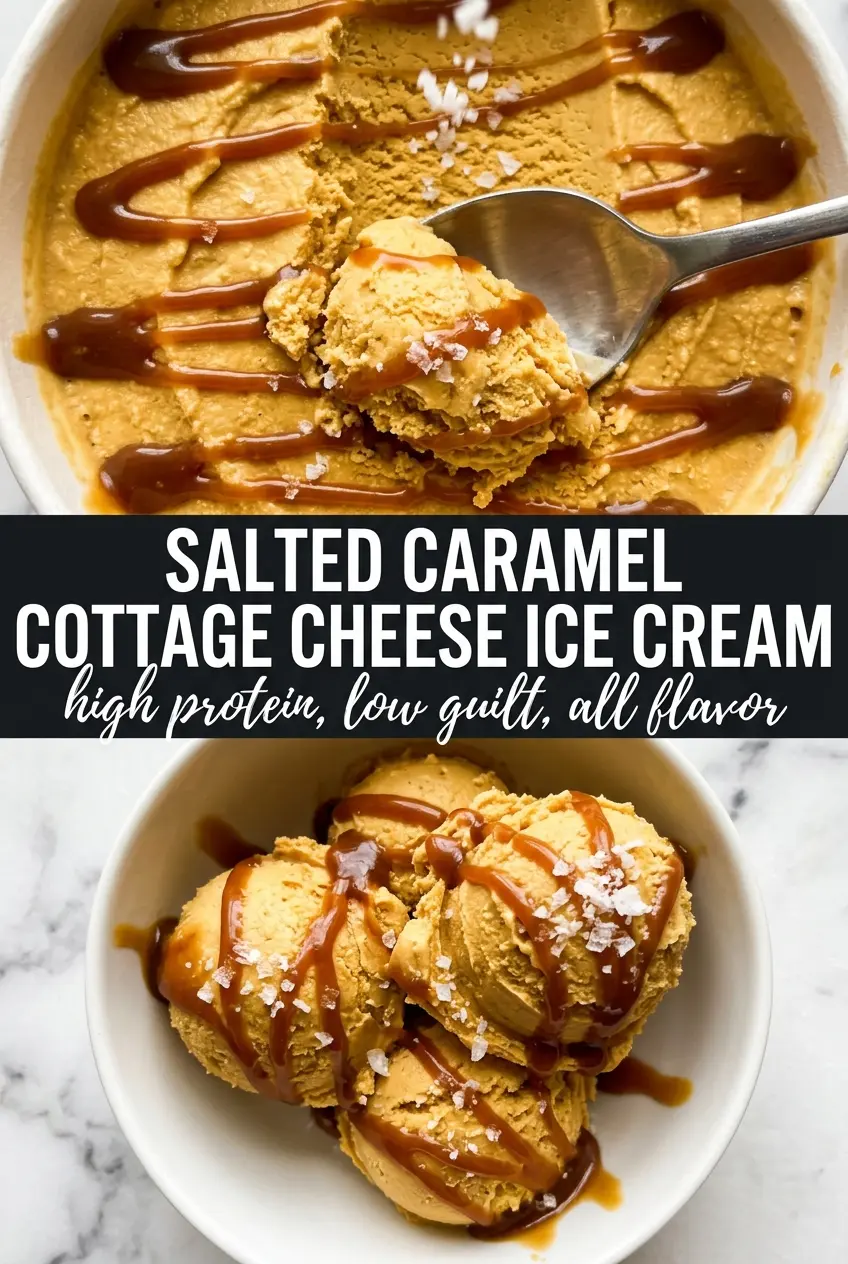
Velvety, caramel-rich ice cream with a clean salty edge is exactly why this one earns a spot in the freezer. The texture lands somewhere between soft-serve and scoopable ice cream after a short rest, and the cottage cheese disappears into the background instead of reading as tangy or savory. What you get is a frozen dessert that tastes indulgent, but still brings a satisfying amount of protein to the bowl.
The trick is blending long enough that every curd is gone before the mixture ever hits the freezer. That’s what keeps the final texture smooth instead of grainy or icy. Brown sugar deepens the caramel note, while the sea salt keeps the sweetness from tasting flat. A little cream cheese is optional, but it adds a rounder, richer finish if you want the result closer to a classic ice cream base.
Below, I’ve included the one blending detail that matters most, plus a few smart swaps and storage notes so you can get the texture right the first time.
The caramel flavor came through beautifully, and after the 5-minute rest it scooped much easier than I expected. Mine was creamy instead of icy, and the flaky salt on top made it taste like a fancy dessert.
Pin this salted caramel cottage cheese ice cream for a high-protein frozen dessert with a creamy texture and a true caramel finish.
The Part That Keeps It Creamy Instead of Icy
The biggest mistake with cottage cheese ice cream is rushing the blending stage. If there are still curds in the base when it goes into the freezer, those little bits freeze into tiny icy pockets and the whole dessert turns gritty. You want the mixture completely silky before it ever sees cold.
Salt matters more here than in a lot of sweet desserts. Caramel gets flatter than people expect once it’s frozen, and the salt keeps the flavor clear instead of muddy. That same balance also helps the cottage cheese taste neutral rather than tangy.
- Full-fat cottage cheese — This gives the richest texture and the least icy finish. Low-fat works in a pinch, but the final ice cream will freeze harder and taste less plush.
- Caramel sauce — Use a thick, spoonable sauce, not a thin ice cream topping that disappears into the base. A good caramel gives both flavor and body.
- Brown sugar — This deepens the caramel note and helps keep the frozen texture softer. White sugar can work, but it tastes a little sharper and less rounded.
- Cream cheese — Optional, but it adds body and makes the finish taste closer to classic ice cream. If you skip it, the dessert is still good; it just sets a touch lighter.
- Flaky sea salt — Use this at the end, not in the blender. The little crunch on top is what makes the salted caramel flavor pop.
What Each Ingredient Is Actually Doing in This Frozen Treat
- Base ingredient (cream, yogurt, or fruit) — This determines the texture and richness. Cream makes it scoopable; yogurt makes it tangy; fruit makes it refreshing.
- Sweetener (sugar or honey) — This prevents the mixture from freezing rock-solid and creates a smooth texture. Too much and it won’t freeze; too little and it’s icy.
- Egg yolks (if using custard method) — These create richness and a silky texture. Tempering is important so they don’t scramble.
- Thickener (cornstarch, gelatin, or egg) — This prevents ice crystals from forming and keeps the texture smooth instead of grainy.
- Flavoring (vanilla, chocolate, fruit, or spices) — Use quality flavorings because they’re essential to the taste. Dilute-tasting ice cream comes from cheap extract.
- Stabilizers (gum, gelatin, or dairy) — These keep the ice cream from becoming icy during storage. They prevent large ice crystals from forming.
- Mix-ins (nuts, chunks, or swirls) — These add texture and interest. Freeze-stable chocolate works better than regular chocolate, which gets hard.
- Proper chilling and churning (the technique) — This incorporates air and prevents ice crystals. An ice cream maker makes a huge difference in texture.
Blending the Base Until It’s Truly Smooth
Getting Rid of Every Last Curd
Put everything in the blender and let it run for at least 2 full minutes, scraping down the sides if needed. Stop only when the mixture looks glossy and completely uniform, with no grainy specks or visible cottage cheese curds. If your blender struggles, pause once or twice so the motor doesn’t overheat, then keep going until the texture is completely smooth. This step does more for the final result than anything else in the recipe.
Tasting Before It Freezes
The base should taste slightly sweeter and slightly saltier than you want the finished ice cream to taste. Cold dulls both sweetness and salt, so a mixture that tastes balanced at room temperature can taste flat after freezing. Adjust the caramel sauce for more depth or add a tiny pinch more salt if the caramel seems one-note. Don’t overcorrect, because the toppings will add another layer of salt and sweetness at the end.
Freezing for a Scoopable Texture
Pour the mixture into a freezer-safe container and freeze for about 4 hours. A shallow container helps it set evenly and makes it easier to scoop later. If you freeze it in a deep container, the edges will harden before the center and you’ll end up waiting longer for a usable texture. Let it sit at room temperature for 5 minutes before scooping so it softens just enough to serve cleanly.
How to Adapt the Base Without Losing the Caramel Flavor
Dairy-Free Version
Cottage cheese is the backbone here, so a true dairy-free swap changes the recipe completely. If you need that route, use a thick dairy-free yogurt or a coconut-based frozen dessert base, then keep the caramel and salt the same. The result won’t have the exact same tangy richness, but it will still give you a creamy salted caramel frozen dessert.
Lower-Sugar Version
You can cut the brown sugar down to 1 tablespoon or skip it if your caramel sauce is already very sweet. The ice cream will taste less deep and a little less rounded, but it still freezes well. If you reduce the sugar, keep the caramel sauce thick so the base doesn’t turn watery.
Extra-Rich Version
Add the cream cheese if you want a denser, more custard-like result. It doesn’t make the ice cream taste tangy; it just smooths the edges and helps the scoop hold together a little better. This is the version I’d use when serving it to guests.
Storage and Reheating
- Refrigerator: Not recommended. This is best kept frozen; in the fridge, it turns loose and loses the texture you worked for.
- Freezer: Store in a sealed freezer-safe container for up to 2 weeks. After that, the flavor is still fine, but ice crystals start to creep in.
- Reheating: No reheating needed. For the best scoop, let it sit at room temperature for 5 minutes before serving. If you try to force a spoon straight through it, you’ll break the texture and make rough scoops instead of smooth ones.
Answers to the Questions Worth Asking
High-Protein Salted Caramel Cottage Cheese Ice Cream
Ingredients
Equipment
Method
- Blend full-fat cottage cheese, caramel sauce, brown sugar, vanilla extract, sea salt, and cream cheese (if using) until completely smooth, blending at least 2 minutes until no lumps remain.
- Taste and adjust the caramel sauce and sea salt level as needed for your preferred sweet-salty balance.
- Pour the mixture into a freezer-safe container and freeze for 4 hours until scoopable.
- Remove from the freezer and let it sit for 5 minutes before scooping to soften slightly for cleaner scoops.
- Serve with a drizzle of caramel drizzle and a pinch of flaky sea salt for a salted caramel finish.