Healthy lemon sorbet hits with that sharp, clean citrus snap that wakes up your mouth and leaves nothing heavy behind. The texture is the part that makes it worth keeping in the freezer: icy and spoonable, with enough body to feel special instead of slushy. Because it leans on fresh lemon juice and just a modest amount of honey, every bite tastes bright, cold, and focused.
The trick is balancing the syrup before the lemon goes in. Honey needs a little warmth to dissolve smoothly, but the mixture has to cool completely before you add the juice or you’ll lose the fresh, fragrant edge that makes sorbet taste alive. A shallow container helps it freeze faster and more evenly, and stirring during the freeze gives you smaller ice crystals instead of a hard block.
Below, I’ll walk you through the part that matters most: how to keep the sorbet from turning icy, how to adjust it if your lemons run especially tart, and the one freezer move that makes the final texture much better.
The lemon flavor stayed super bright, and stirring it every hour kept the sorbet from freezing into a brick. Mine scooped cleanly after 4 hours and tasted like frozen lemonade in the best way.
Like this healthy lemon sorbet? Save it for the days when you want a tart, low-sugar frozen dessert that tastes clean and refreshing.
The Step That Keeps Lemon Sorbet From Turning to Ice
The biggest mistake with homemade sorbet is rushing the base into the freezer while it’s still warm or uneven. That can make the mixture freeze in hard shards instead of forming fine crystals, which is what gives sorbet its smooth, scoopable texture. Let the honey syrup cool all the way down before the lemon juice goes in, then freeze in a shallow container so the cold moves through the mixture quickly and evenly.
Stirring once an hour matters more here than people think. Every stir breaks up the crystals before they get too large, and that’s what keeps the finished sorbet from tasting gritty. If your freezer runs cold and the mixture seems too hard at the edges, give it a vigorous scrape from the sides and corners each time instead of just stirring the center.
- Cooling the syrup completely — warm syrup softens the fresh citrus aroma and can make the final texture icier. Give it time to reach room temperature before mixing.
- Using a shallow container — more surface area means faster freezing and less time for big ice crystals to form.
- Frequent stirring — this is what replaces the smooth churning you’d get from an ice cream maker.
- Tasting before freezing — lemons vary a lot, and a mix that tastes balanced at room temperature will taste less sweet once frozen.
What Each Ingredient Is Doing in This Sorbet
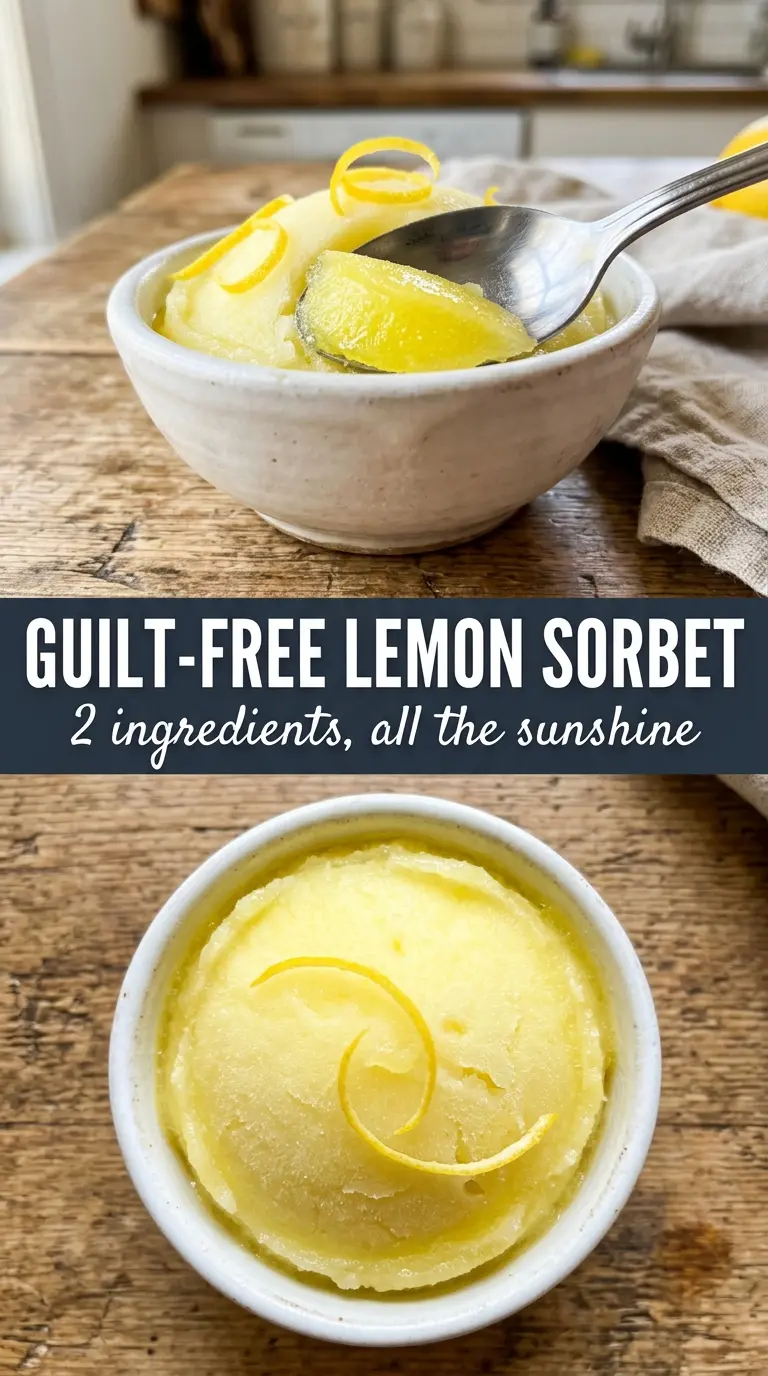
- Fresh lemon juice — this is the whole point of the dessert, so bottled juice won’t give the same bright, clean finish. Fresh juice tastes sharper and more fragrant, which matters when there are only a few ingredients.
- Lemon zest — the zest carries the lemon oils that make the sorbet smell and taste more complex. If you skip it, the sorbet will still be tart, but it won’t have the same depth.
- Honey or agave — either sweetener works, but honey gives a rounder, slightly floral note that softens the tartness without making the sorbet taste candy-sweet. Agave keeps the flavor a little more neutral.
- Water — this gives the honey room to dissolve and creates the base that freezes into a smooth sorbet. Don’t cut it too far or the mixture can freeze dense and hard.
- Salt — just a small amount keeps the lemon flavor from tasting thin. It doesn’t make the sorbet salty; it sharpens everything around it.
Freezing It the Way That Gives You a Clean Scoop
Dissolving the Sweetener First
Warm the honey, water, and salt over low heat just until the honey disappears into the liquid. You’re not trying to cook anything here; you’re just making a smooth syrup that won’t leave grainy streaks in the finished sorbet. If the mixture simmers, pull it off the burner. High heat is unnecessary and only makes you wait longer for it to cool.
Adding the Lemon After the Syrup Cools
Once the syrup is fully cool, stir in the lemon juice and zest. This protects the fresh citrus flavor and keeps the sorbet from tasting dull. Taste it at this stage and adjust if needed: a little more honey softens a very sharp batch, while a touch more lemon juice brightens one that tastes flat. The mixture should taste a little sweeter than you want the final sorbet to taste, because freezing mutes sweetness.
Building the Texture in the Freezer
Pour the mixture into a shallow freezer-safe container and freeze it for 4 hours, stirring hard every hour. Scrape the frozen edges into the center each time so the whole batch freezes at the same pace. If you’re using an ice cream maker, churn until it reaches a soft, slushy texture that holds together on a spoon, then move it to the freezer briefly to firm up.
Serving It Cold Enough to Hold Its Shape
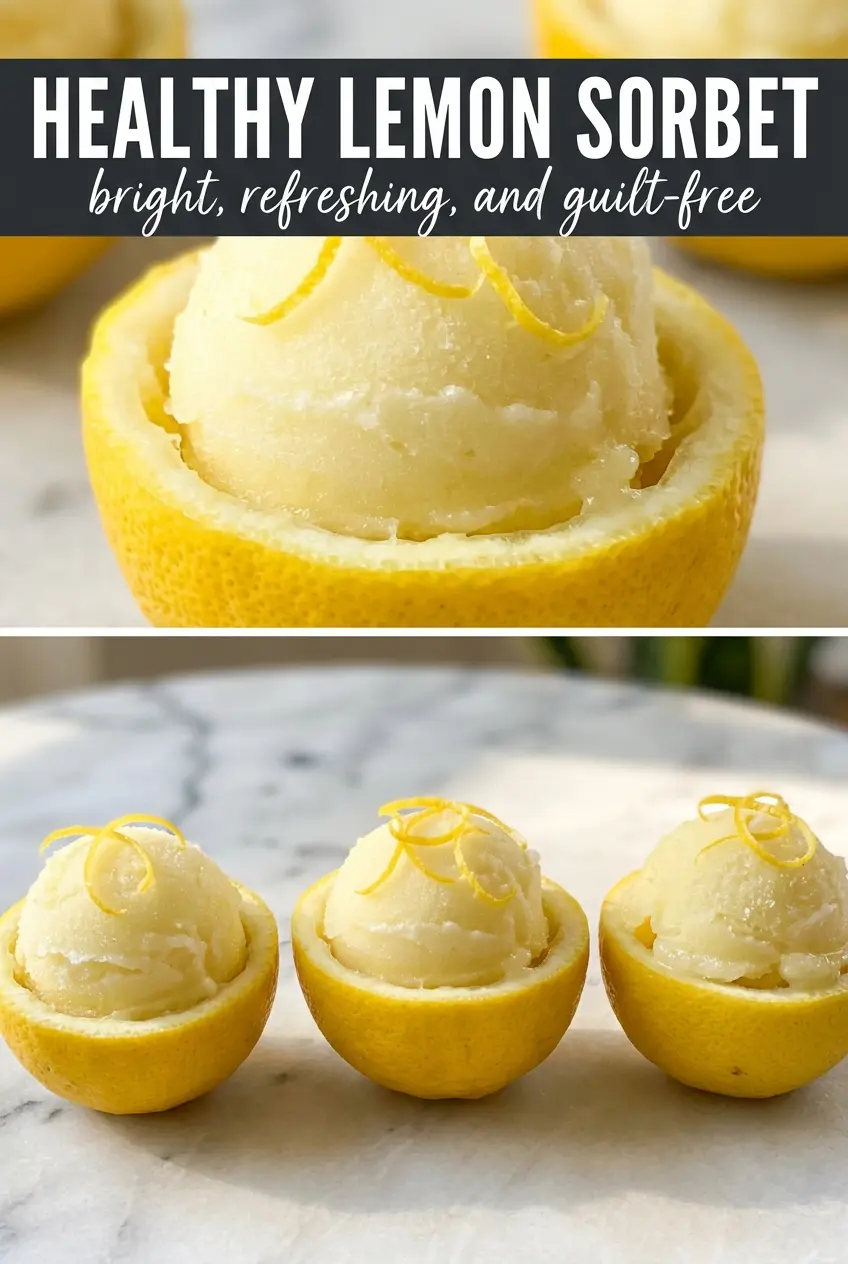
Lemon sorbet is best when it’s firm but not rock-solid. Let it sit at room temperature for a few minutes before scooping, especially if your freezer is very cold. Chilled bowls help it stay neat longer, and hollowed lemon halves make a nice presentation because they reinforce exactly what the dessert tastes like.
How to Adapt This Sorbet Without Losing the Bright Lemon Bite
Make It Vegan with Agave
Swap the honey for agave if you want a fully vegan sorbet. Agave dissolves easily and keeps the texture smooth, though it tastes a little less floral than honey. The lemon still comes through sharply, which is what matters most here.
Use Honey for a Rounder, Softer Finish
Honey gives this sorbet a smoother, less brittle freeze and a fuller taste. If your lemons are extra tart, honey is the better choice because it softens the edges without burying the citrus.
Add a Herb Note
A few mint leaves or a tiny bit of basil-infused syrup can give the sorbet a fresh, aromatic twist. Keep it light. The lemon should still be the loudest flavor in the bowl.
Storage and Reheating
- Refrigerator: Not recommended. Sorbet melts into a thin lemon syrup in the fridge.
- Freezer: Keeps well for about 2 weeks in an airtight container with parchment pressed on top. After that, the texture gets icier.
- Reheating: There’s no reheating here, but if the sorbet gets too hard, leave it at room temperature for 5 to 10 minutes before scooping. Microwaving will melt the edges before the center softens.
Questions I Get Asked About This Recipe
Healthy Lemon Sorbet
Ingredients
Equipment
Method
- Combine honey (or agave), water, and salt in a saucepan over low heat, stirring until fully dissolved, about 3-5 minutes. You should see the mixture look clear with no syrupy granules.
- Turn off the heat and let the honey syrup cool completely to room temperature, about 15-20 minutes. The surface should stop steaming and the mixture should feel fully cooled when touched to the outside of the pan.
- Stir the cooled honey syrup into fresh lemon juice, then add lemon zest and mix until evenly combined, 30-60 seconds. The liquid should look uniformly pale yellow and fragrant.
- Taste and adjust sweetness or tartness by adding a little more honey or lemon juice as needed. The mixture should taste slightly sharper than you want because it will mellow when frozen.
- Pour into a shallow freezer-safe container and freeze for 4 hours, stirring vigorously every hour to break up ice crystals. After each hour, visible ice starts forming, so aggressive stirring keeps the sorbet texture smooth.
- Serve scoops in chilled bowls or alongside hollowed lemon halves, topped with fresh mint. The sorbet should hold its shape briefly at the edges without melting immediately.