Pasta salad gets boring fast when the dressing sinks to the bottom and the vegetables turn limp before the bowl even hits the table. This Greek pasta salad stays bright, salty, and balanced because the dressing is punchy enough to coat every piece of pasta, and the vegetables are cut so they hold their shape after chilling. The feta brings creaminess without making the whole salad heavy, and the olives give it that briny bite that keeps people going back for another forkful.
The small details matter here. Rinsing the pasta under cold water stops the cooking and keeps it from soaking up too much dressing too soon, which is what turns a pasta salad gummy. A short rest in the fridge lets the oregano, garlic, and lemon settle into the pasta instead of sitting on top of it. This is the kind of side dish that gets better after it chills, and the leftovers hold up well for lunch the next day.
The dressing coated everything evenly after chilling, and the feta stayed crumbly instead of disappearing into the pasta. I made it in the morning, and by dinner the flavors had settled in perfectly.
Greek pasta salad with feta tastes best after the chill, when the oregano-lemon dressing has time to soak into every noodle.
The Reason This Pasta Salad Stays Bright Instead of Watery
The difference between a pasta salad people remember and one that gets left behind is moisture control. Tomatoes and cucumbers carry a lot of water, so the cut matters. Halving the tomatoes and dicing the cucumber keeps the pieces substantial while still letting the dressing cling instead of sliding off. If you chop the vegetables too small, they leak faster and the salad turns slippery after an hour in the fridge.
The other thing that helps is dressing the pasta while it’s still cooled, not wet. A fully drained, rinsed pasta surface grabs the vinaigrette better than pasta that’s still carrying steam. That first toss gives the noodles a chance to absorb the garlic, lemon, and oregano before the feta goes on top.
What Each Ingredient Is Actually Doing in This Bowl
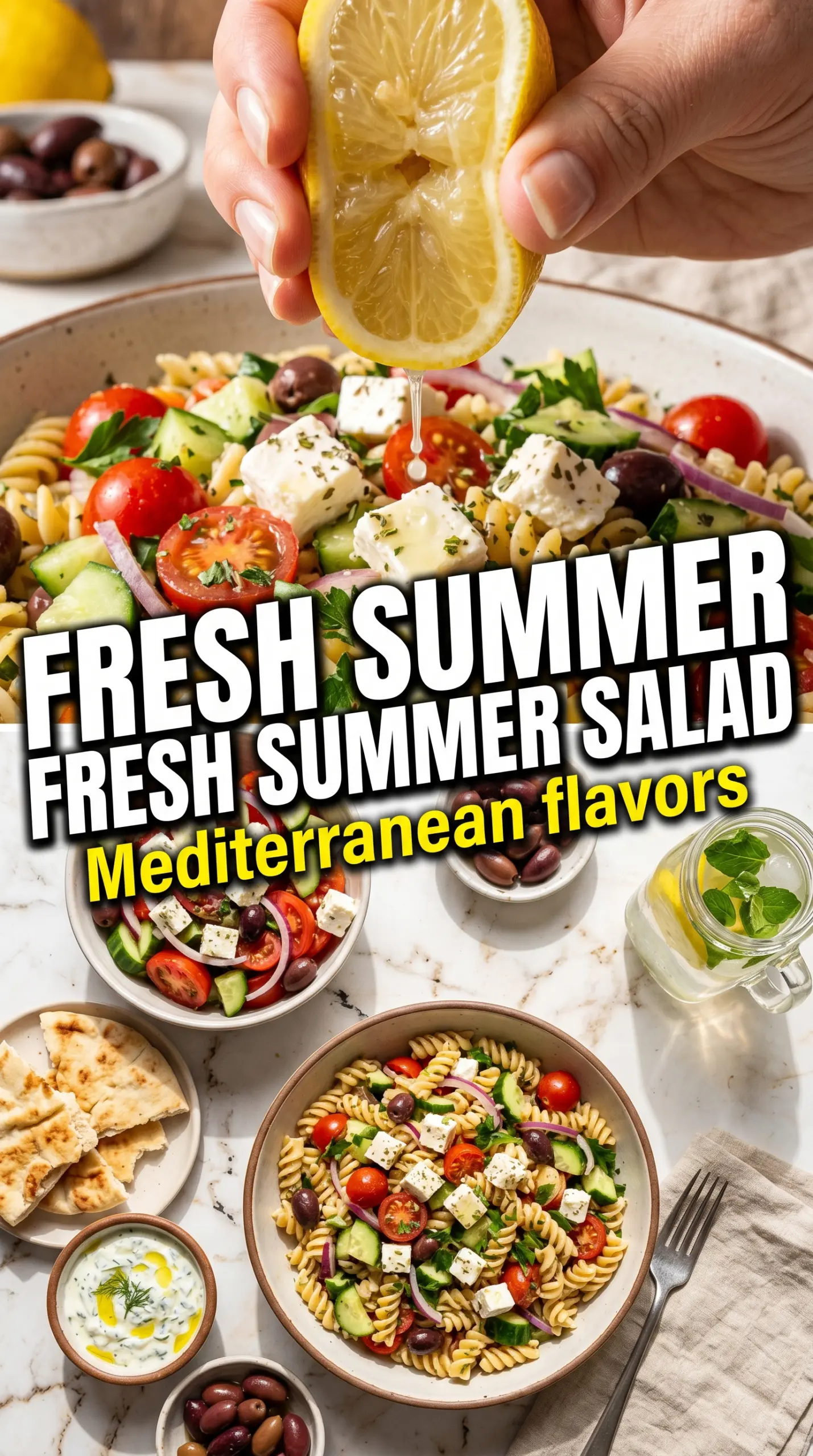
- Penne or rotini — These shapes hold the dressing in the grooves and curves, which is exactly what you want in a cold pasta salad. Long noodles won’t trap the olives, feta, and herbs as well.
- Feta cheese — Use a block if you can and crumble it yourself for the best texture. Pre-crumbled feta works in a pinch, but it tends to be drier and less creamy.
- Kalamata olives — Their briny, almost wine-like flavor is part of what makes this salad taste Greek instead of just “pasta with vegetables.” Regular black olives are milder and won’t give you the same punch.
- Red wine vinegar and lemon juice — This combination keeps the dressing sharp enough to cut through the pasta and feta. If you only use one acid, the salad tastes flatter after chilling.
- Greek oregano — Dried oregano wakes up in the dressing and gives the salad that classic Mediterranean edge. Fresh oregano works too, but use less because it comes across louder.
Building the Salad So It Holds Up After Chilling
Cooking the Pasta to the Right Point
Cook the pasta just until it’s tender with a little bite left in the center. Overcooked pasta turns soft after chilling, and that’s when the salad starts to feel heavy instead of fresh. Drain it well, then rinse with cold water until it’s no longer steaming. If the pasta stays hot, it will soak up the dressing too fast and leave the vegetables tasting separate.
Whisking the Dressing Until It Tastes Sharp
Combine the olive oil, vinegar, lemon juice, garlic, oregano, salt, and pepper in a bowl and whisk until the mixture looks slightly thickened and evenly cloudy. The dressing should taste brighter than you think it should at this stage because the pasta and feta will mellow it later. If the garlic sits in clumps, whisk longer; you want it dispersed so no bite tastes harsh.
Bringing Everything Together
Toss the pasta with the tomatoes, cucumber, olives, red onion, and most of the feta until every piece is lightly coated. Add the dressing and toss gently so the feta doesn’t disappear into a paste. The salad should look glossy, not soaked. Finish with the rest of the feta on top so you get those creamy little pockets when serving.
The Chill That Makes It Taste Finished
Refrigerate the salad for at least an hour before serving. That rest time lets the pasta absorb the dressing and gives the onion a chance to soften a little. If the salad looks dry after chilling, stir in a small splash of olive oil or lemon juice, then taste again. Cold pasta salads often need that last wake-up before they’re served.
Three Ways to Make This Bowl Fit Your Table
Make it dairy-free
Leave out the feta and add extra olives plus a handful of chopped parsley for balance. You’ll lose the creamy saltiness that feta brings, so the dressing should taste a little more assertive with the lemon and vinegar.
Turn it into a gluten-free side
Use a sturdy gluten-free short pasta and cook it just shy of done, because GF pasta softens more as it sits. Rinse it extra well so it doesn’t clump, then dress it while it’s fully cooled.
Add more protein for a fuller meal
Chopped grilled chicken, chickpeas, or salami all work here. Chickpeas keep it vegetarian and soak up the dressing nicely, while chicken or salami make the salad sturdier for lunch.
Use what you have for the vegetables
Swap in diced bell pepper or chopped romaine if you’re out of cucumber or need a little crunch. Bell pepper holds better than lettuce for make-ahead storage, while romaine is best added right before serving.
Storage and Reheating
- Refrigerator: Store covered for up to 4 days. The pasta softens a little as it sits, but the flavor stays strong.
- Freezer: Don’t freeze this salad. The cucumber and tomatoes turn watery and the feta loses its texture.
- Reheating: Serve it cold or let it sit at room temperature for 15 to 20 minutes. If it seems tight after chilling, loosen it with a small splash of olive oil and a squeeze of lemon, not heat.
Answers to the Questions Worth Asking
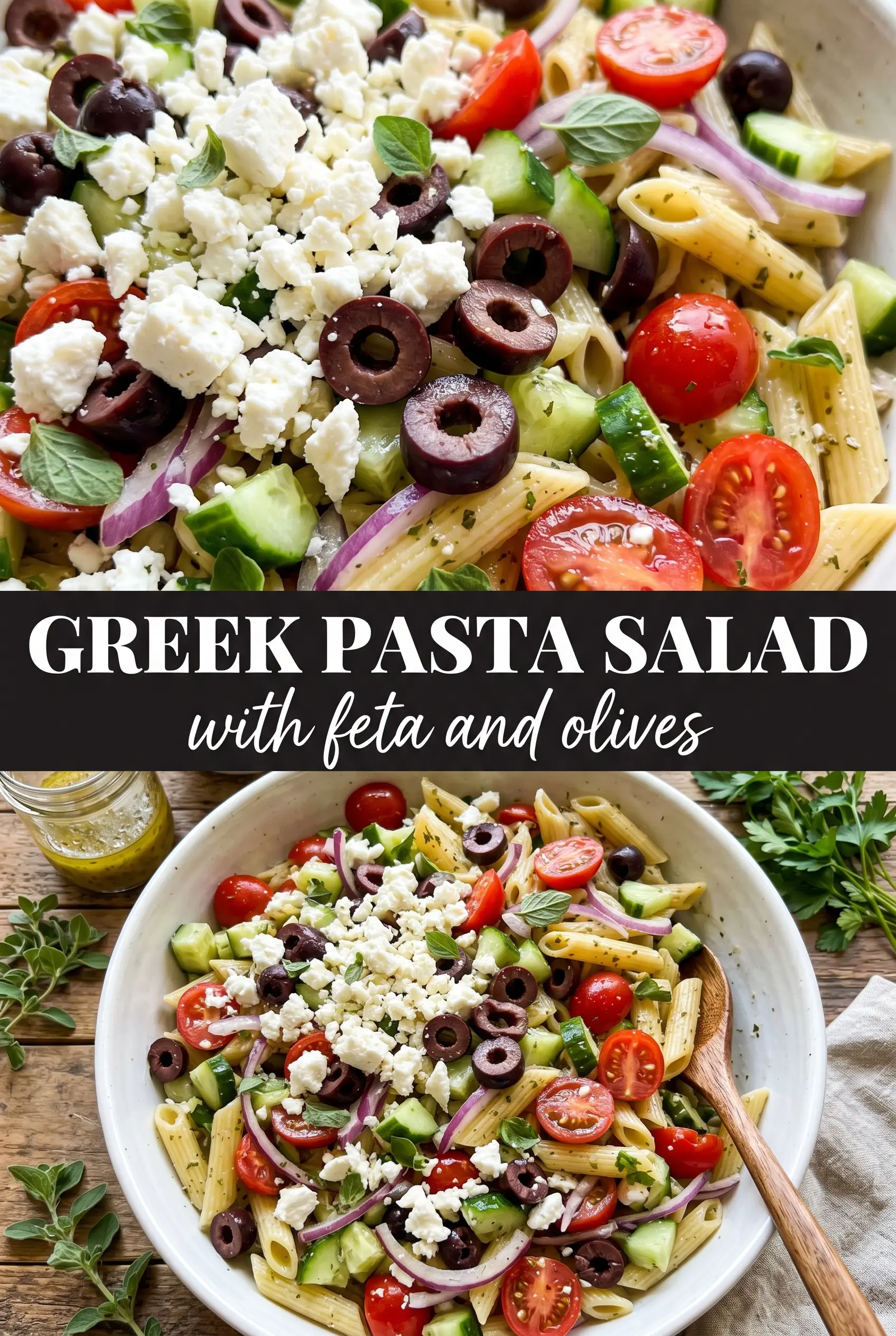
Greek Pasta Salad with Feta Cheese
Ingredients
Equipment
Method
- Bring a Dutch oven of salted water to a boil, then cook penne or rotini pasta according to package directions until al dente.
- Drain the pasta and rinse with cold water until completely cooled, then drain well to remove excess water.
- Whisk together olive oil, red wine vinegar, lemon juice, garlic, dried oregano, salt, and pepper until the dressing looks evenly combined.
- Combine pasta, cherry tomatoes, cucumber, Kalamata olives, red onion, and most of the feta in a large bowl.
- Pour the dressing over the salad and toss gently until everything is coated.
- Refrigerate for at least 1 hour to let the flavors meld and the pasta absorb the dressing.
- Top with the remaining feta right before serving for a fresh, creamy finish.