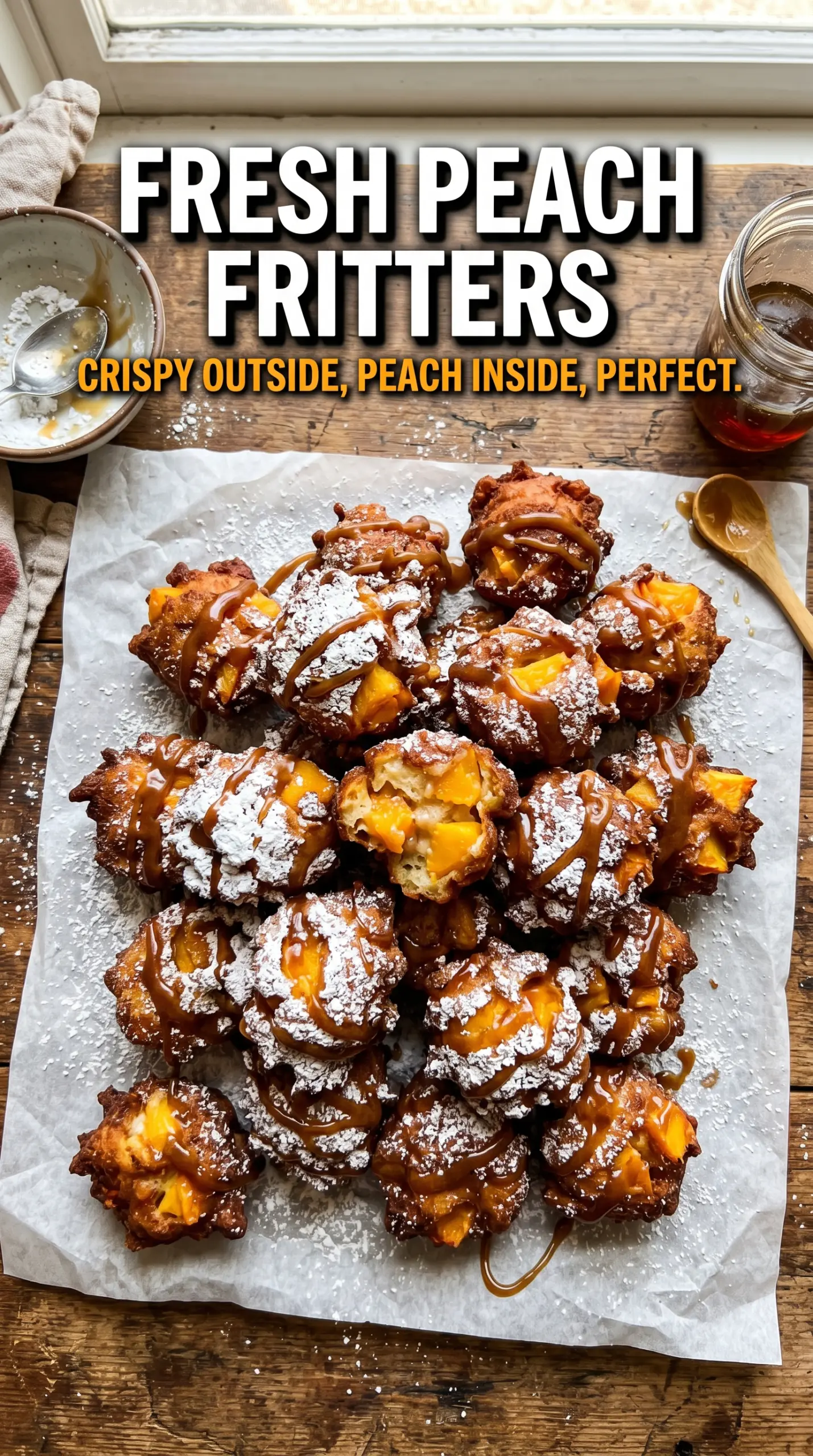
Golden peach fritters have a way of disappearing fast. The edges fry up crisp and crackly, the centers stay soft and cakey, and the little bits of peach turn jammy without melting into the batter. Finished with a vanilla glaze, they land somewhere between a breakfast treat and a proper dessert, which is exactly why they end up getting made more than once.
What makes this version work is the balance. The batter is thick enough to hold the fruit in place, but not so stiff that the fritters come out bready. Finely dicing the peaches matters because big chunks dump too much juice into the batter and create pale, uneven fritters that won’t hold together as well in the oil. A hot fry at 350°F gives you that deep golden crust before the peaches have time to water everything down.
Below, I’ll walk through the small details that keep these fritters light instead of greasy, plus the quickest way to glaze them so you get that glossy finish while they’re still warm.
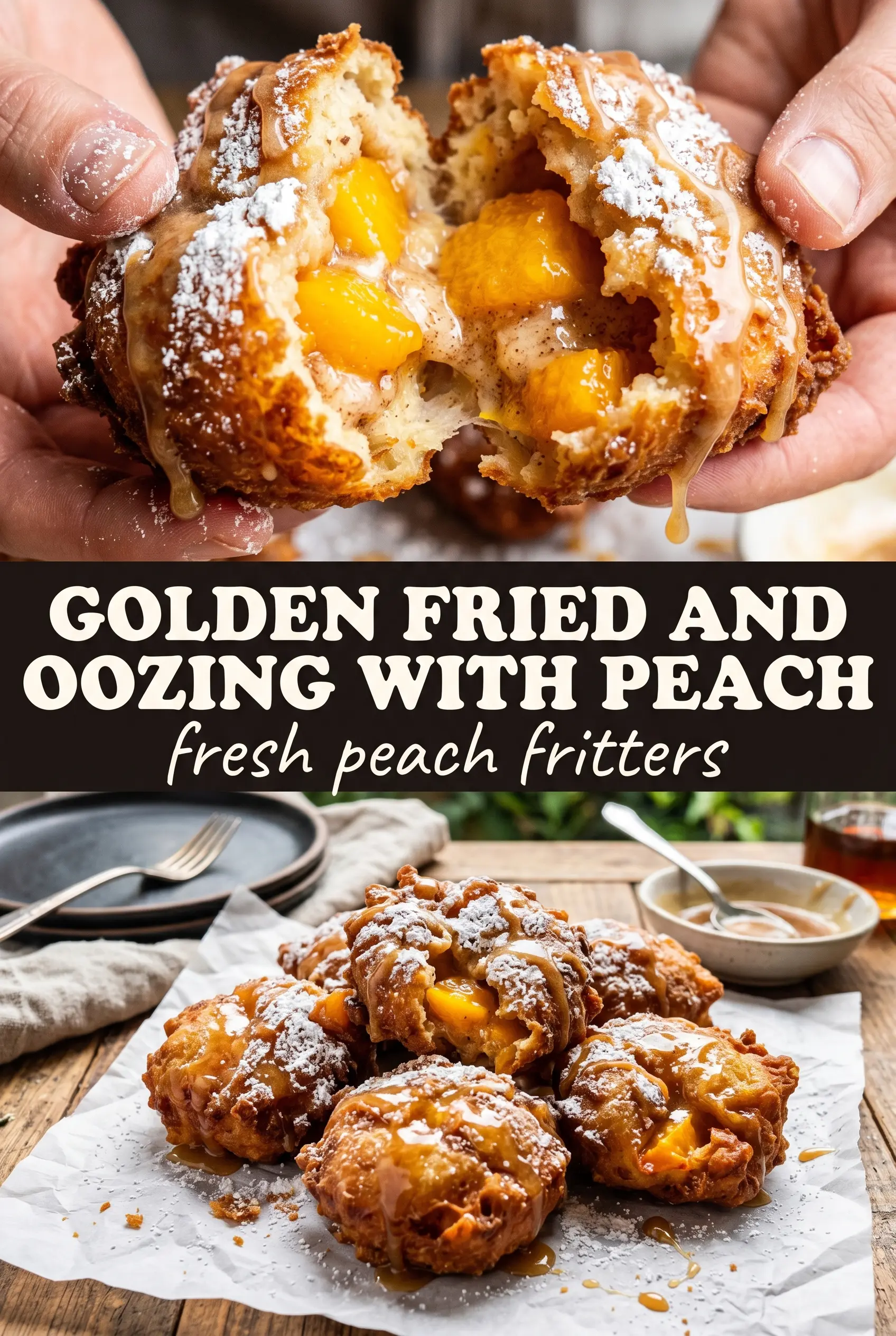
The fritters came out crisp on the outside and fluffy inside, and the chopped peaches stayed in little pockets instead of making the batter soggy. I dipped half in glaze and they were gone before they cooled.
Fresh Peach Fritters with crisp edges and a vanilla glaze are the kind of breakfast you’ll want to save for peach season.
The batter has to be thick enough to hold the peaches
With fritters, the biggest failure point is batter that looks right in the bowl but falls apart in the oil. Peaches bring moisture, and once that juice hits the flour, the batter can loosen fast. That’s why this mixture should drop from a spoon in thick mounds, not pour like pancake batter. If it spreads flat in the oil, it needs a little more flour before you start frying.
The other thing that trips people up is fruit size. Large peach chunks create weak spots and uneven cooking, while finely diced peaches distribute better and soften into sweet pockets inside each fritter. You want pieces small enough to stay suspended, but not so tiny that they disappear completely.
- Fresh peaches — Use ripe but still firm peaches. Soft, overripe fruit turns mushy in the batter and can make the fritters greasy. Peeling is worth the extra minute because the skins can separate from the fruit as it fries.
- All-purpose flour — This gives the fritters structure without making them dense. If you swap in a gluten-free blend, choose one built for 1:1 baking and expect a slightly more delicate crumb.
- Baking powder — This is what gives the fritters lift. Old baking powder is a common reason fritters come out heavy, so check that it still bubbles when mixed with warm water if you’re unsure.
- Whole milk — The fat helps the batter stay tender. Lower-fat milk works in a pinch, but the fritters won’t taste as rich and the glaze may thin out faster.
What Each Ingredient Is Actually Doing in This Peach Treat
- Fresh or dried peaches (the flavor) — Fresh peaches add brightness and moisture; dried ones add concentrated flavor. Dice small so they distribute evenly.
- Flour (the structure) — Don’t overmix or cookies become tough. Mix just until dry ingredients are incorporated.
- Sugar (the sweetness and browning) — This creates texture and browning. Brown sugar adds moisture; white sugar creates crispness.
- Butter (the richness and texture) — Room temperature butter creams better. This creates air and light texture.
- Eggs (the binder) — These hold everything together. Use room temperature eggs for better incorporation.
- Leavening (baking powder or soda) — This creates rise. Too much makes cookies taste bitter and spread excessively.
- Spices (cinnamon or nutmeg) — These complement peach flavor. Use in balance so peach remains the star.
- Glaze or topping (optional finish) — This adds moisture and visual appeal. Keep it light so the peach flavor shines through.
The 350°F fry that gives you a crisp shell and a soft center
Mix the batter just until it comes together
Whisk the dry ingredients first, then add the eggs, milk, and vanilla without overworking the batter. A few small streaks of flour are better than a batter that’s been stirred smooth and overmixed. Once the peaches go in, fold them gently so they don’t break down and bleed juice through the whole bowl. If the batter looks runny at this point, the fritters will spread instead of puffing.
Hold the oil at a steady 350°F
Heat the oil in a deep pot and use a thermometer if you have one. If the oil is too cool, the fritters absorb grease before the outside sets. If it’s too hot, they brown fast on the outside and stay doughy in the middle. Between batches, let the oil come back to temperature before dropping in more batter.
Fry in small batches and turn once
Drop heaping spoonfuls into the oil and give them room to float. Crowding the pan lowers the temperature and makes the fritters pale and oily. Fry until the first side is deeply golden, then turn them once and cook the second side until it matches. They should feel light for their size, not heavy or wet in the center.
Glaze while they’re still warm
Drain the fritters briefly, then glaze them while they’re warm enough for the sugar to set into a thin shell. If they sit too long, the glaze won’t cling the same way and will slide right off. You can dip the tops or drizzle over the whole batch. Either way, work quickly before the surface cools.
How to adapt peach fritters when the peaches are the only thing changing
Make them dairy-free
Swap the whole milk for unsweetened almond milk, oat milk, or another neutral dairy-free milk. The fritters will still puff and fry well, though the glaze may need a touch less liquid because some non-dairy milks are thinner than whole milk.
Use frozen peaches when fresh ones aren’t in season
Thaw the peaches first, then drain them well and pat them dry before dicing. Frozen fruit releases more water, and if you skip the draining step the batter loosens and the fritters spread. The flavor is still good, just a little softer and less bright than fresh.
Skip the glaze and serve them with powdered sugar
A dusting of powdered sugar keeps the fritters a little crisper because you’re not adding a wet topping. That’s the better move if you want a lighter finish or need to serve them later without the glaze soaking in.
Storage and Reheating
- Refrigerator: Store leftovers in an airtight container for up to 2 days. They soften as they sit because the glaze and fruit both add moisture.
- Freezer: Freeze unfrosted fritters in a single layer, then move them to a freezer bag for up to 1 month. Glazed fritters freeze less well because the topping gets sticky when thawed.
- Reheating: Warm them in a 325°F oven for 8 to 10 minutes or in an air fryer for a few minutes until the outside perks back up. Skip the microwave if you want to keep any crispness; it turns the fritters soft and rubbery.
Answers to the questions worth asking before you fry these
Fresh Peach Fritters
Ingredients
Equipment
Method
- Whisk all-purpose flour, baking powder, granulated sugar, cinnamon, nutmeg, and salt in a large bowl until evenly combined.
- In a separate bowl, beat eggs, whole milk, and vanilla extract together.
- Stir the wet mixture into the dry mixture until just combined, then fold in finely diced fresh peaches.
- Heat vegetable oil in a deep pot to 350°F, using enough oil for 3–4 inches deep so the fritters float and brown evenly.
- Drop heaping spoonfuls of batter into the hot oil and fry for 3–4 minutes per side until deeply golden, turning once during cooking.
- Drain the fritters on a paper towel-lined plate, then dip or drizzle with vanilla glaze while warm.