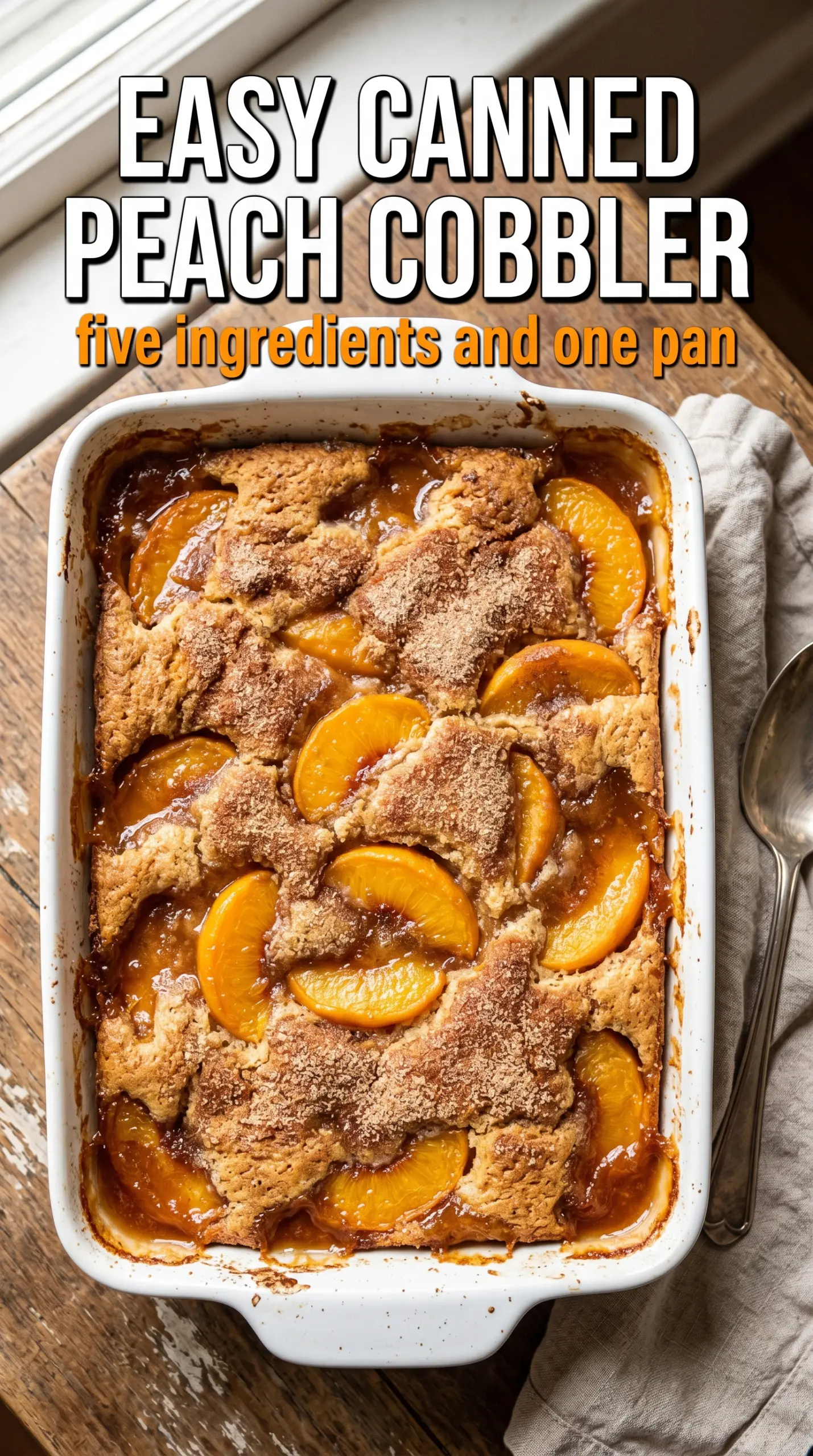
Bubbling peach cobbler with canned peaches is the kind of dessert that earns its place on repeat because it gives you a crisp, golden top and a syrupy peach layer underneath without any fuss. The butter melts right in the pan, the batter rises up around the fruit, and the whole thing bakes into a spoonable, caramelized edge that tastes like you spent a lot more time on it than you did.
Using canned peaches in heavy syrup is the move here. The syrup helps form that glossy, jammy layer in the bottom of the dish, and because the batter goes over the butter without stirring, it bakes up with those bakery-style pockets and craggy edges instead of turning dense. The cinnamon is subtle, not overpowering, which lets the peaches stay front and center.
Below, I’ve included the one mixing detail that keeps the crust light, plus a few swaps and storage notes for when you want to make this pantry dessert work with what you’ve got on hand.
The batter puffed up around the peaches exactly like you said, and the edges turned deep golden instead of soggy. I served it warm with vanilla ice cream and my husband went back for a second bowl before dinner was even over.
Like this canned peach cobbler? Save it for the nights when you want a bubbling dessert with a buttery crust and zero peeling required.
Why the Batter Has to Go in Before You Stir Anything
The part that makes this cobbler work is the layering. The melted butter sits on the bottom and the batter bakes on top of it, which gives you a crisp, almost cake-like crust that rises into the peaches instead of dissolving into them. If you stir after the peaches go in, you lose the distinct layers and end up with a heavier, muddier dessert.
The canned peaches bring enough syrup to keep the filling juicy while the top sets. That extra liquid is important here because the batter is meant to absorb some of it as it bakes. If your cobbler ever turns out dry, it usually means the fruit wasn’t syrupy enough or the pan was overbaked until the edges hardened before the center finished.
What the Pantry Ingredients Are Doing Here
- Canned peaches in heavy syrup — These give you the easiest path to a juicy filling with no peeling or slicing. Heavy syrup matters because it helps the cobbler bake into a glossy, spoonable layer instead of tasting thin. If you only have peaches in juice, drain them and add 2 to 3 tablespoons of extra sugar to keep the filling from tasting flat.
- Butter — This is the flavor base and the barrier that helps the bottom crust fry a little as it bakes. Use unsalted butter so the salt level stays in your control.
- All-purpose flour — This gives the cobbler its structure. I wouldn’t swap in cake flour here; it’s too soft and can make the topping fragile.
- Baking powder — This is what helps the batter puff around the fruit. Old baking powder is a common reason cobbler bakes up dense, so check the date if yours has been sitting in the pantry a while.
- Whole milk — The fat in whole milk helps the batter bake tender. Lower-fat milk works in a pinch, but the texture won’t be quite as rich.
- Cinnamon — You only need a little. It supports the peaches without taking over, and it’s one of those small additions that makes the dessert taste finished instead of plain.
How to Get the Crust Golden Without Ending Up with Soggy Cobbler
Melting the Butter in the Pan
Put the butter straight into the baking dish and let it melt in the oven while it preheats. You want it fully liquefied and hot, not browned. That hot butter helps the batter start cooking immediately when it hits the pan, which is part of what keeps the bottom from turning gummy.
Mixing the Batter Just Until Smooth
Whisk the flour, sugar, baking powder, salt, and cinnamon first, then stir in the milk until the batter comes together. Stop as soon as you no longer see dry flour. If you beat it hard or keep stirring, you’ll build gluten and the topping will bake up tough instead of tender.
Layering Without Disturbing the Pan
Pour the batter over the melted butter and leave it alone. Don’t stir. Then spoon the peaches and all their syrup evenly over the top, again without stirring. During baking, the batter rises around the fruit on its own, and that separation is what gives you the classic cobbler texture instead of a mixed-up cake.
Baking Until the Edges Caramelize
Bake until the top is deep golden and the edges are bubbling hard and looking a little caramelized. The center should be set, not jiggly with raw batter. If the top is browning too fast before the middle finishes, lay a piece of foil loosely over the dish for the last 10 minutes.
Three Ways to Tweak This Cobbler Without Breaking It
Make it dairy-free
Swap the butter for a neutral dairy-free baking butter or plant-based stick butter and use unsweetened almond milk or oat milk in the batter. The cobbler will still rise and brown, though the flavor will be a little less rich than the butter version.
Use fresh or frozen peaches
If you have fresh peaches, peel and slice enough to fill the pan, then add 1/2 to 3/4 cup sugar plus a splash of water or peach juice so the fruit doesn’t bake dry. Frozen peaches work too; thaw and drain them first so you don’t flood the batter with extra water.
Cut the sugar a little
You can reduce the granulated sugar in the batter by 1/4 cup if your peaches are packed in a very sweet syrup, but don’t cut much more than that or the topping loses its structure and browning. The cobbler will taste a little less dessert-like and a little more fruit-forward.
Add a little spice
A pinch of nutmeg or ginger works well if you want a warmer cobbler. Keep the cinnamon moderate and build from there, since too much spice can cover up the peaches instead of supporting them.
Storage and Reheating
- Refrigerator: Store covered for up to 4 days. The top softens as it sits, but the flavor stays good.
- Freezer: It freezes okay, though the crust loses some of its crispness. Wrap tightly and freeze for up to 2 months; thaw in the refrigerator before reheating.
- Reheating: Warm individual portions in the microwave, or reheat the whole dish in a 300F oven until heated through. The mistake to avoid is blasting it at high heat, which dries out the topping before the center warms.
Questions I Get Asked About This Recipe

Easy Peach Cobbler with Canned Peaches
Ingredients
Equipment
Method
- Preheat your oven to 350°F (175°C). Let it fully come to temperature so the cobbler sets evenly and browns properly.
- Place the butter in a 9x13 baking dish and melt in the oven while it preheats. Watch for melted, glossy butter across the bottom with no browning yet.
- Whisk the flour, sugar, baking powder, salt, and cinnamon together, then stir in the milk until just combined. Stop as soon as no dry streaks remain for a tender, self-saucing texture.
- Pour the batter over the melted butter—do not stir. The batter should settle as a layer without mixing into the butter.
- Pour the canned peaches with all their syrup evenly over the batter—do not stir. You should see syrup pooling at the surface and fruit spreading across the top.
- Bake for 40-45 minutes until the top is golden brown and the edges are caramelized. Look for bubbling peach syrup that rises through the crust and a lightly firm center.
- Serve warm with vanilla ice cream or whipped cream. Finish with a scoop so the syrupy fruit soaks into the golden crust.