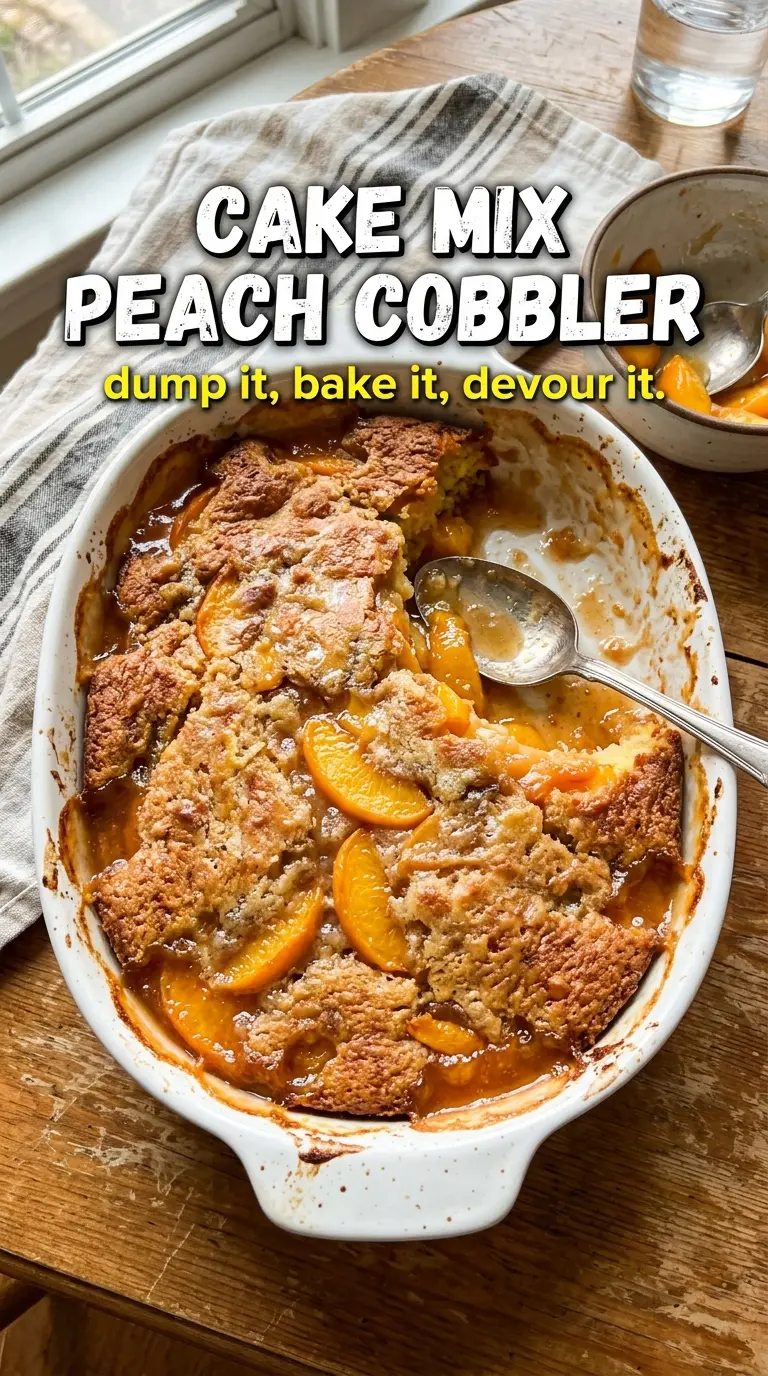
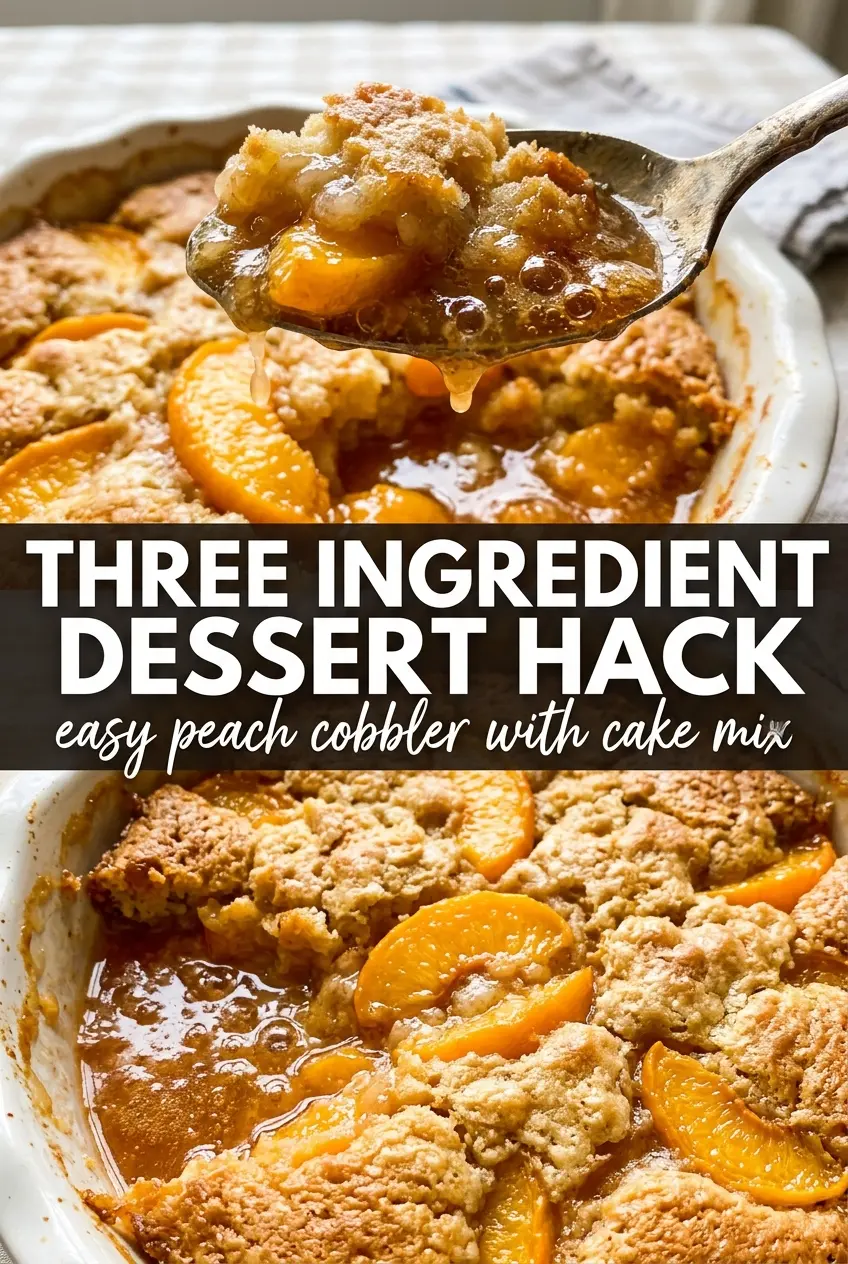
Golden, bubbling peach cobbler with cake mix hits that sweet spot between crisp and spoonable. The top bakes into a crumbly, buttery crust with little toasted edges, while the peaches underneath turn jammy and syrupy in the oven. It’s the kind of dessert that disappears fast because it tastes like you stood over it longer than you actually did.
What makes this version work is the way the dry cake mix turns into a cobbler topping without any stirring. The butter has to be sliced thin and spread as evenly as possible, or you’ll end up with patches of dry mix. I tested it both ways, and the best pan had the peaches bubbling all the way to the edges and a top that stayed crisp instead of turning pasty.
Below you’ll find the small details that matter most: how to keep the topping from staying powdery, when fresh peaches are worth using, and the one mistake that keeps the crust from browning evenly.
The topping turned out crisp at the edges and buttery all the way through, and the peach filling bubbled up just like you described. I used canned filling and it was done right on time.
Love the buttery crumb and bubbling peaches? Save this cake mix peach cobbler for an easy dessert that bakes up golden every time.
Why the Butter Has to Cover the Cake Mix
The biggest failure point in cake mix cobbler is a dry, sandy top that never turns into crust. That happens when the butter lands in a few thick spots instead of spreading across the whole surface. The dry mix needs fat in enough places to moisten and brown, and the butter also carries heat into the topping so it bakes instead of staying dusty.
Thin butter slices work better than melted butter here. Melted butter tends to run into a few puddles and leaves dry pockets behind, especially near the corners of the pan. If you’re using fresh peaches, the sugar matters too — it pulls juice from the fruit and gives you the syrupy base that canned filling already provides.
What the Ingredients Are Doing in This Cobbler
- Peach pie filling — This gives you the fastest path to a thick, spoonable fruit layer. It’s already sweetened and thickened, which means you can go straight to baking without worrying about extra liquid making the cobbler runny.
- Fresh peaches — Use these when peaches are in season and fragrant. The sugar isn’t just for sweetness; it draws out juices so the fruit softens into a syrupy layer instead of baking up dry and firm.
- Yellow cake mix — This is the shortcut that makes the topping work with almost no effort. Yellow cake mix bakes up richer than white cake mix, and its vanilla-butter base plays nicely with the peaches and warm spices.
- Butter — This is the difference between a cobbler topping and a powdery cake mix layer. Keep it cold enough to slice cleanly, then distribute it evenly so every patch of dry mix gets enough fat to brown.
- Cinnamon and nutmeg — These don’t overpower the peaches; they round them out. Cinnamon gives warmth, and nutmeg adds that old-fashioned cobbler note that makes the dessert taste homemade even with a box mix.
How to Build the Cobbler So the Top Bakes, Not Stays Powdery
Start with a Well-Greased 9×13 Pan
Grease the baking dish before anything else, then spread the peaches in an even layer. A thin coating of fat keeps the fruit sugars from sticking at the edges, where they can scorch before the center is done. If you’re using fresh peaches, spread them all the way to the corners so the whole pan bakes at the same pace.
Layer the Dry Mix Without Stirring
Pour the cake mix over the peaches and leave it alone. Stirring turns this into a gummy batter instead of a cobbler topping, and you’ll lose the dry pockets that absorb butter and crisp up. Shake the pan gently if you need to level the surface, but don’t mix the layers together.
Cover the Surface with Butter Slices
Lay the butter over the dry mix in as even a pattern as you can manage. Any patch left bare is likely to stay floury after baking, especially around the corners and edges of the dish. By the end of baking, the butter should have melted through the mix and left a golden, craggy crust with bubbling fruit peeking through the sides.
Bake Until the Edges Bubble and the Top Turns Deep Gold
Bake until the filling is actively bubbling at the edges and the top has turned a deep golden color. If the top looks pale but the fruit is hot, keep going; that pale stage usually means the butter hasn’t fully done its job yet. Let it rest for at least 10 minutes before serving so the filling thickens instead of running straight off the spoon.
How to Adapt This Peach Cobbler When You Need to Switch Things Up
Use fresh peaches for a brighter, juicier filling
Fresh peaches give you a softer, more fragrant dessert, but they need the sugar to pull out enough juice. If your peaches are firm or only lightly ripe, let them sit with the sugar for a few minutes before layering them into the pan. The result is a cobbler that tastes lighter and more fruit-forward than the canned version.
Make it dairy-free with plant-based butter
A good dairy-free butter substitute works here because the topping needs fat, not dairy flavor. Use a stick-style plant butter so you can slice it and distribute it evenly across the cake mix. The crust will still brown, though it may bake up a touch less rich than the original.
Swap in spice cake mix for a deeper dessert flavor
Spice cake mix turns this into a warmer, more autumn-style cobbler with extra cinnamon and clove notes. It’s a little sweeter and more aromatic than yellow cake mix, so it works best if you like a dessert that leans dessert-forward instead of fruit-forward. The texture stays the same.
Storage and Reheating
- Refrigerator: Store covered for up to 4 days. The topping softens as it sits, but the flavor stays good.
- Freezer: It freezes well in portions for up to 2 months. Wrap tightly and thaw in the refrigerator before reheating so the fruit layer doesn’t turn watery.
- Reheating: Warm in a 300F oven until heated through and the topping firms back up. The microwave works in a pinch, but it makes the crust soft instead of crisp.
Answers to the Questions Worth Asking
Easy Peach Cobbler with Cake Mix
Ingredients
Equipment
Method
- Preheat the oven to 350F and grease a 9x13 baking dish.
- Spread the peach pie filling (or the sugared fresh sliced peaches) evenly in the bottom of the dish.
- Sprinkle cinnamon and nutmeg over the peaches in an even layer.
- Pour the yellow cake mix evenly over the top without stirring.
- Lay thin slices of unsalted butter across the top of the dry cake mix, covering as much surface as possible.
- Bake for 40-45 minutes, until the top is golden brown and the edges are bubbling; serve warm.